Choosing the right stone slab thickness depends on where the surface is going. Floor applications generally call for 3cm natural stone or 20mm porcelain to handle load, impact, and daily wear. Wall applications typically work best with 2cm natural stone or 6mm to 12mm porcelain, where lower weight supports reliable adhesion on vertical surfaces. Getting this specification right from the start is one of the most practical decisions in any slab project, and the difference between the two applications is more significant than most people expect.
Floors and walls place entirely different demands on stone. A floor slab absorbs compressive force, foot traffic, and the repeated stress of everyday use. A wall slab needs to bond securely to a vertical substrate without placing excessive load on the adhesive system. The same material, specified at the wrong thickness for the wrong surface, can lead to stress fractures on floors or adhesion failure on walls over time. Understanding what each application actually requires is what makes the difference between a surface that holds up and one that causes problems down the road.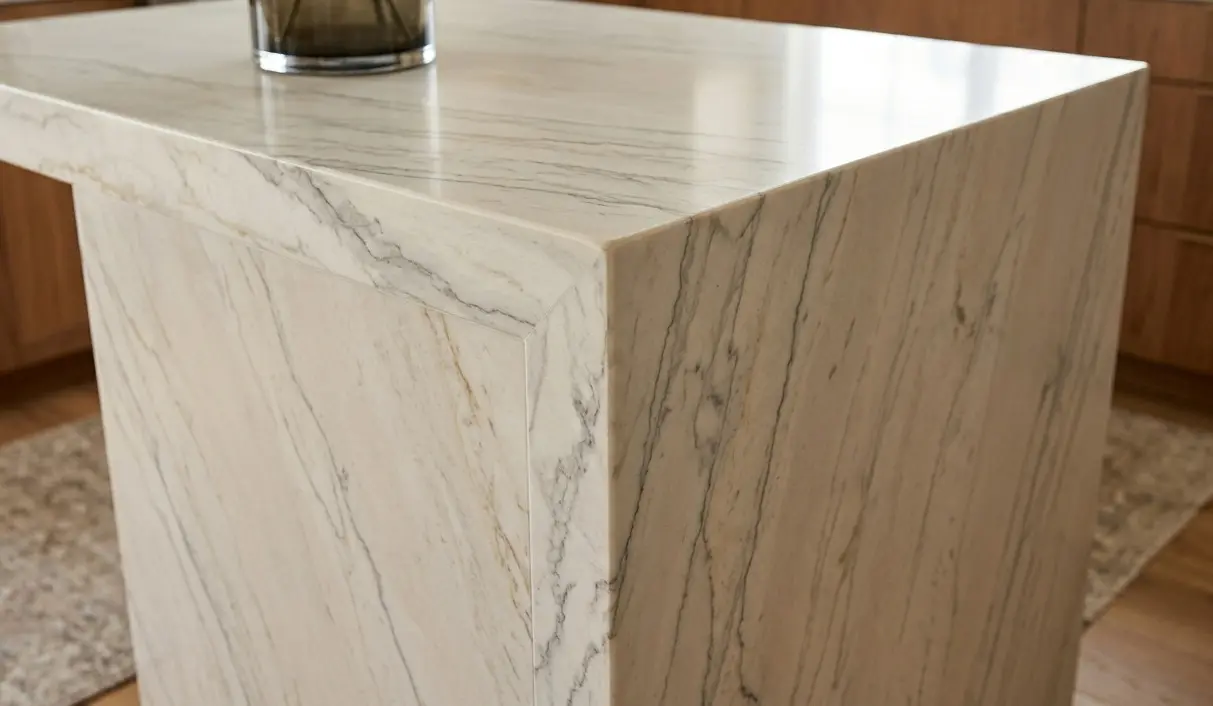
Why slab thickness is not a single answer
Stone slabs are not produced in one universal thickness. Natural stone slabs typically come in two standard gauges: 2cm, which is approximately three-quarters of an inch, and 3cm, which is approximately one and a quarter inches. Porcelain slabs, such as those in the Infinity Surfaces collection, are available in 6mm, 12mm, and 20mm, giving designers and homeowners more granular control over weight, structural performance, and visual profile. For anyone researching how different stone materials compare in real applications, this natural stone countertop guide offers useful context on how material properties translate to performance.
Each of these options exists for a reason. Thinner slabs reduce overall weight, which matters considerably on vertical surfaces where adhesion and substrate load are primary concerns. Thicker slabs provide more structural depth and rigidity, which is what floors need to manage the compressive and impact forces of daily use. Neither is universally better; each serves a different function depending on where and how it is applied.
The material type also plays a role. Granite and quartzite are generally denser and harder than marble, which means a 2cm granite slab may behave differently from a 3cm marble slab in certain floor applications. Browsing the stone slab collection gives a clearer picture of what is available across both natural stone and porcelain options. The slab is durable, but proper care and correct application selection will help preserve its appearance over time.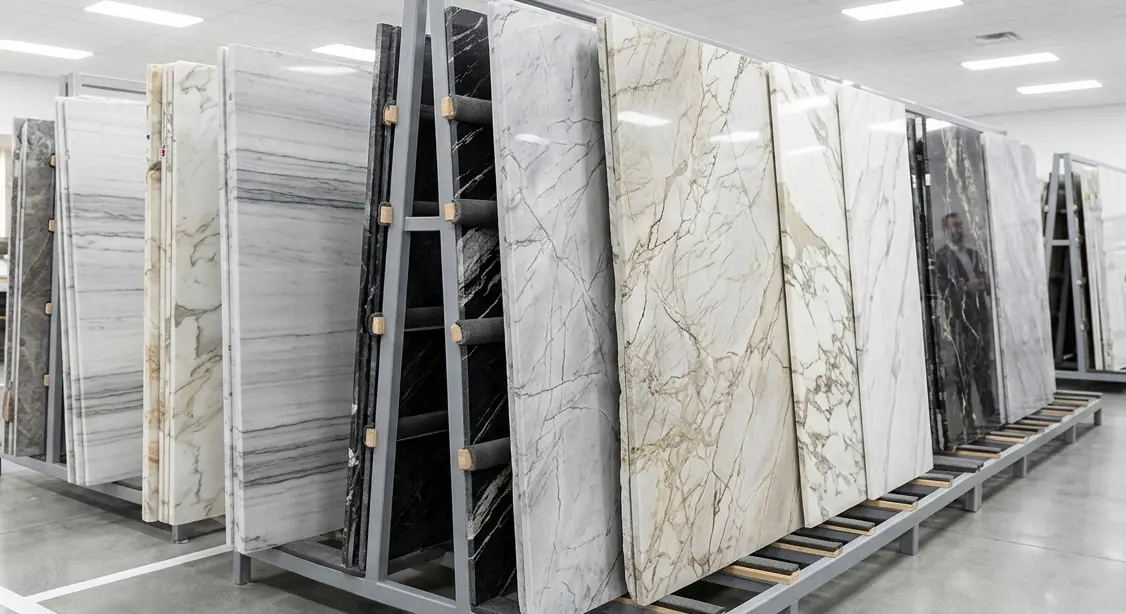
Slab thickness for floors: The case for going thicker
Floors tend to carry a level of mechanical stress that walls rarely face. Foot traffic, furniture weight, and the occasional dropped item create a consistent cycle of impact and pressure that accumulates over years of use. In kitchens, entryways, and dining areas, these demands are especially ongoing, and the depth of the slab plays a significant role in how well the surface holds up.
For natural stone floor applications, 3cm is generally the preferred specification. At this thickness, the slab has enough structural depth to span minor irregularities in the substrate without flexing, which is one of the more common causes of stress fractures over time. A slab that flexes repeatedly will eventually show signs of stress, and that point of vulnerability is usually shaped by the substrate condition beneath it rather than the stone surface above.
The 2cm option can work on floors when supported by a solid, level substrate with minimal movement. In those conditions, the thinner profile may perform adequately for lower-traffic residential applications. However, the margin for error is considerably smaller, and any substrate unevenness is more likely to affect the slab above it. The slab is a practical choice for busy spaces, but the right finish and correct application approach matter for long-term performance. According to the Natural Stone Institute, proper material selection and care from the outset are key factors in how well any stone surface holds up over time.
For outdoor floor applications such as patios, pool surrounds, and covered terraces, porcelain slabs at the 20mm gauge are well suited to handle ground movement, temperature fluctuation, and outdoor load conditions. The material offers good resistance to wear, but long-term performance in outdoor environments depends on how well the application is matched to the slab specification from the outset. Those ready to move forward can request a slab quote to get the process started.
Slab thickness for walls: Where lighter works better
Wall surfaces operate under a different set of priorities than floors. Walls are not subject to the same compressive load or foot traffic impact. What matters on a vertical surface is reliable adhesion, manageable material weight, and visual consistency across a large format. A slab that is too heavy for its bonding system can place stress on the adhesive over time, which is why gauge selection on walls deserves as much attention as it does on floors.
Thinner slab profiles tend to be genuinely advantageous in wall applications. For natural stone wall cladding, 2cm is a well-established standard. It provides enough material depth to convey the visual weight of stone while keeping the overall load manageable for the mounting system. Feature walls, fireplace surrounds, shower wet walls, and bathroom cladding are applications where 2cm natural stone can perform well when properly specified and prepared.
Porcelain slabs at 6mm and 12mm have expanded what is possible on walls considerably. The 6mm option is well suited for vertical use, and its lower weight per square meter makes large-scale wall coverage achievable in spaces where a heavier slab would create adhesion and substrate challenges. Full-height kitchen backsplashes, open-plan living room feature walls, and seamless bathroom surfaces are areas where the thinner porcelain gauge has become a preferred choice among designers working with contemporary interiors.
The slab performs well in humid spaces, but proper sealing or installation may still be needed depending on the specific environment. The finish is made for everyday performance, but care instructions should be followed to help maintain the surface over time.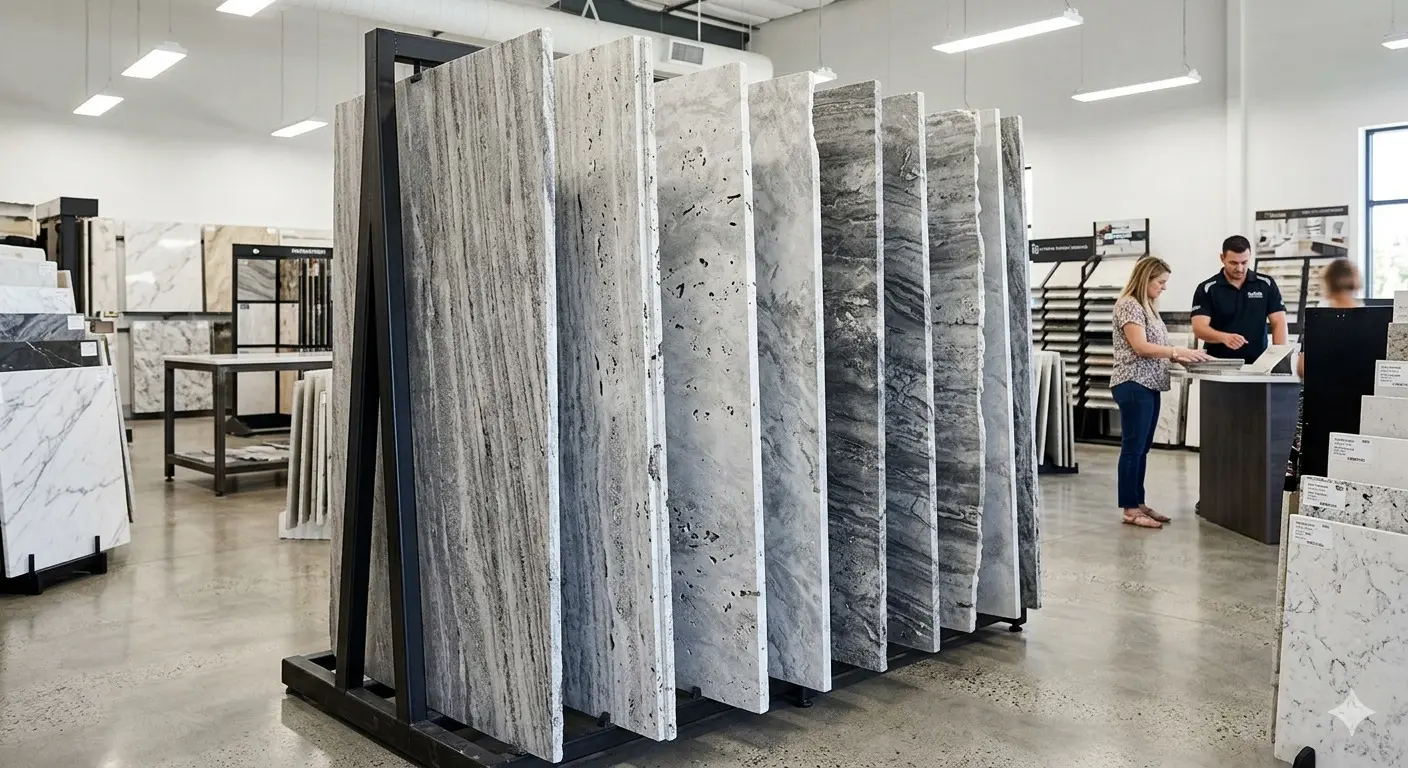
Natural stones vs. porcelain slabs: How thickness decisions differ
Natural stone and porcelain slabs are not interchangeable, and the thickness logic behind each follows a somewhat different path. Natural stone is quarried in varying densities, absorption rates, and structural characteristics depending on the material. Marble, for instance, is generally softer and more prone to surface marking than granite or quartzite, which means the structural support it receives from thickness and substrate matters more across all applications. A broader look at stone surface applications can help illustrate how material choice and thickness interact across different project types.
Porcelain slabs are engineered to a consistent specification, which gives them more predictable performance across the full range of gauges. The 12mm option, for example, is generally rated for both floor and wall use, making it a practical choice for projects where material continuity across surfaces is a design priority. Running the same porcelain slab from a kitchen floor up a feature wall can create a seamless visual flow that may be more difficult to achieve with natural stone without careful planning around thickness transitions. Trade professionals working across multiple projects can access dedicated support to help navigate these decisions at scale.
Each slab has natural variation in tone and character, and each thickness serves a specific structural and visual purpose depending on the application.
Reading the space before you commit
One of the most practical steps before finalizing any slab project is to evaluate the actual conditions of the space. A high-traffic kitchen floor in a busy household has different demands than a guest bathroom feature wall that sees minimal daily contact. An outdoor terrace in a region with significant seasonal temperature variation needs a different specification than a covered indoor-outdoor living room that stays relatively climate-controlled.
Questions worth considering include the level of daily activity the surface will face, the condition and rigidity of the substrate it will be applied to, whether the application is interior or exterior, and whether material continuity across floor and wall surfaces is part of the design intent. These factors together point toward the right gauge far more reliably than any single rule of thumb.
A free design consultation is available to help work through exactly these decisions, whether the project involves a single statement surface or a full renovation across multiple rooms and materials. Having that conversation early in the process tends to simplify the selection considerably and reduces the likelihood of specification changes once fabrication is underway.
Conclusion
Slab thickness is one of those specifications that does its most important work quietly in the background of a project. When it is right, the surface performs as expected for years without drawing attention to itself. When it is wrong, the problems that follow are rarely immediate, but they can be difficult and costly to address after the fact.
Floors benefit from the structural depth needed to manage load, impact, and the cumulative demands of daily use. Walls benefit from a gauge that bonds reliably, looks refined, and keeps weight within what the mounting system can support. Porcelain and natural stone each bring their own thickness logic to both applications, and understanding those differences is what allows a project to come together with confidence. Nova Tile and Stone carries both natural stone slabs and the full Infinity Surfaces porcelain slab range. To see the full selection firsthand, visit a showroom near you.
Frequently Asked Questions
A 3cm slab provides more structural depth and is generally better suited to floor applications where load, impact, and substrate variation are ongoing concerns. A 2cm slab can work on floors with a solid, level substrate in lower-traffic settings, but it offers less tolerance for any movement or unevenness beneath it. For most residential floor projects, 3cm tends to be the more reliable long-term choice.
Yes, 2cm is a well-established standard for natural stone wall cladding. It provides enough material presence to convey the visual weight of stone while keeping the overall load manageable for the adhesive and mounting system. Feature walls, fireplace surrounds, bathroom wet walls, and shower cladding are common applications for 2cm natural stone.
The 12mm porcelain slab gauge is generally rated for both floor and wall use, making it a practical option when design continuity across surfaces is a priority. The 6mm option is better suited to walls, while the 20mm gauge is designed for outdoor and heavy-duty floor applications. Confirming the specific product rating before selecting is worth doing before committing to a material.
Yes, the density and hardness of the stone influence how a given thickness performs in a specific application. Harder, denser materials like granite and quartzite can perform reliably at 2cm in certain floor settings, while softer materials like marble may benefit from the added depth of 3cm to help reduce the risk of surface stress over time. Porcelain slabs follow engineered specifications that tend to be more consistent across the full range.
Thickness has a direct visual effect on edge profiles. A 3cm slab produces a more substantial, prominent edge that reads as solid and refined from across a room. A 2cm slab has a slimmer edge profile that works well in contemporary settings where a lighter visual line is preferred. Porcelain slabs at 6mm and 12mm offer a clean, modern edge that suits minimal design aesthetics particularly well.