When choosing natural stone for your home, the most important factors to consider are the intended application, your lifestyle and maintenance preferences, aesthetic goals, and budget. Natural stone types, including granite, marble, travertine, limestone, slate, sandstone, soapstone, and onyx, each have distinct properties that make them better suited for specific uses.
Granite is the most durable choice for kitchen countertops, while marble is best reserved for lower-traffic decorative areas. Travertine and limestone work well for flooring and wall cladding, and slate is ideal for slip-resistant bathroom floors. Stone finish also matters: polished surfaces suit countertops, while honed or flamed finishes are safer for floors. All natural stone types require regular sealing to protect against staining and moisture damage.
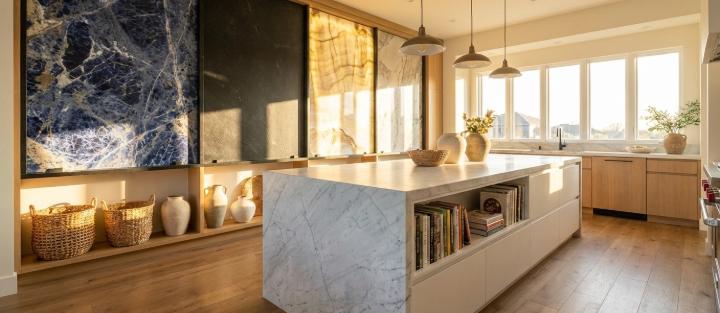
Start With Where You'll Install It
Before you shop, get clear on where the stone is going. Outdoor installations, think patios, walkways, pavers, and building facades, demand materials that can take a beating from the elements, including temperature swings, moisture, and UV exposure. Indoor spaces like kitchen countertops, bathroom vanities, showers, and floors deal with heavy daily use, humidity, and spill risk, so stain and scratch resistance should be near the top of your checklist, especially if you’re selecting a full slab for a seamless look.
Use this as your starting point:
- Granite is a powerhouse for kitchen countertops, tabletops, and high-traffic floors.
- Marble shines on countertops, floors, fireplaces, and feature walls.
- Travertine and limestone are go-to choices for interior flooring, wall cladding, and exterior paving projects.
- Slate performs exceptionally well as flooring and holds its own on countertops and fireplace surrounds.
One more thing to keep in mind: finish affects function. A polished surface may look flawless on a countertop, but that same glossy finish becomes a slip hazard on a bathroom floor.

Match the Stone to Your Lifestyle
The most beautiful stone in the world won't serve you well if it doesn't match how you actually live. If your household is high-energy, kids, daily cooking, frequent guests, you need surfaces that are tough, hygienic, and easy to clean. Low-maintenance materials that resist bacteria and don't demand constant attention are your best friends.
If your home is calmer or you're driven primarily by aesthetics, you have more flexibility to explore stones that require extra care in exchange for extraordinary beauty.
Here's the reality: the more refined and delicate the stone, the more work it takes to keep it looking that way. That means routine sealing, the right cleaning products, and protective habits. Go in with clear eyes, weigh beauty, durability, and cost together before making your final call.
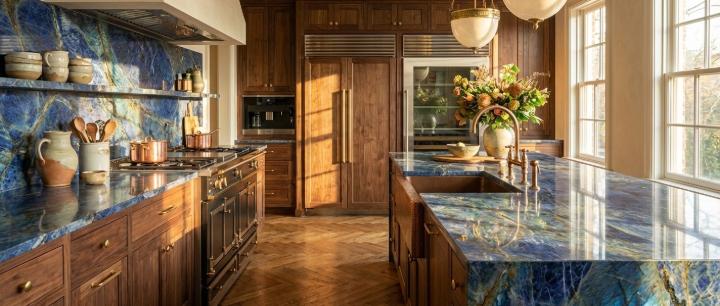
Understand What Drives the Look
Natural stone's visual appeal is unlike anything manufactured, and three elements define its character
Color sets the tone for the entire space. Darker stones are typically denser and more stain-resistant, but they tend to show fingerprints, water spots, and dust, and they can make smaller rooms feel tighter. Lighter stones brighten and open up a space, though they stain more easily and need more frequent resealing. The right color for a dramatic fireplace feature wall is going to be very different from what works on a kitchen island or bathroom vanity.
Veining and pattern are what give each stone its personality. Marble moves across a surface in sweeping, dramatic swirls. Granite presents a more grounded, speckled look with rich color variation. These natural characteristics can anchor a rustic, organic design or sharpen a clean, modern aesthetic.
Stone Finish determines how the stone looks and feels underfoot or underhand:
- Polished - high-gloss shine that intensifies color, best for countertops and walls.
- Honed - a soft matte or satin surface that works well in high-traffic floor areas.
- Leathered - a lightly textured surface that's both elegant and practical for countertops and baths.
- Flamed - a coarse, non-slip texture purpose-built for outdoor surfaces.
- Brushed or Antiquated - a worn, vintage character that suits a wide range of design styles.
Think Through the Practical Side
Good looks only go so far. These technical factors will determine how your stone holds up day after day:
- Absorption rate - Porous stones absorb moisture, which leads to staining and eventually cracking. The more porous the stone, the more diligent you'll need to be about sealing it.
- Hardness - A harder stone holds up against scratches and daily abrasion. Softer stones show wear faster and need more protection.
- Grade - Stone grade is a measure of structural integrity. Higher-grade slabs have fewer pits, fissures, and surface irregularities, making them more resistant to chipping over time.
- Thickness - Go with 3cm slabs for durability and ease of installation, especially in kitchens. The thinner 2cm option works well for decorative or design-forward applications.
Take time to hand-select your slabs. Since every piece is unique, careful selection lets you control how seams fall and ensures the final installation looks intentional and cohesive, especially when you shop local and can view the inventory in person before making your final decision.
Factor In the Cost
Natural stone pricing varies depending on the material, finish, slab thickness, and fabrication complexity. As your trusted tile and stone supplier, we’ll walk you through the options and provide a clear, detailed quote before you make your final decision. Be sure to apply for a trade account if you’re a contractor, designer, or builder to access preferred pricing and additional benefits.
Better yet, visit our showroom or stone yard in person. Seeing and touching the actual slabs you'll be living with, rather than a small sample chip, gives you a far more accurate sense of what the finished product will look and feel like. It also gets you to a real price faster.

Know Your Stone Options
Granite is the workhorse of natural stone countertops. It's incredibly hard, heat-resistant, and when sealed properly, it shrugs off scratches and stains with ease. Maintenance is minimal, and its bold color range and dramatic veining make it as visually impressive as it is functional.
Marble delivers a level of elegance that no other material matches. The luminous depth and sweeping veining are iconic for a reason. But marble is softer than it looks, it scratches, chips, and etches when it comes into contact with acidic substances like citrus or vinegar, even through a sealant. Reserve it for spaces where it can be admired and protected rather than subjected to heavy daily punishment.
Slate is built for real-world conditions. Its natural cleft surface is slip-resistant right out of the gate, making it an ideal choice for bathrooms, entryways, and busy hallways. It's low-maintenance and forgiving, though it doesn't hold up well in climates with dramatic temperature swings.
Travertine brings an earthy, old-world warmth that's hard to replicate. Its porous surface is usually honed and filled to create a smoother, more polished result, but a tumbled or brushed finish leans into its naturally aged character beautifully. It performs well both indoors and in outdoor applications, just keep up with the sealing.
Limestone offers a quieter version of travertine's appeal, warm and neutral, but without the veining. Its large tile format is particularly effective at making rooms feel more expansive. Keep it sealed and it will perform well on floors, walls, and outdoor surfaces for years.
Sandstone is all about texture and character. Its earthy, striated appearance gives floors and outdoor spaces an organic, grounded feel. It's a durable material, but keep it away from acidic substances and stay on top of sealing and maintenance.
Soapstone is an underrated gem. It develops a deep, rich patina as it ages, bringing character and warmth to kitchens, bathrooms, and fireplace surrounds. It's porous, so regular treatment with mineral oil is the key to keeping it looking its best and protecting it from staining.
Onyx is for the bold. Its translucency and soft, luminous pastel tones, especially when backlit, produce a visual impact that stops people in their tracks. The catch is that it's one of the most delicate stones you can choose. It scratches easily, needs frequent sealing, and is best positioned where it will be seen and admired rather than used hard, think vanity tops, tub surrounds, or a dramatic accent wall.
Conclusion
Natural stone is more than just a surface material, it's a long-term investment in the beauty, functionality, and value of your home. From the rugged durability of granite to the timeless elegance of marble, the warmth of travertine to the drama of onyx, there is a natural stone suited for every space, lifestyle, and budget.
The key to making the right choice is understanding that no single stone does everything best. Each type has its strengths, and the best selection is the one that aligns with where it will be installed, how your household lives, and what level of maintenance you're genuinely willing to commit to. Take your time, visit our showroom, get your hands on the actual slabs, and lean on the expertise of professionals who work with these materials every day.
When chosen thoughtfully and cared for consistently, natural stone doesn't just hold up, it gets better with time. It's one of the few home investments that pays you back in beauty and durability for decades. Submit your slab quote request and schedule your appointment today and let our team help bring your vision to life.
Frequently Asked Questions
What is the most durable natural stone for kitchen countertops?
Granite is widely considered the most durable option for kitchen countertops. It is exceptionally hard, heat-resistant, and when properly sealed, holds up well against scratches, stains, and the demands of daily cooking. It requires minimal maintenance compared to softer stones like marble or travertine, making it a practical and popular choice for busy kitchens.
How often does natural stone need to be sealed?
It depends on the type of stone and how heavily it's used. As a general rule, granite countertops should be sealed once a year, while more porous stones like travertine, limestone, and soapstone may need sealing every six months. A simple water test can help you gauge when resealing is needed, if water no longer beads on the surface and instead absorbs into the stone, it's time to reseal.
Is natural stone a good choice for bathroom floors?
Yes, but the right stone and finish matter. Slate is one of the best options for bathroom floors because its naturally cleft texture provides built-in slip resistance. Honed granite and honed travertine are also good choices, as the matte finish offers better grip than a polished surface. Avoid highly polished finishes on bathroom floors, as they can become slippery when wet.
What's the difference between honed and polished stone?
A polished finish has a high-gloss, mirror-like shine that intensifies the stone's color and veining. It's ideal for countertops and wall cladding where visual impact is the priority. A honed finish has a matte or satin appearance with no reflective sheen. It's softer-looking, easier to maintain in high-traffic areas, and less likely to show scratches, making it a smarter choice for floors and surfaces that see heavy daily use.
Can natural stone be used outdoors?
Absolutely. Many natural stones perform very well in outdoor settings, including granite, travertine, limestone, and sandstone. These are commonly used for patios, pool surrounds, walkways, and exterior wall cladding. The key is choosing a stone that can handle your local climate, particularly temperature fluctuations and moisture. Slate, for example, is beautiful indoors but can crack in areas with extreme freeze-thaw cycles, so it's better suited to mild climates when used outdoors.