Both Calacatta and Carrara marble share a geographic origin: the Apuan Alps near Carrara, Italy, a region that has supplied the world with fine white marble for more than two thousand years. Michelangelo sourced his marble here. The Pantheon was built with it. Today, that same mountain range yields two of the most recognized names in natural stone, and yet homeowners, designers, and even some retailers frequently confuse them.
The confusion is understandable. Both are white. Both have gray veining. Both carry Italian heritage. But once you know what to look for, the differences become immediately clear. Understanding them will help you choose the right material, set realistic maintenance expectations, and avoid overpaying or underbuying for the look you want.
We carry both across our natural stone slab collection, and we walk through this comparison with customers regularly. Here is everything you need to know.
The Visual Differences: Background, Veining, and Movement
Carrara: Soft, Consistent, Classic
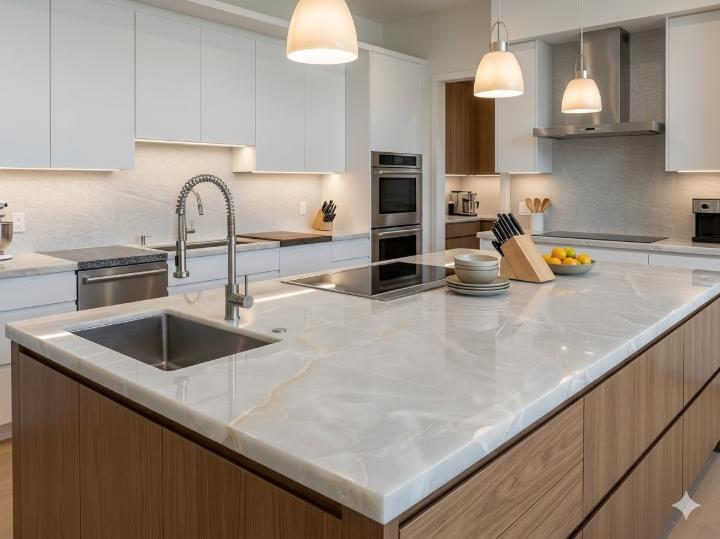
Carrara marble has a gray-white to blue-white background with fine-lined, soft veining that stays relatively consistent across the slab. Movement is subtle rather than dramatic. It reads as elegant and restrained, and because its patterning is uniform, it tiles and repeats predictably, making it a natural choice for flooring, wall cladding, and backsplash applications.
Calacatta: Bold, Rare, High-Contrast
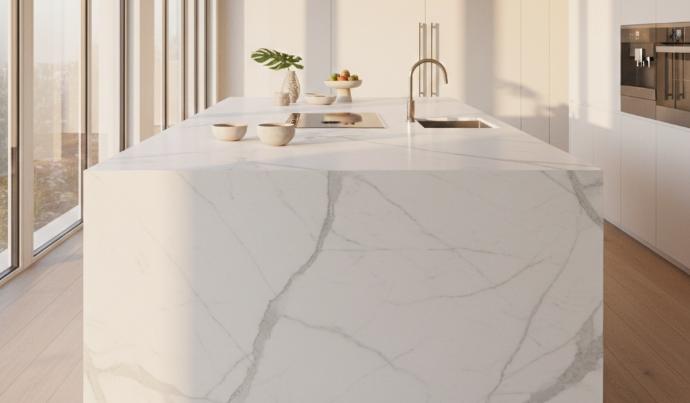
Calacatta marble has a brighter, crisper white background, sometimes pure white, sometimes with warm ivory undertones depending on the quarry block. The veining is the defining feature: thick, sweeping, and dramatically contrasted against the white field in tones of deep charcoal, warm gold, or caramel. No two slabs look the same. Because of that variability, slab selection in person matters far more with Calacatta than it does with Carrara.
Rarity and Why It Affects Availability
Carrara describes stone quarried across a large zone of the Apuan Alps, with dozens of active quarries. That relative abundance is why Carrara has historically been the default white marble in architecture and construction worldwide.
Calacatta comes from a much narrower area within the same mountains. The highest grades, including Calacatta Oro, Calacatta Borghini, and Calacatta Macchia Vecchia, come from only a handful of quarry faces. Limited production is why genuine Calacatta slabs are scarcer on the market and why so many porcelain and engineered stone manufacturers use Calacatta as the inspiration for their premium white patterns. When you see a white countertop in a luxury kitchen magazine and it makes you stop scrolling, it is more often Calacatta than Carrara.
Which Marble Works Best for Countertops?
Both perform similarly from a structural standpoint. The real question is how much visual drama you want and how it will interact with your cabinetry.
Calacatta tends to work best when you want a statement countertop that reads as a focal point, when your cabinetry is white or light gray and you want the contrast to come from the stone, or when you are designing a waterfall island where dramatic veining wraps the edges.
Carrara tends to work best when you want marble to add texture and warmth without competing with other elements, when your space already features rich wood tones or strong color and restraint in the stone is the right call, or when you prefer a traditional Italian marble aesthetic over a bold one.
Honed vs. Polished: Finish Matters for Both
A polished finish amplifies veining contrast, is easy to wipe clean, and photographs beautifully, but makes etches more visible. A honed finish softens the surface tone, reduces reflectivity, and makes etch marks less noticeable, though the chemical reaction from acids still occurs. Many designers specify honed Calacatta for high-use kitchens for exactly that reason.
Maintenance: What Both Marbles Share
Calacatta and Carrara are calcite-based stones with identical maintenance requirements. Both are porous and require sealing at installation and periodic resealing over time. Both etch when exposed to acidic substances like lemon juice, vinegar, or wine.
According to This Old House, testing the surface annually by placing a few drops of water on the stone is a reliable way to know when resealing is needed: if the water soaks in rather than beads, it is time to reseal.
Fine Homebuilding notes that the decision between marble and harder stones often comes down to lifestyle tolerance. Marble develops a patina over time that some homeowners find beautiful and others find frustrating. Knowing which camp you fall into before committing to the material will save you from regret later.
A Note on Imitations
Because genuine Calacatta is expensive and variable, the market is filled with porcelain, quartz, and engineered stone products designed to mimic its look. These alternatives have real advantages: they do not etch, require no sealing, and stay consistent in pattern across multiple pieces. They perform well in the right applications.
It is worth noting, however, that engineered stone carries its own health and safety considerations during fabrication. The CDC and NIOSH have published guidance on silica dust exposure associated with cutting and finishing engineered stone countertops, which is an important factor for fabricators and contractors to be aware of when working with these materials.
Natural marble has a significantly lower crystalline silica content than engineered stone, which typically exceeds 90%. If you are standing in front of a genuine Calacatta slab, you are looking at something that formed over millions of years under geological conditions that exist in one relatively small part of the world. That is either meaningful to you or it is not, and either answer is fine.
Summary: Calacatta vs. Carrara at a Glance
| Feature | Calacatta | Carrara |
|---|---|---|
| Background color | Bright white to warm ivory | Gray-white to blue-white |
| Veining style | Bold, dramatic, thick | Fine, soft, subtle |
| Relative availability | Limited, premium | More widely available |
| Best applications | Countertops, islands, accent walls | Countertops, flooring, wall cladding |
| Maintenance | Sealing required, etches with acid | Sealing required, etches with acid |
| Finish options | Polished, honed | Polished, honed |
Conclusion
Calacatta and Carrara are not interchangeable, but they are both exceptional materials when used in the right context. Carrara rewards those who want timeless, restrained elegance across large surfaces. Calacatta rewards those who want a single surface to carry the room. The right choice depends on your space, your cabinetry, your tolerance for maintenance, and how much of the stone's character you want to feature. Both deserve to be seen in person before a decision is made. Full slabs under natural light tell you everything a photograph cannot, and that conversation with the stone is always worth having before it becomes part of your home.
We carry both natural marble slabs and high-quality porcelain alternatives across our showrooms in Reno, Sacramento, Minden, and Fernley. We offer free design consultations and can help you compare options side by side. If you prefer to find a showroom near you, our team is ready to help you select the right stone for your project.
Frequently Asked Questions
What is the difference between Calacatta and Carrara marble?
Both come from the Apuan Alps in Tuscany, Italy, but differ in appearance and rarity. Carrara has a gray-white background with fine, soft gray veining and is more widely quarried. Calacatta has a brighter white or warm ivory background with thick, bold veining in deep gray, gold, or taupe. Calacatta is quarried in smaller quantities, making it less common and generally more valuable.
Is Calacatta marble more expensive than Carrara?
Yes. Calacatta is quarried from a more limited area of the Apuan Alps, which makes it scarcer on the market. The high visual contrast and rarity of Calacatta, particularly named varieties like Calacatta Oro and Calacatta Borghini, contribute to its higher value compared to standard Carrara grades.
Can Calacatta marble be used in a bathroom?
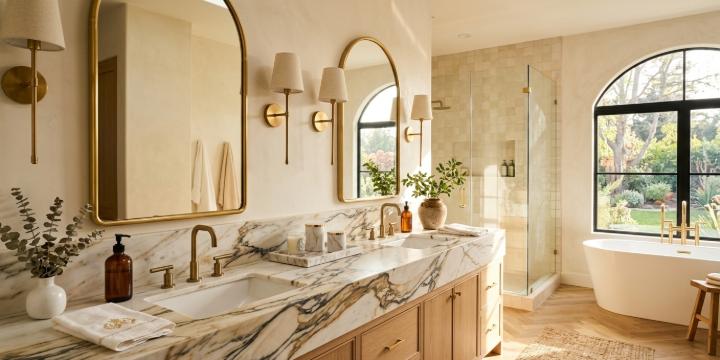
Yes. Calacatta is a popular choice for bathroom vanity tops, shower walls, and flooring. Bathrooms typically see less acid exposure than kitchens, so marble tends to hold up well in these applications. Proper sealing is still required, and honed finishes are often recommended for shower floors to reduce slip risk and minimize the appearance of water spots.
How often does marble need to be sealed?
Marble should be sealed at installation and retested annually. Place a few drops of water on the surface and wait a few minutes. If the water beads up, the seal is still effective. If it soaks in, it is time to reseal. High-use surfaces like kitchen countertops may need resealing more frequently than lower-use areas.
Is Calacatta marble good for a waterfall island?
Calacatta is one of the most popular choices for waterfall kitchen islands. The bold, sweeping veining wraps dramatically over the edge and down the side of the island, turning the stone into a focal point. For the best result, slabs should be bookmatched so the veining mirrors across the seam, which makes slab selection in person especially important.