Blue-veined stone countertops are natural stone surfaces with veining in shades of blue, blue-gray, or blue-white produced by minerals including sodalite, lazurite, hornblende, and biotite that formed within the rock during geological processes. The three primary material types are blue quartzite, blue granite, and semi-precious stone slabs such as lapis lazuli. Blue quartzite rates 7 or higher on the Mohs hardness scale, making it harder than marble (3 to 5) and more resistant to acid etching and scratching. Blue granite rates 6 to 7 on the Mohs scale and shares similar durability characteristics. Both quartzite and granite varieties require sealing approximately once per year to maintain stain resistance. Blue veining is rare in natural stone compared to white, gray, or gold veining, which limits availability relative to more common stone colors. Common applications include kitchen countertops, bathroom vanities, kitchen islands, and feature wall cladding.
Blue-veined stone is often evaluated against marble because both materials share flowing vein patterns and a similar visual character. The key distinction is performance: blue quartzite and blue granite resist acid etching from foods and cleaners, while marble is composed of calcite and etches on contact with acids. For buyers who want the look of veined stone in a kitchen environment, blue quartzite is the closer functional match to marble's appearance with a more durable surface profile. Growing awareness of health and safety considerations in engineered stone fabrication has also contributed to renewed interest in natural stone surfaces among designers and contractors.
At our showrooms in Reno, Sacramento, Minden, and Fernley, we carry a range of natural stone slabs and our team can help you evaluate options in person. Selecting a blue-veined slab requires viewing it at full scale because the distribution of blue coloring varies considerably from one slab to the next within the same material type.
Why Blue Veining Forms in Natural Stone
Blue coloration in natural stone originates from specific minerals present during the rock's formation or deposited when fluid-filled fractures in the stone crystallized over time. Sodalite, a sodium aluminum silicate mineral, produces deep blue-gray coloring in certain granites. Lazurite, the primary mineral in lapis lazuli, creates deep navy tones in semi-precious slab applications. In blue granites, hornblende and biotite combined with reflective quartz crystals formed during deep-earth crystallization produce the distinctive color. In quartzite, trace minerals carried by silica-rich fluids during metamorphism create the blue veining visible in finished slabs.
Unlike gray or white veining, which appears across a wide range of marble and quartzite varieties worldwide, pronounced blue tones require a narrow set of mineral conditions that occur in relatively few quarry locations, which is why blue stone is rarer and often carries a higher price point than more common stone colors.
Natural Blue-Veined Stone Varieties
Blue-veined stone falls into three primary material categories: quartzite, granite, and semi-precious stone. Each category has distinct performance characteristics, and within each category the specific color intensity, veining pattern, and overall character vary considerably from one slab to the next. The following describes what buyers can generally expect from each category.
Blue Quartzite
Blue quartzite is one of the more accessible options in the blue stone category. Most varieties originate in Brazil and feature a white to pale gray base with veining that ranges from soft steel-blue and smoky indigo to deeper ocean tones, depending on the specific slab. Because quartzite forms through the metamorphism of sandstone, it rates higher on the Mohs hardness scale than marble and resists acid etching more effectively. That combination of color and performance makes it a practical choice for kitchen countertops where both durability and visual impact matter.
Blue quartzite is available in polished, which deepens the blue tones and adds reflectivity, honed, which produces a softer matte appearance, and leathered, which adds a subtle texture that helps conceal everyday marks.
Blue Granite
Blue granite covers a range of natural igneous stones whose color comes from minerals including hornblende, biotite, and reflective quartz crystals formed during deep-earth crystallization. Within the category, the character varies widely. Some blue granites have a deeply saturated base with multi-color crystalline movement in white, gold, and black, which reads as dramatic and works well as a focal-point surface such as a kitchen island or bar top. Others have a more muted gray-blue base with metallic mineral flecks that shift color under different light sources, which reads as more understated and is suitable across a wider range of applications.
Blue granite scores 6 to 7 on the Mohs hardness scale and performs well in high-use environments when sealed on a periodic basis. Because the blue coloring is more saturated in some varieties, the slab can look quite different under natural light versus artificial light, which is one reason in-person evaluation matters more with blue stone than with more neutral colors.
Blue Pearl Granite
Blue Pearl is a specific granite variety quarried in Norway, distinct enough from general blue granite that it warrants separate mention. Its gray-blue base contains labradorescence, a reflective quality produced by metallic mineral flecks that shifts the apparent color of the stone depending on the light source and viewing angle. Veining in Blue Pearl is less pronounced than in most blue quartzites or deeply saturated blue granites. The stone reads as a flecked or crystalline surface with a blue cast rather than as a dramatically veined slab, making it a fit for spaces where the goal is a cooler, understated finish.
Semi-Precious Blue Stone
At the premium end of the category, stones such as lapis lazuli can be fashioned into slab form for countertops and accent surfaces. These materials are quarried in small quantities and assembled from pieced gemstone, making them among the most rare and expensive options available. They are typically used for powder rooms, bar tops, or accent walls rather than full kitchen perimeter countertops, given both their cost and their more delicate surface relative to quartzite or granite.
Design Applications and Cabinet Pairings
Blue-veined stone works across several applications, though the approach differs depending on the intensity of the blue in the specific slab.
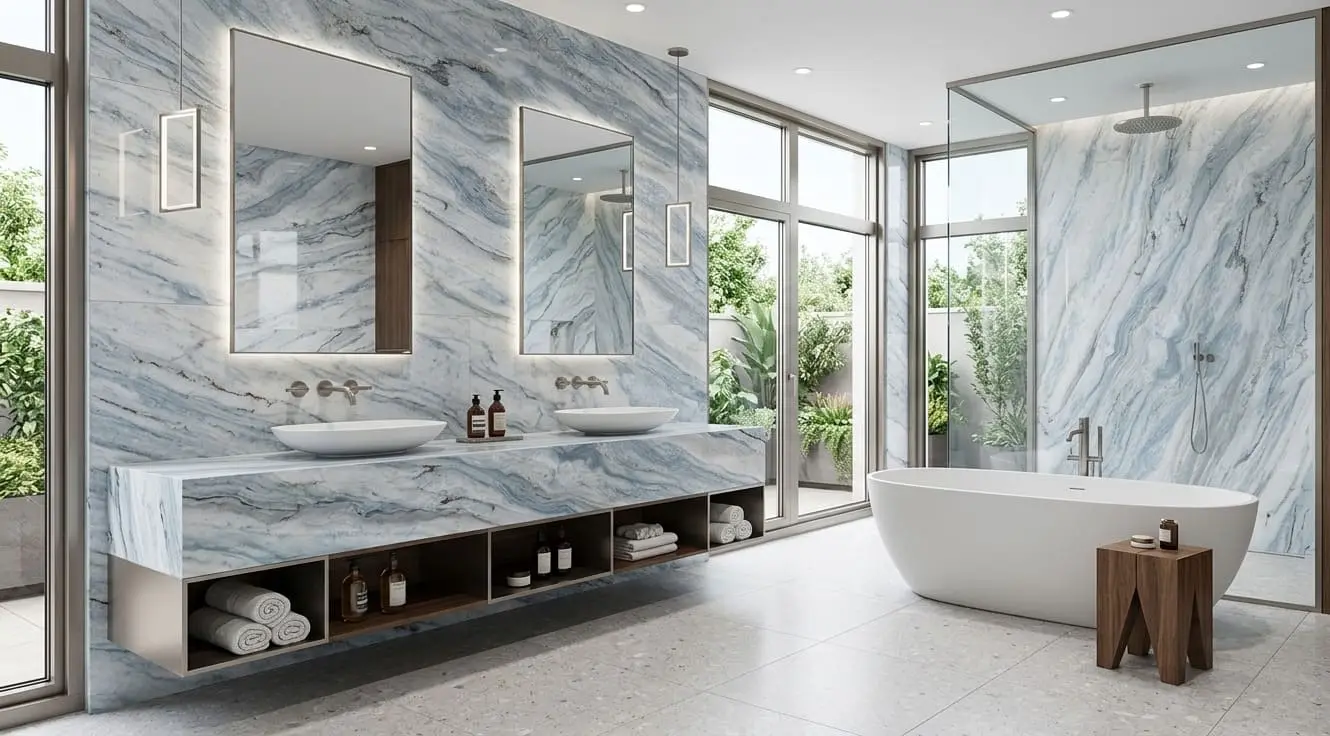
For blue quartzite and lighter blue granite varieties, the stone can function as a full perimeter countertop. White, cream, and light gray cabinets allow the blue veining to read clearly without competing colors in the space. Natural white oak cabinetry, which is a leading cabinet direction in 2026, also pairs well with lighter blue stone because the warm wood tone provides contrast without visual conflict.
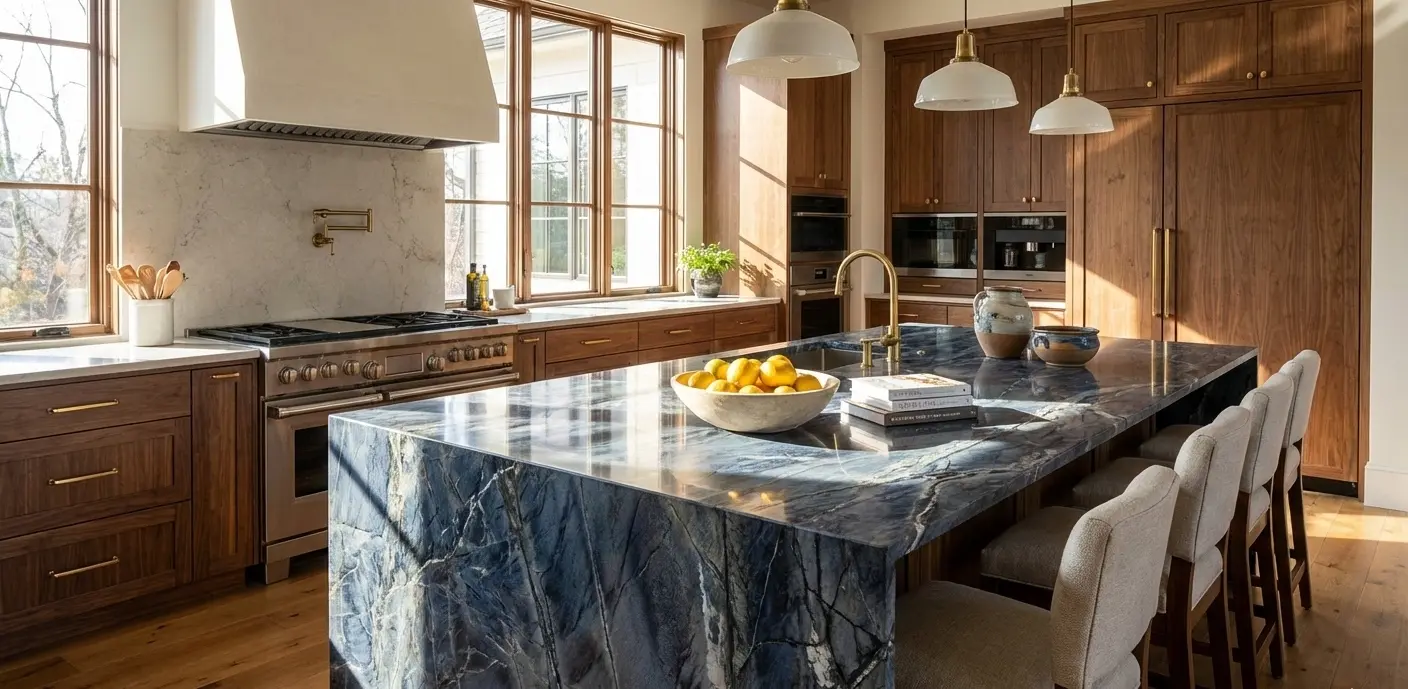
For deeply saturated blue granite, designers typically use the stone as a focal-point surface. An island in deep blue granite with white or warm-toned perimeter countertops is a common approach, allowing the material to anchor the space without overwhelming the palette. Brass and bronze hardware pairs well with blue granite that carries gold and black movement. Black hardware works better with darker, more uniform blue surfaces and emphasizes any white veining present.
Blue-veined stone also works well in bathrooms, particularly for vanity tops in powder rooms or primary baths where a single slab installation allows the stone's character to show without the scale demands of a full kitchen. Bathroom countertop installations that use statement stone are among the most effective ways to introduce material character into smaller spaces.
Our slab collection includes natural stone options across multiple color directions, including blue quartzite and blue granite. Our design team is commission-free and available for free consultations at any of our locations. Scheduling a showroom appointment allows you to evaluate blue stone slabs alongside your actual cabinet samples and hardware before making a decision.
Maintenance Considerations
Maintenance requirements are determined by the material category, not the color.
Blue quartzite requires sealing periodically, typically once a year depending on use. It resists acid etching more effectively than marble, making it appropriate for kitchen environments where acidic foods or cleaning products are a factor.
Blue granite also requires sealing and is generally dense enough that routine care is manageable. The Natural Stone Institute recommends using pH-neutral cleaners on all natural stone surfaces to avoid breaking down sealers over time.
Homeowners can follow guidance on testing whether your sealer is still effective by placing a small amount of water on the surface. If the water beads, the sealer is intact. If it absorbs, resealing is due. As covered in this guide to natural stone countertops, abrasive cleansers and acidic household products can degrade sealers over time, particularly on honed finishes where the protective layer faces more direct contact.
If you have questions about care requirements for a specific variety, our team at any of our four showrooms can provide guidance during your visit.
Selecting a Blue-Veined Slab in Person
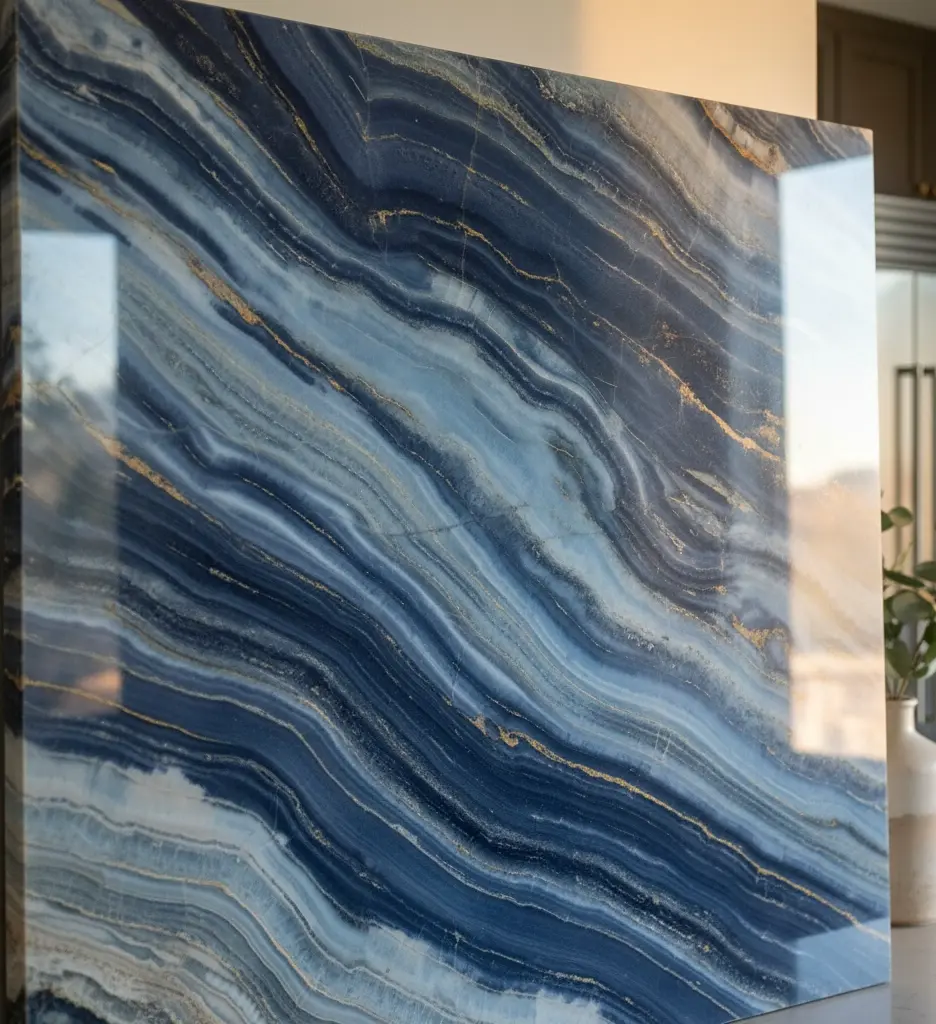
Because blue coloring is unevenly distributed through these materials, slab selection matters more with blue stone than with more uniform options. Two slabs from the same blue stone variety can differ considerably in the intensity and distribution of blue veining. Viewing full slabs in person, under both natural and artificial light, is the most reliable way to assess the material.
Bringing cabinet door samples, hardware finishes, and flooring samples to your slab visit allows you to evaluate the full combination together. Our trade account program is available for designers and contractors sourcing stone for client projects. You can also request a slab quote through our website to get started.
Conclusion
Blue-veined stone countertops occupy a distinct position in the natural stone category. Their color comes from specific mineral conditions that occur in a limited number of quarry locations, which makes them less common than white, gray, or warm-toned stone but also more visually distinct. Blue quartzite, blue granite, Blue Pearl granite, and semi-precious blue stone are the primary natural options available in slab form. Each carries a different intensity of color and a different set of design applications. The right choice depends on the scale of the installation, the cabinet palette, and the visual outcome you are working toward. Viewing slabs in person remains the most important step in the selection process. Our direct stone import team across Northern Nevada and Northern California can help you evaluate blue stone slabs alongside your other design selections.
Frequently Asked Questions
What minerals cause blue veining in natural stone?
Blue veining in natural stone is produced by specific minerals present during the rock's formation or deposited in fractures as the stone developed. Sodalite, a sodium aluminum silicate mineral, creates deep blue-gray coloring in some granites. Lazurite produces the deep navy tones associated with semi-precious stone applications. In blue granites, hornblende and biotite combined with reflective quartz crystals contribute to the color. In blue quartzite, trace minerals carried by silica-rich fluids during metamorphism create the veining visible in finished slabs. The mineral present, its concentration, and the quarry's geological conditions determine the depth and distribution of blue in a given slab.
Is blue quartzite harder than marble?
Yes. Quartzite forms through the metamorphism of sandstone under heat and pressure, producing a hard, silica-rich stone that rates higher on the Mohs hardness scale than marble. This distinction matters in kitchen use, where exposure to acidic foods and cleaners is common. Marble contains calcite, which reacts with acids and can etch the surface over time. Blue quartzite resists this type of etching more effectively, making it a practical choice for countertops in active kitchens while still offering the kind of color and movement that buyers often seek in marble.
Do blue-veined stone countertops require more maintenance than other natural stone?
No. Maintenance requirements are determined by the material category, not the color. Blue quartzite requires the same periodic sealing as other quartzites, typically once a year depending on use. Blue granite follows the same care routine as other granites. In both cases, using a pH-neutral cleaner and resealing when water absorption is detected are the primary maintenance steps. The blue coloring itself does not make these stones more demanding to care for.
What cabinet colors work best with blue-veined stone countertops?
Cabinet selection depends on the intensity of the blue. For lighter blue quartzite with soft blue-gray veining, white, cream, light gray, and natural white oak cabinets all work well, as they allow the blue tones to read clearly against a neutral backdrop. For deeply saturated blue granite, white cabinetry provides strong contrast and keeps the palette from becoming too heavy. Natural wood tones also work with saturated blue stone when the hardware choices bridge the two materials, such as brass or bronze finishes that complement any gold or black movement in the stone.
Are blue-veined stone countertops suitable for kitchens, or are they better for bathrooms?
Both are appropriate. Blue quartzite performs well as kitchen perimeter countertops and island surfaces because its hardness and heat resistance support high-use environments. Deeply saturated blue granite is often used as a focal-point surface in kitchens, such as an island, rather than across the full perimeter, since its intensity can be visually dominant at scale. Bathrooms are a natural fit for all blue-veined stone varieties, particularly in powder rooms and primary bath vanities where a single slab can serve as a design anchor in a smaller space.