Black marble countertops are natural stone slabs characterized by a deep, dark base color and distinctive mineral veining formed through geological metamorphic processes. The stone is quarried in multiple varieties, including Nero Marquina, Sahara Noir, and Nero Splendor, each carrying unique veining patterns in white, gold, or grey. Because no two slabs share an identical surface pattern, black marble is considered one of the more distinctive natural stone materials available for residential and commercial applications.
Black marble countertops are valued for their combination of visual impact and structural durability. The stone's dense, crystalline composition resists surface scratches and everyday wear, making it suitable for high-use environments such as kitchens and bathrooms. Its polished finish reflects light effectively, and the dark base tone pairs well with a wide range of cabinetry colors and design styles, from contemporary to traditional. Available surface finishes include polished, honed, leathered, and specialty treatments, each producing a different interaction with light and texture. Proper maintenance involves regular cleaning with a pH-neutral cleaner, periodic polishing to restore surface clarity, and resealing every one to two years to reduce staining susceptibility.
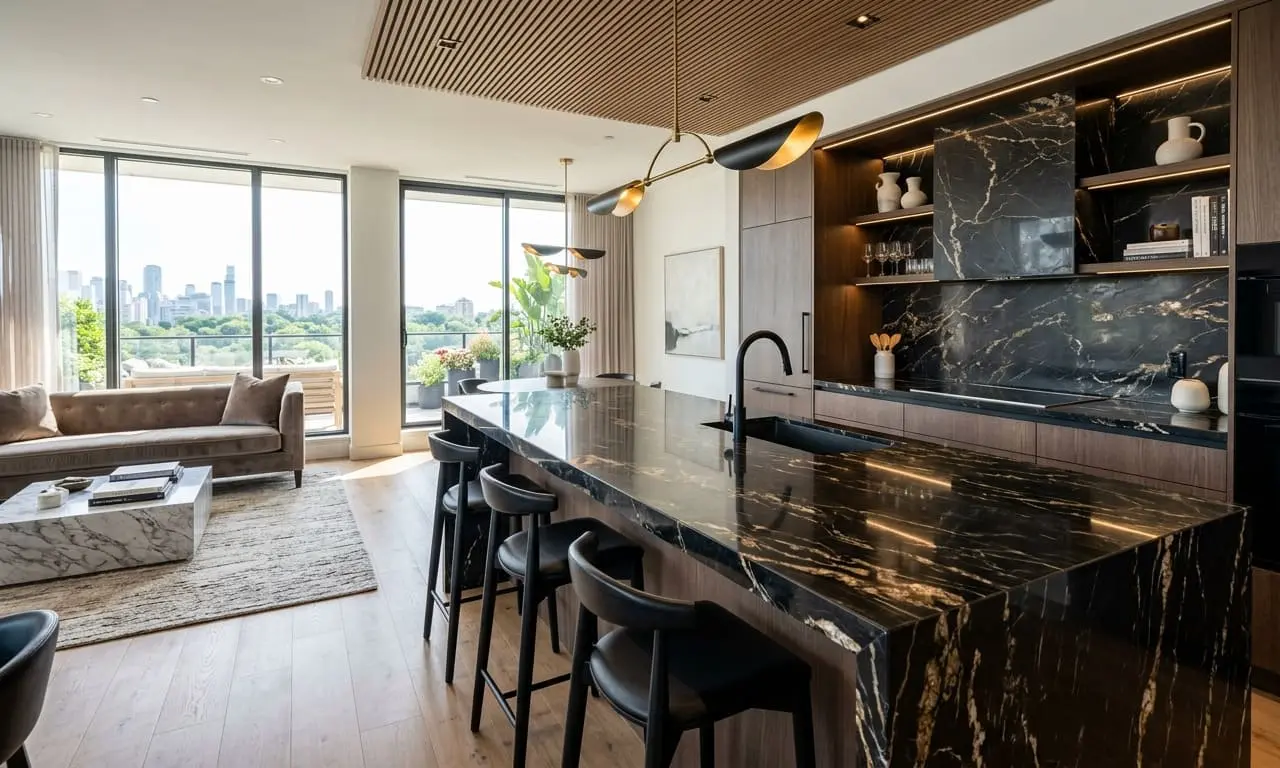
Why Choose Black Marble for Countertops?
Aesthetic Appeal
Few materials command a room the way black marble does. Its dark, saturated base draws the eye immediately, while the natural veining threading through each slab introduces movement and individuality to the surface. A polished finish amplifies both qualities, reflecting ambient light in a way that makes any space feel richer and more considered. Because black marble reads as confidently in a contemporary setting as it does in a traditional one, it remains one of the more versatile stone choices available regardless of the design direction. Shop local with our curated selection of black marble slabs available at our tile and stone showrooms.
Unique Patterns and Finishes
Every slab pulled from the quarry carries a distinct pattern of veins, tonal shifts, and surface detail that cannot be reproduced. That natural variation means the material brings genuine originality to a space rather than the predictability of manufactured surfaces. The depth of the black base also holds its visual weight over time, maintaining its presence long after installation.
Durability and Performance
Black marble's crystalline, densely packed composition gives it a structural integrity that shows in everyday use. It resists surface scratches and chips more effectively than many alternative countertop materials, and its natural hardness means it can handle the demands of a working kitchen or a well-used bathroom without showing obvious wear.
Versatility in Interior Design
One of black marble's most practical qualities is how well it pairs with other materials and color palettes. Placed alongside lighter tones, it creates a high-contrast composition that reads as clean and deliberate. A kitchen combining black marble surfaces with white elements produces a classic, balanced result that has remained a reliable design choice across decades. Introduce wood cabinetry into that equation and the dynamic shifts toward warmth, with the organic quality of the timber softening the coolness of the stone. Light oak brings an airy feel to the pairing, while darker walnut leans into a moodier, more layered aesthetic.

Popular Black Marble Stones
Black and Gold Marble
The pairing of a deep black base with gold veining produces one of the more dramatic natural stone combinations available. The contrast is immediate and intentional, giving floors, countertops, and wall surfaces a sense of opulence that proves difficult to achieve with subtler stones. In a kitchen setting particularly, black and gold marble slabs function as a design statement that anchors the entire space. Apply for a trade account to access exclusive pricing on premium black and gold marble slabs for your next project.
Sahara Noir Marble
Sahara Noir marble slabs carry a polished surface that brings out the richness of the black base, with veining that adds depth and visual movement without competing with the dominant tone. Bookmatch applications work especially well with this stone, producing a continuous, flowing pattern across countertops that gives the surface a refined, gallery-like quality.
Nero Splendor Marble
Nero Splendor marble distinguishes itself through its interplay of black and grey, with veining that introduces organic movement across the slab face. That natural patterning makes it an effective choice for surfaces that benefit from visual interest, including kitchen islands and fireplace surrounds.
Nero Marquina Marble
Nero Marquina is one of the most recognized black marbles in the industry, defined by its dense black background and crisp white veining. The veins range from fine and restrained to bold and expressive, giving each slab its own character. The material performs well in both contemporary and traditional interiors, and its visual impact translates equally well indoors and out.
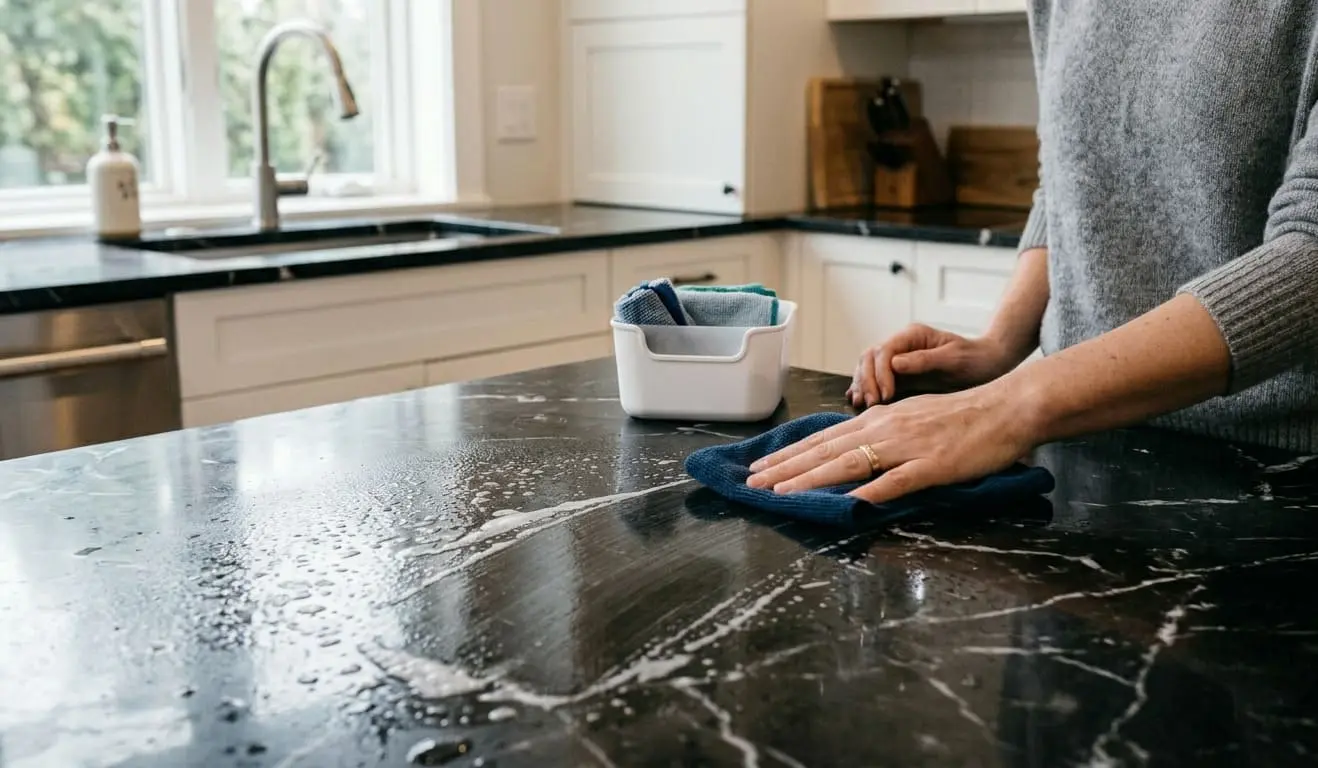
Tips for Maintaining Black Marble Countertops
Cleaning
Consistent cleaning is the most straightforward way to preserve a marble surface's appearance over time. Wiping down surfaces regularly with a damp microfiber cloth prevents dust and residue from dulling the finish. For routine maintenance, a non-abrasive cleaner applied weekly is sufficient to keep the stone in good condition.
Polishing
When black marble surfaces begin to appear dull or show signs of surface fatigue, polishing can restore their original character. The process works by smoothing and refining the surface at a mechanical level, with results influenced by the equipment used, machine speed, and the specific properties of the stone.
Sealing
Applying a penetrating sealer reduces susceptibility to staining and supports long-term surface integrity. Sealed marble is considerably easier to clean and requires less effort to maintain on an ongoing basis, preserving the natural visual character of the stone over time.
Black Marble Countertops: Applications
Countertops and Kitchen Islands
In kitchen environments, black marble surfaces deliver both visual impact and practical performance. The stone's natural resistance to heat and surface wear makes it a functional choice for countertops and islands, while its appearance ensures those surfaces contribute meaningfully to the overall design.
Bathroom and Wall Cladding
From vanity tops to full shower enclosures, black marble elevates bathroom environments into something closer to a spa experience. Its smooth surface and low moisture absorption make it a suitable choice for wet areas, while its visual weight gives walls in larger luxury or commercial spaces a commanding focal point.
Fireplaces
A black marble fireplace surround brings structure and elegance to living spaces in equal measure. The material's visual density makes it a natural centerpiece, and the combination of its dark tones with the warmth of a fire produces an effect that is at once dramatic and inviting.
Conclusion
Black marble countertops occupy a rare position in natural stone design: they are simultaneously a practical building material and a genuine design statement. The stone's dense composition supports real durability in demanding environments, while its deep tones and distinctive veining bring a visual character that manufactured surfaces consistently fail to match. Whether the application is a kitchen countertop, a bathroom vanity, a wall installation, or a fireplace surround, black marble slabs carry the same commanding presence across all of them.
The range of available varieties, from the gold-veined drama of Black and Gold marble to the crisp, graphic contrast of Nero Marquina, means there is a slab suited to virtually any design direction. With proper sealing and consistent basic maintenance, black marble slabs retain their appearance over the long term, making them a sound investment for spaces where both quality and aesthetics matter. Nova Tile and Stone, a trusted tile and stone supplier with premium black marble slabs, schedule an appointment for in-person selection.
Frequently Asked Questions
Is black marble a good choice for kitchen countertops?
Black marble is well suited to kitchen environments. Its dense, crystalline structure gives it solid resistance to surface scratches and everyday wear, and its heat tolerance makes it a practical surface for active kitchen use. The deep coloring also tends to conceal minor residue and surface smudging more effectively than lighter stones.
How often should black marble countertops be sealed?
Sealing frequency depends on usage levels and the specific porosity of the stone. Most black marble countertops benefit from resealing every one to two years under normal residential conditions, though high-traffic surfaces may require more frequent attention. A water bead test is a reliable way to determine when resealing is due.
What is the best way to clean black marble daily?
A damp microfiber cloth is sufficient for day-to-day maintenance. For more thorough cleaning, a pH-neutral, non-abrasive stone cleaner applied weekly keeps the surface in good condition. Acidic cleaners, including vinegar-based products, should be avoided as they can etch the marble surface over time.
Can black marble be used in bathrooms as well as kitchens?
Black marble performs well in both settings. Its sealed surface handles moisture effectively, making it a practical choice for vanity tops, shower walls, and bathroom flooring. The material's visual presence also introduces a spa-like quality that lighter stones do not always achieve.
What makes each black marble slab unique?
Black marble forms through a natural geological process that cannot be replicated. The veining patterns, tonal variations, and surface details in every slab result from mineral deposits, heat, and pressure over millions of years, meaning no two slabs will ever carry an identical pattern.