Black and gray countertops are natural stone surfaces that range from deep charcoal and near-black to soft silver-gray, offering a darker alternative to white and beige countertop materials. These dark tones work across a wide range of kitchen and bathroom styles, from modern minimalist to traditional and transitional, and are available in several natural stone materials including granite, marble, quartzite, and soapstone. As a direct stone importer with slab inventory across our showrooms in Northern Nevada and Northern California, our commission-free design team can help you find the right dark stone slab for your space.
This guide covers the most popular black and gray natural stone options, how they compare, which finishes work best, and how to pair them with cabinets, backsplashes, and fixtures.
Why Homeowners Choose Black and Gray Countertops
Dark stone countertops have remained a consistent choice in kitchen and bathroom design for decades. Black and gray surfaces create strong visual contrast, especially when paired with lighter cabinetry, and bring a sense of visual depth that lighter stones approach differently.
From a practical standpoint, mid-to-dark gray countertops tend to conceal everyday grime and water spotting better than white surfaces, making them a practical choice for busy households. Polished black granite, by contrast, can show fingerprints and water marks more readily, which is worth factoring into finish selection.
Beyond the practical benefits, black and gray stones offer natural variation that engineered surfaces do not replicate. The veining, mineral flecks, and tonal shifts within each slab are unique, meaning no two countertops look exactly the same. For homeowners who want a surface with distinct visual character, dark natural stone provides that in a way that differs from manufactured materials.
Popular Black and Gray Natural Stone Options
Black and Gray Granite
Granite is a hard, dense igneous rock commonly used for countertop surfaces. It registers between 6 and 7 on the Mohs hardness scale, making it resistant to scratches and heat. Black and gray granite varieties are among the most widely sourced options globally, with quarries producing distinct looks across India, Brazil, and Africa.
A few of the most recognized varieties include:
Absolute Black is quarried in India and presents a near-uniform deep black with minimal variation. It suits modern and minimalist kitchens where a clean, consistent surface is the goal.
Black Pearl is also from India and features a semi-solid dark base with flecks of brown, silver, green, and gray. Its tonal variation makes it compatible with both contemporary and transitional styles.
Via Lactea comes from Brazil and combines a gray-black background with chalky white veins. It offers more visual movement than solid black options and pairs well with both warm and cool cabinet finishes.
Steel Grey presents softer charcoal tones with a fine, even grain. It reads as a true gray rather than black and works well in kitchens where the goal is a neutral, understated palette.
Because granite is a naturally porous stone, periodic sealing is recommended to protect the surface from staining. Fine Homebuilding's guide to natural stone countertop care is a useful reference for understanding sealing schedules and maintenance.
Black and Gray Marble
Marble offers a different visual character than granite. Where granite tends toward granular texture and mineral flecks, marble is defined by its flowing veining and smooth surface. Black and dark gray marbles offer visual contrast that lighter marbles do not.
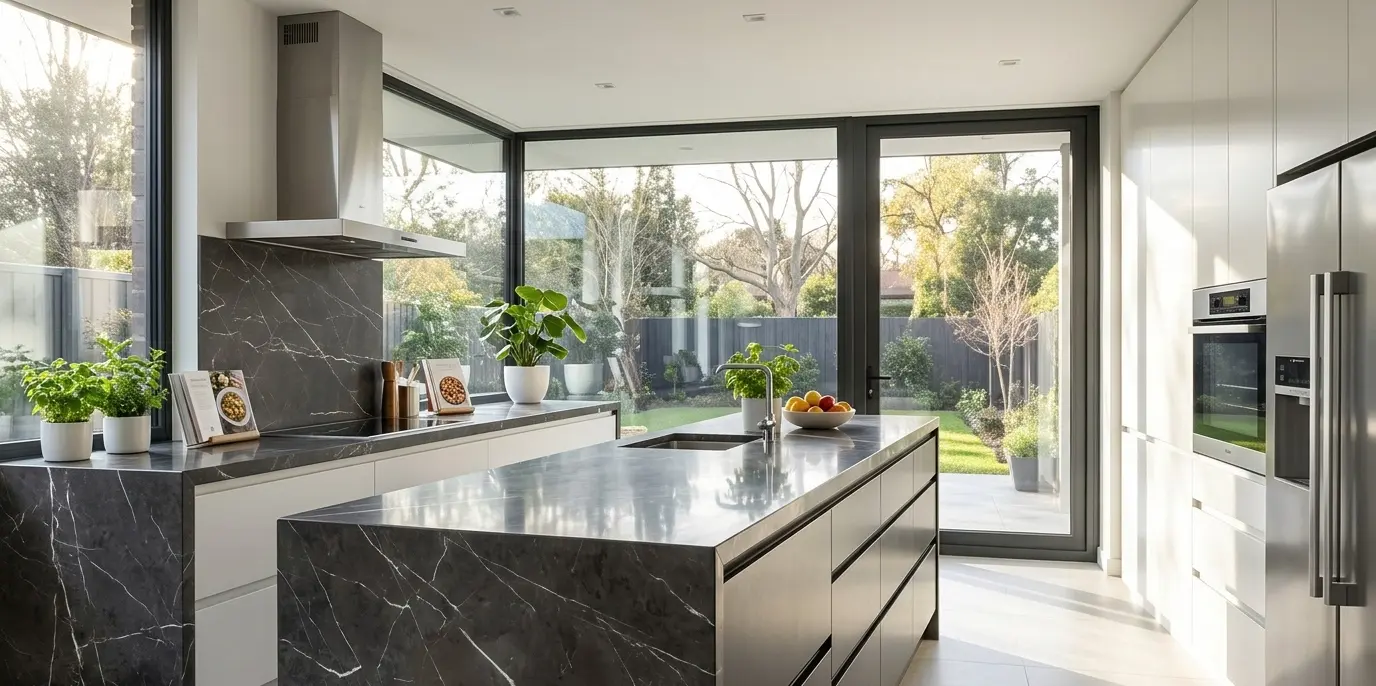
Nero Marquina is one of the most recognized dark marbles in the world. It originates in Spain and features a deep black base with white veining that creates a high-contrast appearance. It is a common choice for bathroom vanities, kitchen islands, and accent walls.
Graphite Marble, also known as Pietra Grey or Persian Grey, features a deep charcoal to near-black background with white or silver veining. It is quarried primarily in Iran and offers a more subtle look than Nero Marquina. We carry graphite marble slabs across our Reno, Sacramento, Minden, and Fernley showroom locations.
Bardiglio is an Italian gray marble with a soft, cloudy appearance. Its veining is less pronounced than Nero Marquina, making it a practical fit for spaces where the goal is a quieter, more neutral backdrop.
It is worth noting that marble registers between 3 and 5 on the Mohs scale, making it softer than granite or quartzite. In kitchen applications, marble requires consistent sealing and careful maintenance to prevent etching from acidic substances.
Dark Gray Quartzite
Quartzite is a metamorphic rock formed when sandstone is subjected to extreme heat and pressure. It shares visual similarities with marble while carrying a denser mineral structure, which positions it as a practical option for high-use countertop surfaces.
Dark gray quartzite varieties offer sweeping veining patterns in tones of charcoal, silver, and white. These stones register between 7 and 8 on the Mohs scale, which gives them greater scratch resistance than marble for countertop applications.
For homeowners who want the look of a dark marble with greater hardness, a gray quartzite is worth considering. You can browse our current natural stone slab inventory to see available quartzite options across all four locations.
Soapstone
Soapstone is a softer metamorphic stone that presents naturally in tones of charcoal, dark gray, and near-black. It is non-porous, which means it does not require sealing, and it develops a patina over time as it is exposed to oils and daily use. Applying mineral oil accelerates the darkening process for homeowners who prefer a more consistent color from the start.
Soapstone has a smooth, matte surface and pairs well with farmhouse, traditional, and rustic kitchen styles. This Old House has a thorough overview of stone countertop materials and their properties for homeowners weighing soapstone against harder stone options.
Finish Options for Dark Stone Countertops
The finish applied to a slab significantly affects how black and gray stone reads in a space.
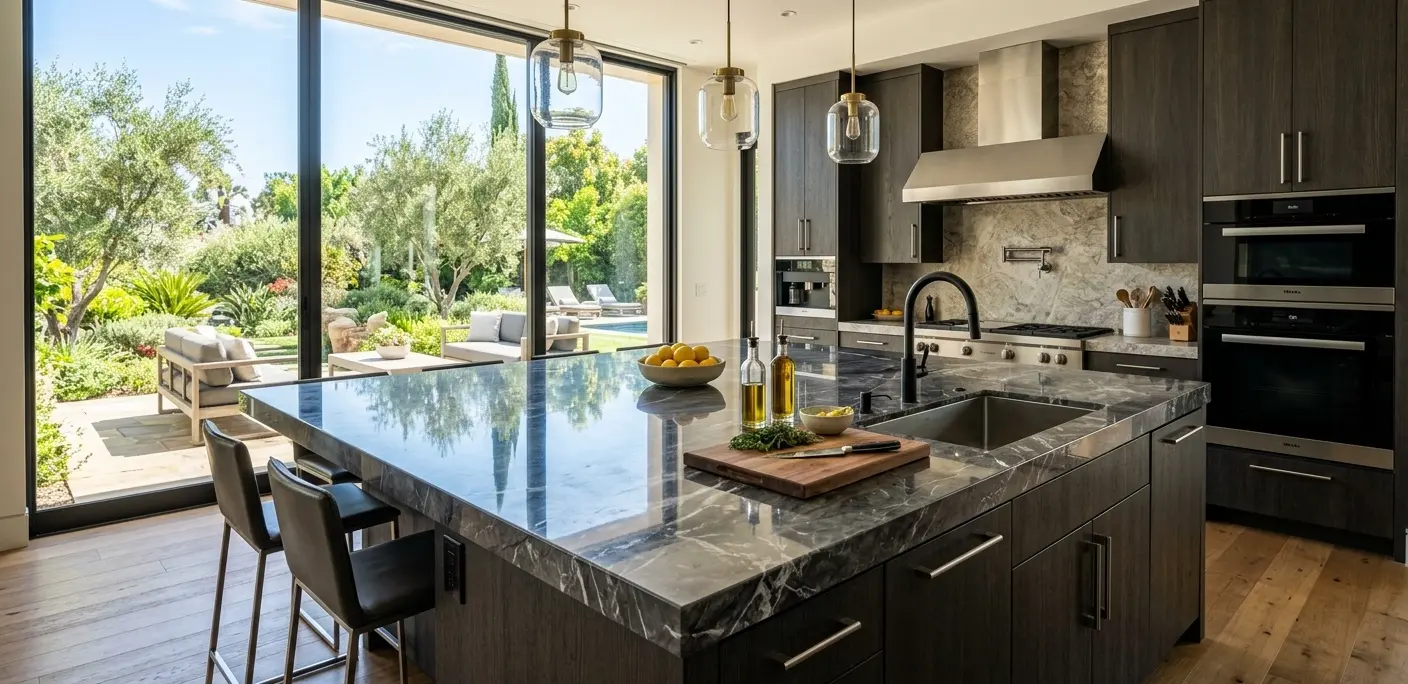
Polished finishes produce a high-gloss, reflective surface that amplifies color depth and brings out the veining within the stone. Polished black granite creates a high-contrast look but shows fingerprints and water spots more readily than other finishes.
Honed finishes deliver a smooth, matte surface without the reflective quality of polished stone. Honed dark countertops have gained traction in contemporary design because they offer a more understated appearance and are less prone to showing daily use marks.
Leathered finishes add subtle texture to the stone's surface while preserving its natural color. On dark granite, leathering creates a tactile surface that conceals smudges and minor scratches better than both polished and honed finishes, making it a practical choice for high-use kitchen countertops.
Design Pairings for Black and Gray Countertops
With White or Light Cabinets
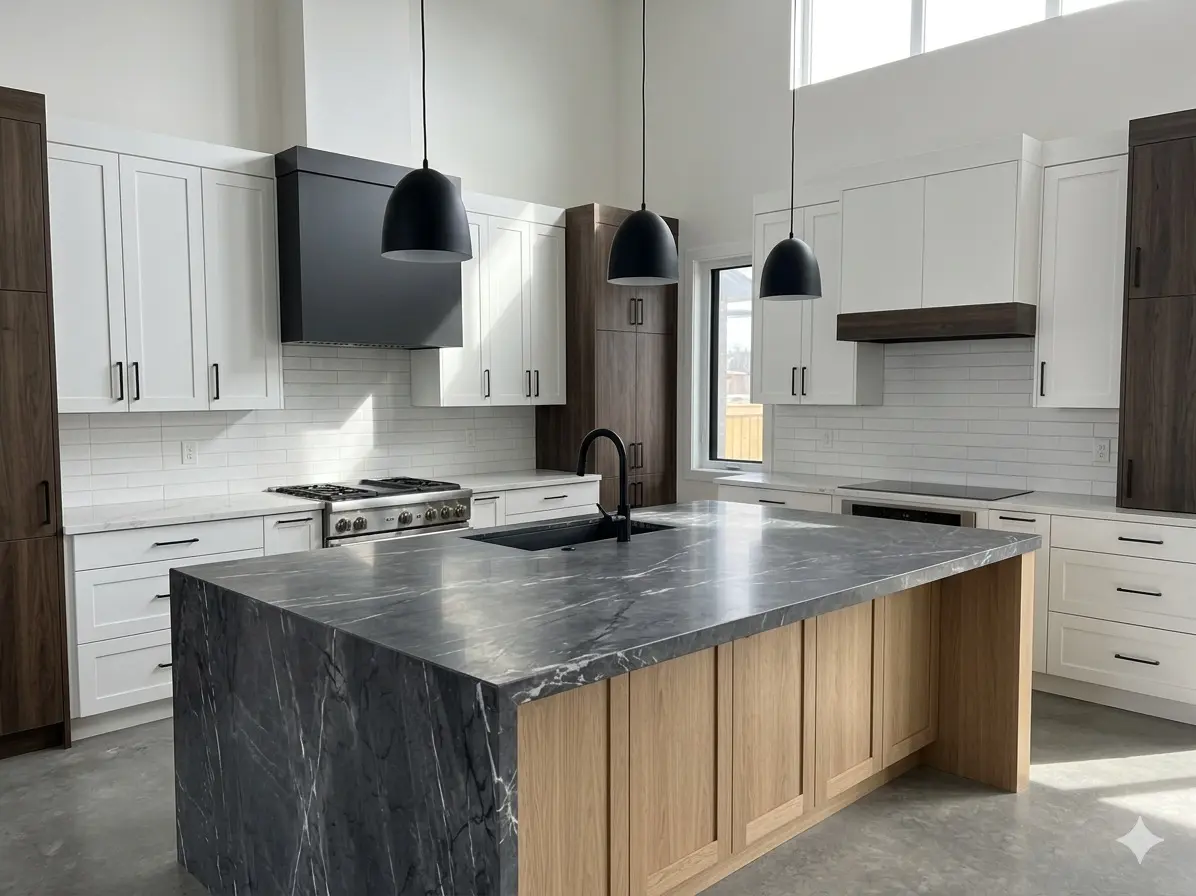
White and cream cabinets paired with black or dark gray countertops create a high-contrast combination that has remained a common choice in kitchen design. The light-to-dark dynamic keeps the space feeling open while giving the countertop surface a distinct visual presence. This pairing works in modern, transitional, and traditional kitchens.
With Wood Cabinets
Natural wood tones work alongside dark stone countertops in a way that painted cabinets approach differently. Medium-tone woods balance the depth of black and gray slabs without competing for visual attention, and the combination produces a grounded, organic quality in the space.
With Dark Cabinets
For homeowners drawn to a darker aesthetic, dark cabinets paired with dark countertops can work when balanced with adequate lighting. Under-cabinet lighting and natural light sources are important in these applications to prevent the kitchen from feeling closed off. Choosing a countertop with lighter veining against a dark base, such as Via Lactea or Nero Marquina, helps introduce contrast within the darker palette.
Backsplash Pairings
White subway tile, marble-look tile, and light-toned natural stone tile are common backsplash choices alongside dark countertops. They introduce contrast and keep the upper portion of the kitchen visually balanced. For a more cohesive approach, a full slab backsplash in a matching or complementary stone can unify the overall look.
Caring for Black and Gray Stone Countertops
Most natural stone countertops benefit from periodic sealing to protect the surface from staining, with granite and quartzite generally requiring reapplication every one to three years depending on use and stone density. Soapstone is the exception, as its non-porous composition eliminates the need for sealant.
For daily maintenance, a soft cloth with warm water and a pH-neutral stone cleaner is sufficient. Avoid bleach, ammonia-based products, and vinegar, as these can degrade sealers and etch marble surfaces. The CDC's guidance on safe cleaning practices around natural stone surfaces is a helpful reference when evaluating which products are appropriate for your countertop material.
Wipe up spills promptly, and use trivets or hot pads under cookware to avoid thermal stress on the stone surface over time.
Conclusion
Black and gray natural stone countertops cover a wide range of materials, visual styles, and maintenance profiles. Whether you are considering the high-contrast veining of Nero Marquina, the mineral texture of dark granite, the hardness of gray quartzite, or the non-porous surface of soapstone, each option brings different practical and visual qualities to a kitchen or bathroom.
The right choice depends on how the stone will be used, the level of maintenance you are comfortable with, and the overall design direction of your space. Our commission-free design team is available at all four of our Northern Nevada and Northern California showrooms to help you compare slabs in person. Viewing stone under your own lighting conditions and against your cabinet and flooring samples is the most reliable way to make a confident decision.
Schedule a free design consultation to visit any of our showroom locations, or request a slab quote to get started on your project. You can also find your nearest showroom and experience the difference that in-person slab selection makes. Trade professionals are welcome to apply for a trade account for access to our full slab inventory and trade benefits.
Frequently Asked Questions
What natural stones come in black and gray for countertops?
The most common natural stone options in black and gray tones include granite varieties such as Absolute Black, Black Pearl, and Via Lactea; dark marbles such as Nero Marquina, graphite marble, and Bardiglio; dark gray quartzite; and soapstone. Each material differs in hardness, porosity, and maintenance requirements, so comparing them in person at a showroom is the most reliable way to evaluate your options.
Are black countertops hard to keep clean?
Polished black stone surfaces, particularly black granite, can show fingerprints, water spots, and smudges more readily than lighter stones. Choosing a honed or leathered finish on dark stone reduces visible everyday marks. Mid-gray stones tend to conceal daily use better than near-black options regardless of finish.
Do black and gray countertops go out of style?
Dark natural stone countertops have been a consistent choice in kitchen and bathroom design for decades. The natural variation, veining, and mineral character of black and gray stone gives it an enduring quality that does not follow the same short-term trend cycles as paint colors or cabinet hardware.
What cabinet colors work best with black and gray countertops?
White, cream, and light gray cabinets create strong contrast with dark countertops and keep spaces feeling open. Natural wood tones work alongside dark stone and produce a grounded look. Dark cabinets paired with dark countertops can work in larger spaces or those with strong natural light, particularly when the countertop includes lighter veining to introduce contrast.
Do black and gray stone countertops need to be sealed?
Most natural stone countertops, including granite, marble, and quartzite, require periodic sealing to protect against staining and moisture penetration. Sealing frequency varies by stone type, typically ranging from once a year to once every three years. Soapstone is a notable exception, as its non-porous composition means it does not require sealing.