The best stone countertops for families with kids and pets are granite, quartzite, and porcelain slab. Granite resists scratching at 6 to 6.5 on the Mohs hardness scale and hides daily wear through its mineral pattern. Quartzite is harder still at 7-plus Mohs, does not etch from acidic spills, and handles heat without damage. Porcelain slab is non-porous, requires no sealing, and resists scratches, stains, and acidic contact without special care. Quartz is a practical engineered option with no sealing requirement, though it is vulnerable to heat damage from hot pans. Marble, travertine, and limestone etch and scratch more easily and are better suited to lower-traffic applications in family homes.
Countertop performance looks different in a household with children and pets than it does in a showroom. Spills sit longer, surfaces take more impact, and maintenance routines get skipped. This guide covers how each stone type holds up under the conditions that actually exist in a busy family kitchen, so you can choose a surface that fits both your household and your design goals.
Why High-Traffic Homes Demand a Different Set of Priorities
In a standard kitchen, a countertop evaluation might focus heavily on appearance, veining, and finish. In a family home, those factors still matter, but three additional criteria move to the top of the list: scratch resistance, stain resistance, and ease of daily cleaning.
Scratch resistance matters because keys, toys, pet claws on a countertop edge, and abrasive sponges all create micro-damage over time. Stain resistance matters because grape juice, tomato sauce, wine, pet food, and coffee are not always wiped up immediately. Ease of daily cleaning matters because complicated maintenance routines do not get followed consistently in a busy household.
The surface finish also plays a role. Polished finishes show fingerprints, watermarks, and fine scratches more readily than honed or leathered finishes. Families who want a low-visual-maintenance surface often find that a honed or leathered finish hides daily wear better, even on a durable material. Our natural stone slab collection includes granite, quartzite, porcelain slab, and quartz across a range of finishes suited to high-traffic households.
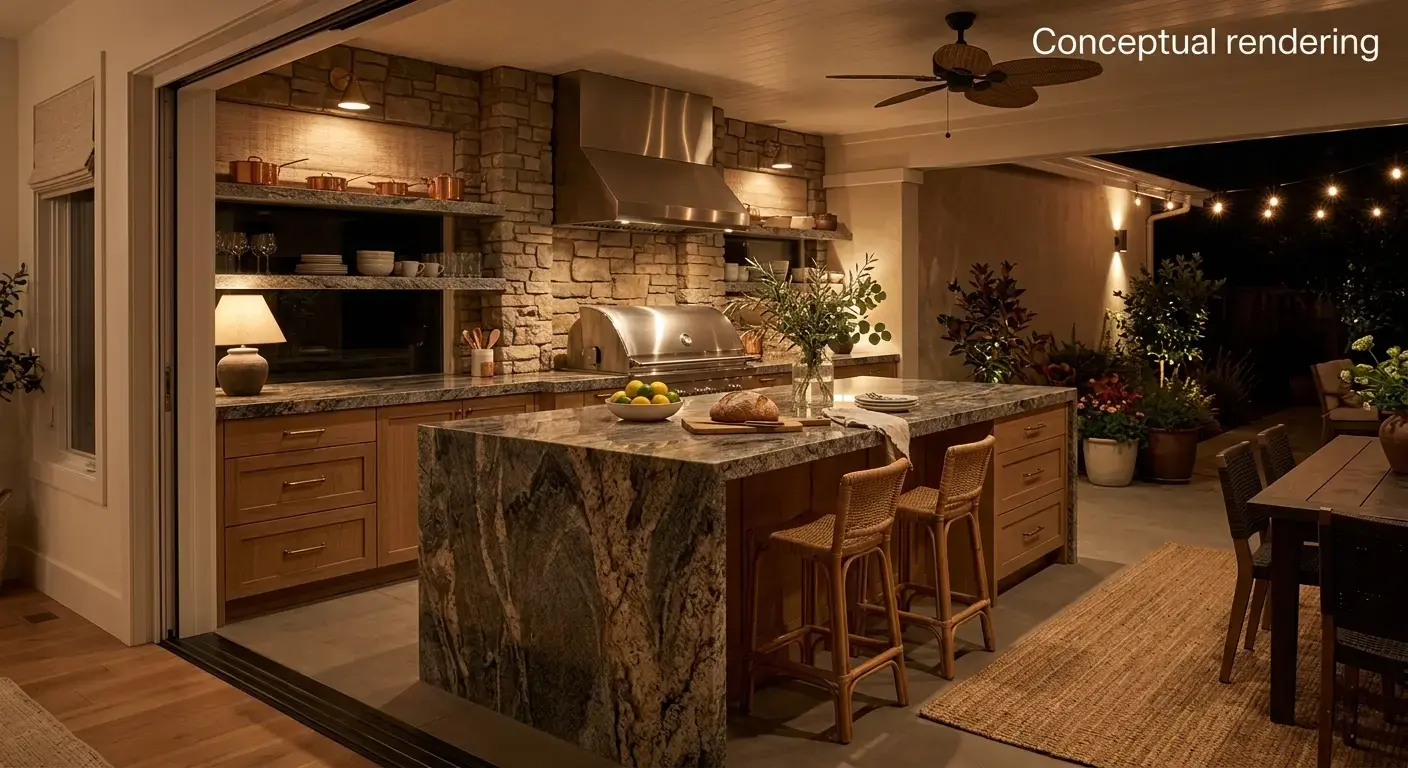
Granite: The Benchmark for Family Kitchens
Granite performs consistently in family homes for several practical reasons. It ranks at 6 to 6.5 on the Mohs hardness scale, which means most household objects cannot scratch it. It handles heat from pots, pans, and baking sheets without discoloring or cracking. When properly sealed, it resists staining from the liquids that appear in a family kitchen on a daily basis.
The speckled, granular pattern of granite is also practical. Random mineral variation hides minor scuffs, fingerprints, and water spots far better than a stone with a large, open white background. Darker granite varieties are particularly forgiving in high-traffic settings because they do not show residue or dull spots between cleanings.
Granite does require periodic sealing, typically once per year in a high-use kitchen, to maintain its stain resistance. The water bead test tells you when it is time: pour a small amount of water on the surface and watch whether it beads up or soaks in. If it soaks in, the sealer has worn down and needs to be refreshed. This Old House covers the full range of material considerations in their stone countertop material breakdown, which aligns with granite's track record in high-traffic residential kitchens. This maintenance routine is manageable for most households and keeps the surface performing well over time.
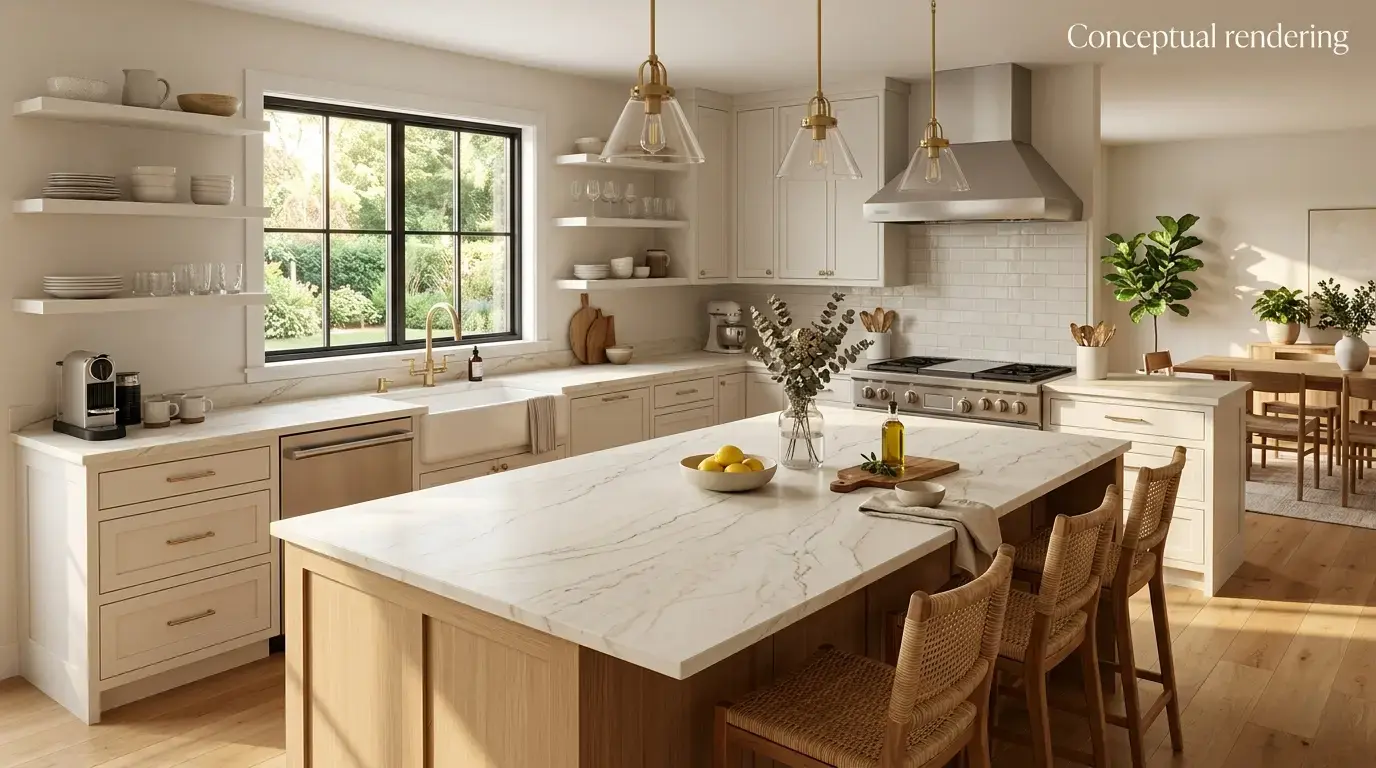
Quartzite: Hard, Heat-Resistant, and Built for Heavy Use
Quartzite is a natural metamorphic stone that forms when sandstone undergoes extreme heat and pressure. The result is one of the hardest countertop materials available, rating at 7 or above on the Mohs scale. This hardness level means quartzite resists scratching from the full range of household objects, including pet claws raking across an edge or sharp utensils dragged across the surface.
Unlike marble, which it can visually resemble, quartzite does not etch from acidic substances. Lemon juice, vinegar, tomato-based sauces, and other common kitchen acids that would leave permanent dull marks on marble have no chemical effect on quartzite. For a household with young children who may spill without noticing, this is a meaningful practical advantage.
Quartzite is porous and does require sealing, but its density means it absorbs liquids more slowly than softer stones, giving you more time to clean up spills before they penetrate the surface. Fine Homebuilding's guide to natural stone countertops identifies quartzite's combination of hardness and heat resistance as a key reason it performs reliably in demanding kitchen environments. Families who want the look of marble but need a surface that holds up better in daily kitchen use often find quartzite a practical fit.
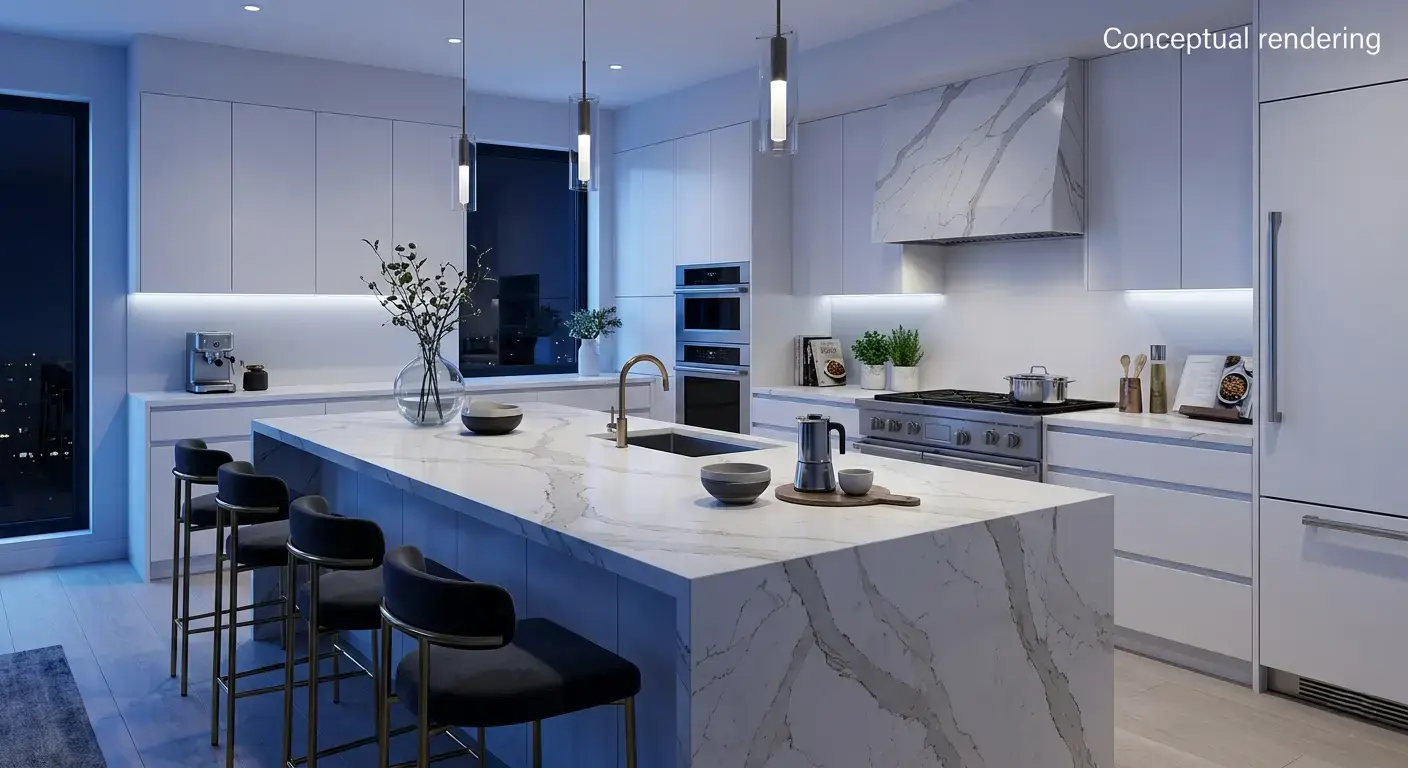
Quartz: The Engineered Option With No Sealing Required
Engineered quartz is manufactured from crushed quartz crystals bound with resin, which produces a non-porous surface that does not require sealing. For households where countertop maintenance is a consistent challenge, the absence of a sealing requirement is a practical benefit.
Quartz resists staining well because liquids cannot penetrate its surface. It holds up to routine cleaning with soap and water and does not need specialty stone cleaners to maintain its finish. Scratch resistance is good but slightly lower than granite or quartzite because the resin component is softer than the stone crystals themselves.
The main limitation in a family setting involves heat. Engineered quartz contains resin binders that can discolor or crack under sustained high heat. Hot pans placed directly on the surface, or baking sheets pulled from the oven and set down without a trivet, can cause permanent damage. Families who cook frequently and do not consistently use trivets may find granite or quartzite more forgiving over the long term. The NIOSH research on engineered stone also documents fabrication-related health concerns associated with resin-bound quartz, which is part of why many homeowners and designers are moving toward natural stone alternatives.
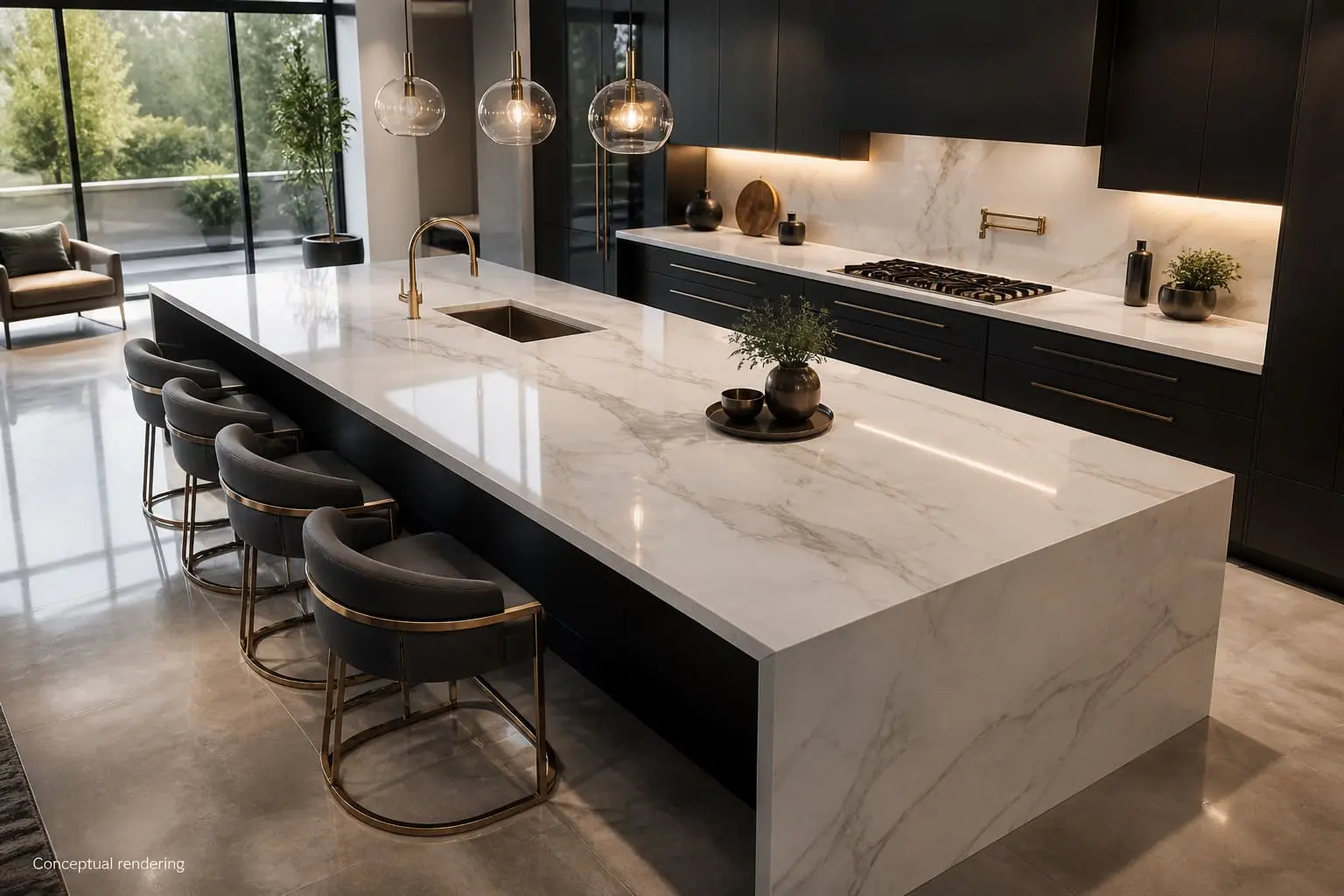
Porcelain Slab: Non-Porous and Scratch-Resistant
Porcelain slab is manufactured under extreme heat and pressure, producing a surface that is dense, non-porous, and highly resistant to scratches, stains, and UV exposure. It does not require sealing at any point, handles acidic spills without etching, and can be cleaned with a wide range of household products without damaging the finish.
For families with very young children, pet feeding stations near the countertop, or any situation where liquids sit on the surface for extended periods, porcelain slab offers a low-maintenance profile among countertop materials. It also performs well in outdoor kitchen settings, which is an advantage for households that want continuity between interior and exterior surfaces.
The surface is hard enough that it can chip at cut edges or around sink cutouts if struck sharply, which is worth factoring in for households with active kids. Proper edge profile selection can minimize exposed edges that are vulnerable to impact.
Stones That Require More Consideration in Family Homes
Marble, travertine, and limestone are genuinely beautiful materials, but their physical properties make them harder to maintain in households with children and pets.
Marble rates at 3 to 4 on the Mohs hardness scale and etches readily from acidic contact. A lemon slice, a splash of vinegar, or an orange juice spill left for even a short period leaves a permanent dull mark on a polished marble surface. Families who choose marble typically select a honed finish, which makes etching less visible, and accept that the stone will develop a patina over time with use.
Travertine and limestone share a similar calcium-based composition and carry the same etching vulnerability. Travertine also has natural pits that require filling and periodic maintenance. These stones work well in lower-traffic applications such as bathroom vanities and powder rooms, and remain part of the full range of natural stone materials we carry for projects where a lighter surface demand makes them a suitable fit.
Finish Choices That Work in Busy Households
Surface finish affects how much daily wear shows on a countertop. Polished finishes are the most reflective and the most likely to show fingerprints, water rings, and fine surface marks. Honed finishes have a matte appearance that conceals these marks more effectively. Leathered finishes add a subtle texture that hides fingerprints and minor abrasion well.
For family kitchens, a honed or leathered finish on granite or quartzite is a practical choice that reduces the visual evidence of daily use between cleanings. The stone is no less durable in a honed or leathered finish, but the surface reads cleaner throughout the day with less wiping required. Seeing finish options side by side at a local stone showroom gives you a reliable sense of how each reads under real lighting conditions before committing to a selection.
Keeping Stone Surfaces Clean in a Home With Kids and Pets
Regardless of material, a few habits make a significant difference in how stone countertops hold up in a family home. Wiping spills promptly rather than allowing them to sit is the single most effective thing you can do. Using a pH-neutral cleaner rather than acidic or alkaline household cleaners protects the sealer and the stone surface over time. Avoiding abrasive scouring pads on polished surfaces prevents micro-scratches that accumulate into visible dullness.
For households with dogs or cats, keeping pet water bowls on a mat rather than directly on the stone reduces prolonged water exposure near grout lines or sink cutouts. This simple step helps prevent mineral deposits and reduces sealer wear in the areas most likely to stay wet.
Conclusion
The right stone countertop for a family home balances the durability demands of daily life with the appearance goals that make the space worth investing in. Granite and quartzite are well-suited natural stone options for high-traffic kitchens because of their hardness, heat resistance, and stain resistance with proper sealing. Porcelain slab and quartz offer non-porous alternatives for households that prioritize low maintenance. Marble and travertine are better suited to lower-traffic applications unless the household is prepared to manage their specific care requirements.
Seeing materials in person makes the decision significantly easier. Schedule a showroom appointment to compare slabs across finishes and stone types at any of our locations. If you are ready to move forward on a project, you can also request a slab quote directly. Design professionals and contractors specifying for family home projects are welcome to apply for a trade account for dedicated project support.
Note: Some images on this page may be conceptual renderings created to illustrate design possibilities and may not depict actual installations.
Frequently asked questions
Granite is a non-toxic natural stone. When properly sealed, its surface does not harbor bacteria at a rate higher than other common countertop materials. Routine cleaning with soap and water is sufficient for maintaining a hygienic surface in a family kitchen.
Granite rates at 6 to 6.5 on the Mohs hardness scale, which is harder than most household materials including pet claws. Occasional contact with a dog jumping at a counter edge is unlikely to produce visible scratches under normal circumstances.
Quartz and porcelain slab require the least maintenance because neither needs sealing and both resist staining through a non-porous surface. Among natural stones, granite is a practical option for families because of its hardness and its ability to hide daily wear through its mineral pattern variation.
No. Unlike marble and other calcareous stones, quartzite does not etch from acidic contact. Its siliceous mineral composition is chemically resistant to the acids found in common kitchen liquids. Prompt cleanup is still recommended to prevent any potential staining through unsealed pores.
Most granite countertops in an active family kitchen benefit from sealing once per year. The water bead test is a reliable indicator: if water absorbs into the surface rather than beading up, the sealer has worn down and should be reapplied. Some denser granite varieties may need sealing less frequently.