The best stones for outdoor kitchen countertops are granite, quartzite and porcelain. Each material is chosen for its ability to withstand heat, UV exposure, moisture, and daily cooking wear, which are the four core performance demands of any outdoor kitchen surface.
- Granite is the most popular natural stone choice, heat-resistant, widely available, and built for long-term outdoor use with periodic sealing.
- Quartzite offers marble-like aesthetics with superior hardness and low porosity, making it ideal for both beauty and durability outdoors.
- Porcelain is the top low-maintenance option, frost- resistant, UV-stable, stain-resistant, and never needs sealing.
For most homeowners, granite and quartzite are the best all-around natural stone options, while porcelain leads for those prioritizing zero-maintenance performance. Engineered quartz, despite its indoor popularity, is not recommended for outdoor use due to resin-based UV degradation.
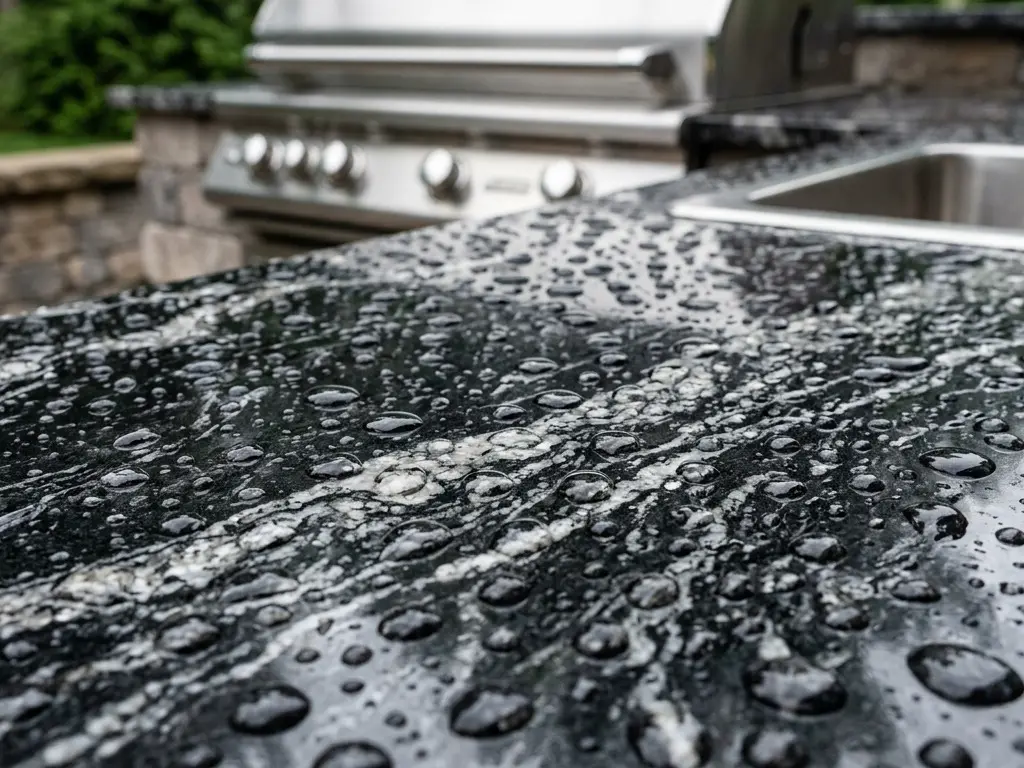
What Makes a Stone Right for an Outdoor Kitchen?
Selecting stone for an outdoor kitchen is not the same decision as choosing one for your interior. Outdoor countertops face the elements around the clock, so the material needs to handle whatever nature delivers. Think of it as protecting a long-term investment in your entertaining space, something that stays beautiful and performs reliably through years of backyard cookouts and family gatherings.
The right stone holds up against weather shifts, sun exposure, and everyday cooking wear. It won't fade, crack, or stain after a couple of seasons. When you're designing around a grill station or outdoor fireplace, the countertop material shapes both the look and the longevity of the entire setup. Here's what to prioritize.
Weather Resistance: Non-Negotiable
Outdoor countertops take on everything, including heavy rain, summer humidity, cold nights, and sharp temperature swings. The material you choose needs to handle all of it without deteriorating. Porous stones absorb moisture, and in colder climates, that trapped water freezes, expands, and causes cracking from the inside out. The strongest outdoor stones are dense and naturally low-porosity, or can be sealed thoroughly to prevent water infiltration. Ideally, you want something that doesn't require covering before every storm, a surface that gives you confidence through every season. To explore durable outdoor countertop materials in person, browse our locally available selection of weather-resistant natural stone and slab surfaces.
Sun and Heat Tolerance
Outdoor countertops deal with two distinct heat sources: ambient UV radiation from the sun and direct heat from grills or hot cookware. Prolonged sun exposure causes certain materials to fade or discolor, leaving a once-sharp surface looking washed out. UV stability is essential for keeping color consistent year after year. Heat resistance is equally critical, particularly in zones directly surrounding the grill where hot pans and trays land regularly.
Granite and quartzite perform exceptionally well here because their natural pigmentation resists UV fading reliably. Engineered quartz, by contrast, contains resins that can yellow under direct sunlight, making it a poor match for exposed outdoor settings. Choosing a UV-stable stone keeps your outdoor space looking sharp long after installation.
To learn more about sustainability and performance considerations in natural stone materials, explore the Natural Stone Institute’s guide to environmental and health product labels for natural stone.
Durability for Everyday Use
Weather resistance is only part of the equation. Your countertop also needs to handle the everyday reality of outdoor cooking, including scratches from prep work, chips from dropped cookware, and stains from wine, sauces, or marinades. An outdoor kitchen is built to be used, not babied. A truly durable stone holds its own against consistent activity without demanding constant attention.
Maintenance and Upkeep
Even the toughest stones benefit from routine care. Porous materials like granite and quartzite require periodic sealing, a straightforward process that creates a protective layer against staining. Day-to-day cleaning is simple because mild soap and water does the job. Starting with proper installation and sticking to a basic maintenance routine keeps your countertop looking its best for the long haul.
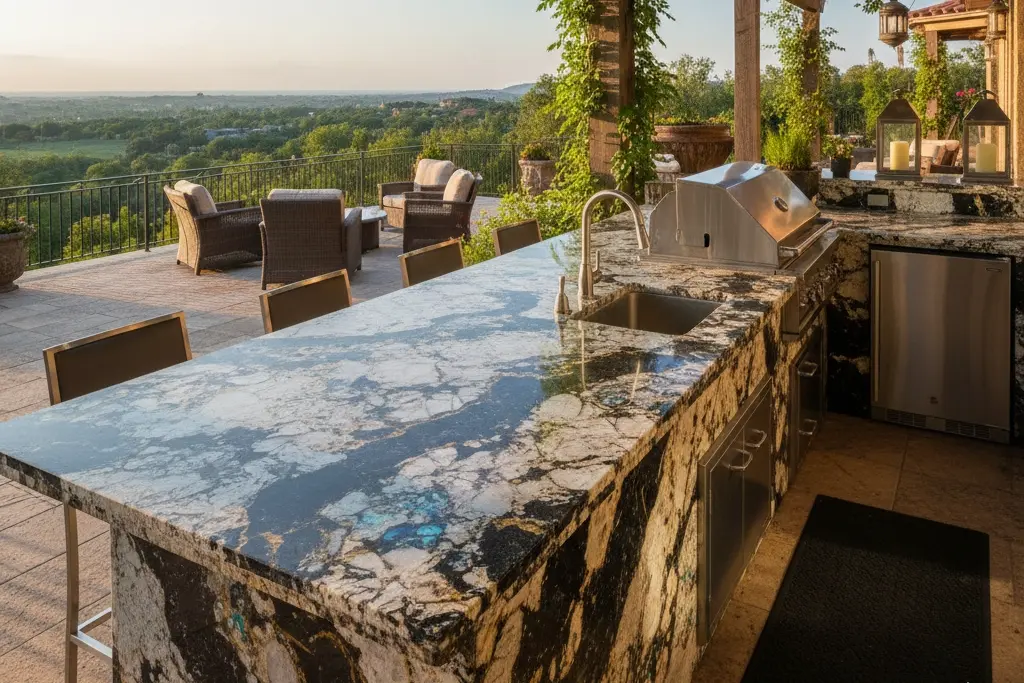
Top Stone Options for Outdoor Kitchen Countertops
Granite: Proven, Tough, and Timeless
Granite remains one of the most trusted choices for outdoor kitchens for good reason. It handles high heat without issue, weathers the elements gracefully, and comes in an extensive range of colors and veining patterns, from rich charcoal blacks to light speckled whites, making it easy to match any home exterior. It does require periodic sealing since it is naturally porous, but that maintenance is minimal compared to the long-term payoff. A well-installed granite countertop is a durable, striking centerpiece built for years of outdoor entertaining.
Quartzite: Marble-Like Beauty, Far Greater Strength
Quartzite is the answer for anyone drawn to marble's elegance but unwilling to accept its fragility outdoors. This natural metamorphic stone resists scratching and chipping with ease, and its low porosity means it doesn't readily absorb liquids, which is a major advantage against rain, spills, and sun damage alike.
What makes quartzite especially compelling is how closely it replicates marble's flowing veins and soft tonal depth. Many homeowners want that luxurious marble aesthetic but know it won't hold up outdoors. Quartzite delivers the same refined look with none of the maintenance baggage. Slabs like Taj Mahal or White Macaubas bring dramatic visual movement and warmth that rival sought-after Italian marbles, letting you build a sophisticated outdoor space that is as functional as it is beautiful. If you would like to explore quartzite options in person, schedule a personalized showroom appointment with our stone specialists for expert design guidance.
Porcelain: Modern, Maintenance-Free, and Built to Last
For a clean, contemporary aesthetic with near-zero upkeep, porcelain slabs are hard to beat. Manufactured by firing minerals under extreme heat, porcelain emerges as a dense, completely non-porous surface that is stain-proof, frost-resistant, and UV-stable without ever needing sealing. Colors stay true year after year regardless of sun exposure.
At 12mm thickness, porcelain strikes the right balance between structural strength and workable installation. It handles thermal stress, daily cooking demands, and seasonal weather changes without compromise. Large-format slabs minimize seam lines across the countertop surface, producing a cleaner, more refined look that is also easier to maintain. Fewer grout lines mean less buildup and less scrubbing. And with its ability to convincingly replicate marble, concrete, wood, or metal, porcelain gives you full design flexibility without sacrificing the durability that outdoor living demands.
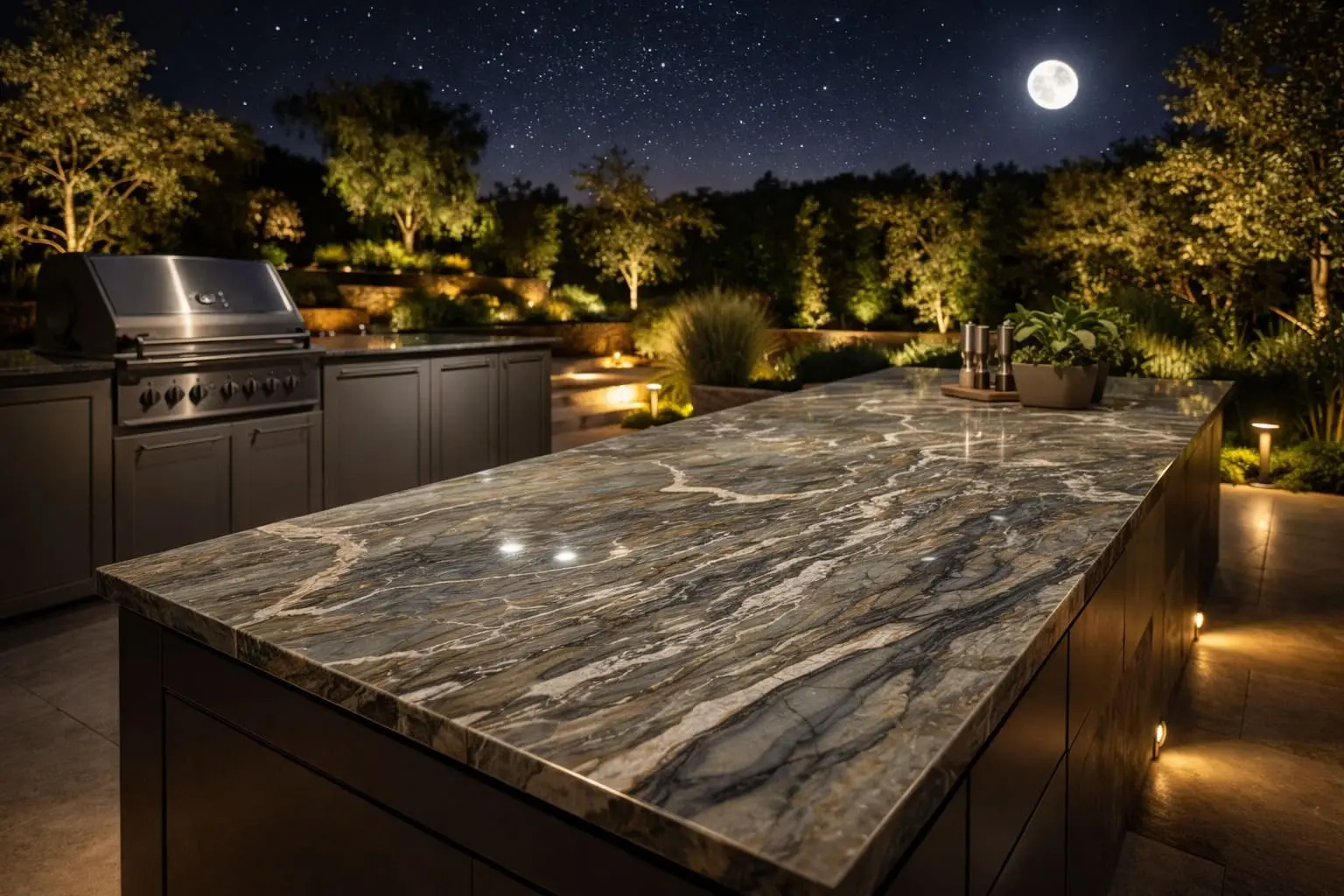
Conclusion
Choosing the best stone for your outdoor kitchen countertop comes down to finding the right balance between durability, aesthetics, and maintenance commitment. Whether you gravitate toward the timeless toughness of granite, the marble-like elegance of quartzite or the modern practicality of porcelain, each material brings genuine strengths to the outdoor cooking environment.
The key is matching the stone's performance profile to your specific climate, cooking habits, and design vision. A material that thrives in a mild coastal setting may need extra consideration in a region with harsh winters and freeze-thaw cycles. No matter which direction you go, investing in quality stone, paired with proper installation and routine care, ensures your outdoor kitchen remains a functional, beautiful space for years of cooking, entertaining, and making memories under the open sky.
For expert guidance and premium material selection, work with Nova Tile and Stone, your trusted supplier for outdoor kitchen countertops and natural stone surfaces, or request project-specific pricing through our slab quote request form for custom outdoor countertop solutions.
Frequently Asked Questions
Granite and quartzite consistently rank among the most durable natural stone options for outdoor kitchens. Both are extremely hard, heat-resistant, and capable of handling the physical demands of outdoor cooking and entertaining. Porcelain is equally strong in terms of weather and stain resistance, with the added advantage of requiring no sealing, making it a top contender for homeowners who prioritize low maintenance alongside long-term durability.
It depends on the material. Porous natural stones like granite and quartzite require periodic sealing, typically once a year or every couple of years, to protect against staining and moisture absorption. Soapstone is naturally non-porous and doesn't need sealing, though mineral oil is often applied to enhance its appearance. Porcelain requires no sealing at all, as its manufacturing process makes it completely non-porous from the start.
Engineered quartz is generally not recommended for outdoor kitchen use. While it performs well indoors, quartz contains resins and pigments that are vulnerable to UV exposure. Over time, direct sunlight can cause quartz surfaces to yellow, discolor, or warp, compromising both the appearance and structural integrity of the countertop. For outdoor applications, natural stones like granite and quartzite, or engineered porcelain, are far better choices.
Stone density and porosity are the deciding factors in cold-climate performance. Porous stones that absorb moisture are at risk during freeze-thaw cycles because trapped water expands as it freezes, which can cause cracking over time. Dense, low-porosity options like quartzite and properly sealed granite handle cold climates much better. Porcelain is frost-proof by nature, making it one of the strongest choices for regions that experience harsh winters and significant temperature swings.
Porcelain is widely considered the easiest outdoor stone countertop to maintain. It requires no sealing, resists stains and frost naturally, and holds its color without fading under UV exposure. Routine cleaning with mild soap and water is all it needs. Soapstone is another low-maintenance option since it doesn't require sealing and minor surface scratches can be buffed out without professional assistance. For homeowners who prefer natural stone with minimal upkeep, soapstone offers a compelling combination of durability and easy care.
Note: Some images on this page may be conceptual renderings created to illustrate design possibilities and may not depict actual installations.