Marble kitchen countertops are natural stone surfaces quarried from metamorphic rock, known for their distinctive veining, smooth finish, and association with luxury kitchen design. They are a popular choice for homeowners and designers seeking a high-end aesthetic, but they require consistent maintenance to perform well over time. The primary advantages of marble countertops include their elegant appearance, unique natural patterning, and naturally cool surface temperature that makes them well-suited for baking. The main disadvantages include susceptibility to scratching and staining, the need for periodic sealing, and a higher upfront cost compared to materials like granite or quartz. Marble is best suited for homeowners who prioritize visual appeal and are prepared to commit to a regular care routine. For high-use kitchens, pairing marble with a more durable countertop material in cooking-heavy zones is a practical strategy that balances beauty with function.
Explore our premium natural stone slab collection to find the perfect marble for your space and learn more about how natural stone meets environmental and health standards for safer, more informed material selection.
What Makes Marble So Popular?
Marble has been used as a natural stone in homes and commercial buildings for centuries. Its smooth surface, rich colors, and distinctive veining patterns make it a sought-after material for luxury kitchens. Because every slab is one of a kind, marble gives your kitchen a look that cannot be replicated elsewhere. That individuality, paired with its undeniable elegance, is a key reason homeowners continue to choose it.
For a deeper understanding of your options, explore the complete guide to natural stone countertops to help you choose the right material for your space.
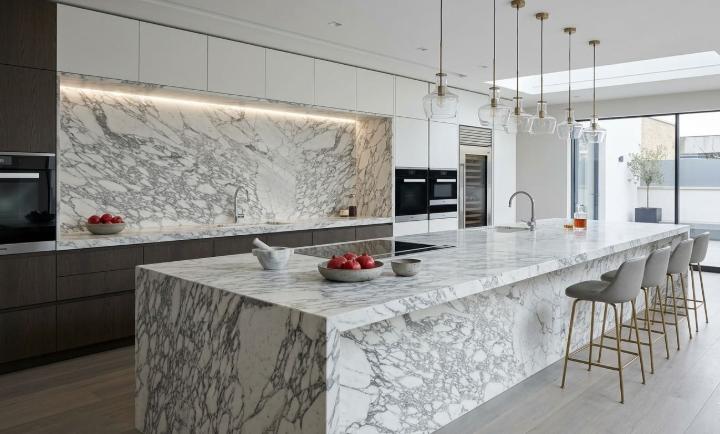
The Advantages of Marble Countertops
1. Beautiful and Elegant Appearance
Marble introduces a soft, luxurious quality to any kitchen. Its natural sheen and characteristic white or light tones brighten a space while giving it a polished, refined look. Designers frequently turn to marble when a kitchen calls for both charm and sophistication, regardless of the overall style.
Experience it firsthand by visiting a Nova Tile and Stone showroom near you to view our full marble slab selection in person.
2. Natural and Unique Patterns
No two marble slabs are identical. Each countertop carries its own natural veining and color variation, making your kitchen surface genuinely one of a kind. That organic individuality is something manufactured materials simply cannot replicate.
3. Cool Surface Ideal for Baking
Marble maintains a naturally cool temperature, making it an excellent work surface for rolling dough or preparing pastry. Professional bakers and chefs have long favored marble for exactly this reason, and home bakers benefit from the same advantage.
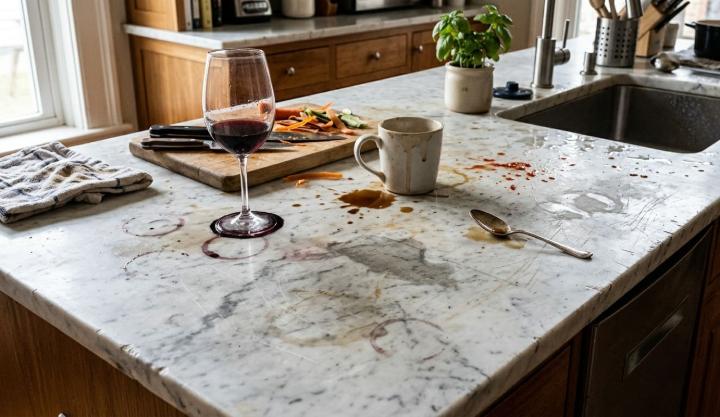
The Disadvantages of Marble Countertops
1. Susceptible to Scratches and Stains
Marble is a softer natural stone compared to granite or quartz, which makes it more vulnerable to scratching, particularly when food is cut directly on the surface. It is also porous, meaning spills from wine, citrus juice, or coffee can penetrate and stain the surface if not wiped up promptly.
Learn how to protect your investment with the natural stone care and maintenance guide to keep your marble looking its best.
2. Demands Regular Sealing and Maintenance
Keeping a marble countertop in good condition requires periodic sealing. While sealing helps guard against staining and surface damage, it adds an ongoing layer of maintenance and cost over the life of the countertop. Skipping or delaying that process can compromise both the appearance and durability of the surface.
3. Higher Cost Investment
Marble typically carries a higher price tag than most other countertop materials. Costs vary based on the style and grade of marble selected, but installation expenses tend to be significant as well. For homeowners working within a strict budget, this is a factor worth weighing carefully.
For professionals and bulk buyers, apply for a Nova Tile and Stone trade account to access exclusive pricing and material benefits.
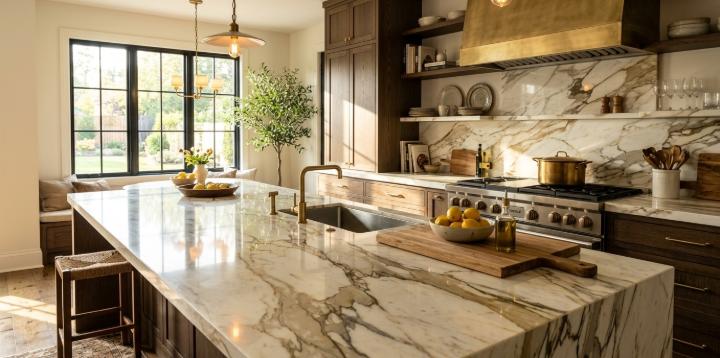
Is Marble Right for Your Kitchen?
If you gravitate toward classic design, value natural beauty, and are committed to keeping the surface properly maintained, marble kitchen countertops can be an excellent fit. On the other hand, if your kitchen sees heavy daily cooking and you need a surface that holds up under constant use, marble may present some challenges.
One practical approach is to combine materials strategically. Installing marble on a kitchen island designated for lighter tasks, while using granite or quartz on sections that see more intensive cooking activity, lets you enjoy marble's aesthetic without putting it under excessive strain.
Get expert guidance tailored to your project by scheduling a showroom appointment to explore marble options and material combinations in person.
Conclusion
Marble kitchen countertops remain one of the most sought-after surfaces in home design. The natural beauty, distinctive veining, and cool working surface make marble a compelling choice for homeowners who prioritize both aesthetics and functionality. At the same time, the material demands consistent care. Scratches, stains, and the need for periodic sealing are real considerations that should factor into your decision. When that commitment to upkeep is in place, marble can serve as a stunning, enduring centerpiece in your kitchen for years to come.
Work with us, a trusted tile and stone company committed to providing high-quality marble and expert guidance for your project.
Frequently Asked Questions
How often does a marble kitchen countertop need to be sealed?
Sealing frequency depends on how heavily the countertop is used and the specific type of marble installed. Most marble countertops benefit from sealing once or twice a year, though high-traffic kitchens may require more frequent attention to maintain adequate protection against staining and moisture penetration. Consulting a natural stone professional can help you determine the right schedule for your specific surface.
Can marble kitchen countertops be repaired if they get scratched or chipped?
Minor scratches can often be addressed through professional honing or polishing, which smooths out surface-level damage and restores the finish. Chips and deeper damage may require filling with a color-matched epoxy or resin compound. For significant damage, a natural stone restoration specialist is the most reliable resource to ensure the repair blends seamlessly with the surrounding surface.
Is marble a sanitary surface for food preparation?
Properly sealed marble is generally considered safe for food preparation. Sealing closes off the pores in the stone, reducing the ability of bacteria and moisture to penetrate the surface. Cleaning up spills promptly and avoiding cutting directly on the marble helps maintain both hygiene and appearance, while regular re-sealing sustains that level of protection over time.
How does marble compare to granite and quartz in terms of durability?
Marble is softer than granite, making it more prone to scratching and surface wear over time. Granite offers greater hardness and resistance to daily kitchen use, while quartz, as an engineered stone, provides a non-porous surface that requires virtually no sealing and resists staining more effectively. If durability is your primary concern, granite or quartz may be the stronger practical choice, though neither matches marble's natural elegance and veining character.
Does the color or veining of marble affect its performance in the kitchen?
Color and veining are primarily aesthetic characteristics and do not directly affect the stone's performance or durability. However, lighter marble varieties tend to show staining and etching more visibly than darker options. Choosing a marble with more pronounced veining or a warmer tone can help mask minor surface marks between cleanings, making it a practical consideration alongside visual appeal.
Get accurate pricing based on your selection by requesting a custom slab quote tailored to your preferred marble style and project needs.