Marble countertops are a premium natural stone surface known for their distinctive veining, heat resistance, and ability to increase home resale value. They are a popular choice for kitchen and bathroom renovations, but come with trade-offs including susceptibility to scratching, staining, and a higher price point compared to granite or quartz.
Homeowners considering marble countertops should weigh four key advantages, unique aesthetic appeal, natural heat resistance, added home value, and a cool surface ideal for baking, against four common drawbacks: surface softness, porosity, ongoing maintenance requirements, and premium cost. Regular sealing once or twice a year is essential to protect marble from staining and etching caused by acidic substances.
Marble is best suited for homeowners who prioritize beauty and are prepared to maintain a high-end material. For those seeking a low-maintenance alternative, engineered quartz offers greater durability with less upkeep. Homeowners comparing materials can explore our natural stone slab collection to see available options for kitchen and bathroom surfaces.
Pros of Marble Countertops
1. Stunning, One-of-a-Kind Aesthetic
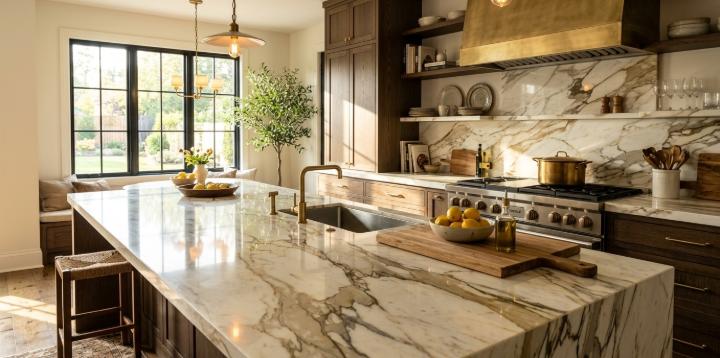
Few materials match marble's visual impact. Every slab carries its own unique veining and color variation, meaning no two installations ever look exactly alike. Whether you gravitate toward the soft, classic tones of Carrara or the bold contrast of Calacatta, marble adapts seamlessly to both traditional and contemporary design schemes. It's the kind of surface that immediately elevates the look of any kitchen or bathroom.
2. Naturally Heat-Resistant
Marble holds up well against heat, making it a practical choice for busy kitchens. You can set hot cookware directly on the surface without the risk of burning or warping, a concern that comes up frequently with wood or laminate alternatives. That built-in heat tolerance adds a layer of everyday convenience that cooks genuinely appreciate.
3. Boosts Your Home's Resale Value
Marble carries a reputation as a premium material, and buyers notice. Installing marble countertops signals quality and thoughtful design, which can translate to a higher asking price when it's time to sell. In both kitchens and bathrooms, marble features tend to leave a strong impression on prospective buyers.
4. A Baker's Best Friend
If you spend time in the kitchen making pastries, pie crusts, or cookie dough, marble's naturally cool surface works in your favor. It helps keep temperature-sensitive doughs from warming up too quickly during prep, something avid bakers consistently call out as a major practical advantage. With proper care and routine maintenance, marble can stay beautiful for years, which is why understanding how to clean marble countertops properly is essential.
Homeowners who prefer seeing materials in person can also shop local stone slabs near you to compare options before choosing the right surface for their project.
Cons of Marble Countertops
1. Scratches More Easily Than Other Stones
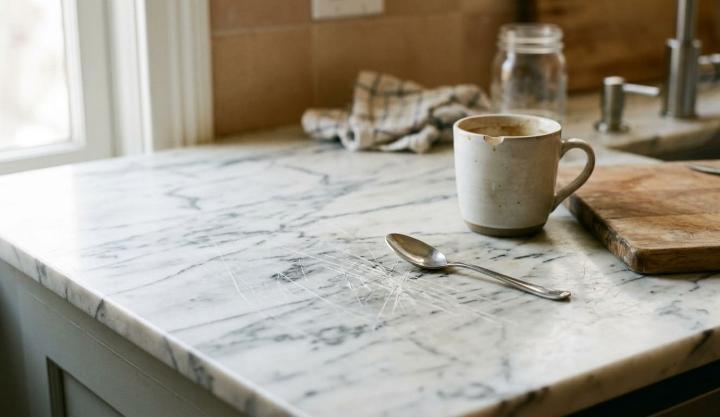
Marble is durable, but it's softer than granite or quartz, which makes it more vulnerable to scratching. Cutting directly on the surface without a board will leave marks over time. While polishing can restore some smoothness, high-traffic countertops will show wear, something to factor in before you decide. Homeowners comparing durability between different materials can learn more about natural stone countertop options and how they perform in everyday use.
2. Stains Are a Real Risk
Marble is a porous material, meaning liquids like wine, coffee, and citrus juice can penetrate the surface if not wiped up promptly. Acidic substances are particularly damaging and can etch the finish permanently. Even with proper sealing, lighter marble varieties are especially prone to discoloration if spills aren't addressed quickly.
3. Ongoing Maintenance Is Non-Negotiable
Keeping marble looking its best takes consistent effort. Beyond routine cleaning, you'll need to reseal the surface periodically to preserve its protective layer and guard against staining. For homeowners who prefer low-maintenance surfaces, this upkeep schedule is worth weighing carefully. For detailed guidance from industry experts, you can review the official marble and natural stone care guidelines.
4. It Comes at a Premium Price
Marble generally costs more than granite, quartz, or laminate. The final price depends on the marble variety, slab quality, and installation complexity. If budget is a constraint, particularly for a full kitchen or bathroom renovation, the overall investment in marble can add up fast. Contractors, builders, and design professionals planning larger projects may benefit from applying for a trade account for exclusive pricing and project support.
Is Marble the Right Fit for Your Space?
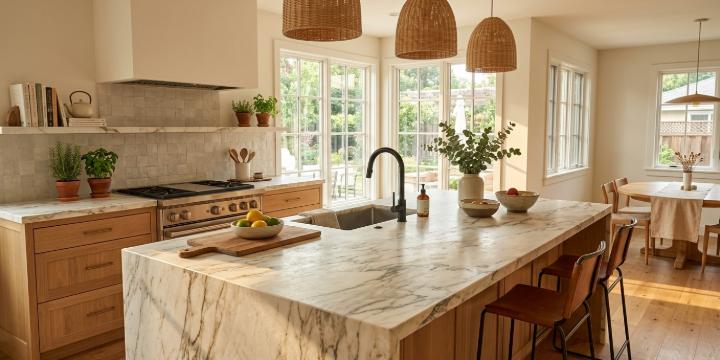
Marble makes the most sense for homeowners who prioritize aesthetics and are prepared to care for a high-end material. It performs beautifully in upscale kitchen and bathroom settings where it becomes the visual centerpiece of the design. That said, if durability and low maintenance top your list, granite or quartz will likely serve you better in a high-traffic environment.
Choose marble when you're ready to invest in both its look and its upkeep. Maintained properly, it's a surface that lasts for years, adding lasting value and a refined character to your home that more practical materials simply can't replicate. If you're planning a project, you can request a custom slab quote for your countertop or stone project or schedule a showroom appointment to view available marble slabs in person.
Conclusion
Marble countertops remain one of the most compelling choices in home design, and for good reason. The combination of natural beauty, heat resistance, and long-term value makes marble a material worth serious consideration for any kitchen or bathroom renovation. That said, it's not a one-size-fits-all solution. Its softer surface, porous nature, and maintenance demands mean it rewards homeowners who are attentive and willing to put in the care it requires.
If you're drawn to marble's elegance and prepared for the upkeep, it can be a genuinely rewarding investment, one that enhances both the function and the feel of your space for years to come. If low maintenance and maximum durability are your priorities, exploring alternatives like granite or quartz may be the smarter path. Either way, knowing what marble offers and what it asks of you, puts you in the best position to make a decision you'll be confident in long after installation day. To ensure quality and peace of mind, always choose a trusted tile and stone company.
Frequently Asked Questions
How often do marble countertops need to be sealed?
Most marble countertops should be resealed once or twice a year, depending on how heavily the surface is used. High-traffic kitchen countertops may benefit from more frequent sealing, while bathroom vanities used less intensively can often go longer between treatments. A simple water test, if water beads up, the seal is still intact; if it absorbs, it's time to reseal, can help you gauge when the surface needs attention.
Can marble countertops be repaired if they get scratched or etched?
Minor scratches and surface etching can often be buffed out with a marble polishing powder or professionally honed and repolished. Deeper scratches or chips may require a professional stone restoration service. The good news is that marble is a material that can be refinished multiple times over its lifespan, which helps extend its usability even in busy households.
What's the difference between honed and polished marble finishes?
A polished marble finish has a high-gloss, reflective surface that highlights the stone's natural veining and color depth. A honed finish is matte or satin in appearance and tends to be more forgiving of everyday wear, as it's less likely to show etching or scratches as prominently. Polished finishes are popular for formal or decorative spaces, while honed finishes are often preferred for kitchens where practicality matters.
Is marble a good choice for bathroom countertops as well as kitchens?
Marble works exceptionally well in bathrooms, where it's less exposed to the heavy daily wear of a kitchen. Bathrooms typically see fewer acidic spills, sharp utensils, and high-heat cookware, which reduces some of marble's biggest vulnerabilities. For bathroom vanities and shower surrounds, marble delivers a spa-like aesthetic with a comparatively lower risk of damage.
How does marble compare to quartz in terms of durability and maintenance?
Quartz is an engineered stone that's harder, non-porous, and significantly more resistant to staining and scratching than natural marble. It requires very little maintenance beyond routine cleaning. Marble, on the other hand, is a natural stone with more character and variation, but it demands regular sealing and more careful day-to-day handling. If durability and ease of care are your top priorities, quartz has the edge. If timeless aesthetics and the unique quality of natural stone matter more to you, marble is worth the extra effort.