Natural stone countertops need different care depending on the season: spring is the time to deep clean and inspect sealant after months of heavy use, summer demands fast responses to acidic spills, fall is the best window for resealing before holiday cooking, and winter calls for consistent protection during peak kitchen activity.
Most stone care guides organize maintenance by task rather than by time of year. That approach covers the basics, but it does not reflect how households actually use their kitchens. Cooking intensity, the types of food being prepared, and entertaining frequency all shift significantly from one season to the next. Stone care that aligns with those patterns tends to be more consistent and more effective than care that is reactive.
A few points worth keeping in mind throughout the year:
- Calcareous stones, including marble, travertine, limestone, and dolomite, are more vulnerable to acidic spills and require more attentive seasonal care than siliceous stones like granite and quartzite. The type of stone you have determines nearly every aspect of the care routine, and viewing our available stone slabs can help if you are still working to identify what is on your countertop.
- Most natural stone benefits from resealing once a year, with fall being the most practical timing for households that cook heavily during the holidays.
- pH-neutral cleaners formulated for natural stone are the only safe choice regardless of the season. Many common household cleaners contain acids or bleach that damage stone surfaces.
- Consistent habits matter more than any single cleaning session.
Spring: Deep Clean and Inspect
The period from Thanksgiving through the end of winter tends to be the most demanding stretch for kitchen countertops. Heavy cooking, holiday entertaining, and months of daily use leave their mark. When spring arrives, it is the right moment to assess how stone has fared and address anything that built up during that period.
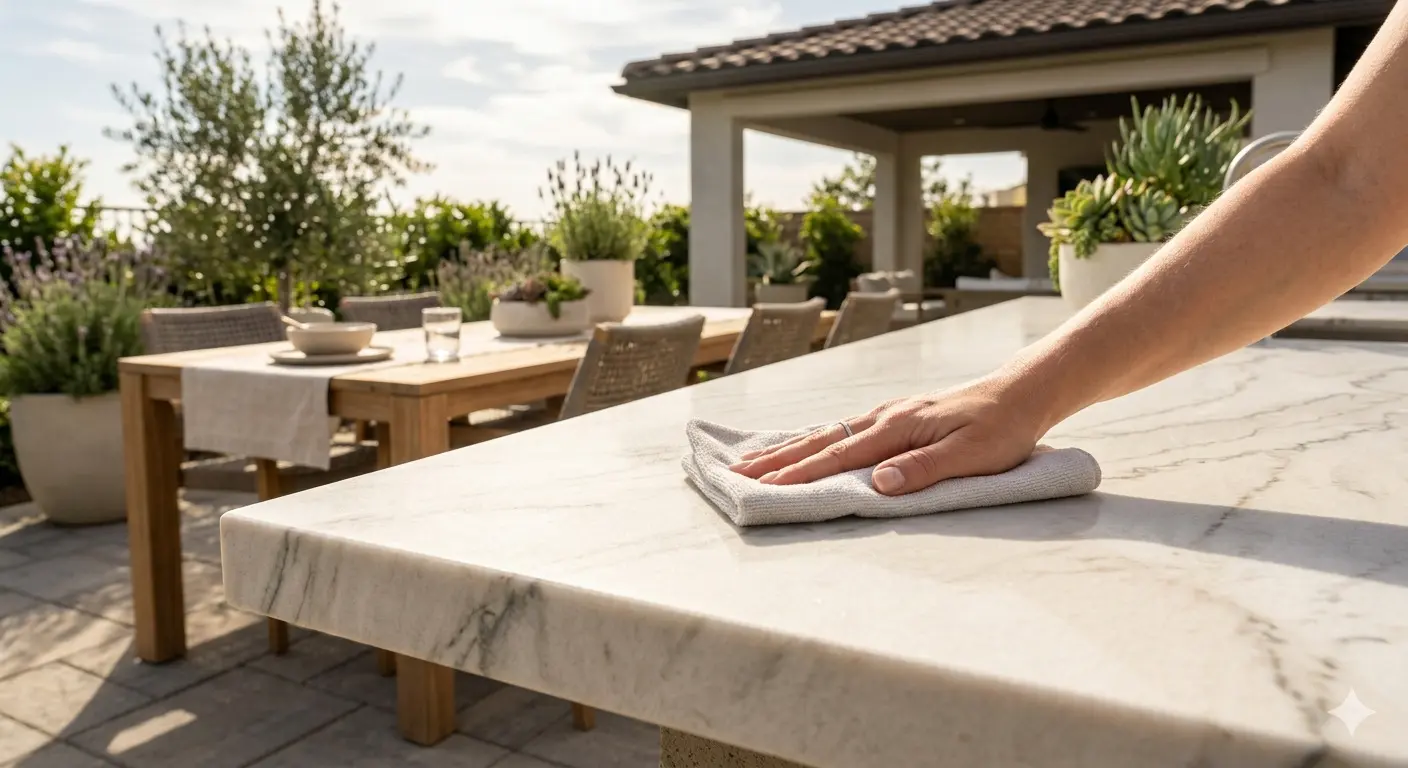
Begin with a thorough clean using a pH-neutral stone cleaner diluted in warm water. Work across the full surface with a soft microfiber cloth, paying close attention to areas near the stove, sink, and main food preparation zones where residue accumulates most. Avoid reaching for spring cleaning staples like vinegar, citrus-based sprays, or bleach. These are damaging to calcareous stones and should never be used on natural stone surfaces of any kind. Fine Homebuilding's complete guide to natural stone countertops covers how different stone types respond to cleaning agents and why product selection matters as much as technique.
Once the surface is clean, check the condition of the sealant using a simple water test. Pour a small amount of water onto several areas and leave it for ten to fifteen minutes. If the water beads and holds its shape on the surface, the seal is intact. If the water darkens the stone or begins to absorb, the sealant has worn down and the surface needs resealing before the next season of heavy use.
Spring is also a good time to inspect edges and corners. Run your hand along the perimeter of each countertop looking for chips, rough spots, or fissures. Minor chips caught early are far easier to address than damage discovered later. If you are unsure what type of stone you have or how it was finished, stopping into one of our showroom locations and bringing a photo gives our team everything needed to identify the material and point you toward the right care approach. If you notice significant damage, a stone restoration professional can assess and address it.
Finally, check the caulk or grout lines where stone meets the sink or backsplash. Water that pools in these areas over a full season can compromise the stone at its joints. Replacing cracked or separated caulk is a practical step that protects both the stone and the surrounding surfaces.
Summer: Respond Quickly to Acidic Spills
Summer shifts the kitchen toward lighter meals, outdoor entertaining, and a far wider range of acidic ingredients than any other season. Berries, citrus, stone fruits, tomatoes, wine, and vinaigrette dressings all appear regularly during summer cooking and all present real risk to calcareous stones. Marble, travertine, limestone, and dolomite can etch within minutes of acid contact, making response time the most important variable of the season.
The most critical habit in summer is speed. Lemon juice squeezed during food preparation, wine spilled during a dinner party, or tomato from a summer salad should be wiped up immediately. Keeping a dry cloth within reach at the counter during food preparation makes this easier in practice.
Heat exposure also increases during summer, both from the stove and from grills in outdoor kitchen setups. Natural stone handles ambient kitchen heat well, but direct contact with hot items can cause thermal shock in some materials. Use trivets and heat pads consistently, especially during outdoor entertaining when the pace of cooking often means items get set down quickly.
Be attentive to cleaning products during this season. Many households shift toward natural or DIY cleaning solutions in summer, a number of which include vinegar or lemon juice as active ingredients. These will etch calcareous stones regardless of how diluted they are. pH-neutral stone-safe cleaners remain the correct choice for all natural stone surfaces throughout the year. Understanding what your countertop is actually made of matters before reaching for any maintenance product. NIOSH has documented specific health and safety concerns related to engineered stone fabrication, a useful reminder that natural stone and engineered surfaces are fundamentally different materials with different care and safety profiles.

Fall: Reseal and Prepare for the Heavy Season
Fall is the most strategically important season for natural stone care. Thanksgiving and holiday cooking create the most demanding conditions of the entire year for kitchen countertops. A well-maintained, properly sealed surface going into that stretch performs better than one carrying unaddressed wear from summer.
Resealing in September or October gives sealant time to fully cure before the season's heaviest cooking begins. Most granites, quartzites, and marbles benefit from resealing on an annual schedule. Denser stones may need it less frequently, while more porous materials may need attention more often. Stone grade and density influence how quickly sealant breaks down, which is worth discussing with your stone supplier if you are unsure of your slab's characteristics. This Old House's guide to stone countertops walks through the resealing process clearly and covers product selection in practical terms.
Before the season accelerates, confirm that you have adequate supplies of pH-neutral stone cleaner, clean microfiber cloths, trivets, and a stone-safe cutting board. Running out of proper cleaner in the middle of heavy use often leads to reaching for whatever is available, which is how a lot of stone damage occurs. If you want guidance on which sealant suits your specific stone before the season begins, scheduling a free design consultation gives you direct access to our team ahead of the holiday stretch.
Fall is also the right time to address any etching or staining that appeared over summer. Carrying surface damage into the holiday season and then through another summer compounds the issue. Light etching on honed surfaces can sometimes be improved with a stone polishing powder, but deeper damage benefits from professional assessment. For interior designers and contractors who advise clients on stone selection and care, our trade account program provides ongoing access to our sourcing and specification team throughout the year.

Winter: Protect During the Highest-Use Period
Winter combines the year's most intensive cooking with the types of spills most likely to cause lasting damage. Red wine, cranberry sauce, citrus from holiday cocktails, and rich sauces from long-cooked meals are all both acidic and deeply pigmented. A properly sealed surface offers a degree of protection against staining and etching, but it does not make stone impervious to damage. Consistent habits still matter throughout the season.
Keep a labeled bottle of pH-neutral stone cleaner at the counter so it is always the first option for cleanup. The temptation during busy holiday cooking is to wipe with whatever cloth or cleaner is nearby. Establishing the right product as the default eliminates that risk without adding any extra steps to the routine.
Use trivets without exception during winter cooking. Cast iron cookware, roasting pans, and slow cooker inserts all hold significant heat after use. Setting these directly on stone repeatedly over a full season creates cumulative stress that eventually affects the surface. The same applies to warming dishes and serving platters that come straight from the oven during holiday meals. Our stone specialists are available to answer specific questions about how your stone type handles heat and sustained daily demands.
Once the holiday season winds down, run through the same inspection completed in spring. Check for new chips, run the water test to assess sealant condition, and look for any etching or staining that appeared during peak use. Addressing these before another full year of use begins gives stone a better outcome over time.
Conclusion
Natural stone countertops maintain their surface condition over time when care is consistent and aligned with how the kitchen is actually being used. The seasonal approach in this guide is not about adding more tasks to a cleaning routine. It is about timing the right tasks to moments when they will be most effective. Resealing before the holidays, running the water test in spring, and keeping pH-neutral cleaner within reach during summer entertaining covers most of what natural stone needs throughout a full year.
If you are considering adding stone to another space in your home or replacing an existing surface, submitting a slab quote request is a practical starting point. We offer free design consultations at our showrooms in Reno, Minden, Sacramento, and Fernley, and our team is happy to help you identify what you are working with and recommend a care routine that fits.
Note: Some images on this page may be conceptual renderings created to illustrate design possibilities and may not depict actual installations.
Frequently asked questions
Most granite, quartzite, and marble countertops benefit from resealing once a year. Denser stones may hold a seal longer, while more porous materials may need attention more frequently. The water test is the most reliable way to check: pour a small amount of water on the surface and wait ten to fifteen minutes. If the water absorbs or darkens the stone, it is time to reseal.
No. Vinegar is acidic and will etch calcareous stones such as marble, travertine, limestone, and dolomite on contact. Baking soda is mildly abrasive and alkaline, which can dull polished surfaces over repeated use. The only safe option for cleaning natural stone is a pH-neutral cleaner formulated specifically for stone surfaces.
A stain is caused by a liquid penetrating the stone's pores and leaving pigment behind. Etching is a chemical reaction caused by acid contact that removes the surface finish. Stain marks are typically darker than the surrounding stone, while etch marks are usually lighter and feel slightly rough to the touch. Stains can often be treated with a stone-safe poultice, while etching generally requires professional honing or polishing to correct.
Natural stone is heat-resistant but not heatproof. Repeated direct contact with very hot cookware can cause thermal shock that leads to cracking or discoloration over time. Using trivets consistently is the recommended practice for all natural stone countertops regardless of stone type.
Calcareous stones, including marble, travertine, limestone, and dolomite, are the most vulnerable because they contain calcium carbonate, which reacts chemically with acids found in citrus, wine, and many common foods. Siliceous stones like granite and quartzite are much more resistant to acid-based damage. All natural stone benefits from proper sealing regardless of type.