Natural stone has long been a hallmark of sophisticated interior design, and few materials command attention quite like Taj Mahal quartzite. With its soft, luminous palette and extraordinary structural integrity, this Brazilian-quarried stone has earned a prominent place in residential and commercial spaces worldwide. Whether you are considering it for a kitchen countertop, a statement accent wall, or a bathroom vanity, understanding what makes this stone so remarkable will help you make a well-informed decision. Here are five essential facts every homeowner and design enthusiast should know before choosing this luxurious natural material.
1. It Originates from a Single Region in Brazil
Despite its name evoking the iconic monument in India, Taj Mahal quartzite is quarried exclusively from Uruoca, a geologically rich city in northeastern Brazil. The region's unique underground conditions provide the precise environment needed for this stone's formation, which is why it cannot be authentically sourced anywhere else in the world.
The stone forms through a metamorphic process in which quartz-rich sandstone is subjected to extreme heat and pressure deep within the earth over millions of years. This prolonged transformation, known as the rock cycle, results in a dense, compact structure composed of approximately 99 percent quartz crystals one of the hardest minerals found in nature. The outcome is a true quartzite, distinguished from impostors in the market by its completed metamorphic cycle and superior physical properties.
Its origin in a single remote location also contributes to its exclusivity. Each slab carries the distinct geological fingerprint of Uruoca, meaning no two pieces are ever completely alike. That individuality makes sourcing from a knowledgeable supplier especially important, as quality and authenticity can vary significantly depending on where you purchase. Browsing our natural stone slab collection in person allows you to assess true color, veining, and texture before committing to a selection.
2. It Offers Strength That Surpasses Granite
One of the most compelling reasons designers and homeowners gravitate toward this stone is its exceptional hardness. Taj Mahal quartzite ranks between 6.5 and 7 on the Mohs hardness scale, placing it firmly above granite in terms of scratch resistance and surface durability. This makes it particularly well suited for high-traffic environments such as busy kitchens, commercial countertops, and heavily used flooring.
Unlike marble, which can etch when exposed to acidic substances like vinegar, citrus juice, or wine, Taj Mahal quartzite holds up remarkably well against everyday kitchen spills. Its dense crystal structure resists surface damage, meaning it can withstand the demands of daily food preparation, heavy cookware, and consistent use without losing its visual character.
The stone is also highly heat resistant. Hot pots and pans placed directly on its surface are far less likely to cause damage compared to engineered alternatives that contain resin binders. For homeowners who want the refined elegance of marble with the performance of a harder material, this quartzite variety represents one of the most practical choices available in natural stone today. This Old House's guide to stone countertops offers a helpful overview of how various natural stones compare in everyday performance.
3. Its Aesthetic Mimics Marble Without the Fragility
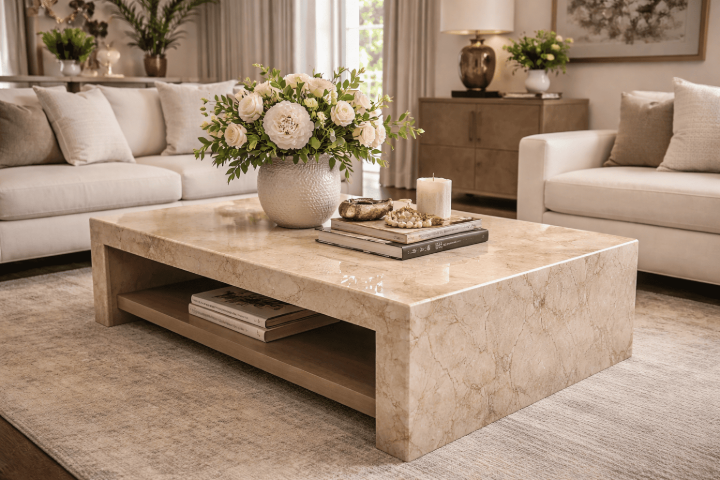
Taj Mahal quartzite is celebrated for its distinctive soft white to creamy beige background, gently traversed by flowing veins of warm gold, gray, and tan. The result is a surface that closely resembles high-end marble, offering the same sense of understated luxury without the associated maintenance challenges. For spaces where visual sophistication matters as much as performance, this balance is nearly impossible to replicate with engineered alternatives.
The stone is available in multiple finishes, each of which alters how the veining and color read within a space. A polished finish amplifies the stone's natural sheen, making veins appear more vibrant and giving countertops a reflective quality that brightens interiors. A honed finish produces a smooth matte surface that softens the palette and works beautifully in relaxed or rustic settings. A leathered finish introduces subtle texture, offering tactile depth while reducing the visibility of fingerprints and everyday smudges. For deeper guidance on selecting between these options, this resource on choosing the ideal stone finish is a practical reference worth reviewing.
Because natural light interacts differently with each finish, viewing slabs in person before making a final selection is always recommended. The stone's long, linear striations can also make spaces feel broader and more open when properly oriented during fabrication, a visual effect particularly notable in kitchen and island applications. You can book a free design consultation to explore finish options alongside our team of stone specialists.
4. It Is Remarkably Versatile Across Applications
While Taj Mahal quartzite is perhaps best known as a countertop material, its applications extend far beyond the kitchen. Its combination of durability, aesthetic neutrality, and surface versatility makes it a compelling choice across a broad range of interior and exterior uses.
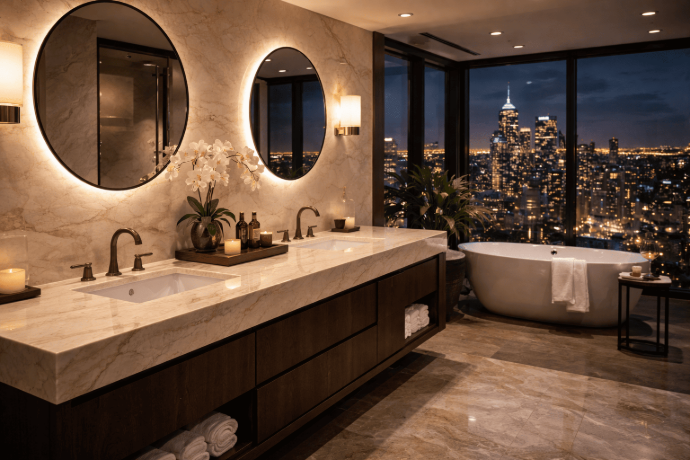
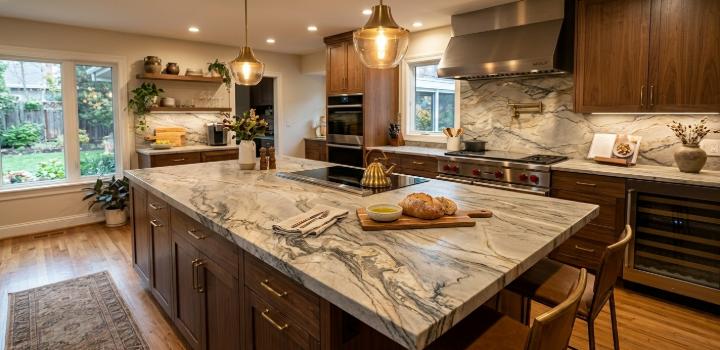
In kitchens, it functions beautifully as countertop slabs, waterfall islands, and backsplash panels. The stone's neutral tone pairs seamlessly with stainless steel appliances, wood cabinetry, and both light and dark hardware finishes. In bathrooms, it translates effortlessly into vanity tops and shower wall panels, where its low porosity provides resistance to moisture and humidity over time. Accent walls and fireplace surrounds are other popular applications, where the stone's dramatic veining becomes a focal point in living and entertaining spaces.
Outdoors, Taj Mahal quartzite holds up well against UV exposure and shifting temperatures, making it a preferred material for covered patio countertops and outdoor kitchen surfaces. A honed or leathered surface finish is generally recommended for outdoor use, as it performs more consistently in variable conditions. If you are ready to explore slab options for any of these applications, you can submit a slab quote request to get the process started.
5. It Requires Thoughtful but Minimal Maintenance
A common misconception about natural stone is that it demands constant upkeep. While Taj Mahal quartzite does require periodic care, its maintenance routine is far less intensive than many homeowners expect. Routine cleaning with mild dish soap and warm water is sufficient for everyday surface care. Abrasive sponges and harsh chemical cleaners should be avoided, as they can dull the stone's finish or degrade the protective sealant over time.
Sealing is the most important aspect of long-term care. Although this quartzite variety is less porous than marble or granite, applying a quality sealant once a year creates an additional protective barrier against stains and moisture absorption. In kitchens that see heavy daily use, or where frequent spills involving oil, coffee, or wine are common, resealing every six to nine months offers stronger protection. A simple water drop test can help determine when resealing is needed: if water beads on the surface, the sealant is still effective; if it absorbs into the stone or darkens the surface, it is time for a fresh application. The Natural Stone Institute's care guide provides thorough guidance on maintaining natural stone surfaces over time.
The stone also qualifies for Green Guard Gold Certification for low chemical emissions, making it a sound choice for households that prioritize healthier indoor air quality. Its NSF certification further confirms its suitability for food preparation surfaces, a reassuring detail for kitchen applications. Whether you are renovating a kitchen or refreshing a bathroom, our Reno showroom and Sacramento location carry an extensive selection of quartzite slabs available for viewing in person.
Conclusion
Taj Mahal quartzite earns its reputation as one of the most coveted natural stones in contemporary design. Its Brazilian origins, superior hardness, marble-like aesthetics, wide-ranging applications, and manageable upkeep requirements combine to make it a standout surface material for both residential and commercial projects. Whether you are drawn to its soft, luminous palette or its exceptional physical performance, this stone delivers on every level that matters in a high-use interior. Understanding these five key characteristics puts you in a much stronger position to evaluate whether this premium quartzite variety is the right investment for your next renovation.
Frequently Asked Questions
Is Taj Mahal quartzite harder than granite?
Yes. It ranks between 6.5 and 7 on the Mohs hardness scale, which places it above most granite varieties in terms of scratch resistance and overall surface durability. This makes it particularly well suited for kitchens and other high-traffic spaces.
Can Taj Mahal quartzite be used in bathrooms?
Absolutely. Its resistance to moisture and humidity makes it an excellent choice for bathroom vanity tops, shower wall panels, and full countertop surfaces. Regular sealing helps maintain its protective qualities in wet environments.
How often does this quartzite need to be sealed?
In most residential settings, once a year is sufficient. However, surfaces that experience heavier daily use or frequent exposure to oils, wine, or acidic liquids may benefit from sealing every six to nine months to ensure optimal protection.
Does Taj Mahal quartzite work for outdoor spaces?
Yes, it can be used in covered or partially shaded outdoor areas such as patio countertops and outdoor kitchen surfaces. A honed or leathered finish is generally preferred for exterior applications as it performs more consistently when exposed to changing weather conditions.
What makes this stone different from marble?
Although both share a similar refined aesthetic, Taj Mahal quartzite is significantly harder and more resistant to scratching, etching, and staining than marble. It offers the visual elegance of marble with greater structural durability, making it a more practical choice for surfaces that see regular, demanding use.