The difference between a 2cm and 3cm slab comes down to application, design style, and structural needs. Three centimeters is the standard thickness for kitchen countertops in the United States, offering self-supporting strength, a wider range of edge profiles, and a bold, substantial appearance suited for high-use surfaces. Two centimeters is the preferred choice for backsplashes, wall cladding, bathroom vanities, and contemporary designs where a slimmer profile is part of the aesthetic. Both thicknesses are available in natural stone and engineered slabs, and the stone material itself is identical regardless of which you choose.
This guide covers how each thickness performs, where each works best, how they affect edge profile options, and what to consider before making a final decision.
What Do 2cm and 3cm Actually Mean?
The measurements refer to the thickness of the stone slab itself. Two centimeters equals roughly three-quarters of an inch, while three centimeters equals approximately one and a quarter inches. The difference is modest when you hold a ruler to it, but it has a noticeable visual and structural impact once the countertop is installed.
For most of the twentieth century, 2cm was the standard thickness for residential countertops across the United States. Over the past few decades, 3cm has grown to become the dominant choice in American kitchens, particularly for natural stone. Today, both thicknesses remain widely available, and neither is going away. Each continues to serve specific applications well.
It is worth noting that the stone material itself is identical regardless of thickness. A 2cm granite slab and a 3cm granite slab cut from the same block will have the same hardness, the same veining, and the same pore structure. Thickness is a physical dimension, not a measure of stone quality.
The Case for 3cm Slabs
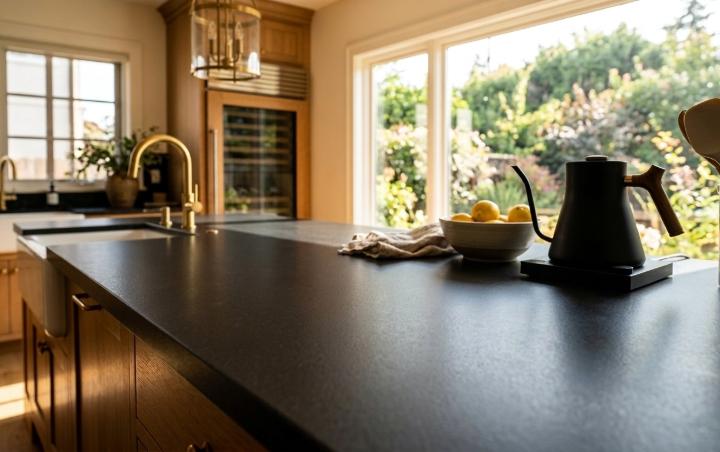
Three-centimeter slabs have become the preferred choice for kitchen countertops in the United States, and for good reason. Their structural advantages, design flexibility, and cleaner installation process make them the default recommendation for most high-use kitchen applications.
Structural strength without added support. A 3cm slab is thick enough to span cabinet openings and support its own weight without requiring a plywood sublayer underneath. This simplifies the installation process significantly and eliminates a layer of material that would otherwise be visible beneath overhangs and island seating areas.
A bolder, more substantial look. The thicker edge profile gives countertops a sense of weight and permanence that reads as high-end in kitchen design. Whether the edge is polished flat or finished with a more decorative profile, the extra depth adds visual presence that many homeowners associate with a luxury kitchen or bath renovation.
More edge profile options. Decorative edge profiles like bullnose, ogee, and waterfall edges are best executed on 3cm material. The added depth gives fabricators more stone to work with and produces cleaner, more dramatic results on these more intricate profiles.
Better performance on large overhangs. Kitchen islands and peninsula countertops often extend beyond the cabinetry to create seating. Longer unsupported spans benefit from the added thickness and rigidity of 3cm material, which is less likely to flex or develop stress cracks over time.
No visible seams on exposed edges. Because 3cm slabs are a consistent thickness throughout, there is no need for laminated edging. This means the edge of your countertop shows a clean, continuous face of stone with no seam line running along the front.
If you are ready to explore your options, our full granite, quartzite, marble, and engineered slab collection includes both thicknesses across a wide range of materials and colors.
The Case for 2cm Slabs
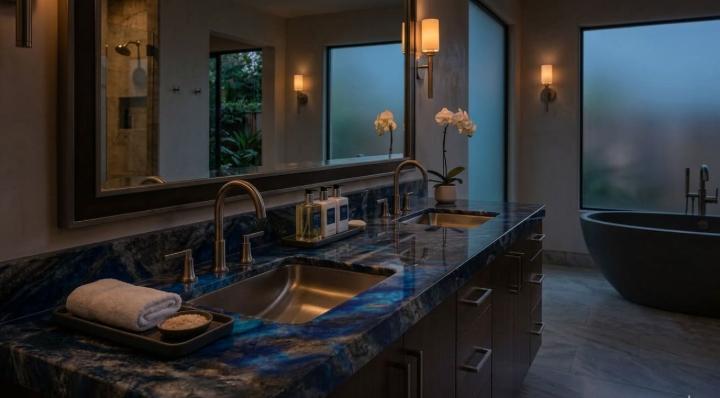
Two-centimeter slabs have real advantages that make them a smart choice in specific situations. Their lighter weight, lower material volume, and sleeker profile serve certain design styles and applications extremely well.
A contemporary, refined aesthetic. The slimmer edge profile has a strong following in minimalist and European-influenced design. Clean, thin lines at the edge of a countertop read as modern and understated. If your kitchen or bathroom leans toward a streamlined look with flat-front cabinetry and minimal ornamentation, a 2cm slab can complement that style beautifully.
Lighter weight for vertical and wall applications. Stone backsplashes, wall cladding, and vertical accent panels are best executed in 2cm material. The reduced weight places less stress on the wall structure and is generally the recommended thickness for any application where the stone is not lying flat on a horizontal surface. Three-centimeter material is not recommended for backsplash use because of the added weight and the specialized outlet boxes required to accommodate the extra depth.
Works well in bathrooms and vanities. Bathroom vanities see lighter daily use than kitchen countertops. A properly supported 2cm slab performs reliably in this context, and the thinner profile can look especially polished in a smaller vanity application where visual proportion matters.
Creative edge possibilities. Because 2cm slabs are thinner, fabricators can get creative with edge details. With techniques like laminated edges (where two pieces are glued together to create the illusion of a thicker slab) or mitered edges (angled cuts that give a seamless waterfall effect), 2cm slabs can mimic the look of 3cm or even thicker countertops while keeping costs lower.
Practical considerations. Two-centimeter slabs do require a plywood sublayer during installation on horizontal surfaces. This provides the structural support the thinner stone needs and helps ensure the countertop does not flex or crack under load. The sublayer is generally not visible in standard installations but may be noticeable where the countertop overhangs more than a couple of inches.
Which Materials Come in Each Thickness?
Both thicknesses are available across most popular slab materials, though availability varies by supplier and color. Granite, quartzite, marble, and quartz are all commonly stocked in both 2cm and 3cm. Porcelain and sintered stone slabs are produced in a wider range of thicknesses and may have different standard dimensions depending on the manufacturer.
When working with engineered stone in either thickness, it is worth knowing that fabrication generates fine silica dust. The CDC's guidance on engineered stone fabrication safety is a helpful resource for understanding proper ventilation and dust control practices during the cutting and finishing process.
If you have a specific material in mind, confirming thickness availability before falling in love with a particular slab is always a smart move. Our team at the Reno showroom, Minden showroom, Sacramento showroom, and Fernley showroom can walk you through what is currently in stock and help you evaluate your options in person.
How Thickness Affects Edge Profiles
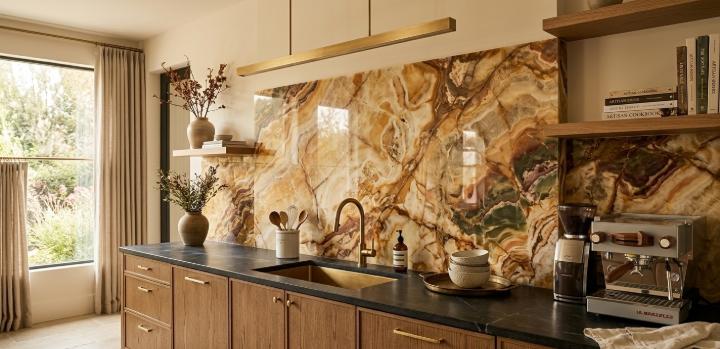
Edge profiles are one of the most visually important details of any countertop, and your choice of thickness directly affects which profiles are available to you.
On 3cm material, the full range of decorative edge profiles is accessible. Flat, eased, beveled, bullnose, ogee, dupont, and waterfall edges all work well on this thickness. The extra depth produces crisp, well-proportioned results on profiles that rely on a substantial surface to work with. For a deeper look at how edge styles interact with different stone types, This Old House's guide to stone countertops is a thorough reference covering the most common options.
On 2cm material, simpler profiles tend to look best when the stone is at its natural thickness. Square and eased edges translate well. More decorative profiles can still be achieved by laminating or mitering the edge, which builds up the visible depth using additional pieces of stone. This approach works particularly well for straight, contemporary edge designs.
Application Guide: When to Use Each Thickness
Use 3cm for:
- Kitchen countertops with heavy daily use
- Large kitchen islands and peninsulas with seating overhangs
- Decorative edge profiles including ogee, bullnose, and waterfall designs
- Any application where a bold, substantial visual presence is desired
- Installations where you prefer not to use a plywood sublayer
Use 2cm for:
- Stone backsplashes and wall cladding
- Bathroom vanity tops with lighter daily use
- Contemporary or minimalist kitchens where a slim profile is part of the design intent
- Custom edge builds using lamination or mitered construction
- Any application where reduced weight is a structural consideration
Talking to Your Showroom Team
Once you have a sense of which thickness direction makes sense for your project, a visit to a stone showroom is the best next step. Seeing actual slab edges and profiles in person makes the choice much clearer than any photograph. You can also ask to see laminated edge samples on 2cm material to evaluate whether that look works for your design.
For additional guidance on caring for your countertop once it is installed, Fine Homebuilding's natural stone countertop guide covers sealing schedules and surface maintenance across the most popular stone types.
Our design team specializes in helping homeowners, designers, and builders work through exactly these kinds of decisions. Whether you are still in early planning or ready to select a slab, a free design consultation at your nearest local showroom gives you the full picture before any commitments are made. You can also browse the complete slab and tile selection at our homepage to start getting a feel for what is available.
Conclusion
Choosing between a 2cm and 3cm slab does not have to be complicated. For most kitchen countertops, 3cm is the practical choice. It is structurally self-supporting, offers the widest range of edge profiles, and delivers the bold, substantial look that suits high-use spaces. For backsplashes, wall cladding, bathroom vanities, and contemporary designs that call for a slimmer profile, 2cm is not just acceptable but often the better fit.
The most important thing to remember is that thickness does not determine quality. Both options are made from the same stone, perform reliably when properly installed, and can produce beautiful results in the right application. What matters most is matching the thickness to the demands of the space and the direction of your design.
When in doubt, see it in person. Visiting a showroom and comparing actual edge samples side by side will give you a clearer sense of which direction is right for your project than any photo or description ever could. Our team is ready to help you find the right slab, in the right thickness, for your home.
Frequently Asked Questions
Is 3cm the standard thickness for countertops?
Three centimeters has become the dominant standard for kitchen countertops in the United States, particularly for natural stone. It offers structural strength without requiring a plywood support layer. Two centimeters remains the standard for backsplashes, wall applications, and certain bathroom vanity installations.
Do 2cm countertops require extra support?
Yes. When installed on horizontal surfaces like kitchen or bathroom countertops, 2cm slabs typically require a plywood sublayer to provide structural stability. This support helps prevent flexing and cracking under load. The sublayer is usually not visible in standard installations.
Can a 2cm slab look as substantial as a 3cm slab?
With the right edge treatment, yes. Laminated and mitered edge techniques bond additional pieces of stone to the visible edge of a 2cm slab, creating the appearance of a thicker profile. The result can closely mimic a 3cm or even thicker edge without the added weight of a thicker slab throughout.
Which thickness works better for a kitchen island?
Three centimeters is generally recommended for kitchen islands, especially those with extended overhangs for seating. The added thickness provides greater rigidity across longer unsupported spans and eliminates the need for plywood reinforcement.
Can I use 2cm stone as a backsplash?
Yes, and it is actually the recommended thickness for stone backsplashes and wall cladding applications. The lighter weight of 2cm material is easier to secure to a vertical surface, and the reduced depth avoids complications with electrical outlet boxes and wall depth clearances.