Porcelain tile is a dense, durable flooring material made from refined clay fired at 2,300 to 2,400 degrees Fahrenheit. This high-temperature process creates tiles with a water absorption rate below 0.5 percent, making porcelain nearly waterproof and significantly harder than standard ceramic tile. Porcelain resists scratches, stains, and moisture, which makes it ideal for bathrooms, kitchens, entryways, and outdoor spaces.
Available in formats that replicate hardwood, natural stone, and concrete, porcelain tile combines design versatility with low-maintenance performance. This guide covers porcelain tile types, grades, ratings, and the best applications for every room in your home.
Understanding Porcelain Tile: Composition and Manufacturing
Porcelain tile begins its journey as a carefully formulated mixture of refined clays, feldspar, silica, and other natural minerals. What distinguishes porcelain from standard ceramic tile is the manufacturing process and the resulting material density. During production, this clay mixture undergoes firing at extremely high temperatures ranging from 2,300 to 2,400 degrees Fahrenheit. This intense heat creates a vitrification process that transforms the raw materials into an incredibly dense, hard-wearing surface. Innovations in flooring technology continue to advance porcelain tile manufacturing and installation methods.
The high-fire manufacturing method produces tiles with a water absorption rate below 0.5 percent, making porcelain virtually impervious to moisture penetration. This characteristic sets porcelain apart from natural stone, which contains pores that can absorb water and lead to staining or damage over time. The result is a flooring material that combines the visual appeal of natural materials with superior performance characteristics that stand up to daily wear and environmental challenges.
Porcelain Tile vs. Ceramic Tile: Key Differences
Many homeowners wonder about the distinction between porcelain and ceramic tiles since both belong to the same family of fired clay products. The primary differences lie in density, durability, and moisture resistance. Porcelain tiles are fired at higher temperatures and contain more refined clay materials, resulting in a denser product that resists wear, scratches, and moisture more effectively than standard ceramic options.
Ceramic tiles work well for light-duty applications and interior walls where moisture exposure remains minimal. Porcelain tiles excel in demanding environments including high-traffic areas, wet locations, and outdoor installations. When durability and longevity matter most, porcelain consistently outperforms its ceramic counterparts while offering comparable design versatility. Explore porcelain tile options to see the variety of styles available.
Types of Porcelain Tile for Every Application
Floor Tiles
Porcelain floor tiles represent the most popular application for this material, and for good reason. These tiles deliver exceptional resistance to foot traffic, scratches, and impacts while maintaining their appearance for decades. Modern manufacturing techniques allow porcelain floor tiles to replicate the look of hardwood planks, natural stone, concrete, and countless other materials with remarkable realism. Homeowners enjoy the aesthetic they desire without sacrificing the practical benefits that make porcelain an intelligent long-term investment.
Wall Tiles
Porcelain wall tiles open creative possibilities for bathrooms, kitchens, and accent walls throughout your home. These tiles typically feature lighter construction than floor varieties while maintaining the moisture resistance that makes porcelain ideal for wet environments. Options like our Onyx 12x24 Matte or Polished porcelain tile showcase how wall tiles can create sophisticated focal points. From sleek subway patterns to large-format panels that minimize grout lines, porcelain wall tiles accommodate virtually any design vision while providing easy-clean surfaces that resist mold and mildew growth.
Mosaic Tiles
Mosaic porcelain tiles consist of smaller tile pieces arranged in patterns and mounted on mesh backing for simplified installation. These decorative options create stunning backsplashes, shower accents, and feature walls that become focal points in any room. The mesh backing maintains precise spacing during installation, ensuring professional results whether you're creating geometric patterns, flowing designs, or traditional mosaic arrangements.
Outdoor Tiles
The density and low porosity of porcelain make it an excellent choice for outdoor applications where other materials might fail. Porcelain patio tiles, pool surrounds, and walkway surfaces resist freeze-thaw cycles, UV exposure, and moisture penetration that can damage natural stone or lower-quality ceramics. Many outdoor porcelain tiles feature textured surfaces that provide slip resistance when wet, combining safety with style for exterior living spaces.
Understanding Porcelain Tile Grades and Ratings
PEI Ratings (Class 1-5)
The Porcelain Enamel Institute developed a rating system that measures abrasion resistance and helps homeowners select appropriate tiles for specific applications. Class 1 tiles suit wall installations only, while Class 5 tiles withstand heavy commercial traffic. For residential flooring, Class 3 and Class 4 tiles handle most household demands effectively, with Class 4 recommended for entryways and kitchens where traffic concentrates.
Quality Grades (Grade 1-3)
Tile quality grades indicate manufacturing standards and structural integrity rather than wear resistance. Grade 1 tiles meet the highest standards for uniformity, sizing accuracy, and surface quality. Grade 2 tiles may contain minor imperfections but remain suitable for most residential applications. Grade 3 tiles, sometimes called "seconds," contain noticeable variations and work best for rustic designs where imperfections add character rather than detract from appearance. Learn how our design consultants can help you determine which grade best suits your project requirements and budget.
Thickness Considerations
Porcelain tile thickness ranges from approximately one-quarter inch to three-quarters inch, with thicker tiles generally indicating greater durability and suitability for high-traffic installations. Floor tiles typically measure at least three-eighths inch thick, while wall tiles may use thinner profiles since they don't bear weight or foot traffic. Outdoor installations often benefit from thicker tiles that resist cracking under temperature fluctuations and physical stress.
Best Rooms and Applications for Porcelain Tile
Bathrooms
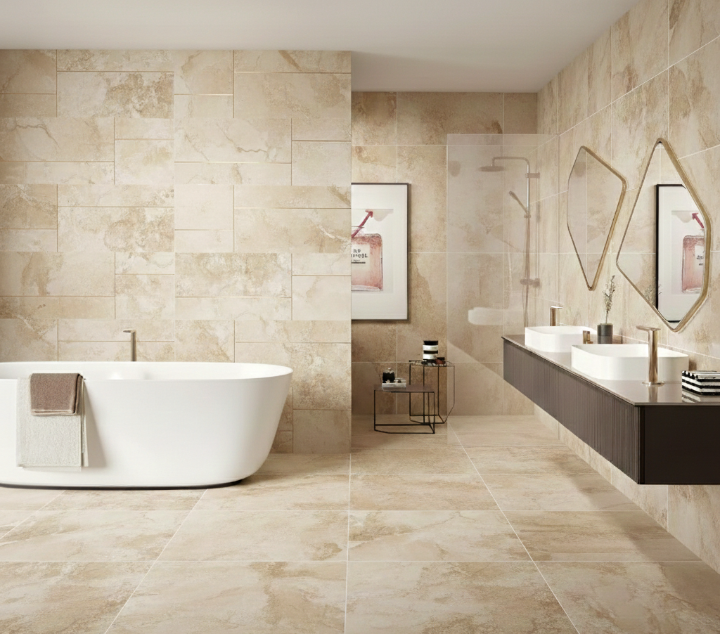
Moisture resistance makes porcelain the premier choice for bathroom flooring and walls. Unlike hardwood or laminate, porcelain won't warp, swell, or deteriorate when exposed to humidity, splashes, and standing water. The non-porous surface resists mold and mildew growth while providing easy cleaning that maintains hygienic conditions. From floors to shower surrounds to vanity backsplashes, porcelain handles every bathroom application with exceptional performance. Schedule a free design consultation to explore bathroom tile options for your project.
Kitchens
Kitchen environments demand flooring that withstands spills, dropped items, heavy foot traffic, and frequent cleaning. Porcelain meets these challenges while offering design options that complement any kitchen style, including 2026's trending kitchen color palettes. The stain-resistant surface shrugs off wine, oil, and food spills that might permanently mark other materials. Many homeowners extend their kitchen porcelain onto backsplash areas, creating cohesive designs that simplify cleaning around cooking zones.
Entryways and Mudrooms
First impressions matter, and entryways endure more abuse than almost any other area in your home. Porcelain tile handles tracked-in dirt, wet shoes, and heavy foot traffic without showing wear patterns that plague carpeting and hardwood. The material's resistance to moisture protects against damage from rain, snow, and slush while providing easy cleanup that keeps these high-visibility areas looking their best.
Living Areas
Open floor plans have popularized porcelain tile in living rooms and great rooms where its durability and design versatility shine. Wood-look porcelain planks deliver the warmth of hardwood with none of the maintenance concerns, while stone-look tiles create sophisticated backdrops for any décor style. Large-format porcelain slabs minimize grout lines for a seamless, contemporary appearance in expansive living areas. Radiant heating systems work beautifully beneath porcelain floors, providing efficient warmth that the dense material conducts evenly throughout living spaces.
Outdoor Spaces
Patios, pool decks, and outdoor kitchens benefit from porcelain's weather resistance and low maintenance requirements. Unlike natural stone that may require sealing or concrete that can crack and stain, quality porcelain maintains its appearance through seasons of sun, rain, and temperature extremes. Select tiles rated for outdoor use and featuring appropriate slip resistance for safe, beautiful exterior living areas.
Design Possibilities with Modern Porcelain Tile
Today's porcelain tiles reproduce the appearance of virtually any natural material with stunning accuracy. Advanced digital printing and texturing technologies create surfaces that look and feel like authentic hardwood, marble, travertine, slate, and concrete. Our Contemporary Slate 12x24 porcelain tile demonstrates how realistic these reproductions have become. These tiles allow homeowners to achieve their desired aesthetic without the maintenance demands, durability concerns, or higher costs associated with natural materials.
Color options extend far beyond traditional neutrals, with bold hues, subtle variations, and dramatic patterns available for every design preference. For inspiration on coordinating tile with your overall color scheme, explore resources on classic color combinations that stand the test of time. Large-format tiles create contemporary looks with minimal grout lines, while smaller formats and mosaics support traditional and transitional designs. This versatility ensures you'll find porcelain tiles that perfectly complement your vision regardless of your home's architectural style or your personal taste.
Conclusion
Porcelain tile stands as one of the smartest investments homeowners can make when selecting flooring and wall surfaces. Its combination of exceptional durability, moisture resistance, design versatility, and low maintenance requirements delivers lasting value that other materials simply cannot match. From bathrooms and kitchens to outdoor living spaces, porcelain performs beautifully in demanding environments while maintaining its appearance for decades of daily use.
Whether you're drawn to the warmth of wood-look planks, the elegance of marble reproductions, or the clean lines of contemporary concrete-look tiles, porcelain offers options that bring your design vision to life. Understanding grades, ratings, and appropriate applications helps you select tiles that perform as beautifully as they look, ensuring satisfaction with your investment for years to come.
Visit one of our tile showrooms in Reno, Minden, Sacramento, or Fernley to explore our extensive porcelain tile collections. Our design consultants provide complimentary guidance to help you select the perfect tiles for your project, and our $1 cut-to-order sample program lets you evaluate options in your home before committing. Experience the difference that quality porcelain tile makes in transforming your living spaces.
Porcelain Tile Products
Frequently Asked Questions
Is porcelain tile better than ceramic tile for bathrooms?
Porcelain tile generally outperforms ceramic in bathroom applications due to its lower water absorption rate and greater density. While both materials work in bathrooms, porcelain's moisture resistance below 0.5 percent absorption makes it superior for shower floors, tub surrounds, and areas with frequent water exposure. The denser composition also resists mold and mildew growth more effectively, contributing to healthier bathroom environments with less maintenance effort.
How long does porcelain tile flooring last?
Quality porcelain tile flooring routinely lasts 50 years or longer with proper installation and basic maintenance. Many porcelain installations remain beautiful and functional for the lifetime of the home, far exceeding the lifespan of carpet, hardwood, or laminate alternatives. The key factors affecting longevity include selecting appropriate grades and ratings for your application, professional installation with suitable substrates, and following manufacturer cleaning recommendations.
Can porcelain tile be installed over existing flooring?
In many cases, porcelain tile can be installed over existing hard-surface flooring including vinyl, tile, and concrete, provided the existing surface is level, stable, and properly prepared. Installing over existing floors can save removal costs and reduce project timelines. However, factors like floor height transitions, door clearances, and the condition of existing materials require professional evaluation. Visit a showroom location to speak with our design consultants who can assess your specific situation and recommend the best approach for your project.
Does porcelain tile require sealing like natural stone?
Glazed porcelain tiles do not require sealing because the manufacturing process creates a non-porous surface that resists staining and moisture penetration. Unglazed or through-body porcelain may benefit from sealing in certain applications, though the material's inherent density provides substantial protection even without treatment. Grout lines between tiles typically do require sealing to prevent staining and moisture absorption, regardless of the tile type used.
What is the price range for porcelain tile?
Porcelain tile prices vary widely based on quality, design complexity, size, and manufacturer, typically ranging from three dollars to fifteen dollars per square foot for residential-grade options. Premium designer collections and large-format tiles may exceed this range. While porcelain often costs more initially than vinyl or laminate alternatives, its exceptional longevity and minimal maintenance requirements deliver superior value over time. Our showrooms offer options across all price points, and our team helps you find tiles that meet both your design goals and budget requirements.