The top kitchen countertop trends for 2026 include warmer neutral tones, bold natural veining, matte and honed finishes, and durable engineered surfaces such as quartz, sintered stone, and porcelain.
Homeowners in Minden and throughout Carson Valley are moving away from the cool, uniform surfaces that dominated kitchen design over the past decade, choosing materials with more warmth, texture, and personality instead. Nova Tile and Stone carries each of these countertop options at our Minden showroom, so you can compare samples side by side before making a decision. Whether you are updating a single countertop or planning a full kitchen remodel, understanding these shifts can help you choose a material that fits both your home and your daily routine.
Warm Neutrals Are Replacing Cool, Stark Palettes
For several years, bright white surfaces paired with gray veining were the default choice in most new kitchens. That palette is giving way to warmer, earthier tones such as cream, taupe, bone, and soft gold. National design coverage of the shift points to a broader move toward spaces that feel grounded and lived-in rather than sterile, and countertops are one of the clearest places this preference shows up.
Homes across Carson Valley, from Gardnerville to Genoa, often suit these warmer tones well, since they complement wood cabinetry and the surrounding high desert landscape. If this direction appeals to you, our natural stone countertop selection includes granite, quartzite, and marble in warmer color families, alongside quartz engineered to echo the same palette.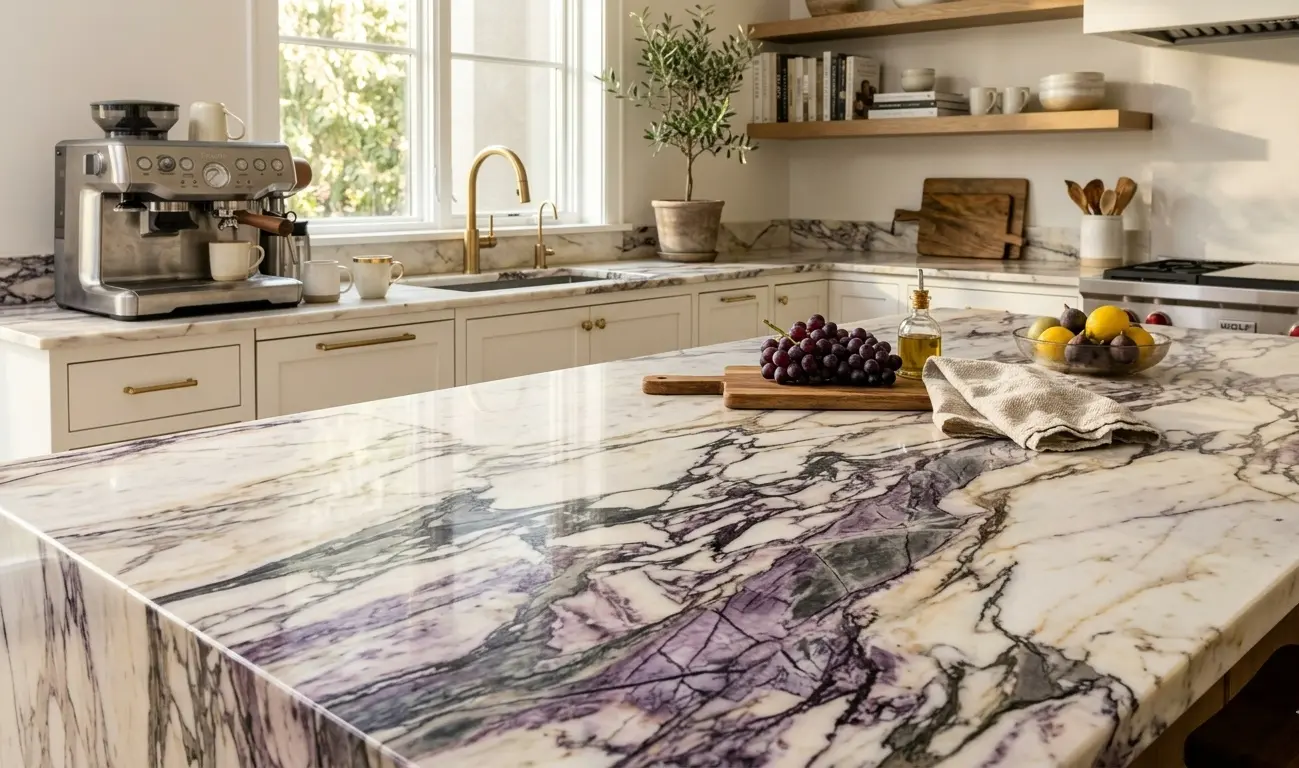
Bold Veining and Natural Movement Are Taking Center Stage
Alongside warmer colors, homeowners are gravitating toward slabs with visible movement rather than flat, uniform patterns. Quartzite in particular has grown in popularity for its marble-like veining paired with notable hardness, and it is increasingly treated as a focal point rather than a background surface. Each slab has natural variation in tone, veining, and movement, which is part of what makes a stone countertop feel personal rather than mass produced.
Marble remains a favorite for the same reason, prized for its soft, flowing patterns, though it is worth noting that marble is softer than granite or quartzite and benefits from more attentive care over time. Quartz has followed this trend as well, with manufacturers producing patterns that echo the drama of natural stone while keeping the consistency of an engineered material. To see the range firsthand, you can browse our slab inventory before deciding on a direction.
Matte and Honed Finishes Are Gaining Ground
High gloss finishes once signaled a modern kitchen, but that preference is cooling. Matte and honed finishes are increasingly favored because they read as more tactile and less reflective, which suits the warmer, textured kitchens described above. Spills are still worth wiping up fairly quickly on a honed surface, even though the finish holds up well against staining in everyday use. This holds true whether you choose natural stone or an engineered material.
Leathered finishes, which add a subtle texture to natural stone, offer a similar effect for homeowners who want depth without added shine. Industry coverage of 2026 surface trends has noted this same pattern across manufacturers, with softer finishes replacing the high polish that dominated prior years. The finish you select does more than change the look of a slab; it also affects how fingerprints, water spots, and daily wear show up over time.
Engineered Surfaces Continue to Expand
Quartz, sintered stone, and porcelain each continue to grow in popularity alongside natural stone, and recent trend survey data points to quartz and quartzite as the fastest growing countertop materials right now, with porcelain, granite, and marble following close behind. Quartz combines crushed natural quartz with resin binders into a non-porous surface, and keeping up with regular cleaning is really what keeps it looking its best over time. Sintered stone is produced under extreme heat and pressure, which gives it strong resistance to everyday kitchen heat; a trivet is still the safer bet for pans coming straight off the stove.
Porcelain slabs offer a lightweight alternative with a comparable look, and both porcelain and sintered stone are frequently chosen for outdoor applications thanks to strong UV stability, with color and finish still playing a role in how a given slab performs over time. That versatility matters in a climate like ours here in Northern Nevada, where surfaces face strong sun and wide temperature swings across the year. Our full range of countertop materials includes all of these options for comparison under one roof.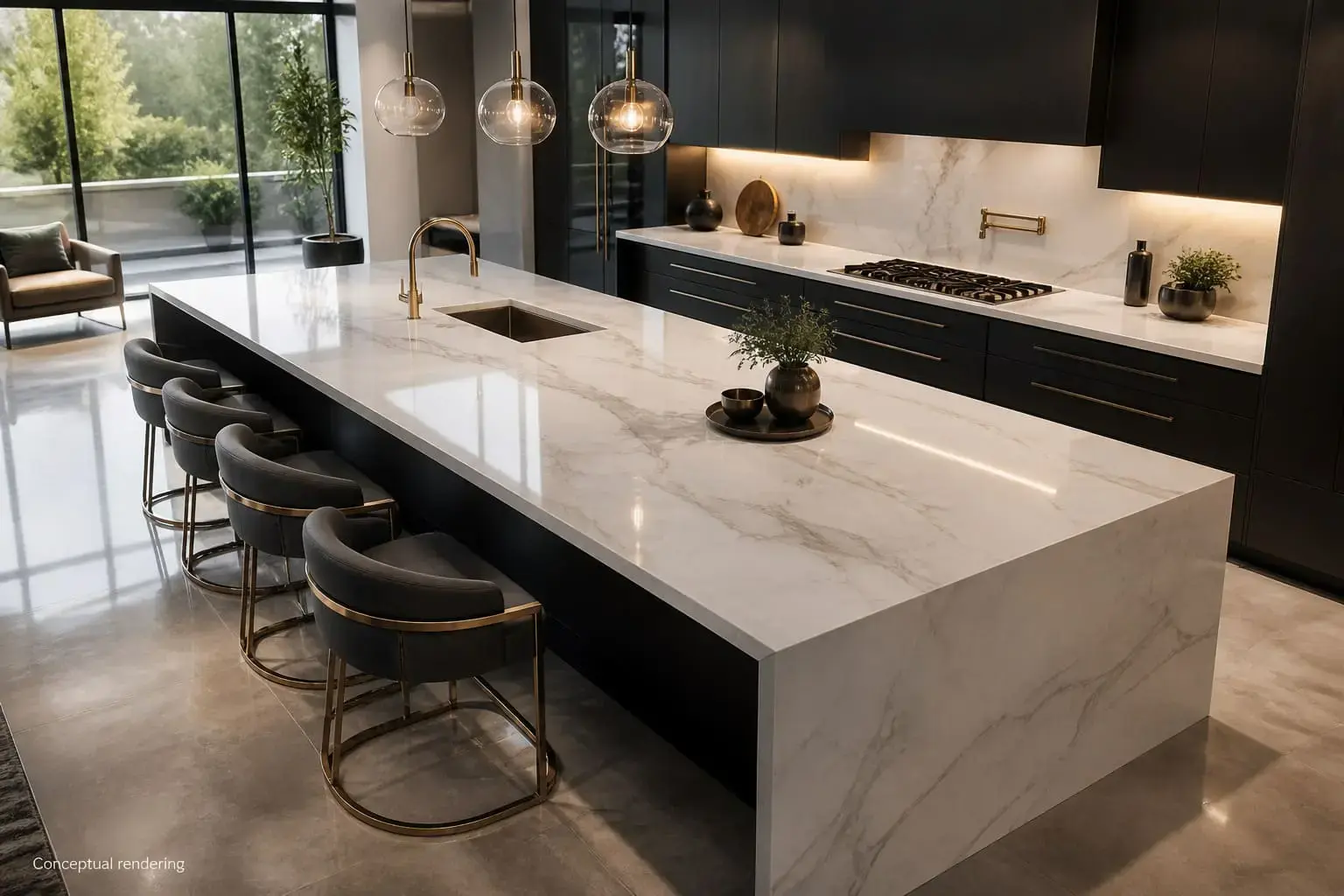
Comparing Natural Stone and Engineered Options for Everyday Use
Choosing between a quarried material and an engineered one often comes down to how a household actually uses its kitchen. Granite remains a practical choice for busy spaces, but the right finish still matters, since a polished surface shows fingerprints differently than a honed version. It also stands up to normal kitchen heat well, and like any countertop material, a hot pan is better off on a trivet than set directly on the surface.
Quartzite sits near the top of the hardness scale among natural stones, which is part of why it pairs well with active households that do a lot of food preparation. Even a hard, scratch-resistant surface like this can dull a knife blade or pick up fine marks when used as a cutting board, so keeping one on hand protects both the blade and the countertop.
Engineered options such as quartz and sintered stone offer a different kind of consistency. Because they are manufactured rather than quarried, color and pattern repeat more predictably from one slab to the next, which can make matching an island to a perimeter run more straightforward. These materials offer good resistance to everyday wear, but long term performance still depends on routine care and how heavily the space gets used. For households weighing these trade offs, comparing swatches of each option side by side often clarifies a decision faster than reading specifications alone.
Countertops Are Extending Beyond the Kitchen Island
Another shift worth noting is how far a single material now travels within one space. Rather than stopping at the edge of an island or perimeter run, many homeowners are choosing to carry the same slab up the wall as a full backsplash, creating a seamless look that highlights the stone itself. This approach works particularly well with quartzite, since it allows dramatic veining to read as one continuous piece rather than being broken up by a separate tile backsplash.
This trend also extends to how countertops meet cabinetry, with more designers coordinating tone and texture between the two rather than treating the counter as an isolated element. The result tends to feel more intentional and less like a patchwork of unrelated finishes chosen one at a time.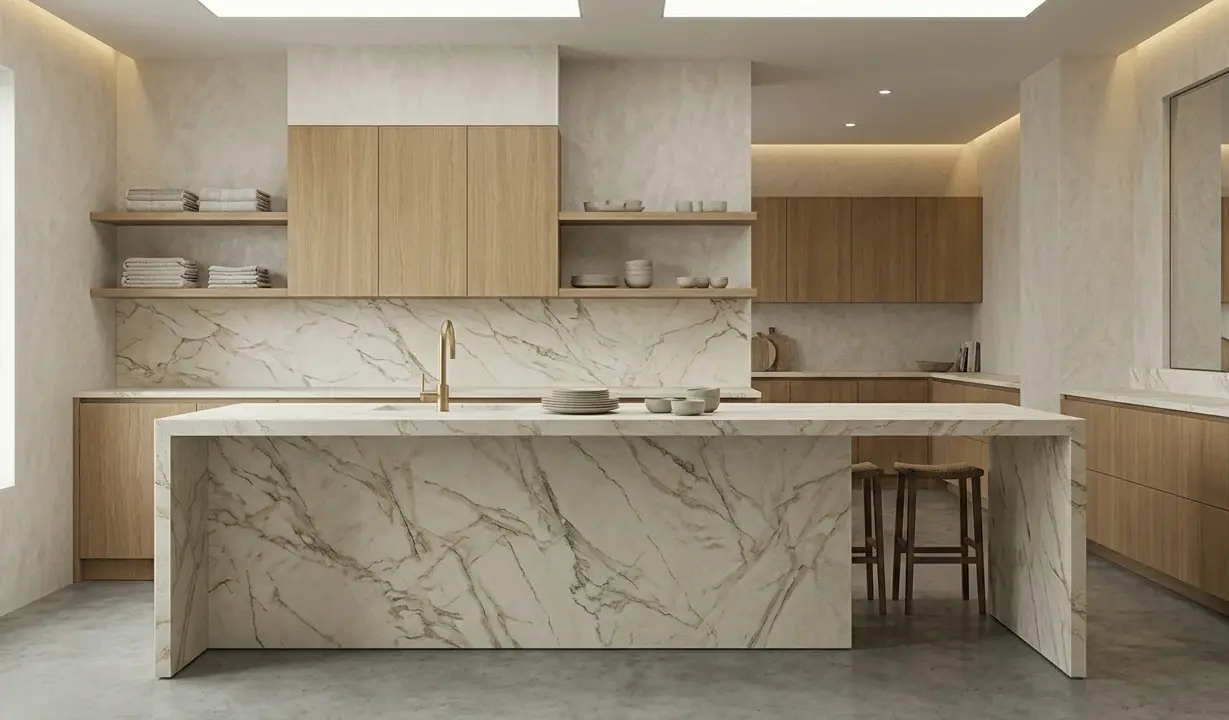
Finding the Right Fit for a Minden Kitchen
Every kitchen is different, and the right material depends on how a space is used day to day, how much natural light it receives, and the overall style of the home. Homeowners throughout Carson Valley, including Gardnerville, Genoa, and the surrounding Douglas County communities, often benefit from viewing full slabs in person, since photographs only tell part of the story and lighting can change how a color or pattern appears. Our Minden showroom carries natural stone, quartz, sintered stone, and porcelain side by side, along with prefabricated options for households looking for a more straightforward path forward.
If you are still narrowing down a direction, our design team offers a free consultation to walk through options based on your cabinetry, layout, and the overall look you are hoping to create. There is no pressure to decide on the spot, and taking home a sample often remains the easiest way to see how a material behaves under your own lighting before committing to one.
Conclusion
Countertop trends will keep evolving, but the underlying theme heading into 2026 is a move toward materials that feel authentic, textured, and personal rather than uniform. Whether that means a warm quartzite with dramatic veining, a matte quartz in a soft neutral tone, or a sintered stone surface built for both indoor and outdoor use, there is a wide range of directions worth exploring. Taking the time to compare materials in person, under your own lighting and alongside your cabinetry, remains the most reliable way to choose a surface you will be glad to live with for years to come. You can browse our full collection or stop by to see these options firsthand.
Frequently Asked Questions
Warmer neutrals such as cream, taupe, bone, and soft gold are leading the way, often paired with quartzite or marble featuring visible veining and movement.
Both perform well in a kitchen setting. Quartz offers a consistent pattern and skips the sealing step entirely, while natural stone brings unique veining and typically benefits from periodic sealing depending on the material chosen.
Matte and honed finishes are generally easy to maintain. Skipping harsh cleaners and wiping up spills fairly promptly goes a long way toward helping the surface hold up over time.
Yes, both are commonly selected for outdoor applications for strong UV stability and resistance to temperature swings, though the specific finish and application should be matched to the intended use.
The most reliable approach is comparing samples in your own lighting and alongside your cabinetry. Our design team offers a free consultation to help narrow down options based on your space and style.