Wood-look porcelain tile is worth it for most Granite Bay, CA homeowners because it delivers the appearance of hardwood while resisting moisture, scratching, and temperature swings better than real hardwood or laminate, and holding up better against UV fading than many LVP products in sun-exposed rooms. It costs more upfront than laminate and most LVP, but its moisture and scratch resistance make it a stronger long-term fit for kitchens, entryways, bathrooms, and other high-traffic or water-exposed rooms.
Granite Bay's combination of lakeside humidity, hot dry summers, and homes with large sun-facing windows makes flooring durability a bigger factor than it is in many other areas. This guide compares wood-look porcelain tile against hardwood, LVP, and laminate on performance, cost, and room-by-room fit, so Granite Bay homeowners can decide where it fits into their tile, stone, and flooring plans.
What Wood-Look Porcelain Tile Actually Is
Wood-look porcelain tile is a fired ceramic tile manufactured to mimic the color, grain, and texture of hardwood planks. High-resolution printing technology transfers a wood-grain pattern onto the tile surface before firing, and modern manufacturing has moved past the flat, repetitive patterns older versions were known for. Many current lines use multiple print patterns across a single run of tile so that a floor doesn't show an obvious repeat every few planks, and homeowners can browse current wood-look tile patterns to compare how different manufacturers handle grain variation and color.
The tile itself is a dense, low-porosity porcelain body, which is what gives it very different performance characteristics than actual wood. It doesn't expand or contract with humidity the way hardwood does, and it absorbs only a negligible amount of water into its structure, meeting the water absorption requirements for certified porcelain tile. The wood-look effect is purely visual and textural, created through printing and embossing, not through any wood content.
How It Performs Compared to Hardwood
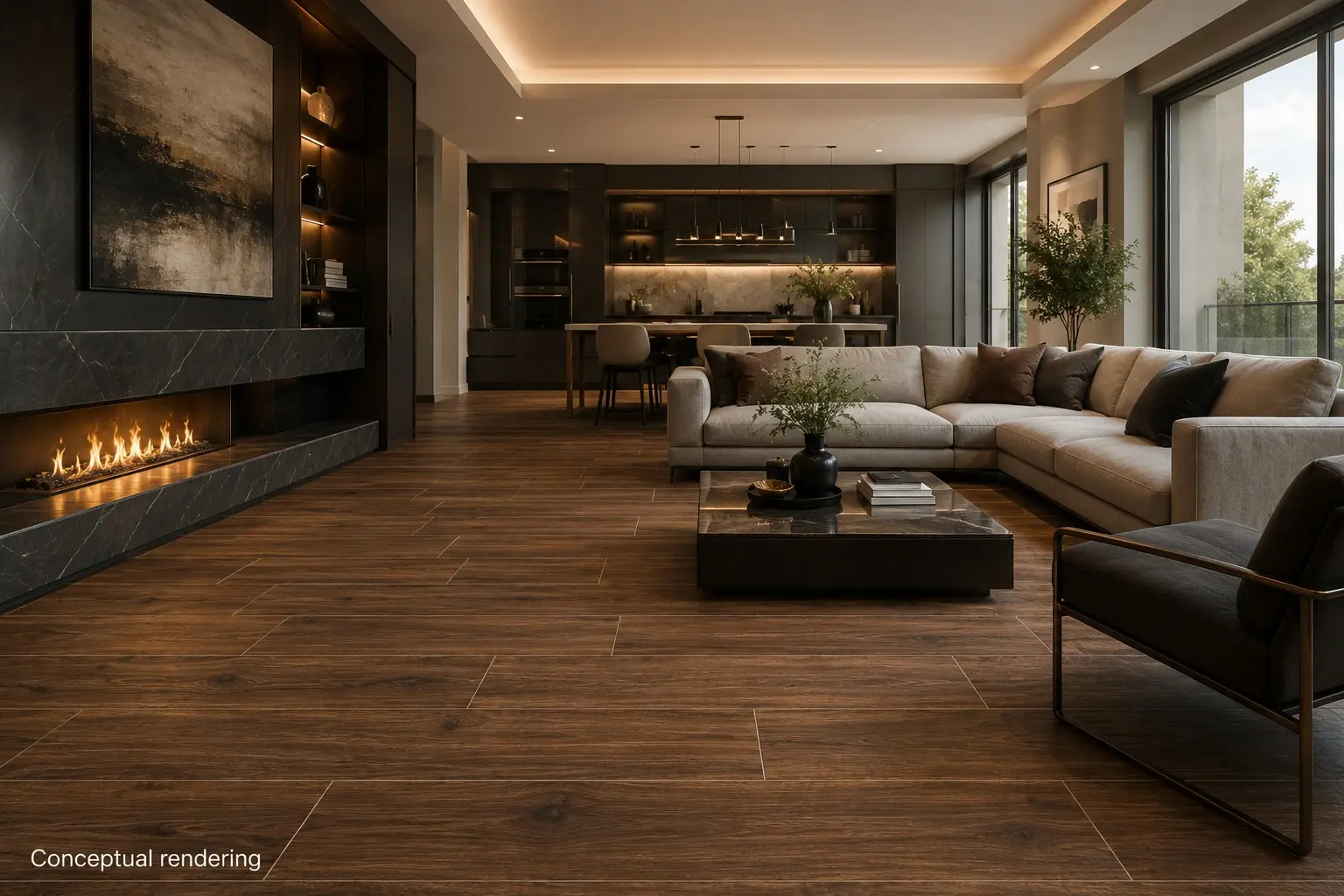
Real hardwood brings a natural material quality that some homeowners prefer, along with the ability to be refinished multiple times over its life. Wood-look porcelain tile can't be sanded and refinished the way hardwood can. If a plank chips or the finish wears unevenly, replacement of the affected tile is generally the fix rather than resurfacing.
Where porcelain tile pulls ahead is moisture and temperature stability. Hardwood flooring can cup, gap, or warp when humidity fluctuates, which matters in Granite Bay homes that see dry summer heat followed by damp winter months. Porcelain tile doesn't respond to humidity changes in the same way, so it tends to stay flat and stable in rooms where hardwood might need more careful climate control.
Scratch resistance is another point of difference. Hardwood surfaces, especially softer wood species, can scratch from foot traffic, pet nails, or moved furniture. Porcelain's fired surface is harder and generally more resistant to surface scratching under normal household use, and manufacturing quality for ceramic and porcelain tile is governed by industry-wide ceramic tile standards that cover everything from water absorption to surface hardness.
How It Performs Compared to LVP and Laminate
Luxury vinyl plank and laminate are the two other common wood-look alternatives, and each has a different set of tradeoffs against porcelain tile.
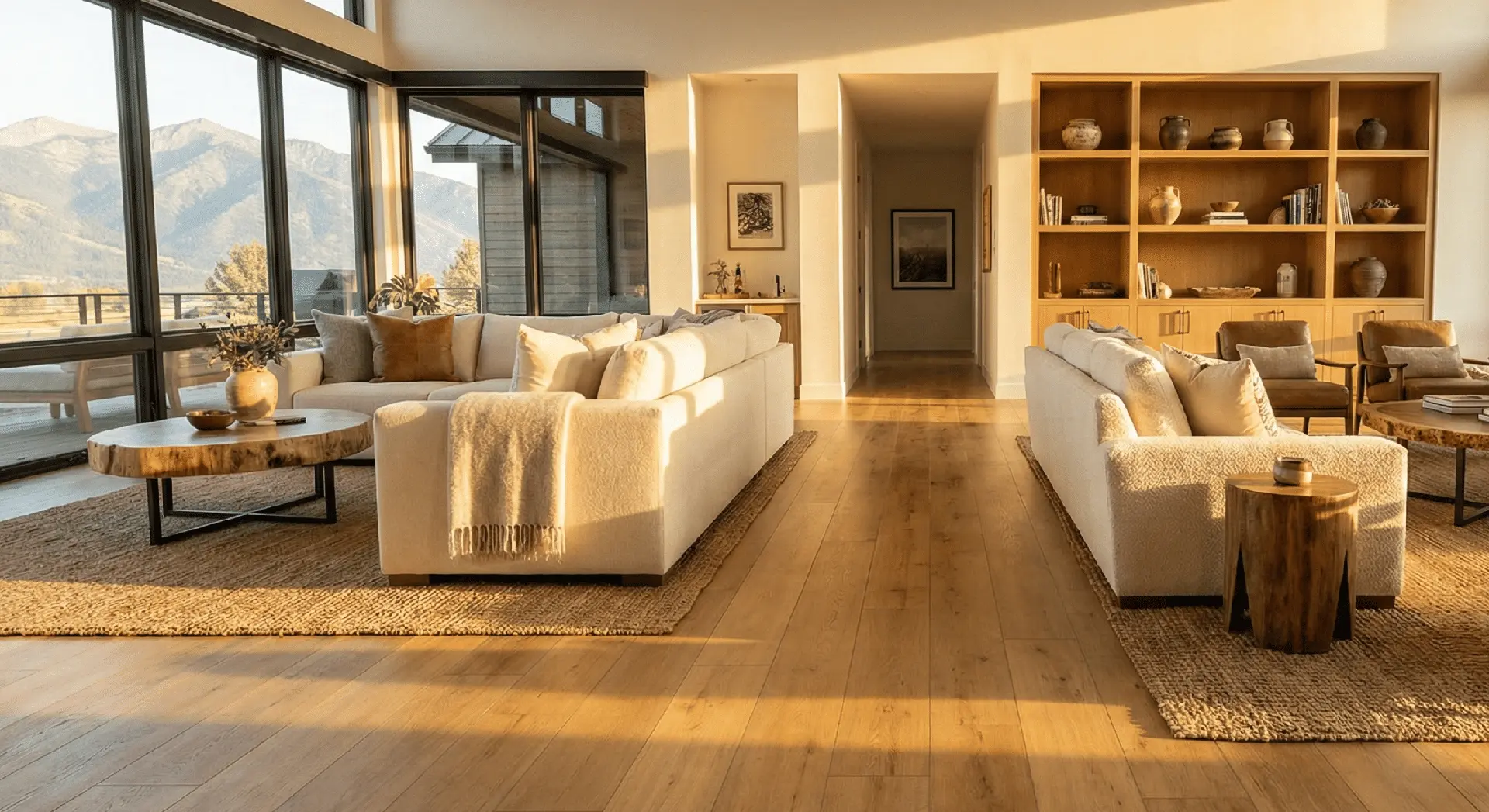
LVP has a resilient, slightly cushioned feel underfoot and is generally easier to install as a floating floor. It performs well in moisture-prone spaces and is often less expensive than porcelain tile per square foot. Its main drawback shows up over time in heat and UV exposure. Vinyl products can be more prone to fading or softening in rooms that get intense, direct sunlight for extended periods, which is worth factoring in for west-facing rooms common in Granite Bay's newer construction.
Laminate flooring uses a printed image layer under a wear-resistant coating on top of a composite wood core. That core is vulnerable to swelling if water sits on the surface for any length of time, which makes laminate a weaker choice for bathrooms, laundry rooms, or entryways where wet shoes and dripping umbrellas are common. Porcelain tile has no organic core to swell, so it handles those conditions with far less risk.
Porcelain tile is typically the most rigid and coldest underfoot of the three options, and it's usually the most involved to install since it requires a mortar setting bed rather than a floating installation. Homeowners weighing these materials are generally trading some installation simplicity and softness underfoot for better long-term moisture and wear performance.
Where It Tends to Make the Most Sense in a Granite Bay Home
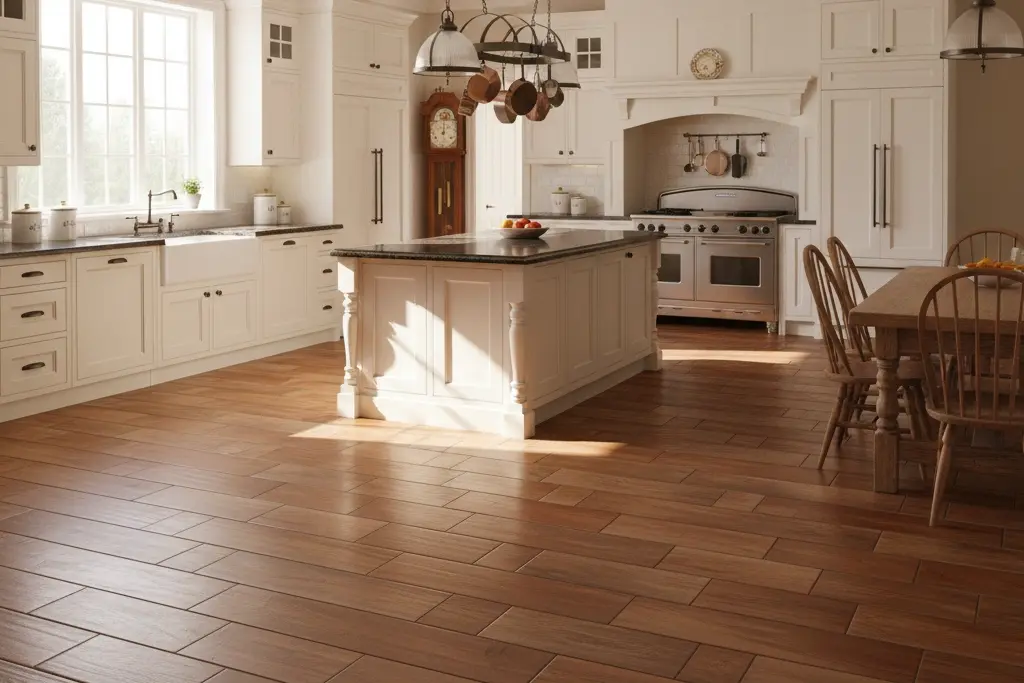
Kitchens are one of the more common rooms for wood-look porcelain tile, since spills, dropped utensils, and pet water bowls are a daily reality. The material's resistance to moisture and scratching holds up well in that setting without the risk of long-term water damage that real hardwood can face near sinks and dishwashers. Homeowners who want to carry the wood-look aesthetic onto a backsplash or accent wall can pair floor tile with a coordinating option like Aura's matte wood-look wall tile, which is designed specifically for vertical, wall-only applications rather than flooring.
Entryways and mudrooms are another strong fit, particularly in homes near the lake or with outdoor pool access, where foot traffic tracks in dirt, water, or pool chemicals. Bathrooms benefit from porcelain's water resistance in a way hardwood simply can't match, since standing water and humidity are constant factors in that room.
Sunrooms and rooms with large amounts of direct window exposure are worth considering carefully. Porcelain tile's color-fast printed finish generally resists fading better than some LVP products under sustained UV exposure, which can be relevant in Granite Bay homes designed with large windows to take advantage of the area's views and natural light.
Bedrooms and other lower-traffic, drier rooms are where the case for wood-look porcelain tile is less clear cut. Real hardwood or LVP may make more sense there, since the rooms don't face the same moisture or heavy-traffic demands, and some homeowners prefer the warmer, softer feel of those materials underfoot in spaces where they're walking barefoot.
Cost Considerations
Wood-look porcelain tile generally costs more than laminate and is often comparable to or slightly above mid-range LVP, though pricing varies by tile size, format, and finish quality. As a family-owned direct importer of tile and stone, we're able to offer a wide range of price points within the porcelain category itself. It typically costs less than solid hardwood in materials, though installation costs for tile setting can offset some of that difference depending on the scope of the project. Because porcelain doesn't need refinishing over time the way hardwood does, some of the cost difference can even out over a longer ownership period, though that calculation depends heavily on the specific products being compared and how long a homeowner plans to stay in the home.
Tile size also affects both appearance and cost. Longer plank formats tend to look more like real hardwood and can reduce the number of visible grout lines, but they can also cost more and require a flatter subfloor for proper installation.
Grout Lines and Realism
One of the more common concerns homeowners raise is whether grout lines break the wood-look illusion. Narrower grout joints, paired with a grout color that closely matches the tile, can minimize how much the lines stand out. Rectified tile edges, which are precisely cut for tighter, more consistent spacing, also help create a cleaner, more continuous look across a floor. Homeowners who are especially focused on realism often find that plank format, grout color choice, and the variation in the print pattern across tiles matter more to overall appearance than any single specification on its own.
Conclusion
Wood-look porcelain tile is a solid option for Granite Bay homeowners who want the visual warmth of hardwood in rooms where moisture, temperature swings, or heavy traffic make real wood a riskier choice. It isn't a universal replacement for hardwood or LVP in every room, but in kitchens, entryways, bathrooms, and sun-exposed spaces, it tends to outperform both in day-to-day durability. Homeowners weighing this decision are welcome to see the range of plank sizes, finishes, and grout options in person at our Sacramento showroom, located at 6100 Warehouse Way, Sacramento, CA 95826, or reach our team at (916) 913-6682, or book a design consultation to talk through what would work best for a specific room.
Note: Some images on this page may be conceptual renderings created to illustrate design possibilities and may not depict actual installations.
Frequently Asked Questions
Modern wood-look porcelain tile uses high-resolution printing and multiple pattern variations to closely mimic the color and grain of real hardwood. Larger plank formats, tight grout joints, and matching grout color all contribute to a more convincing look, though close inspection can still reveal differences from natural wood grain.
Yes, porcelain tile generally feels cooler underfoot than hardwood, especially in winter months. Some homeowners address this by installing radiant floor heating beneath the tile in rooms like bathrooms where comfort underfoot is a bigger priority.
This depends on the existing floor's condition, flatness, and the installation method used, and is best evaluated on a room-by-room basis. A flat, stable subfloor is typically required for a proper tile installation.
Porcelain tile has very low water absorption and doesn't have an organic core that can swell or warp, which makes it well suited to bathrooms and other consistently damp rooms. Proper grout sealing and maintenance still play a role in long-term performance.
It's often priced above mid-range LVP, though the gap varies depending on tile size, finish, and brand. Porcelain tile's resistance to UV fading and surface wear can make it a stronger long-term value in rooms with heavy sun exposure or foot traffic, even at a higher upfront cost.