Slip-resistant tile is a smarter choice than glossy tile for bathrooms in Zephyr Cove, NV, since lake activity tracks wet feet, sand, and sunscreen into the bathroom on a near-daily basis during the season. Zephyr Cove sits on Lake Tahoe's southeastern shore in Douglas County and takes its name from the Washoe Zephyr, a regional wind that blows down the eastern slopes of the Sierra Nevada each summer afternoon. That lake-driven lifestyle, more than style alone, is what should shape a Zephyr Cove tile choice.
A Cove Named For Its Own Wind
The Washoe Zephyr has been part of this region's character long enough that Mark Twain wrote about it during his own time in nearby Carson City in the 1860s, and meteorologists still study exactly why it behaves the way it does, since it blows downslope in the afternoon rather than the upslope pattern most mountain winds follow. Before Zephyr Cove borrowed that name for itself, though, the cove was a claim. Andrew Gardner staked 160 acres of beachfront in 1862 and built an inn called Zephyr Cove House, catering first to Comstock-era silver prospectors passing through and later to lumber crews cutting cordwood for the mining operations across the valley. By the early 1900s, wealthy California families had discovered the cove for a different reason: as a place to build summer retreats along one of the most scenic stretches of Lake Tahoe's Nevada side.
That resort identity never really left. The U.S. Forest Service bought the property in 1979 for $4.9 million, and today Zephyr Cove Resort still operates the marina and a mile of sandy beach under Forest Service ownership. The M.S. Dixie II, a 151-foot paddlewheeler launched in 1994, still departs from the same cove where Gardner's inn once stood, carrying passengers on cruises toward Emerald Bay. Year-round, only 679 people call Zephyr Cove home, according to the 2020 census, a population dwarfed many times over by the visitors who pass through every summer.
A Marina Town, Not A Main Street
That contrast, a small residential population layered underneath a seasonal tourist economy, shapes what a Zephyr Cove bathroom actually needs to hold up to. Unlike a downtown historic district, Zephyr Cove's housing stock leans heavily toward vacation homes and guest properties tied to the marina and beach, and those bathrooms see a different kind of wear than a full-time family home does: wet swimsuits rinsed off after a day on the water, sandy feet before dinner, sunscreen and lake residue that a full-time resident might not track through a bathroom nearly as often.
Guest bathrooms in particular benefit from tile that looks intentional rather than purely utilitarian, since a rental property or a vacation home used by extended family still needs to feel finished, not just functional. Larger-format tile on shower walls tends to serve double duty here: it reads as clean and current, and it also means fewer grout lines for soap scum, sunscreen residue, and lake sediment to collect in over a season of heavy use.
Zephyr Cove is connected to our Douglas County showroom by Nevada State Route 207 over Kingsbury Grade, the same mountain pass route used by homes further south in Stateline, putting the drive at around 20 miles.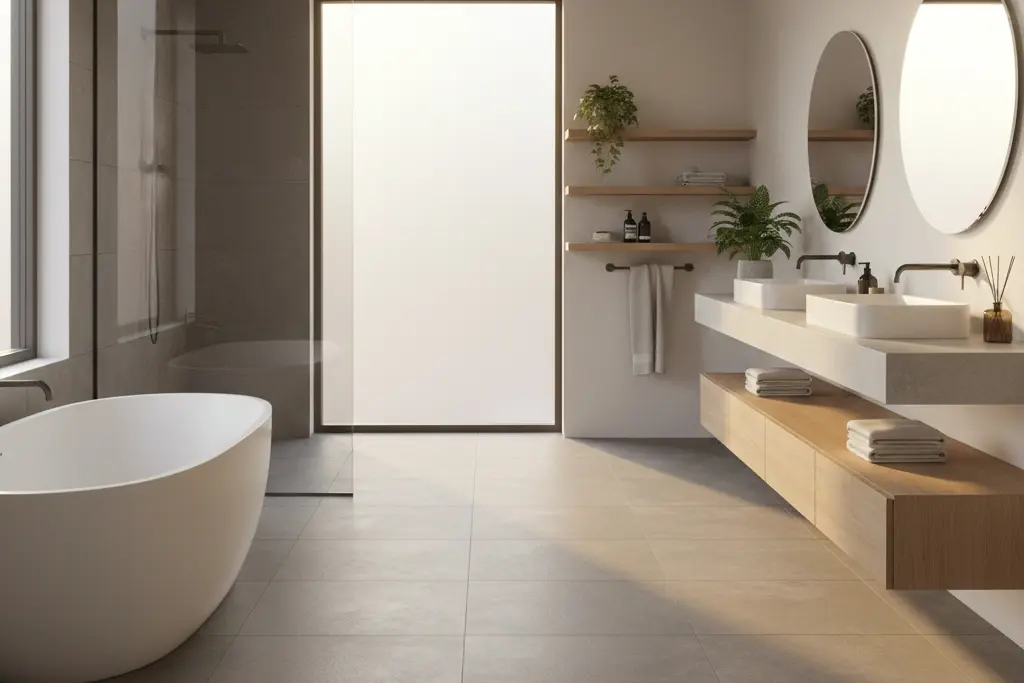
Why Slip Resistance Matters More In A Lake Bathroom
The tile industry measures slip resistance using a specific test, and it's worth understanding before choosing a shower or bathroom floor. According to TCNA's technical resource center, floor tile is evaluated for dynamic coefficient of friction, or DCOF, using a standardized test called the DCOF AcuTest. A tribometer drags a weighted sensor across a wetted tile sample, and the industry standard calls for a minimum wet DCOF of 0.42 for any level interior floor expected to be walked on wet. Since 2022, the governing standard has also required manufacturers to publish a product use classification alongside that number, so a tile's intended application, not just its raw score, is part of what gets published.
That number is a useful comparison tool, not a guarantee. TCNA's own published guidance is direct about this: DCOF measurements help compare one tile's traction against another's, but the test does not predict whether any specific person will or won't slip on a given surface in real conditions. A textured or matte-finish tile generally tests higher for wet traction than a glossy, highly polished tile, which is part of why bathroom floors and shower pans lean toward textured finishes even when the walls above them are glossy.
Grout choice plays into this too, in a way that's easy to overlook. Standard cement grout is porous by nature, which is why it needs periodic sealing to keep moisture and staining out. Epoxy grout uses a resin binder instead of cement, which makes it essentially non-porous from the start, resists moisture and staining more effectively, and doesn't call for that same resealing schedule. That difference matters more in a bathroom that dries out slower than most because of lake humidity tracked in with every use, and epoxy grout also tends to hold its original color longer, since it isn't absorbing the same moisture and residue a cement grout gradually takes on.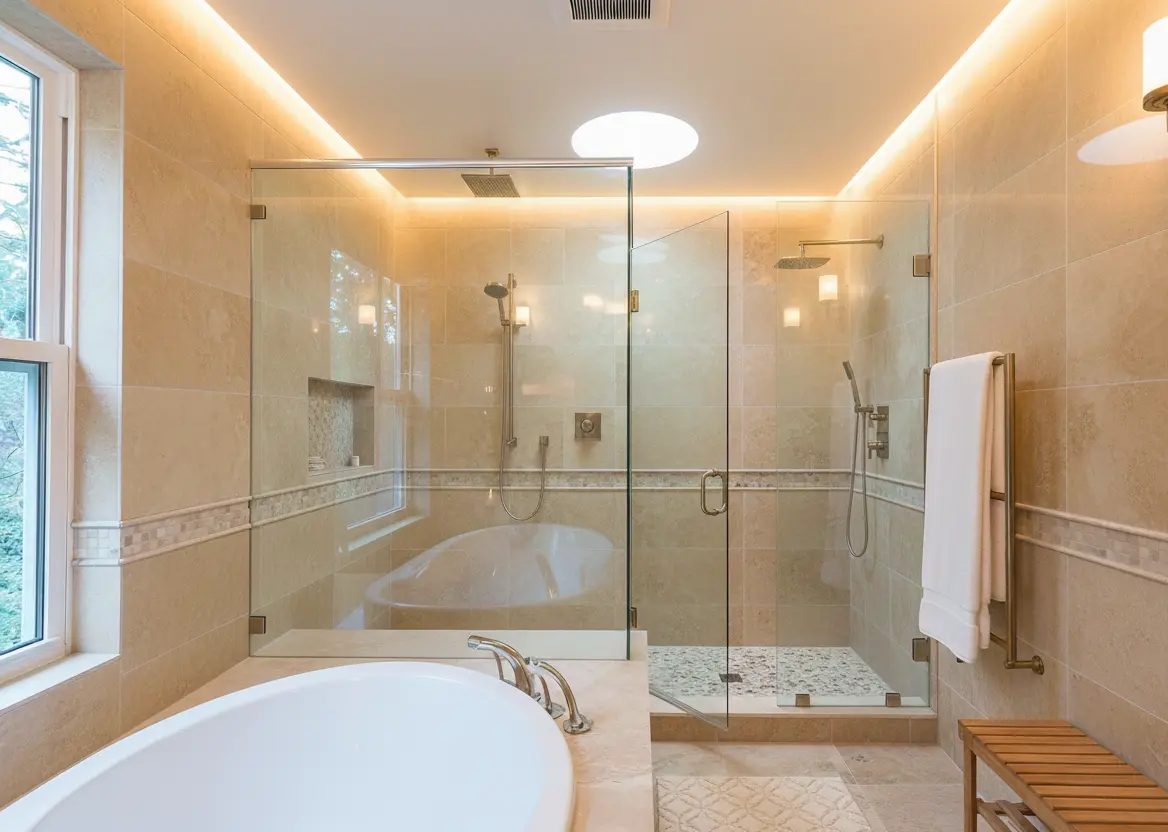
Choosing Tile For Guest And Primary Bathrooms
A guest bathroom arguably needs the slip-resistance conversation even more than a primary one does. Someone unfamiliar with a house, stepping out of an unfamiliar shower onto an unfamiliar floor, doesn't have the muscle memory a full-time resident builds up over years in their own bathroom, which is part of why a textured, higher-DCOF finish is worth prioritizing in the bathrooms guests actually use. A primary bathroom used daily by full-time or long-season residents can still lean into more decorative choices, since the people using it are the ones who chose it and know exactly where the floor gets slick. A guest bathroom serving a rotation of family, friends, or renters benefits from a simpler, more consistent approach: finishes that photograph well, wear evenly, and don't show every water spot the way a very dark, glossy tile can.
Homeowners deciding between a textured shower floor and a smoother deck or bench tile can browse tile by type to compare matte and textured finishes side by side before settling on a combination. Our showroom floor in Minden keeps physical samples of both on hand, since a finish that looks subtly textured in a photo can feel very different underfoot in person, and running a bare foot across an actual sample tells a homeowner more about slip feel than any product description can.
Homeowners furnishing more than one bathroom across a lake property, or managing several rental units at once, may want to compare finishes across our entire catalog in a single visit. Contractors handling multiple Zephyr Cove or Tahoe-basin projects at once can also ask about pricing for trade accounts for ongoing work.
Nova Tile and Stone has served Douglas County and the greater Tahoe basin since 2005, and our history in the region spans long enough to have worked with plenty of homeowners tackling a Zephyr Cove bathroom redo as one piece of a larger, multi-season cabin refresh rather than a single isolated job. Anyone ready to compare tile samples in person can book time at the Minden showroom. Our location on the map sits just off Highway 395, reached from Zephyr Cove by way of Kingsbury Grade and down into Carson Valley.
The showroom is located at 2548 Business Pkwy, Minden, NV 89423, and can be reached at (775) 783-4970.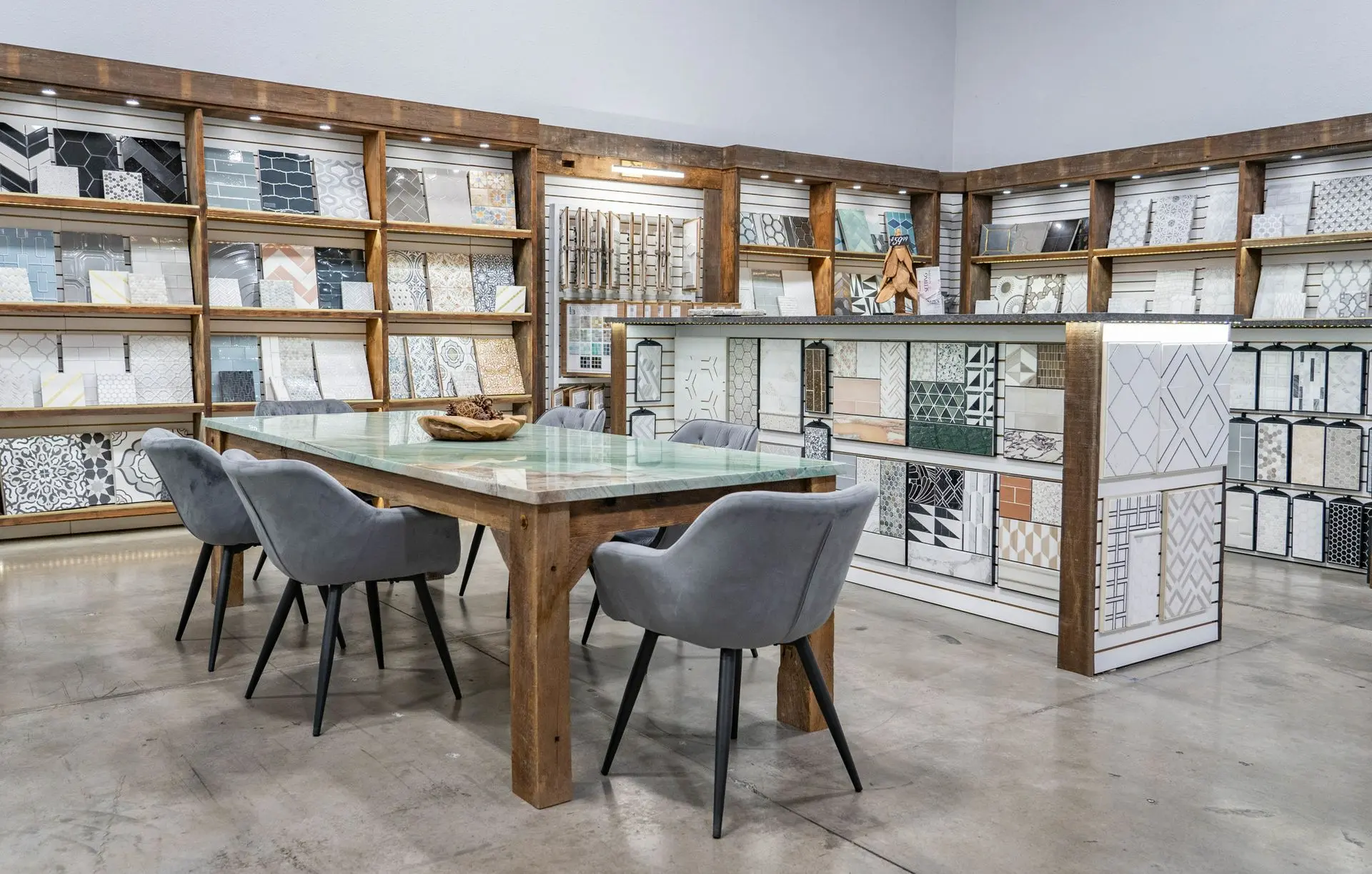
Conclusion
A Zephyr Cove bathroom works harder than a typical Nevada bathroom does, simply because of what a day on the lake tracks in with it. Slip-resistant flooring, grout that shrugs off moisture, and tile that holds up to guest turnover as easily as it does full-time use all matter more here than they would in a home further from the water. Understanding what a DCOF rating actually measures, and choosing finishes with a vacation property's real usage pattern in mind, makes that choice far more straightforward than picking on style alone.
Frequently Asked Questions
Lake activity means wet feet and sandy floors make it into bathrooms far more often than in a typical inland home. A tile's wet DCOF rating, tested using the industry's DCOF AcuTest method, offers a useful way to compare how different finishes perform underfoot when wet, though it isn't a guarantee against slipping.
Epoxy grout resists moisture and staining better than standard cement grout and doesn't need periodic resealing, which is useful in a bathroom that deals with lake humidity and frequent showering. Cement grout remains a common, lower-maintenance-to-install option for bathrooms with lighter daily use.
Often, yes, and slip safety is a bigger part of that decision than it might seem. Guests unfamiliar with a house don't have the same footing instincts a full-time resident builds up, so a textured, higher-traction finish is worth prioritizing in guest bathrooms specifically. Beyond that, a simpler, neutral tile tends to wear more evenly across a rotation of visitors or renters, and a consistent finish across multiple guest bathrooms in the same property also makes future repairs easier to match.
Not the selection itself, but it's worth knowing the showroom is about 20 miles away over Kingsbury Grade, roughly a 30 to 40 minute drive depending on conditions. Seeing full tile samples under real lighting before a purchase is still the most reliable way to judge finish and color for a lake home.
Textured or matte-finish tile generally tests higher for wet traction than glossy tile, which is why shower floors and pans commonly use a textured finish even when the surrounding walls are glossy. Grout lines also add traction, so smaller-format tile is sometimes used on shower floors for that reason alone.