Taj Mahal quartzite is a natural stone quarried in Brazil, formed from sandstone under heat and pressure, with a Mohs hardness of roughly 7 to 7.5, harder than marble and most granite. Its creamy background with gold and gray veining, combined with strong resistance to scratching, heat, and staining, makes it a common countertop and vanity choice for homes in Kings Beach, CA and the broader North Lake Tahoe area, where kitchens see heavy seasonal use from both snow and lake traffic. This guide covers what the stone is, how it compares to marble, granite, and engineered quartz, and what to consider when choosing it for a home at Tahoe's elevation.
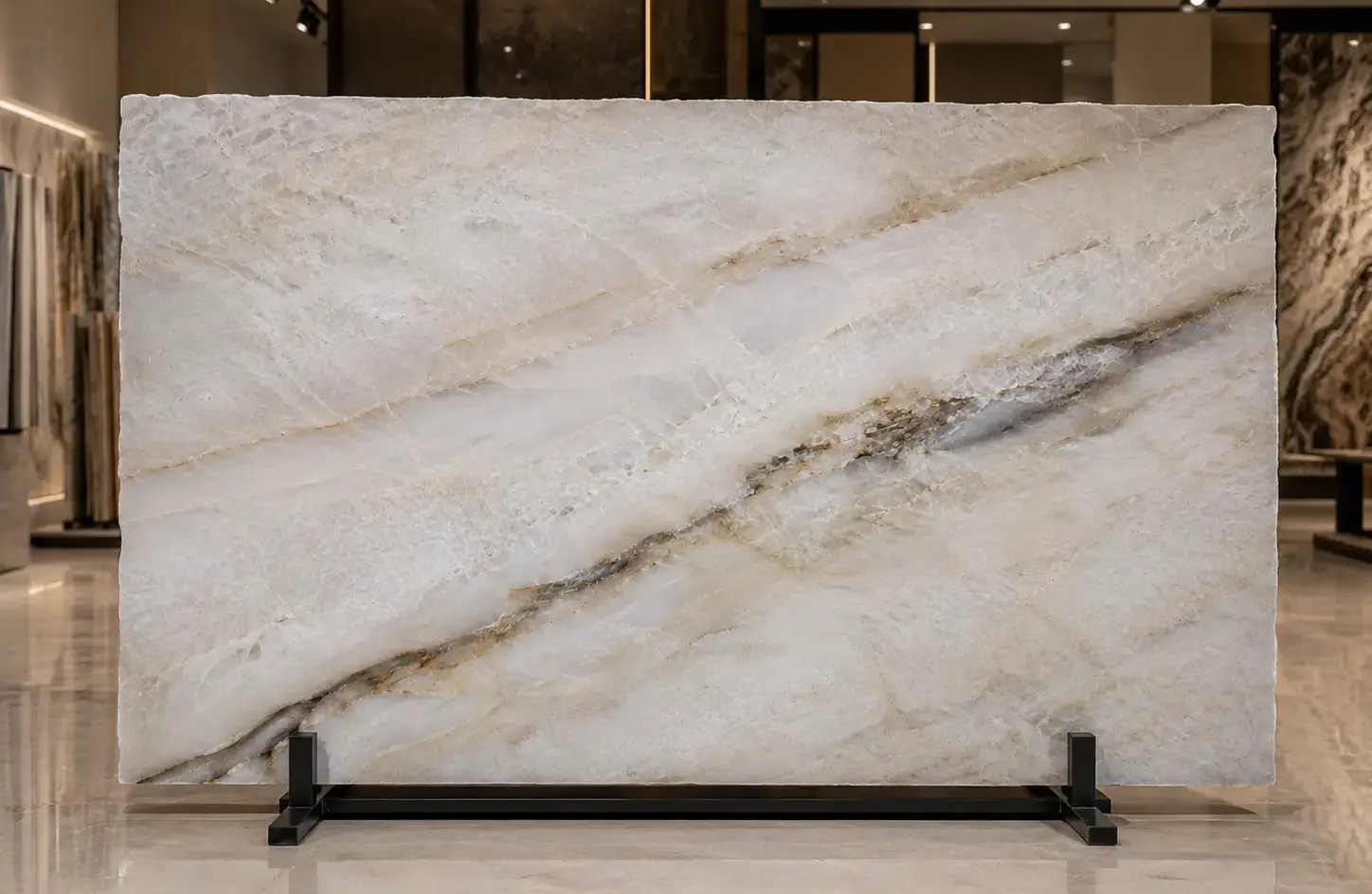
What Taj Mahal Quartzite Actually Is
Taj Mahal quartzite is quarried in Brazil and formed through millions of years of heat and pressure acting on quartz-rich sandstone, the same metamorphic process behind quartzite deposits found in mountain ranges worldwide. Most quartzite develops during mountain-building events at convergent plate boundaries, where sandstone is metamorphosed by intense pressure and often deep burial. That geologic history explains why the finished stone performs so differently from marble, even though the two can look similar from a distance.
Some geologists classify Taj Mahal within a dolomitic or calcareous quartzite category, based on its specific mineral makeup, and that distinction comes up occasionally in industry discussions about the material. In practical terms for a kitchen or bathroom, it behaves like a true quartzite: less porous and more resistant to the etching that acidic spills cause on softer stones like marble.
Because this is a natural stone rather than an engineered product, no two slabs are identical. Veining density, the balance of gold versus gray tones, and the overall movement across the surface can vary meaningfully from one slab to the next, even within the same quarry lot. That variation is part of the appeal for homeowners who want a surface with real character, but it also means the specific slab being cut for a project is worth seeing in person rather than judging from a catalog photo.
How It Compares to Other Countertop Materials
Granite and engineered quartz remain common choices in local remodels, and each carries a different set of tradeoffs. Granite is comparably durable, but its patterning tends to be bolder and more speckled, which reads differently from the softer movement found in quartzite. Engineered quartz offers consistent patterning and low maintenance since it's manufactured with resin binders, but it doesn't have the same one-of-a-kind character, and it generally tolerates high heat less well than natural stone.
Marble is the material Taj Mahal is most often compared to, since the resemblance is strong at a glance. The practical difference matters most in a home used the way a lake and mountain property typically is: marble's lower hardness and its sensitivity to acidic spills make it a riskier choice for a kitchen that sees frequent, varied use, while this stone offers a similar look with meaningfully better day-to-day performance. For anyone drawn to the marble aesthetic but hesitant because of the maintenance it demands, that difference is usually the deciding factor.
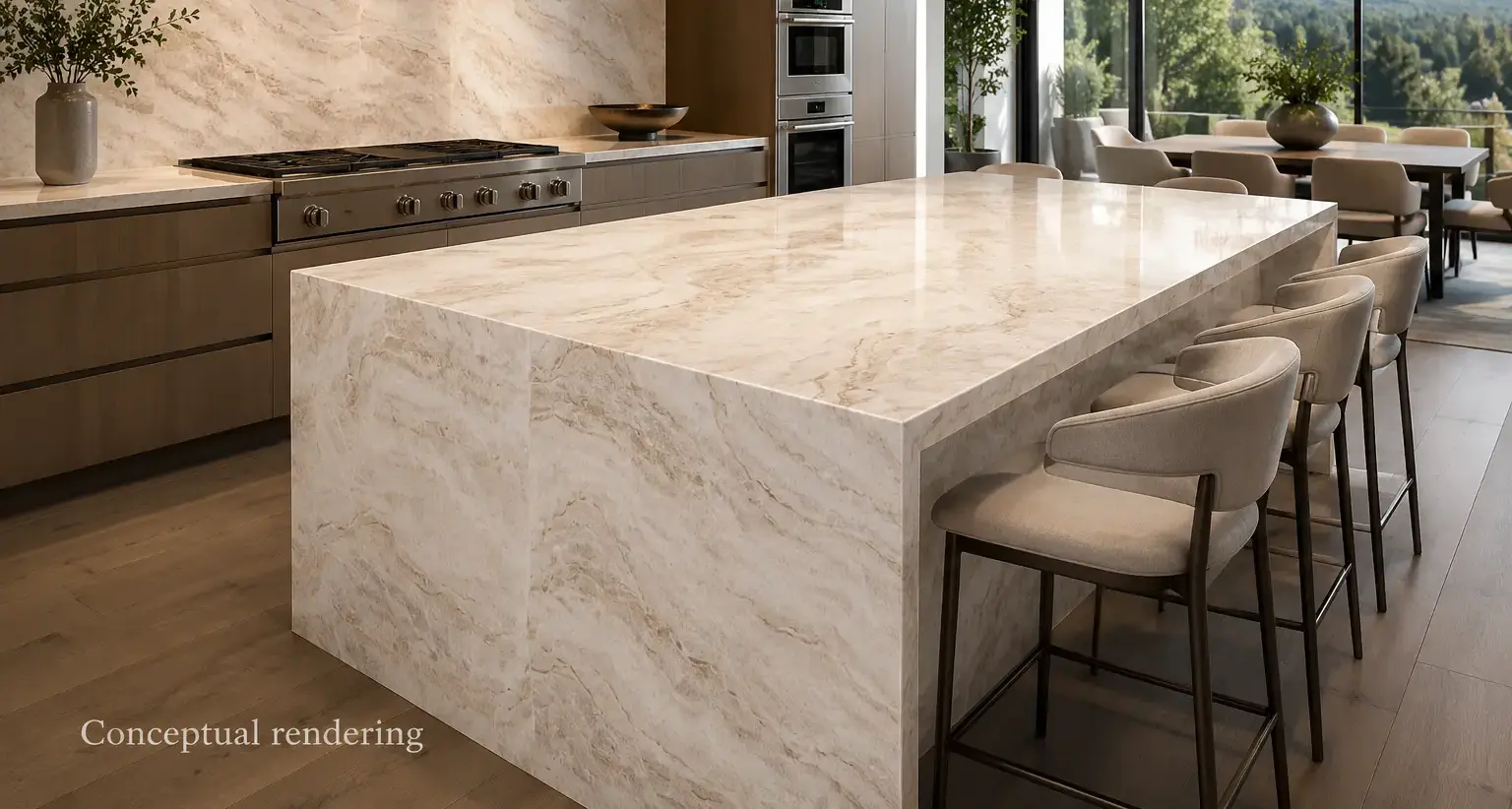
Handling Daily Wear in a High-Country Home
A kitchen in this part of Tahoe sees a different kind of wear than one in a milder climate. The Tahoe Basin's seasonal climate patterns, studied long-term by researchers at UC Davis's Tahoe Environmental Research Center, show just how much conditions shift here from one season to the next. In Kings Beach that means sandy feet tracked in from the beach in summer and wet boots shaking off snow in winter. Countertops and nearby surfaces take on a fair amount of grit and moisture year-round as a result, which is part of why a hard, low-porosity surface holds up better here than it might elsewhere.
Routine care is simple: mild soap and water for daily cleaning, with sealing needs that vary depending on the household's traffic level and how the surface is used. A quick water test, letting a few drops sit on the surface to see whether they bead up or start to soak in, is a reliable way to judge when resealing is actually due, rather than relying on a fixed schedule.
Why the Look Fits This Part of Tahoe
The town sits right on the north shore of Lake Tahoe, at roughly 6,200 to 6,400 feet elevation, where the south-facing beach earns it a local nickname as the banana belt of the North Shore for the amount of sun it catches. That setting, with granite peaks, dense pine forest, and lake and mountain views from most kitchen windows, is exactly where a warm, natural-feeling stone earns its keep. It sits comfortably next to reclaimed wood beams and a stone fireplace, and it works just as well in a more contemporary mountain-modern kitchen.
The veining itself is soft and feathery rather than bold, so it doesn't compete with the views most kitchens here are designed around. It also pairs easily with materials already common in North Shore homes: white oak cabinetry, wrought iron or matte black hardware, and stone accent walls that echo the granite peaks surrounding the lake. Many remodels in the area lean toward an updated cabin look rather than a strictly modern one, blending timber ceilings and stacked stone with cleaner cabinetry lines, and this stone's warm palette bridges that gap without forcing a choice between rustic and refined.
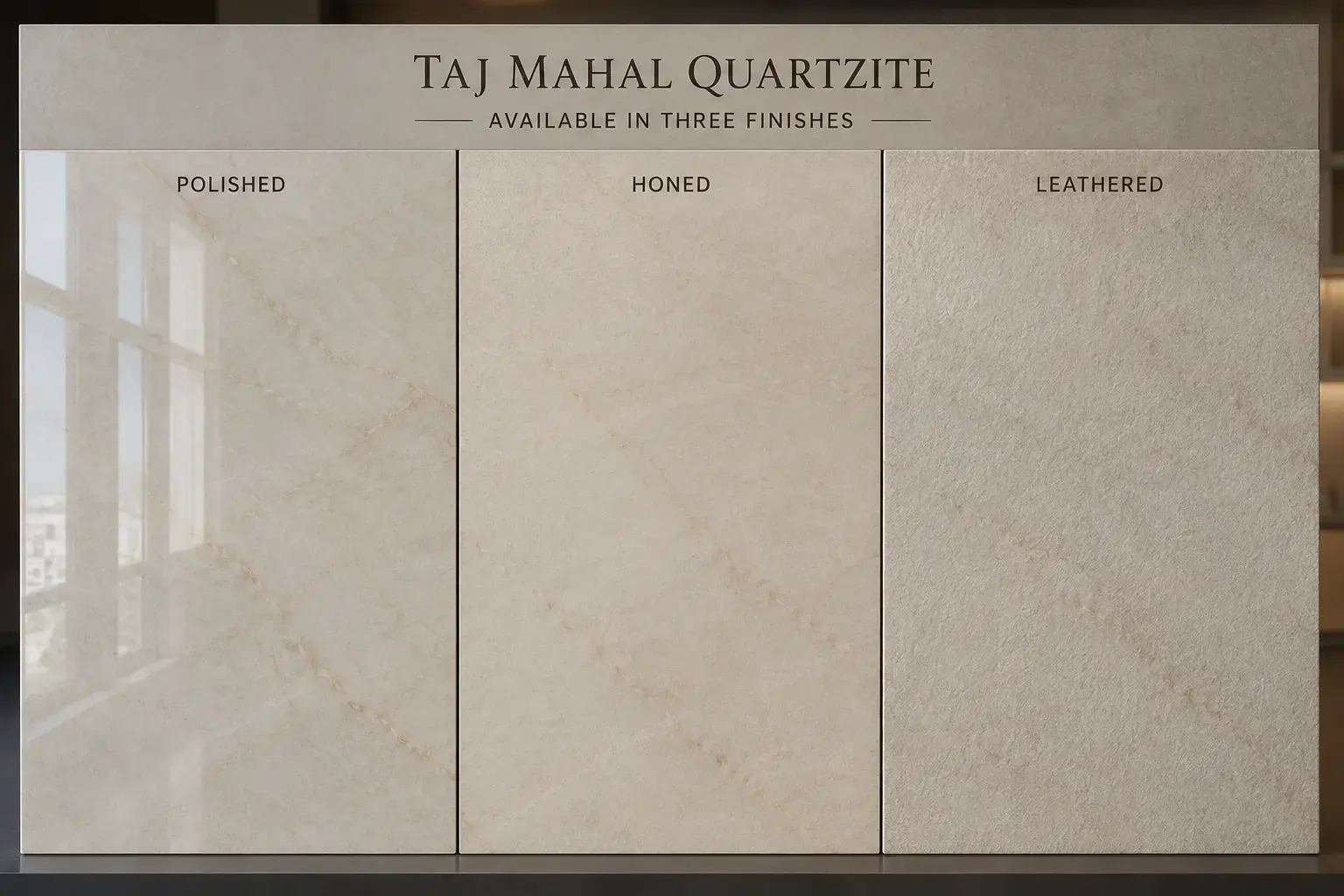
Choosing a Finish for This Kind of Light and Setting
Taj Mahal quartzite comes in polished, honed, and leathered finishes, and the choice matters more here than it might in a different setting. A polished finish brings out the veining with a high-gloss surface, and it tends to work well in more contemporary builds and in kitchens with strong natural light from lake-facing windows. A honed finish softens the look with a matte surface, a common choice for anyone leaning into a quieter, more understated cabin feel, and one that hides water spots and fingerprints more easily in a household with frequent guests. A leathered finish adds a subtle texture that suits the rustic, tactile materials found in a lot of North Shore homes, from timber framing to stacked stone, and can work well on an island or bar area meant to feel a bit more casual than the main countertop run.
Because the light here shifts so much between overcast winter days and bright summer afternoons, it's worth viewing finish samples at different times of day. That's a more reliable way to judge how a finish will actually read in a specific room than photos alone can offer.
Sourcing and Delivery Considerations
Nova Tile and Stone's Reno showroom serves homeowners and contractors throughout the North Lake Tahoe area, including Kings Beach, Crystal Bay, and Tahoe City. The drive from Reno runs about 43 miles and takes roughly 50 minutes under normal conditions, typically via I-80 west to Truckee, then Highway 267 over Brockway Summit into Kings Beach. Mountain pass conditions can add time in heavy winter weather, so that's worth factoring into scheduling for a project timed for late fall or winter.
A showroom visit typically includes walking the live slab inventory to see the specific piece of stone that would be used, since photos and small samples don't fully convey how veining and tone will look at full scale. Free design consultations are available to help with slab selection and finish choices for a specific kitchen, bathroom, or backsplash project.
Nova Tile and Stone, Reno Showroom
12835 Old Virginia Rd, Suite 24, Reno, NV 89521
(775) 331-6682
Conclusion
For a Kings Beach home, the decision usually comes down to weighing natural variation and warmth against consistency and low upkeep. Taj Mahal quartzite sits in a practical middle ground: closer to marble in appearance, closer to granite in how it holds up to daily use, and better suited to a lake and mountain lifestyle than either extreme on its own. Whether the project is a full remodel or a single vanity update, viewing available slabs on the company's website can be a helpful starting point, but seeing an actual slab in person, under the kind of light this part of Tahoe gets, remains the most reliable way to judge whether a given piece is the right fit.
Frequently Asked Questions
Chipping is uncommon but can happen at thin edges or sharp corners if they take a direct, heavy impact, such as a dropped cast iron pan. Thicker slab edges and rounded or eased profiles reduce this risk. It's a different failure mode than scratching or staining, and one worth discussing with a fabricator when deciding on edge style for a busy kitchen.
Standard slab sizes vary by quarry lot, but many Taj Mahal slabs are large enough to cover a typical island without a seam, depending on the island's dimensions. Waterfall edge applications, where the slab wraps down the sides of the island, require extra slab length to maintain a continuous veining pattern, so island size and layout should be confirmed against available slab dimensions before finalizing a design.
It performs well in humid bathroom settings because of its low porosity and resistance to moisture absorption. Ventilation still matters for the room overall, but the stone itself isn't particularly sensitive to sustained humidity the way some softer, more porous stones can be.
Natural quartzite is generally stable under UV exposure and doesn't yellow or fade the way some resin-based materials can. Homes with large lake-facing windows and a lot of direct sunlight shouldn't need to worry about long-term color shift in the stone itself.
Yes. Minor chips and scratches can often be filled and polished by a stone fabricator using a color-matched epoxy or resin, restoring a smooth surface without full slab replacement. Deeper damage or cracks usually require a more involved repair or, in rare cases, a section replacement, so the extent of the damage determines the right approach.
Note: Some images on this page may be conceptual renderings created to illustrate design possibilities and may not depict actual installations.