Granite, quartzite, travertine, and porcelain are the outdoor slab materials well suited to Minden, NV backyards. Each is dense enough to handle the Carson Valley's intense summer sun, dry air, and winter freeze without losing its finish.
Granite is UV resistant and food-safe, making it a common pick for outdoor kitchen counters and fire pit surrounds, while quartzite and porcelain bring the hardness and low upkeep that high-traffic patios and pool decks call for, and travertine's naturally textured surface adds a slip-resistant option for pool decks and walkways.
Nova Tile and Stone carries a range of natural and engineered slabs suited to outdoor use built for exactly this kind of Minden backyard project.
What Makes A Slab Suitable For Outdoor Use
Not every slab is built to handle direct exposure to the elements. Minden sits at roughly 4,700 feet in the Carson Valley, where summer afternoons regularly climb past 90 degrees and winter mornings just as regularly drop below freezing, sometimes within the same week come spring and fall.
That swing matters more for a slab than color or pattern does. Water expands by about nine percent in volume when it freezes, so a stone that absorbs even a small amount of moisture can develop cracking or flaking after enough freeze-thaw cycles, while a dense, low-absorption slab simply sheds that moisture before it becomes a problem.
General resources on how natural stone is sourced and labeled can help homeowners understand these differences before comparing options. The good news is that a handful of materials are simply built for this kind of exposure, while engineered options add a manufactured alternative that can be tailored for exterior performance from the start.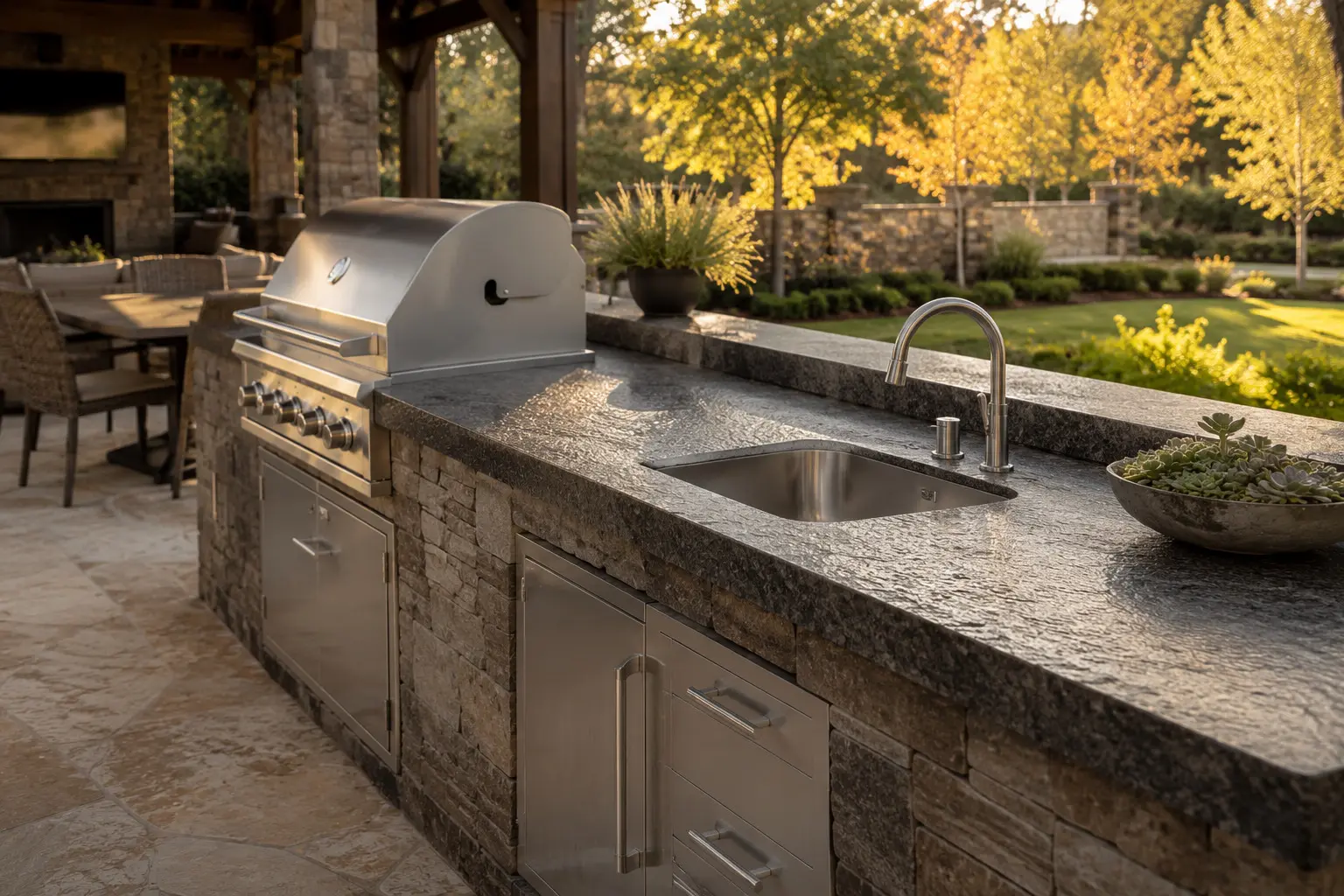
Granite: A Dependable Choice For Backyard Surfaces
Granite is a heat-formed, mineral-dense stone, and that density is exactly what a Minden backyard needs from a surface facing full sun and hard freezes. Its visible mineral flecks, quartz, feldspar, and mica bound together, give it a depth and light-catching texture up close that a manufactured surface rarely matches.
General guidance on selecting the right stone finish can help narrow down which one suits a specific backyard style: polished granite catches the light, honed granite reads more matte and casual, and a leathered texture hides the kind of light surface wear that comes from years of backyard use.
Granite is UV resistant, though color and finish still affect how it holds up under direct sun, and it has long been a traditional favorite for food-prep surfaces, which is part of why it remains a common pick for outdoor kitchen counters in Minden, with a cutting board doing the heavy lifting on daily prep tasks. Its main soft spot sits at the edges, where corners can chip if they take a hard, direct hit.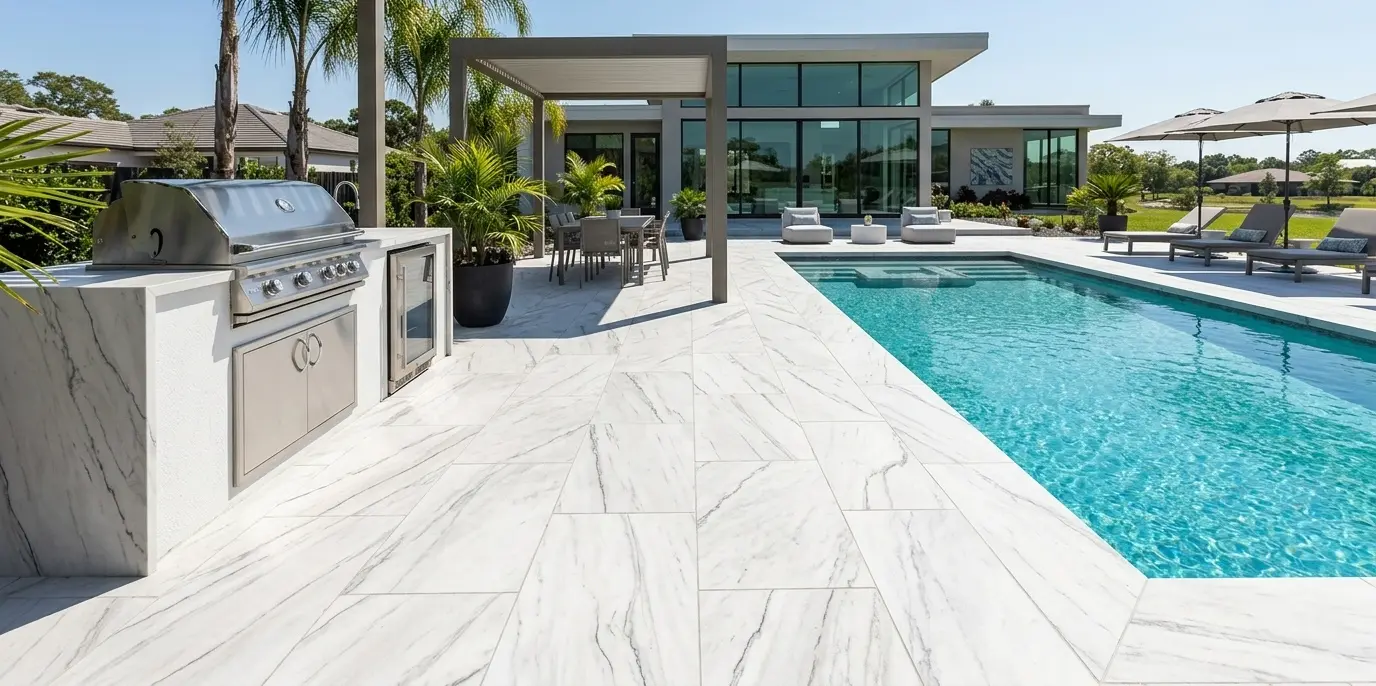
Quartzite: Hardness Built For Exterior Exposure
If granite is the dependable option, quartzite is the one homeowners reach for when hardness is the priority. It is a metamorphic stone, meaning intense heat and pressure recrystallized it from sandstone, and it typically rates around 7 on the Mohs hardness scale, noticeably harder than granite's usual 6 to 6.5.
Like granite, it comes polished, honed, or leathered, and that added hardness is exactly why it holds up well on high-traffic patios and pool decks, where dragged furniture and constant foot traffic take their toll on softer surfaces. Its UV resistance follows a similar pattern to granite's, varying somewhat by finish and color, which makes it a strong match for the kind of sun a Minden patio sees through the summer months.
Quartzite isn't typically positioned as a kitchen-prep surface the way granite is, so it tends to show up more on walkways and pool decks than on kitchen counters, and cutting directly on the surface still is not recommended even given its hardness. Homeowners weighing quartzite for a backyard project can review current slab inventory to see available colors and finishes before deciding.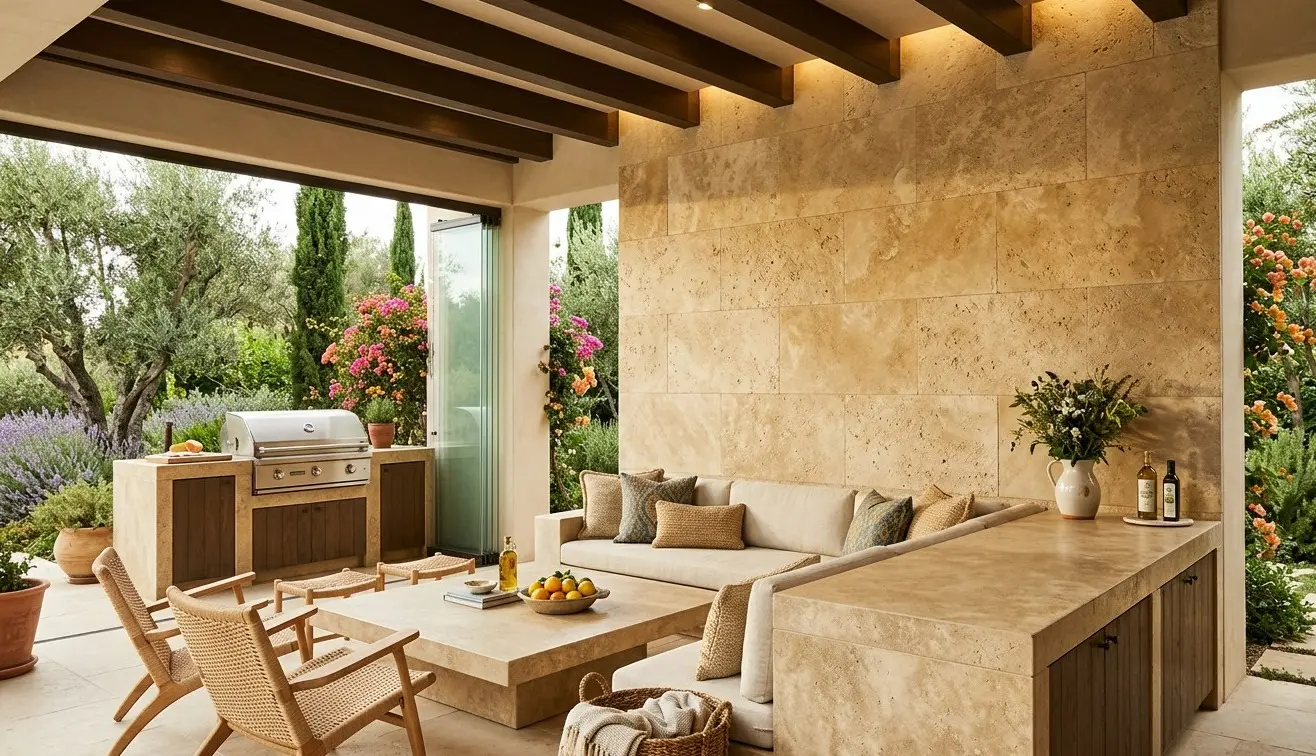
Travertine: Warmth And Texture For Patios
Travertine reads differently than granite or quartzite the moment you see it. It forms from mineral deposits rather than heat and pressure, which is why it carries small natural pits across its surface, some left open for a more rustic look and some filled with a matching resin or grout for a smoother one.
That texture, filled or not, is part of why it shows up so often around pool decks in the region, since a textured surface tends to offer better underfoot grip than a glass-smooth polished one. Each slab also carries its own natural variation in veining, so no two installations read quite the same.
Its long-term performance leans more on finish and sealing than the other outdoor stones do, so harsh cleaners are best avoided in favor of gentler, routine care. Reviewing samples in person at our Minden location before settling on one tends to save some second-guessing later.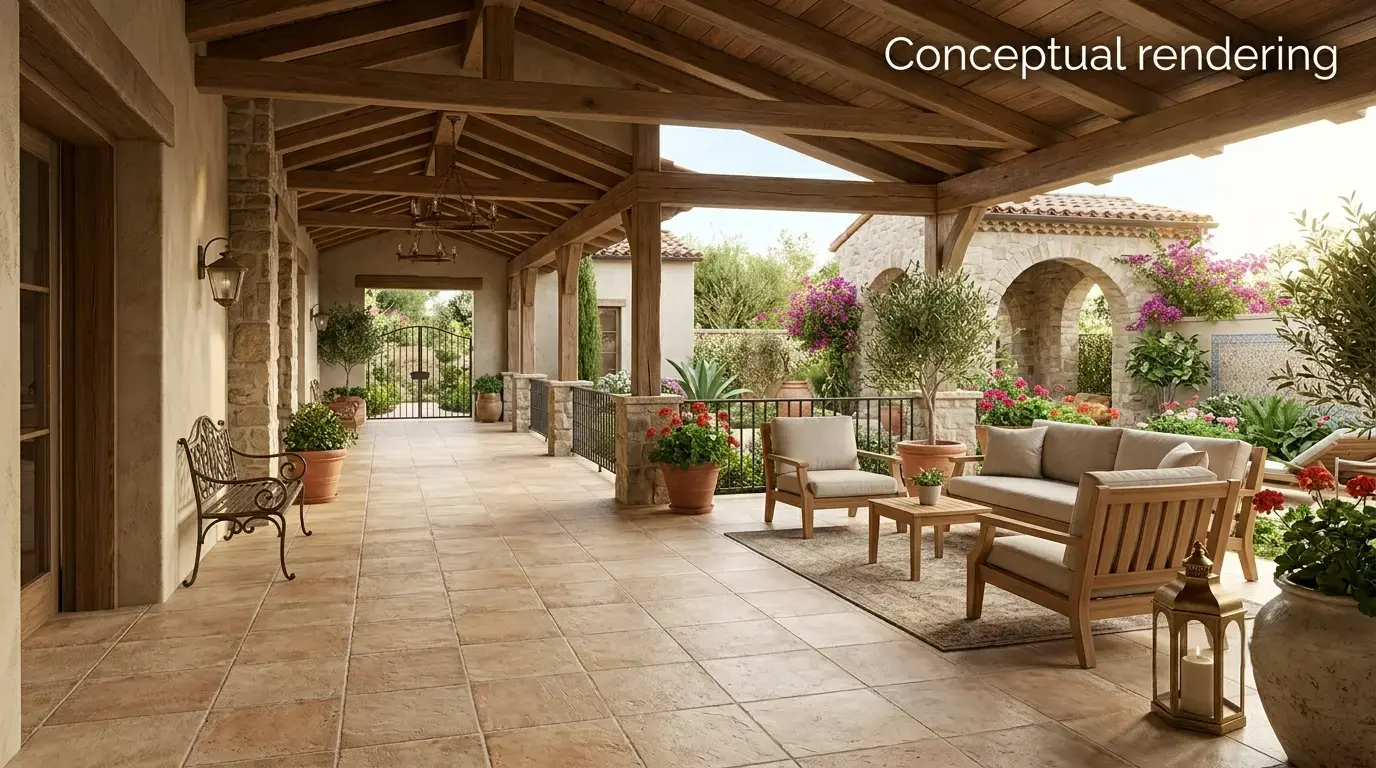
Porcelain: An Engineered Option Built For The Outdoors
Porcelain is the outlier in this lineup, since it is manufactured rather than pulled from a quarry. That manufacturing process is also its biggest advantage: color and pattern stay consistent from slab to slab in a way natural stone cannot always match, and porcelain is commonly produced in larger slab formats than a quarry block typically allows, which matters for anyone lining up a large patio or a long pool surround with fewer seams.
Its density makes it essentially non-porous, holding its color under UV exposure in much the same way granite and quartzite do, though outdoor debris such as pollen and dust still calls for the occasional rinse. That same non-porous surface also resists staining and buildup well, even though granite remains the more traditional pick specifically for food-prep counters.
That same manufactured consistency is part of why contractors handling several backyard installs at once tend to favor it, and trade professionals working on ongoing projects can apply for a trade account for continued access to inventory.
Choosing The Right Outdoor Slab For A Minden Backyard
With four solid options on the table, the easiest way to narrow things down is to start from the feature rather than the material. A fire pit sees close-up viewing and some heat cycling, which is where granite's leathered finish earns its keep by hiding the kind of light wear that shows up over years of use. A pool deck puts grip underfoot first, which tends to point toward travertine's natural texture or a honed finish on quartzite or porcelain.
An outdoor kitchen counter is where food safety matters most directly, and among these four materials, that points to granite. A walkway or a wide patio, meanwhile, mostly comes down to hardness and upkeep, where quartzite and porcelain both perform well.
Our Minden showroom remains one of the most direct ways to compare all of this side by side, since color and finish read differently under natural light than they do on a screen. For anyone who wants extra guidance matching a slab to a specific backyard layout, a free design consultation is available to talk through the options in more detail.
Conclusion
Maintenance is where these four materials separate out the most once they're installed. Granite and quartzite need little beyond routine cleaning thanks to their density, though both can benefit from an occasional resealing over the years. Travertine calls for a bit more attention to sealing and gentler cleaners given its natural pitting, and porcelain needs the least upkeep of the four since its near-zero porosity leaves very little for dirt or moisture to hold onto. Whatever the project looks like, whether that's a compact fire pit patio or a full outdoor kitchen, matching those upkeep expectations to how the space actually gets used makes the choice easier to live with for years to come.
Homeowners ready to move forward can start with a slab quote request to begin narrowing down options for an upcoming backyard project.
Frequently Asked Questions
Granite, quartzite, travertine, and porcelain all handle Minden's sun, dry air, and winter freeze well, though each brings something different to a backyard: granite for food-safe kitchen counters, quartzite and porcelain for hardness on patios and walkways, and travertine for grip around a pool deck.
Yes, granite has long been a traditional favorite for food-prep surfaces and holds up well as a kitchen counter outside, though a cutting board is still recommended and edges benefit from careful handling in high traffic areas.
Dense, low-absorption materials such as granite, quartzite, and porcelain generally handle seasonal freeze-thaw conditions well, but installation still has to match the application, since the Carson Valley's temperature swings place real demands on any exterior surface.
Granite, quartzite, and porcelain are all UV resistant, though darker colors and certain finishes can respond differently to years of direct sun exposure than lighter ones do.
Seeing full slabs under natural light at a showroom is one of the most reliable ways to judge color and finish accurately, and a free design consultation can help match a material to a specific backyard layout.
Curious About Something Else?
Note: Some images on this page may be conceptual renderings created to illustrate design possibilities and may not depict actual installations.