Sintered stone countertops are made from an engineered material created by compressing natural mineral powders under extreme heat and pressure until they fuse into a single dense slab. The process mirrors how stone forms underground, only compressed into hours rather than thousands of years. Because the finished slab is non-porous, sintered stone countertops do not require sealing like many quarried materials do. They also hold up well to heat and sun exposure, which makes them a fit for both indoor kitchens and outdoor cooking spaces. Our Minden showroom carries sintered stone slabs alongside the rest of our countertop selection for anyone who wants to see the material firsthand.
What Sintered Stone Is Made From
Sintered stone begins as a blend of raw mineral powders, including materials similar to those found in natural stone formations. These powders are compacted under intense pressure and heated to very high temperatures until the particles bond into a single, uniform slab. No resins or adhesives are used to hold the material together, since the heat and pressure alone are what fuse the minerals into their final form.
This manufacturing approach produces a slab that is dense and fully solid all the way through, rather than a surface treatment applied over a different base material. Because the process is tightly controlled, sintered stone generally shows less natural variation than quarried stone, though the specific look still depends on the finish and pattern technique used.
The compaction stage is what gives the material much of its structural density. Applying significant pressure while the minerals are still hot forces out air pockets and gaps, resulting in a slab with very low porosity once it cools. This dense internal structure is part of why the finished material performs the way it does across everyday household use.
The sintering process applies pressure in the thousands of tons alongside temperatures well above 2,000 degrees Fahrenheit, fusing minerals into a single mass within hours rather than the geological timescales natural stone formation requires. Exact figures vary by manufacturer.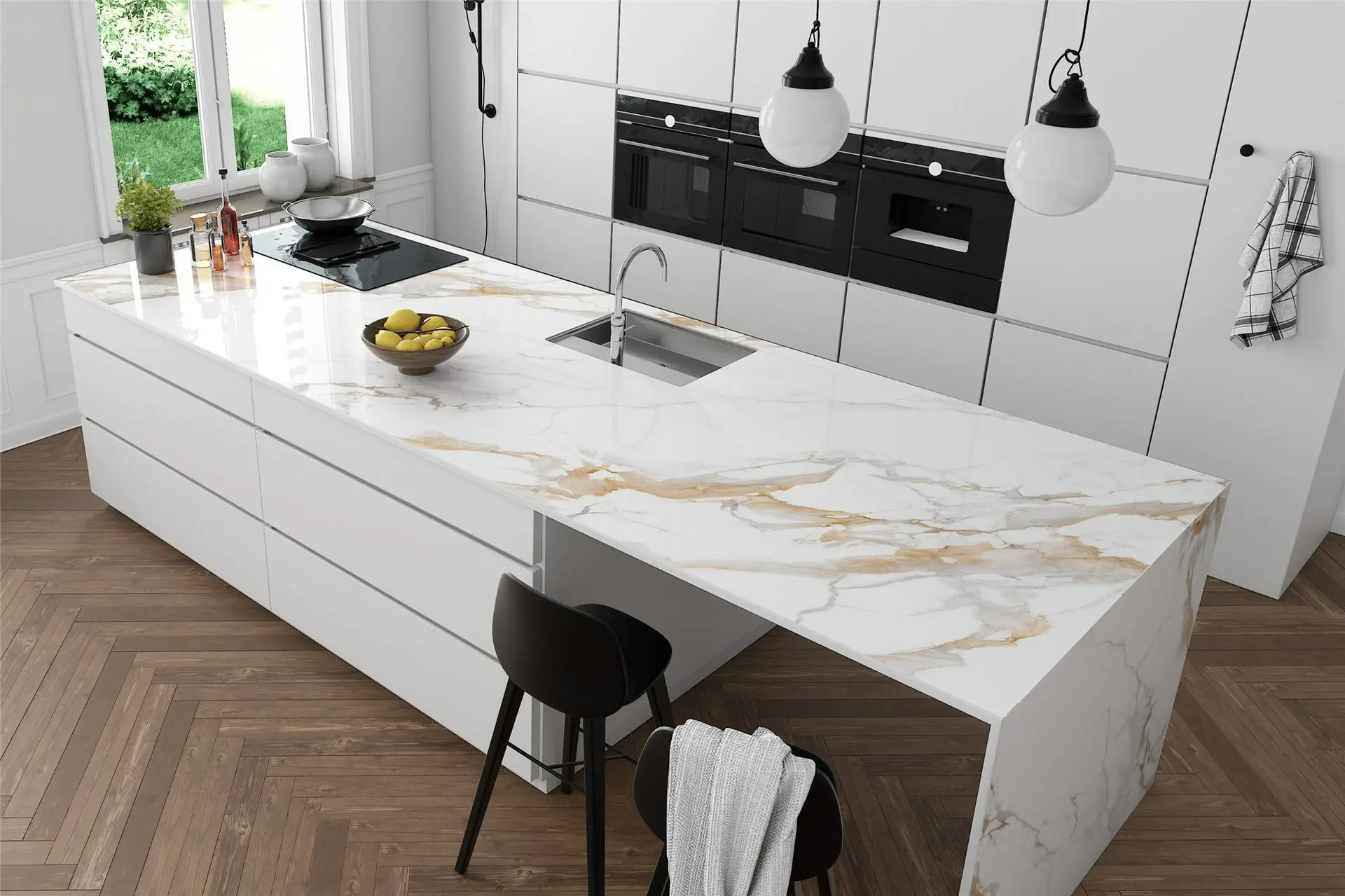
Performance Characteristics Homeowners Notice
The slab is a practical choice for busy spaces, but the right finish still matters when it comes to matching the surface to a specific kitchen or bathroom layout. According to Angi, sintering fuses minerals so tightly that the resulting surface resists both moisture and everyday staining, which is why sintered stone countertops skip the sealing routine that many quarried materials need.
Heat tolerance is another characteristic homeowners bring up often. The slab can handle direct contact with warm cookware better than many sealed surfaces, though sudden and extreme temperature changes should still be avoided. The surface is scratch resistant, but cutting directly on it is not recommended, since a cutting board protects both the knife and the finish over time. The material is also UV resistant, which supports its use outdoors, but performance can still vary somewhat by color and finish selection. Despite its overall hardness, edges and corners can still chip under a heavy, direct impact, so the same care given to any dense countertop material is worth applying here as well.
Day to day care is straightforward, since the non-porous surface does not hold onto residue the way a porous material might. A soft cloth with mild soap and water is generally enough for routine cleaning. Harsh abrasive scrubbers are still worth avoiding, even on a surface this durable, since repeated abrasion over many years can dull a finish faster than gentle cleaning habits would.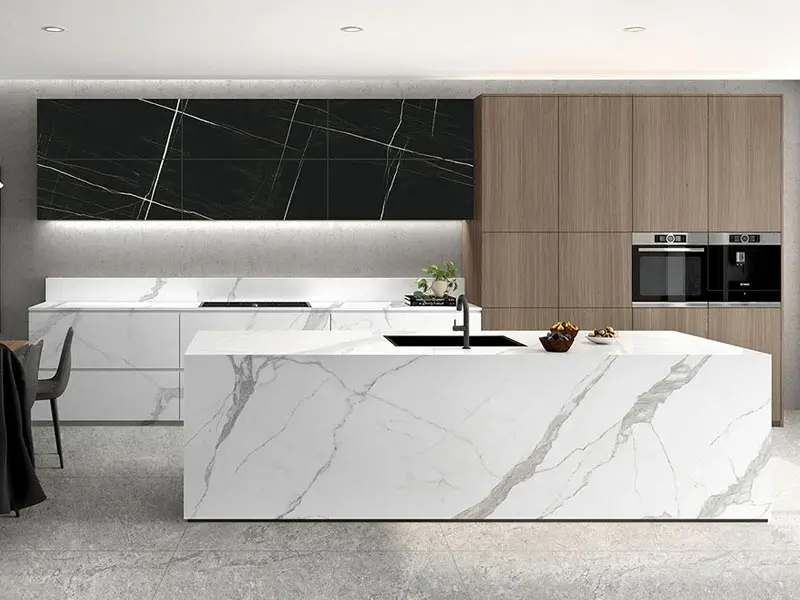
Finishes and Appearance Options
Sintered stone is available in a range of finishes, including polished surfaces that reflect light and matte options that soften glare in bright rooms. Textured finishes are also part of the lineup for homeowners who want a tactile surface with more visual depth. Many manufactured slabs combine the base mineral blend with advanced printing techniques to achieve either a solid, uniform color or a more veined, stone inspired pattern.
Color options span neutral whites and grays through deeper charcoal and stone inspired tones, many of which are designed to echo the look of natural veining. This gives sintered stone a flexible role in a variety of design directions, from a clean modern kitchen to a warmer, more traditional space.
Weight, Sourcing, and Sustainability Notes
Despite its density, sintered stone is generally lighter than many quarried stone slabs of comparable thickness, since manufacturing controls the internal structure more precisely than natural formation does. This is worth knowing when planning cabinetry support for a larger island or an extended countertop run.
The manufacturing process relies on natural mineral powders rather than petroleum based resins, and several producers highlight recycling programs for manufacturing offcuts. Sourcing and sustainability practices vary by manufacturer, so it is worth asking about the specifics during a showroom visit.
Hygiene Benefits For Kitchens And Bathrooms
That same density limits the kind of foothold bacteria and mold can gain on a countertop surface, which is part of why sintered stone shows up often in food preparation areas and bathroom vanities where moisture and daily contact are constant. Routine cleaning still matters for any surface, but the material itself does not rely on an added antibacterial coating to perform this way.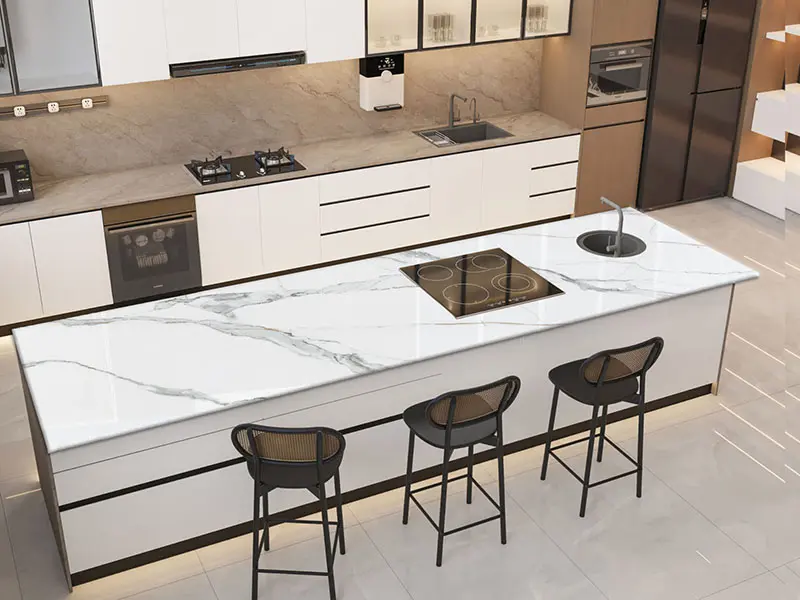
Why Sintered Stone Countertops Fit Minden Homes
Minden includes a mix of ranch style properties, newer builds, and homes designed around mountain views and outdoor living. The area sits in a high desert climate with strong summer sun, low humidity, and notable swings between daytime and nighttime temperatures. Outdoor surfaces in this climate face more UV exposure and thermal cycling than in milder regions, which is part of why heat and UV performance carry real weight in a Minden material decision. Sintered stone suits this variety well because the same slab that performs indoors also holds up to sun and temperature swings outside, which matters for homeowners building outdoor kitchens or covered patio counters. A feature from House Digest notes that the material typically offers a higher heat threshold than many other engineered surfaces, which is part of why it performs well in exposed outdoor settings.
Viewing a slab in person remains the most reliable way to judge color depth and finish before committing to a project. Homeowners throughout Minden can reach out to our team to compare sintered stone slabs side by side with other options, where lighting and scale are easier to evaluate than through a photo alone.
Where Sintered Stone Countertops Work Best
Kitchen countertops and islands are the most common application for sintered stone, particularly in households that want a low maintenance surface for daily cooking and cleanup. Bathroom vanities are another strong fit, since the non-porous surface holds up well against everyday personal care products without absorbing moisture.
Outdoor kitchen counters and covered patio surfaces are common applications as well, since they call for a surface built to handle daily sun exposure without special upkeep. Backsplashes are a growing use case as well, since a matching slab can extend from the countertop up the wall for a continuous, seamless appearance. A piece from Tasting Table points out that this engineered surface is increasingly used beyond countertops alone, including cabinetry fronts and other surfaces where a consistent, modern material is part of the overall design.
Edge Profiles and Design Flexibility
Edge options for dense engineered slabs like sintered stone commonly include straight, eased, and beveled profiles, since simpler edges tend to work well with the material's hardness. A waterfall edge, where the slab continues down the side of an island toward the floor, is also achievable and creates a strong visual anchor in a kitchen. Because the material relies more on finish and color than the natural veining found in quarried stone, many homeowners lean on edge choice and slab orientation to add visual interest. Edge profile availability varies by product line, so it is worth confirming during a showroom visit.
Getting Expert Guidance Before You Decide
Because sintered stone is manufactured rather than quarried, checking our current slab inventory ahead of a showroom visit can help narrow down colors and finishes already in stock. Thickness options vary by manufacturer as well, with thinner formats suited to backsplashes and vertical surfaces and thicker formats better suited to countertops and islands.
Homeowners who already have measurements or a rough project scope in mind can request a slab quote for a clearer picture of next steps, whether that happens before or after an in person visit. Our design team also offers a free consultation to walk through sintered stone alongside other available options and answer questions specific to a kitchen or bathroom layout. At Nova Tile and Stone, this guidance comes without sales pressure, since the goal is matching each homeowner with a surface that performs well in their specific space.
Scheduling time to book a design consultation is a straightforward way to see samples in person and get honest input on how sintered stone might fit a specific project.
Conclusion
Sintered stone countertops give Minden homeowners a durable, low maintenance surface that performs well in kitchens, bathrooms, and outdoor living spaces alike. Its non-porous composition, heat tolerance, and consistent appearance make it a practical option for households that want strong daily performance without heavy upkeep. Visiting a showroom, comparing finishes under real lighting, and speaking with a design expert remain reliable ways to decide whether sintered stone is the right fit for a specific project. Nova Tile and Stone continues to bring this material to Minden households looking for a modern, dependable surface for their next renovation.
Frequently Asked Questions
Sintered stone is made from natural mineral powders that are compacted under extreme heat and pressure until they fuse into a single dense slab. No resins or adhesives are used in the process, which is part of what gives the material its uniform, fully solid structure.
No. Sintered stone is non-porous, so it does not require sealing the way many quarried materials do. Routine cleaning with a mild, non-abrasive cleaner is generally enough to keep the surface looking its best.
Yes. Sintered stone is UV resistant and holds up well to temperature changes, which makes it a suitable option for outdoor kitchens and covered patio counters. Performance can still vary somewhat depending on the specific color and finish selected.
Sintered stone is highly scratch resistant due to its dense, fused composition. Even so, using a cutting board is recommended, since direct contact with knives can still leave marks over time on any hard surface.
Sintered stone offers strong heat tolerance and can handle direct contact with warm cookware better than many sealed surfaces. Sudden, extreme temperature changes should still be avoided to help preserve the surface over the long term.
Curious About Something Else?