White and light stone countertops in Fair Oaks kitchens typically come from one of three materials: marble, quartzite, or granite, each with a different look, resistance to wear, and price point. Marble offers a soft white background with gray veining but is more prone to etching from acidic foods. Quartzite provides a similar marble-like appearance with greater resistance to scratching and etching, making it a common choice for busy kitchens. Granite offers a more uniform, granular light color with strong resistance to scratching and heat. Choosing between them depends on how the kitchen is used day to day, the undertones of existing cabinetry and flooring, and how much veining or movement feels right for the space.
Why Light Stone Colors Work in Fair Oaks Kitchens
Many Fair Oaks homes were built with smaller, more segmented kitchens that have since been opened up through remodeling. Light-colored stone countertops help these spaces feel larger and brighter, especially when paired with white or light-colored cabinetry. In kitchens with limited natural light, a light stone color reflects more of the available light than a dark one, which can make a real difference in older homes with smaller windows.
Light stone colors also pair well with the mix of architectural styles found in the area. Ranch homes with warm wood tones, farmhouse kitchens with shaker cabinets, and craftsman bungalows with original trim all tend to work with a light stone color as a neutral base, letting cabinetry, hardware, and lighting carry more of the design character. Homeowners can start browsing options online anytime.
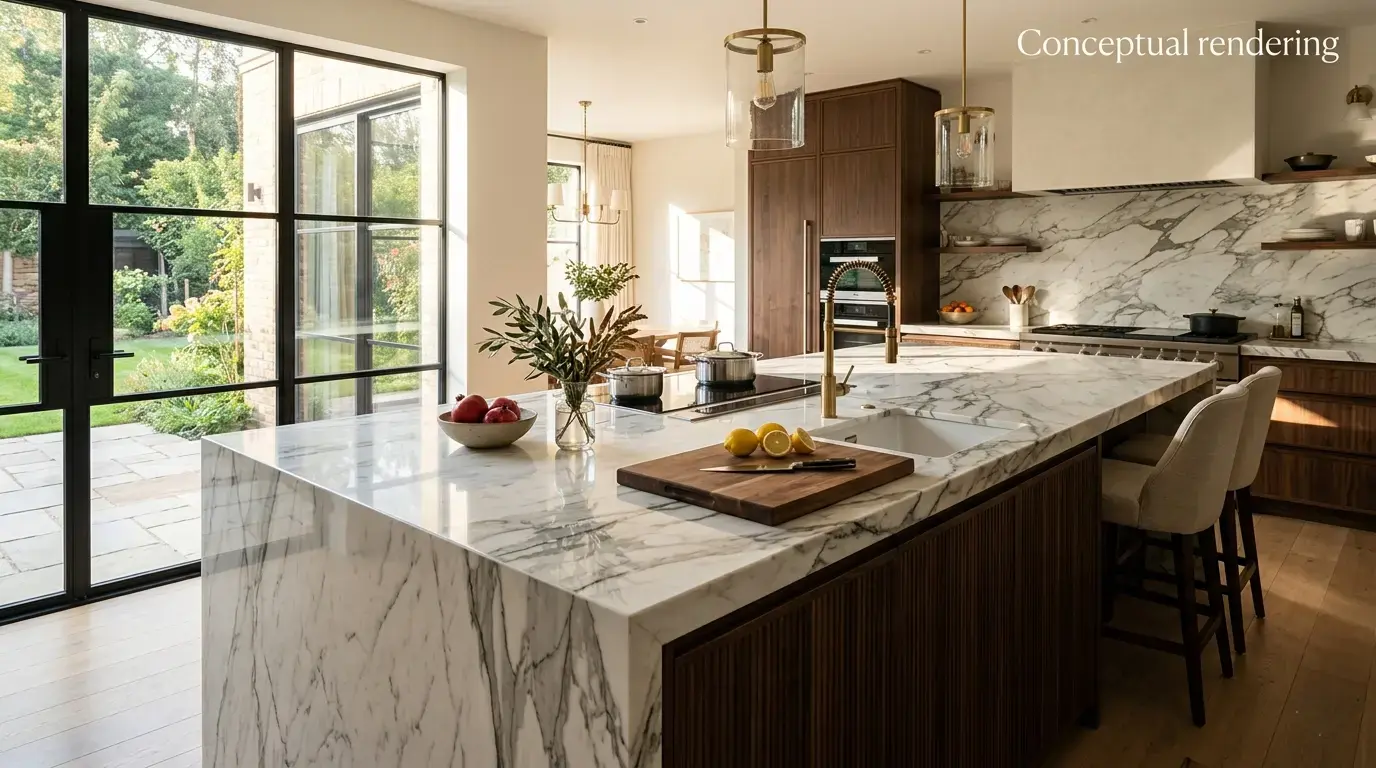
Marble: Soft Veining and Cool Undertones
Marble is the material most people picture when they think of white stone. Classic marbles like Carrara and Calacatta offer a white or off-white background with gray veining that ranges from fine and linear to bold and dramatic. Marble tends to have a cooler undertone, which pairs well with stainless steel appliances, black or brass hardware, and cool gray cabinetry.
Marble is a softer stone than granite or quartzite, so it is more prone to etching from acidic foods and liquids like lemon juice or wine. As Fine Homebuilding's guide to natural stone countertops notes, softer stones require more consistent sealing and extra care around food preparation to reduce etching and staining over time. Homeowners considering marble for a Fair Oaks kitchen should think about how the space is used day to day. A marble island in a lower-traffic entertaining area behaves differently than a marble surface around a busy cooktop.
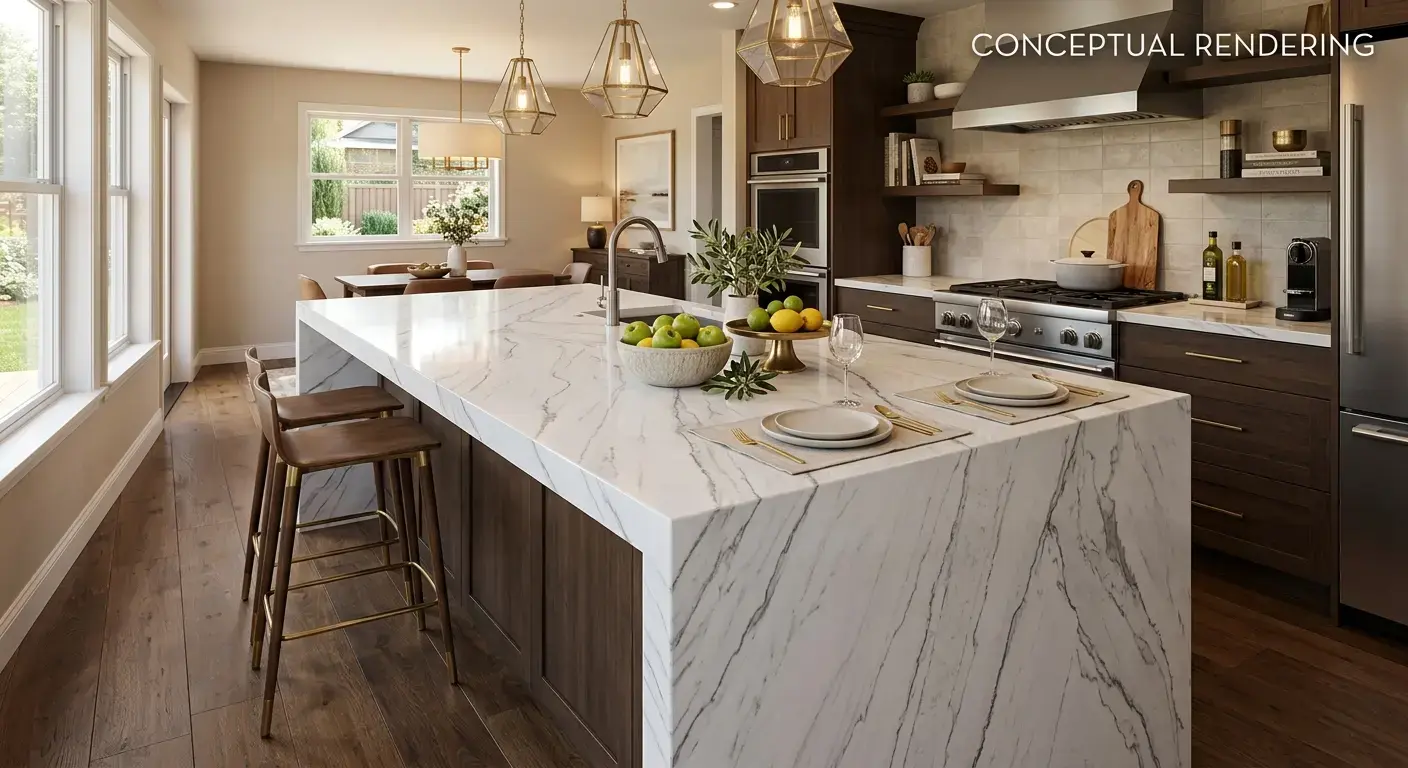
Quartzite: A Marble-Like Look with More Resistance to Wear
Quartzite has become a popular alternative for homeowners who want the look of marble with more resistance to scratching and etching. Our live slab inventory includes a range of white and light quartzites, from nearly solid white to heavily veined patterns that mimic Calacatta marble. Because quartzite is a natural stone formed from sandstone under heat and pressure, color and veining vary from one slab to the next, and viewing a full slab in person is a reliable way to understand the specific color and movement of the piece being considered.
Light quartzite works well in Fair Oaks kitchens that see daily cooking and family activity, since it holds up better than marble to the acidic spills and general wear of an active kitchen. Some light quartzites carry warm undertones with soft beige or gold veining, which can complement the wood tones common in ranch and farmhouse homes.
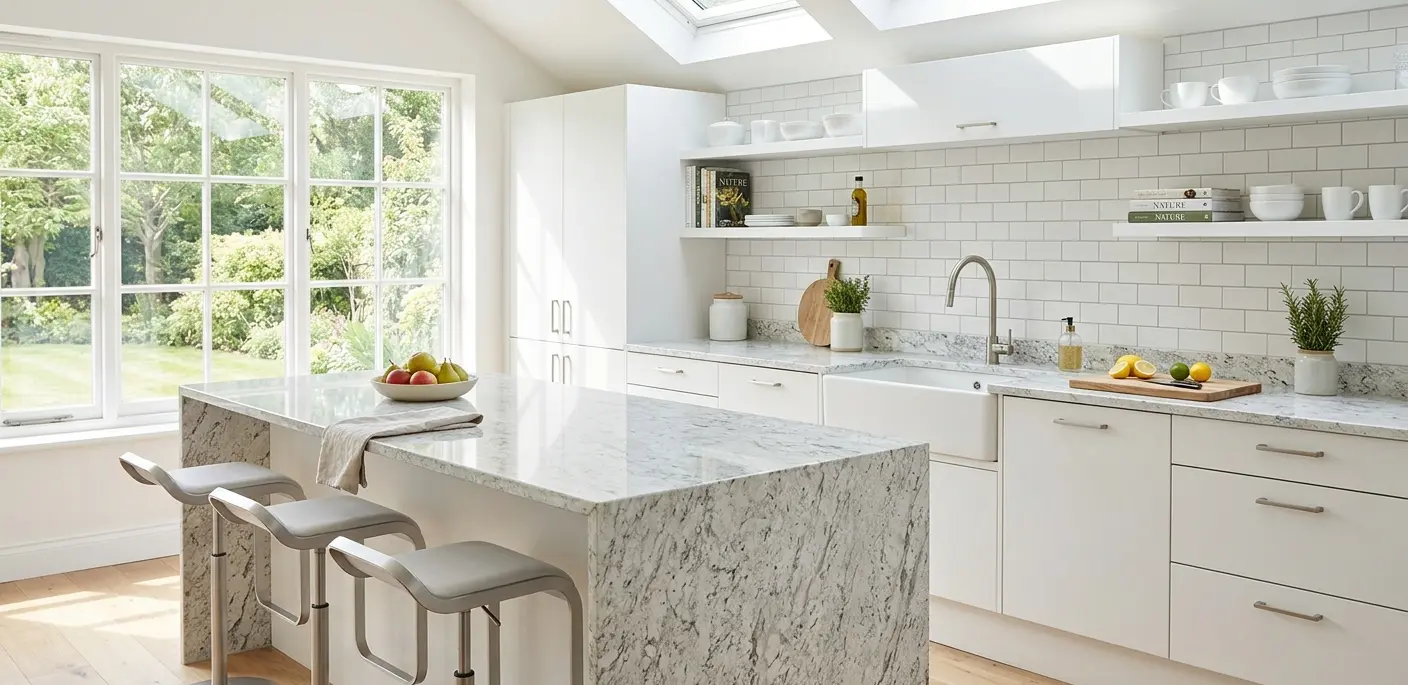
Granite: A Practical Light-Colored Option
Granite is often associated with darker, speckled patterns, but light and white granite options are widely available as well. White granites typically have a more consistent, granular appearance rather than the flowing veining seen in marble or quartzite. This can be a good fit for homeowners who want a light countertop with a less dramatic pattern, or who prefer a surface with more uniform coloring throughout the kitchen.
Granite is generally more resistant to scratching and heat than marble, making it a practical choice for busy kitchens. For Fair Oaks homes with active households, pets, or frequent entertaining, a light granite can offer a lower-maintenance alternative to marble while still achieving a bright, neutral look. Contractors and designers managing several Fair Oaks projects at once may also want to apply for a trade account for ongoing pricing and support across multiple jobs.
Light Stone Color on an Island Versus the Perimeter
Many Fair Oaks kitchens use a lighter or a bolder shade of stone differently on the island than on the surrounding counters. Because an island is typically viewed as a single, uninterrupted surface from multiple angles, a whiter background with heavier gray or gold veining can become a visual centerpiece for the room. Perimeter counters, on the other hand, are usually broken up by a sink, cooktop, and cabinetry, so a paler, more consistent white or cream tone often reads better along the walls without competing with the island.
Some homeowners choose a more dramatic white with bold veining for the island and a quieter, more uniform light color for the perimeter in the same material. Others prefer a single color and slab type throughout the kitchen for a more cohesive look. Either approach can work well in a Fair Oaks kitchen, and the right choice usually comes down to the overall floor plan and how much color contrast the homeowner wants between the island and the surrounding counters. Once a specific slab color catches your eye, you can request a quote on that slab to see how it fits your project and budget.
Matching Light Stone with Cabinetry and Flooring
The undertone of a light stone slab matters as much as the base color. Some whites lean warm, with cream, beige, or gold undertones, while others lean cool, with gray or blue undertones. Matching the undertone of the stone to existing or planned cabinetry and flooring helps avoid a mismatched look once everything is installed together.
For kitchens with warm wood cabinetry or hardwood flooring, a stone with warmer undertones tends to blend more naturally. For kitchens with painted white or gray cabinetry, a cooler-toned stone often complements the palette more closely. Bringing cabinet samples and flooring samples to view alongside full slabs at our Sacramento showroom is one of the most reliable ways to confirm the pairing works before moving forward.
Considering Lighting in the Final Decision
Lighting changes how a light stone color reads in a finished kitchen. Natural daylight, warm incandescent bulbs, and cooler LED fixtures can each shift the appearance of the same slab. A stone that looks bright white under showroom lighting may take on a slightly different tone under the specific lighting conditions of a Fair Oaks kitchen, particularly in homes with skylights, large windows, or under-cabinet lighting.
Viewing a full slab in natural light, and ideally under the type of lighting planned for the kitchen, gives a more accurate sense of how the color will look once installed. This Old House's guide to stone countertops makes a similar point, noting that a stone's appearance can shift noticeably depending on the time of day and the light source in the room. Because veining and color can vary across a single slab, seeing the full piece in person also helps homeowners understand how the pattern will be distributed across the countertop and island.
Everyday Care for Light-Colored Stone Countertops
A light-colored stone countertop requires the same basic care regardless of whether it is marble, quartzite, or granite: wiping up spills promptly, using cutting boards to avoid direct knife contact, and using trivets for hot cookware. Because a light color can show water spots, oil residue, or food stains more visibly than a dark color, many homeowners find it helpful to keep a mild stone-safe cleaner on hand for daily wipe-downs.
Sealing needs vary by material and by the specific stone's porosity, so it helps to ask about the sealing schedule appropriate for the exact slab chosen rather than relying on general assumptions about marble, quartzite, or granite as a category. As a general guideline, more porous stones tend to need more frequent sealing than denser ones, though the right interval always depends on the specific slab and how the kitchen is used day to day.
Everyday habits also play a role in how a light stone color looks over time. Placing a mat or rug in front of a sink or prep area can reduce the chance of standing water sitting on the stone, and drying the surface after cleaning helps prevent water spots from forming, particularly on marble and other more porous stones. Homeowners who cook frequently may also want to keep cutting boards and trivets within easy reach of the island or main work area, since these simple habits do more to preserve a light stone color than any single cleaning product.
Conclusion
Choosing between white marble, light quartzite, and light granite comes down to how the kitchen will be used, what other finishes are already in place, and how much veining and movement feel right for the space. Our team walks Fair Oaks homeowners through these options in person, comparing full slabs side by side under different lighting so the undertones and patterns can be evaluated accurately before a final decision is made. Our showroom is located at 6100 Warehouse Way, Sacramento, CA 95826 (see us on Google Maps), and our team can be reached at (916) 913-6682 to book a design consultation or ask questions about current slab inventory.
Note: Some images on this page may be conceptual renderings created to illustrate design possibilities and may not depict actual installations.
Frequently Asked Questions
White marble typically has a cooler, brighter white background with gray veining, while white quartzite can lean either bright white or slightly warmer with beige or gold veining depending on the specific slab. Because quartzite forms differently than marble, its color and undertone vary more from one slab to the next.
Yes. White granite typically has a more consistent, granular pattern rather than the flowing veining found in marble or quartzite, giving it a different overall texture and visual character.
A reliable way is to compare the stone's undertone, warm or cool, against your cabinet finish in person. Bringing cabinet or flooring samples to view alongside full slabs helps confirm whether the tones work together.
Yes. Natural light, warm bulbs, and cooler LED fixtures can each shift how a light stone reads in a room. Viewing a full slab under lighting similar to your kitchen gives a more accurate picture of the final result.
Yes, in general. Lighter colors like white and cream can make water spots, oil residue, or crumbs more visible than a darker stone color would, simply due to the contrast. How much this matters day to day still depends on the specific material and how porous it is.