Quartz works best in kitchens and bathrooms, where its non-porous surface stands up to daily food prep and moisture. Quartzite works best in fireplaces, outdoor features, and accent walls, since its natural composition and heat tolerance suit conditions an engineered surface isn't built for. Floors and walls work well with either material, so that choice usually comes down to style rather than performance.
Getting this room-by-room fit right ahead of time can save a lot of back and forth during a remodel, since swapping a material after the design is finalized is far more disruptive than choosing correctly from the start.
This guide walks through the most common rooms in a Minden home, kitchens, bathrooms, fireplaces, floors, and outdoor spaces, and breaks down which material fits best in each one, based on what's currently available through Nova Tile and Stone's showroom floor.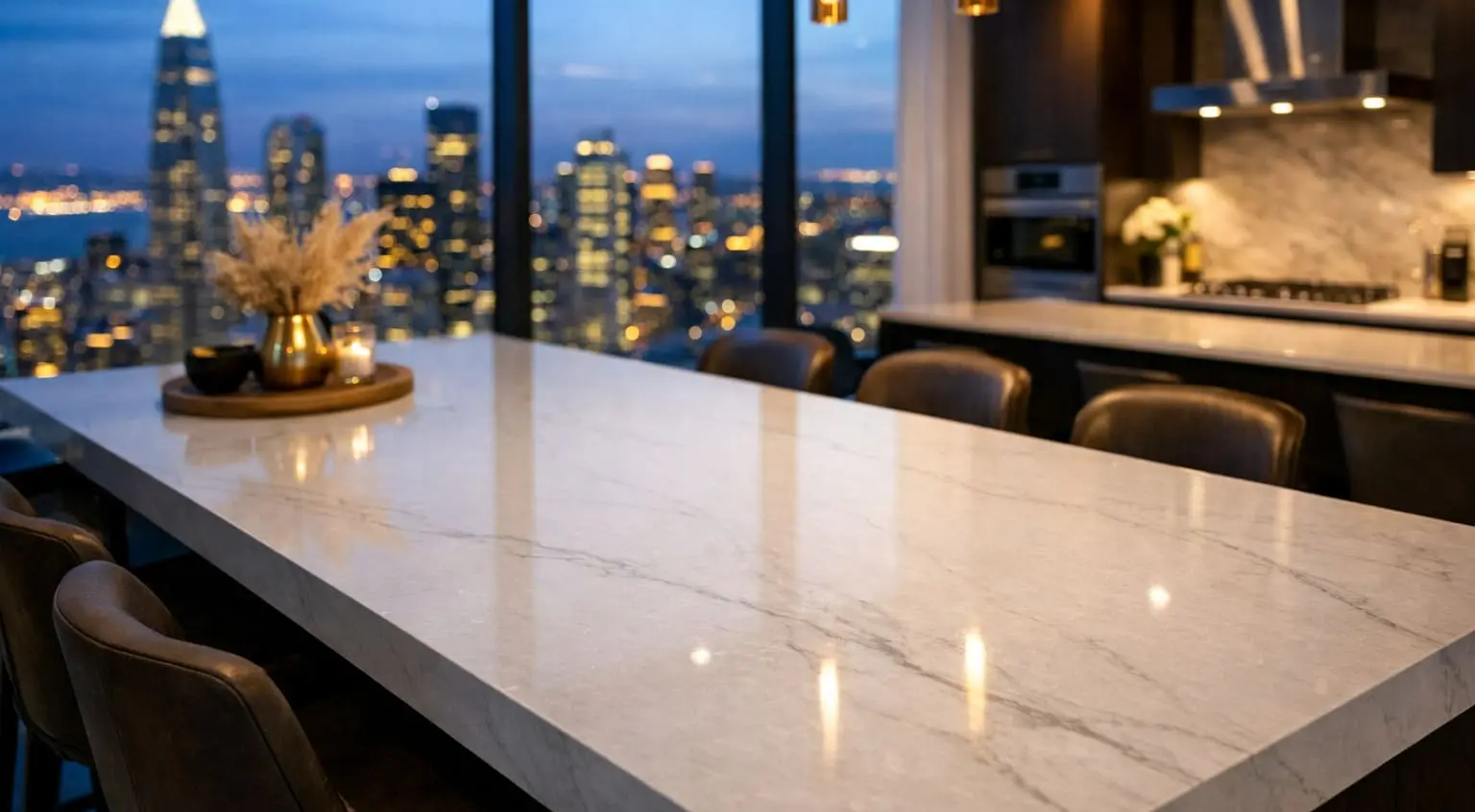
Kitchens: Where Quartz Takes the Lead
A kitchen sees more daily wear than almost any other room in the house, which is exactly where quartz's non-porous, engineered surface earns its reputation. Quartz resists stains from oil, wine, and coffee without needing to be sealed, and its consistent color makes it easy to match across an island and perimeter counters.
Quartz islands in particular have become a popular kitchen centerpiece, since quartz island options for a kitchen come in enough colors and finishes to fit almost any kitchen style. For a broader look at how the two materials compare in a working kitchen, an independent side-by-side comparison covers many of the same tradeoffs from an outside perspective.
Quartzite has a smaller role in the kitchen itself. Rather than countertops, it tends to show up as a backsplash, an accent wall, or flooring that complements a quartz or granite counter, adding natural texture without competing with the main work surface.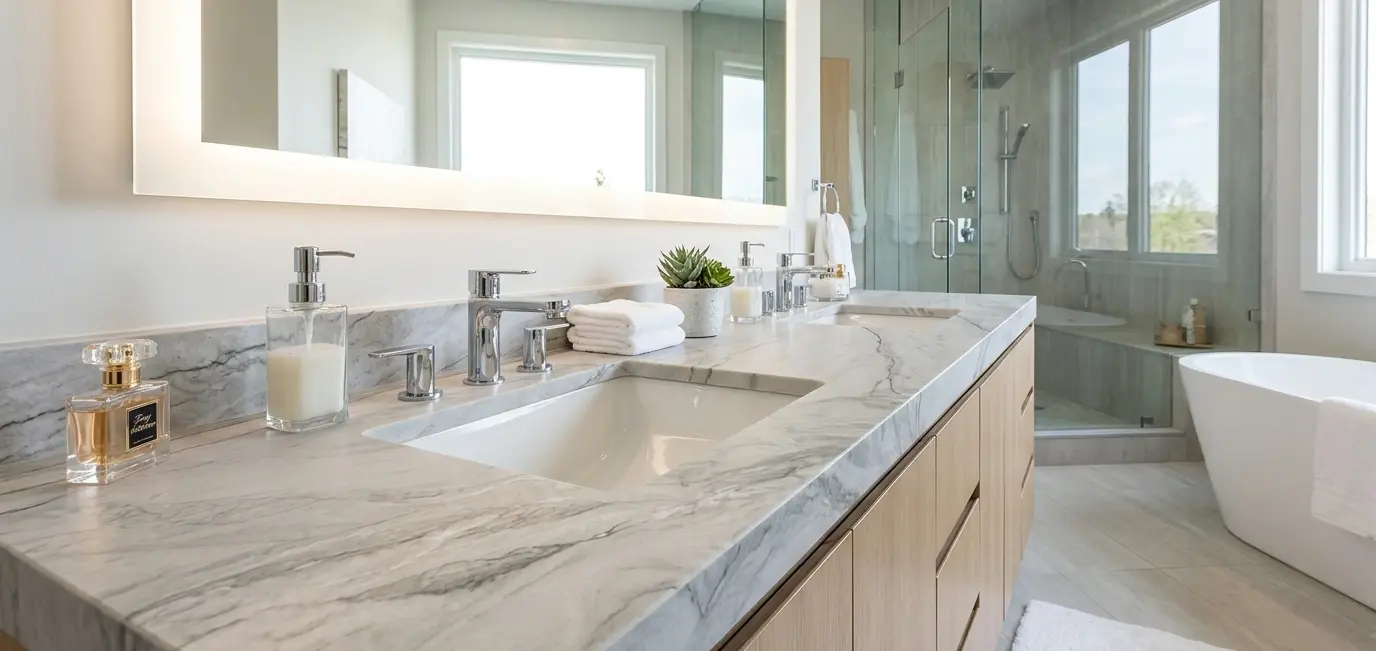
Bathrooms: Vanity Options for Both Materials
Bathrooms are one of the few rooms where both materials genuinely compete for the same job. Quartz holds up well in a vanity setting since its non-porous surface resists moisture, soap residue, and the everyday grooming products that end up on a bathroom counter. For additional quartz countertop specifics beyond kitchen use, its bathroom performance is covered in more detail.
Quartzite brings a different look to the same space. Its natural veining and Mohs hardness rating around 7 make quartzite vanity countertop options a strong pick for homeowners who want a marble-like appearance with more resistance to scratching and etching, provided the stone is sealed periodically to protect against moisture. Varieties like Sea Pearl and Infinity Blue show how different a quartzite vanity can look from one slab to the next, ranging from soft coastal tones to bold blue movement.
Choosing between them in a bathroom usually comes down to style preference more than performance, since both hold up well in a vanity setting when properly cared for. A smaller powder room might favor the brighter, uniform look of quartz, while a primary bathroom remodel often has room for a more dramatic quartzite slab as a focal point.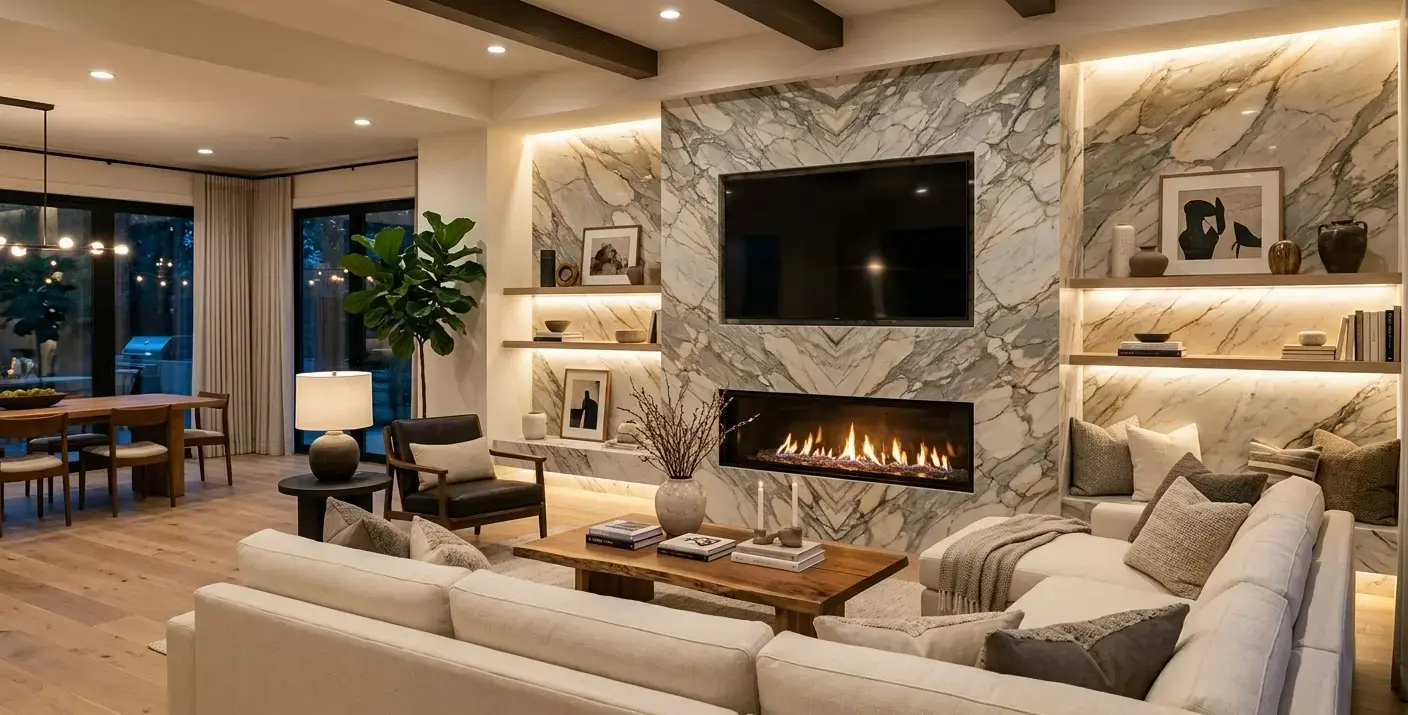
Fireplaces: A Quartzite Specialty
Fireplaces are one of quartzite's strongest applications, and quartz generally isn't used here at all. Quartz contains resin binders that aren't designed for the kind of sustained heat a fireplace surround experiences, so it's built for indoor use away from direct flame exposure rather than as a fireplace material.
Quartzite has no such limitation, since it's a natural stone with no resin content to begin with. Slabs like the Taj Mahal quartzite collection are used for fireplace surrounds precisely because the material can handle direct heat exposure that would damage an engineered surface, while still offering the same natural veining found in its countertop applications.
Flooring and Walls Throughout the Home
Floors and walls are where quartz and quartzite are most evenly matched. Both hold up to foot traffic and daily use, and both can be finished in ways that suit hallways, entryways, or accent walls throughout a home.
The main difference shows up in appearance rather than performance. Quartz delivers a more uniform, engineered look across a large floor area, while quartzite carries the kind of natural movement that makes each installation slightly different from the last. In high-traffic areas like an entryway or a hallway that connects to a kitchen, either material holds up well, so the decision often comes down to whether the space calls for a seamless match with existing quartz counters or a natural stone accent that stands on its own. What's currently in stock across the slab floor is a good way to compare both options side by side before deciding on a look for a specific room.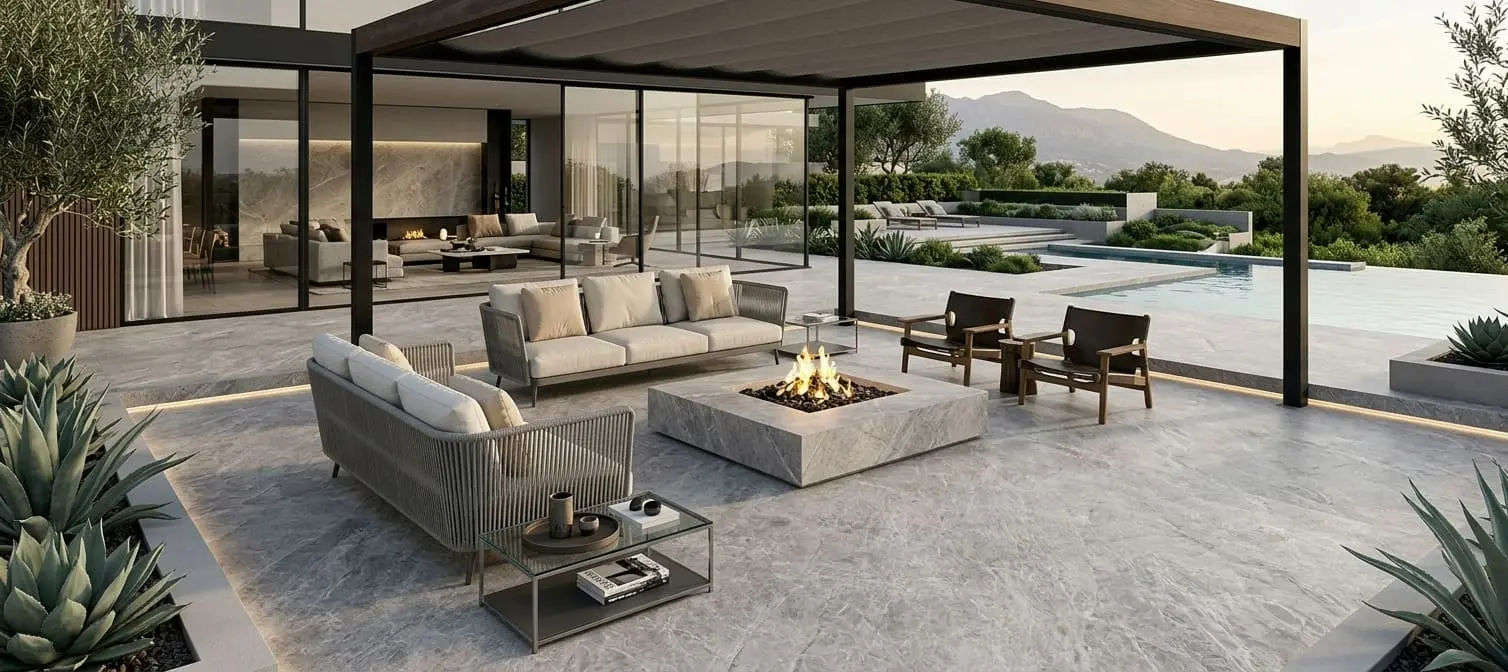
Outdoor Spaces: Patios and Accent Features
Sun and moisture are what separate these two materials outdoors. Quartz doesn't hold up well in that environment, since its resin content isn't designed for prolonged sun exposure, and it's not recommended for patios, outdoor kitchens, or exterior walls.
Quartzite is the natural choice here instead. It resists fading in direct sun, though the level of protection can vary by color and finish, which makes it a suitable choice for outdoor fireplaces, patio accents, and exterior stone walls. For outside guidance on natural stone upkeep, general maintenance tips can help keep an outdoor quartzite feature looking its best through changing seasons.
Room Choices Across Minden's Home Styles
Homeowners across Minden and the surrounding Carson Valley work with everything from lake cabins to newer builds in town, and the room-by-room approach tends to hold up regardless of the style of home. A kitchen remodel usually points toward quartz, a fireplace or exterior feature points toward quartzite, and bathrooms and floors can go either way depending on the look.
Both materials are part of the regular lineup at the Minden location's showroom floor, which makes it easy to pair them within the same project, such as a quartz kitchen paired with a quartzite fireplace in the adjoining living room. Browsing the complete lineup of materials available in-store is a practical way to see how each one looks before committing to a specific room.
From Room Plan to Slab Selection
Once it's clear which rooms call for which material, the next step is usually narrowing down colors and getting pricing. For a specific quartzite slab, homeowners can get pricing on a specific slab to check availability before visiting in person.
For a room-by-room plan that covers more than one material at once, such as a kitchen and an adjoining fireplace, a design consultation can help coordinate the look across both spaces. Homeowners can schedule a one-on-one design session to walk through options for each room together rather than deciding on materials in isolation.
See It In Person Before You Decide
Photos and swatches only tell part of the story, especially once lighting and room size are factored in. The Minden showroom is located at 2548 Business Pkwy, Minden, NV 89423, and can be reached at (775) 783-4970 for questions about current inventory.
Free tile samples are available to take home, which is useful for comparing a specific color against a room's existing lighting and finishes before making a final decision. Map out the drive to the showroom ahead of a visit to plan the trip.
Conclusion
There isn't one material that wins every room, and that's really the point. Quartz's non-porous, low-maintenance surface makes it the practical choice for a kitchen or bathroom vanity, while quartzite's natural composition and heat tolerance make it the better fit for a fireplace or an outdoor feature.
Floors and walls are flexible enough to go either direction based on style, so the room usually decides itself once durability requirements are considered. Homeowners in the Minden area have both materials available locally, along with guidance to help match each one to the right space in the home.
Frequently Asked Questions
Quartz should be avoided outdoors and near an open flame, such as a fireplace surround. Its resin binders aren't designed for prolonged sun exposure or the sustained heat a fireplace produces, so it performs best in indoor rooms like kitchens and bathrooms.
Quartzite is more commonly used in a kitchen as a backsplash, accent wall, or flooring rather than as the countertop itself, adding natural texture without competing with a quartz or granite work surface.
Yes. Quartz's non-porous surface resists moisture and soap residue, which makes it a practical option for a bathroom vanity in addition to kitchen countertops.
Quartzite is the better fit for an outdoor fireplace. It contains no resin, so it can handle direct heat and prolonged sun exposure in ways that quartz isn't designed for.
Yes, both materials are suitable for floors and walls, so the decision for those rooms usually comes down to whether a uniform engineered look or natural stone variation fits the space better.