Granite and quartzite are the easiest natural stones to maintain, since both are durable and resist scratching and fading. Marble, dolomite, and travertine bring distinctive veining and color movement, but their higher porosity means they typically need more consistent sealing and everyday care.
Homeowners across Carson Valley run into all of these options when planning a kitchen, bathroom, or fireplace update. Matching the right stone to a busy household, especially one with kids, pets, or frequent cooking, often comes down to knowing which materials need less day-to-day attention.
Nova Tile and Stone carries a range of natural stone, as shown on our main website, including our Minden showroom in the heart of Carson Valley.
Anyone comparing options may also want to look into how these materials are labeled for environmental and health considerations, which this guide to natural stone product labeling covers in more detail.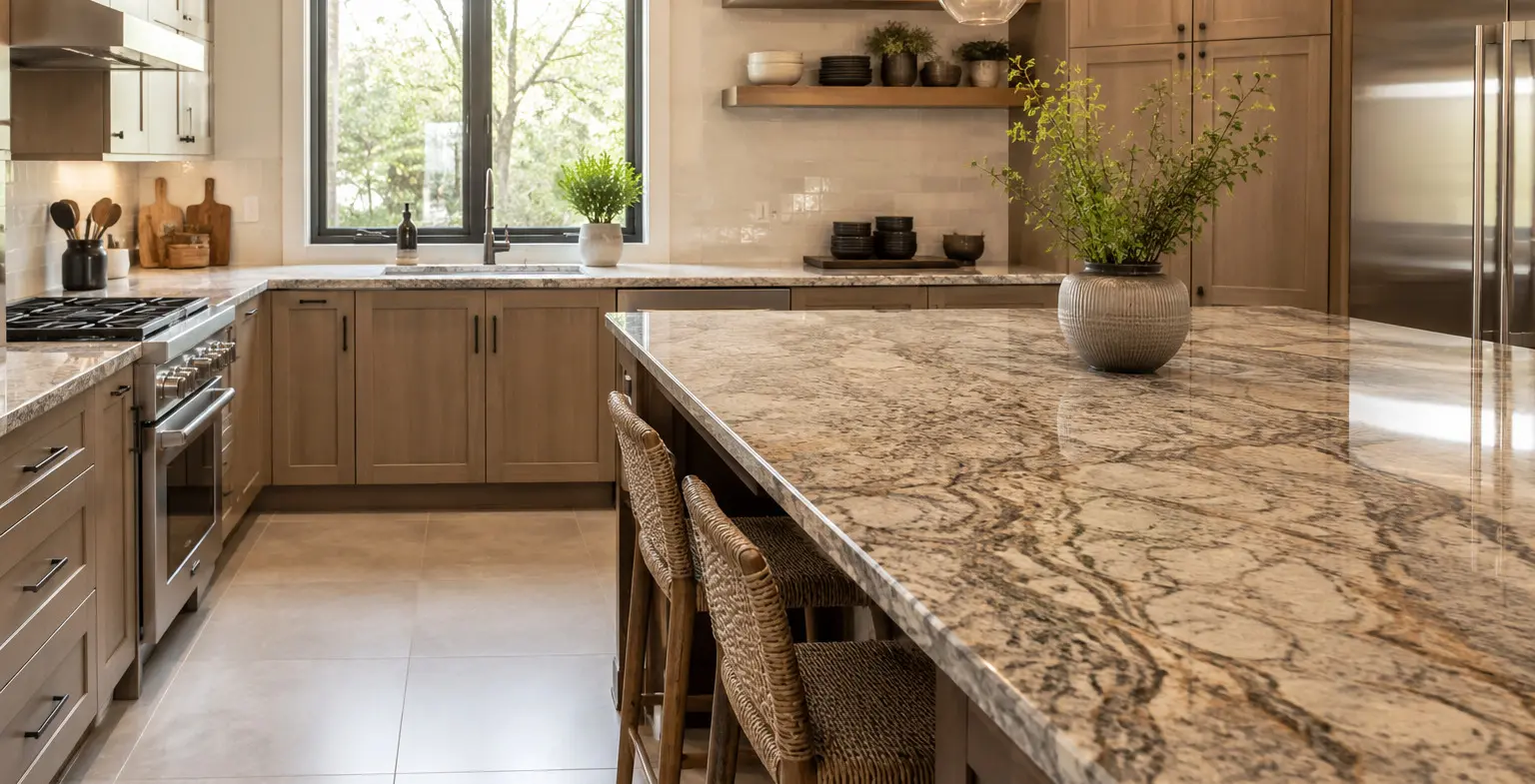
Granite Holds Up With Minimal Upkeep
Granite remains one of the most forgiving natural stones available for daily use. It comes in polished, honed, and leathered finishes, so the look can be adjusted without giving up performance. Because it works indoors and outdoors, it shows up in kitchens, bathrooms, fireplaces, and even outdoor cooking spaces.
Granite is dense enough to resist scratching, and it can handle the daily demands of a busy kitchen. It also holds up well as a countertop for food preparation. Most kitchens still keep a cutting board within reach for everyday cutting and chopping, mainly to protect knife edges. Granite also holds its color well in areas that get regular sunlight, which makes it a reasonable pick for a bright kitchen or a sunroom.
This range of finishes and applications is why granite shows up so often as a kitchen island, a bathroom vanity top, and a fireplace surround all in the same home. A leathered finish can soften the look of a busy fireplace wall, while a polished finish tends to suit a kitchen that gets a lot of natural light.
Because granite performs consistently across so many applications, it's often the starting point for anyone comparing natural stone that needs less regular attention. Those who want to see current color and pattern options in person can look through our current slab inventory before narrowing down a choice.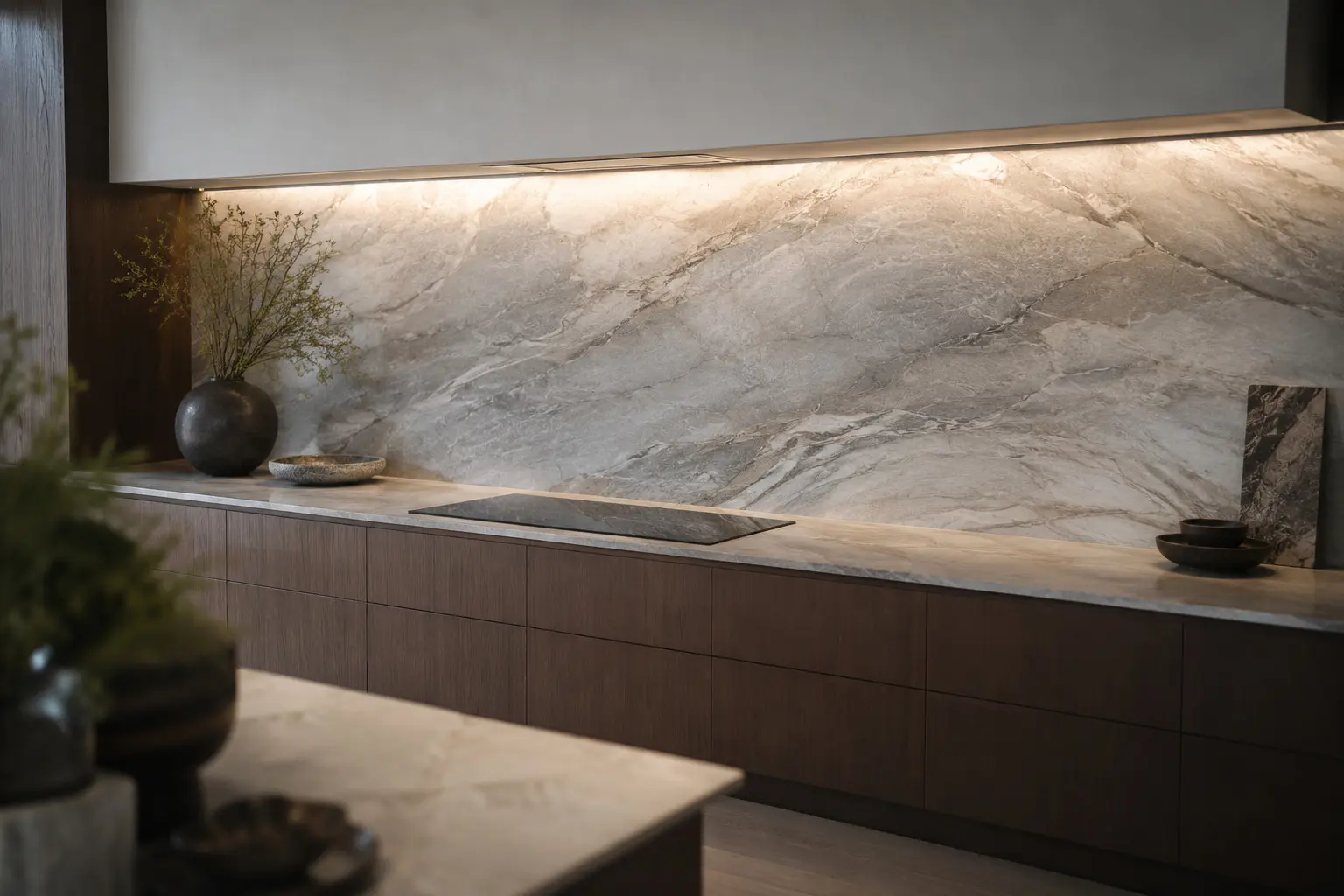
Quartzite Offers Similar Durability With Its Own Care Notes
Quartzite shares several traits with granite, including polished, honed, and leathered finish options, and it performs well both indoors and outdoors. It suits floors, walls, and fireplace surrounds, and it resists fading from ultraviolet exposure. Darker colors and certain finishes can show a bit more variation in how well they hold up under direct sun.
Because quartzite holds up outdoors as well as inside, it works well for spaces that see a mix of sun and everyday traffic, such as an outdoor fireplace surround or a well-used entryway floor. Scratching and general wear aren't usually a concern with quartzite. Edges and corners tend to show wear first, so they're worth a bit of extra attention over time.
A leathered or honed finish on quartzite tends to hide light surface wear a little better than a high polish, which is worth considering for a wall or floor that sees constant foot traffic. Color and veining also vary quite a bit from one quartzite slab to the next, so seeing a piece in person often changes how a homeowner pictures it in a specific room.
Anyone who finds a color or pattern that stands out can request a quote on that specific slab before making a final decision.
Marble, Dolomite, and Travertine Need a Bit More Attention
These three stones bring some of the most distinctive veining and color movement available in natural stone, but they ask for a more consistent care routine than granite or quartzite. Marble and dolomite are suited to indoor floors, walls, and fireplaces, while travertine extends to outdoor spaces as well, giving it more flexibility for patios and outdoor living areas.
None of these three should be treated as UV resistant, so color exposure in direct, prolonged sunlight is worth factoring into the decision, particularly for marble and dolomite placed near large windows. They also tend to be more porous than granite or quartzite. The surface holds up reasonably well in humid spaces like bathrooms, and proper sealing plays a part in keeping moisture from becoming an issue over time.
Each of these three stones is available in polished, honed, and leathered finishes, so the same general care needs can look quite different depending on how the surface is finished. A honed marble floor tends to show fewer etch marks than a highly polished one, for example, since the matte surface already has a softer sheen to begin with. Every slab also carries its own natural variation in tone, veining, and movement, so no two homes with the same stone type end up looking exactly alike.
For a closer look at cleaning products and everyday care that suit these more porous stones, the Natural Stone Institute publishes a consumer care guide worth reviewing before making a final decision.
Semi-Precious Stone as a Specialty Accent
Semi-precious stone occupies a different role than the stones above. It's typically used as a polished specialty accent on interior walls rather than as a flooring or fireplace material, and it isn't intended for outdoor use.
Because of how it's cut and finished, semi-precious stone often becomes a focal wall in a bathroom or a feature behind a bar area rather than a surface that sees heavy daily contact. Since it's positioned for a narrower set of applications, less of the everyday wear-and-tear conversation applies here than with the stones above. The bigger consideration usually comes down to planning where a smaller, more dramatic material will have the most visual impact in a room.
Everyday Habits That Keep Any Natural Stone Looking Its Best
Regardless of which stone ends up in a home, a few consistent habits make a noticeable difference over time. Wiping up spills soon after they happen helps prevent staining, which matters even more for marble, dolomite, and travertine than it does for granite or quartzite.
Mild, pH-balanced cleaners tend to work better than harsh, acidic products, which can dull a polished finish faster than expected. Using trivets under hot cookware and a cutting board on any food-prep surface also helps preserve the finish over the long run.
Placing mats near entryways can also cut down on grit that scratches a floor's finish over time, and lifting rather than dragging heavy furniture or appliances helps protect edges and corners on any natural stone surface. None of these habits require special products or extra effort once they become routine.
Homeowners who want a wider range of choices while a project is still taking shape can browse current overstock selections, since rotating stock often includes patterns that aren't part of the regular lineup.
Comparing Options at Our Minden Showroom
Nova Tile and Stone's Minden showroom gives Carson Valley homeowners, along with those in Gardnerville, Genoa, and the surrounding Douglas County area, a local option for comparing these stones side by side. Seeing granite, quartzite, marble, dolomite, and travertine under natural showroom light makes a real difference, since photos rarely capture how a stone's veining and color shift with lighting.
Our Minden showroom is located at 2548 Business Pkwy, Minden, NV 89423, and can be reached at (775) 783-4970. Directions are also available through Google Maps for anyone planning a visit.
Free tile samples are also available to take home, which makes it easier to see how a specific stone reads in a room's actual lighting before making a final decision. Comparing a sample against existing flooring, wall color, or fixtures at home often makes the choice between two or three finalists much clearer.
For a broader look at what's on display before stopping by, the Minden showroom page outlines current offerings, and a free design consultation is available for anyone ready to talk through a specific project.
Conclusion
Granite and quartzite offer some of the simpler natural stone care routines available, while marble, dolomite, and travertine reward a bit more attention with distinctive color and movement. Semi-precious stone rounds out the lineup as a specialty accent rather than an everyday surface.
Whatever material ends up fitting a project best, the right choice usually comes down to matching a stone's natural characteristics with how a space actually gets used day to day. Carson Valley homeowners are welcome to compare all of these options in person before settling on a direction.
Frequently Asked Questions
Granite and quartzite generally need less day-to-day attention than more porous stones like marble, dolomite, or travertine. Both resist scratching and hold up well across finishes.
These stones are more porous than granite or quartzite, so sealing is typically part of keeping them protected from staining and moisture. How often resealing is needed depends on the specific stone, its finish, and how the space is used.
Granite, quartzite, and travertine are all suited to outdoor use, which makes them reasonable options for patios, walkways, or fireplace surrounds. Marble and dolomite are better suited to indoor applications.
Yes, granite is a solid choice for kitchen countertops and handles food preparation well. Many homeowners still keep a cutting board on hand to protect the finish and their knives.
A polished finish has a glossy, reflective surface, while a honed finish has a flatter, matte appearance. Both finishes are available across most of the natural stones discussed here, so the choice mostly comes down to the look a space calls for.