Onyx works best in Granite Bay homes on backlit bar panels, bathroom vanities, fireplace surrounds, and wine room features. It is not recommended for kitchen countertops, outdoor spaces, or high-traffic bathroom counters. Onyx is a translucent, calcite-based stone that rates 3 to 4 on the Mohs hardness scale, softer than granite or quartzite, so where it goes in a Granite Bay home matters more than it does with harder stones.
The reason for this comes down to two properties. Onyx is translucent, so a backlit onyx panel glows and reveals its veining in a way granite and quartzite cannot. Onyx is also soft and prone to etching from acids like citrus juice and wine, so it performs best away from daily kitchen and cooking-adjacent contact.
Understanding Onyx as a Material
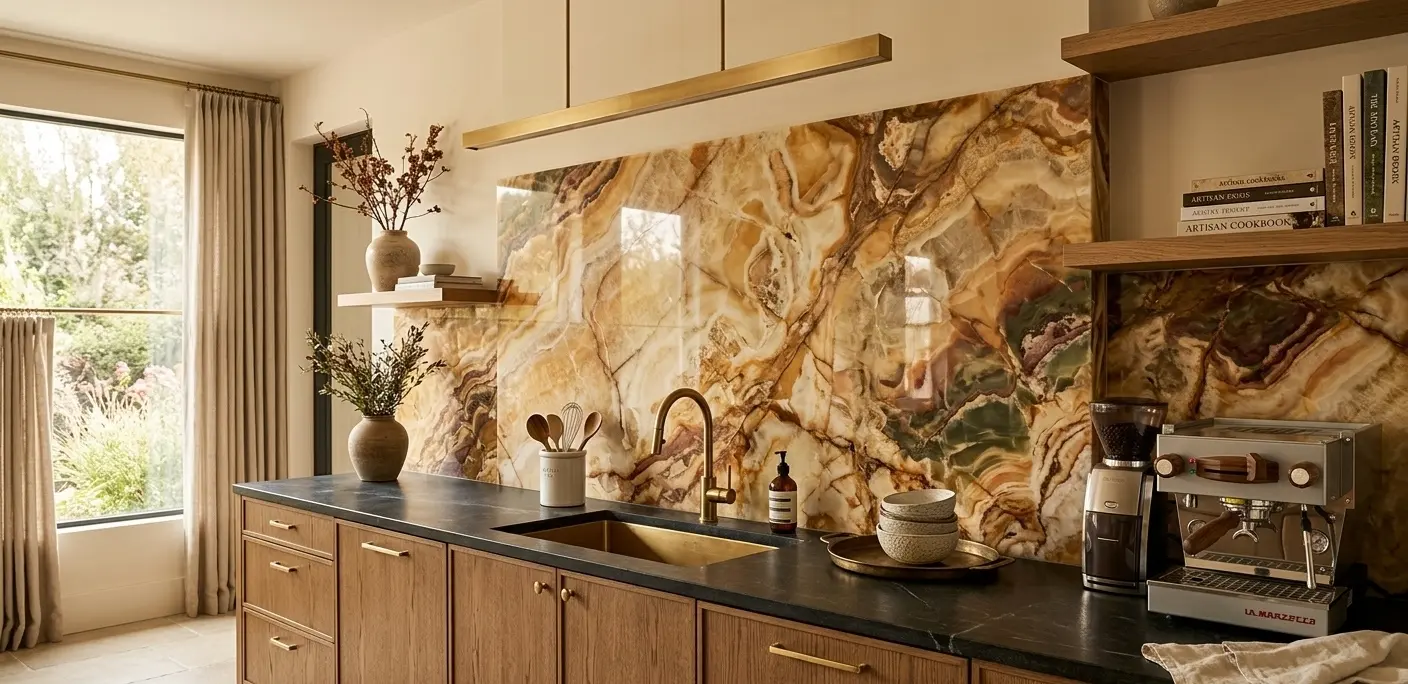
Onyx forms through mineral deposits left behind as calcite-rich water evaporates over long periods, which is why it develops the parallel banding and swirled patterns it is known for. That same formation process is what makes it translucent. Light can pass through a properly cut slab, particularly in lighter honey, white, and green tones, while darker onyx varieties transmit less light and read more like a moody accent stone.
Worth noting: the material sold as onyx in stone yards is not the same mineral geologists call true onyx, which is a much harder form of banded quartz. What the stone trade calls onyx is technically banded calcite, formed the same general way as travertine. The name has stuck in the design world because of the look, but the softness and care requirements described here come from that calcite composition, not from true quartz onyx.
On the Mohs hardness scale, onyx typically falls in the 3 to 4 range, well below granite or quartzite. It is more prone to scratching and etching from acidic substances like citrus juice, wine, or certain cleaning products. This does not make onyx a poor choice. It makes it a stone that works best when it is placed thoughtfully, in locations where it will be appreciated rather than tested by daily wear. For a broader look at how different materials handle daily kitchen use, this overview of stone countertop options covers the trade-offs across granite, marble, and quartzite as well.
Color and banding also play a role in how a specific onyx slab performs once it is installed. Lighter honey, cream, and white varieties transmit the most light and work well for backlit applications, while darker green, red, and black onyx tend to be more opaque and read as a solid accent color even without a light source behind them. Which effect a homeowner is after, a lit translucent panel or a deeper opaque surface color, helps narrow down both the slab and the location it belongs in.
Where Onyx Performs Well
Wet bars and home bar backs are a common application for onyx in a Granite Bay home. A backlit onyx panel behind a bar adds visual interest to the room without competing with countertop traffic, since the bar surface itself can be finished in a harder material while the onyx panel serves as the lit accent behind it.
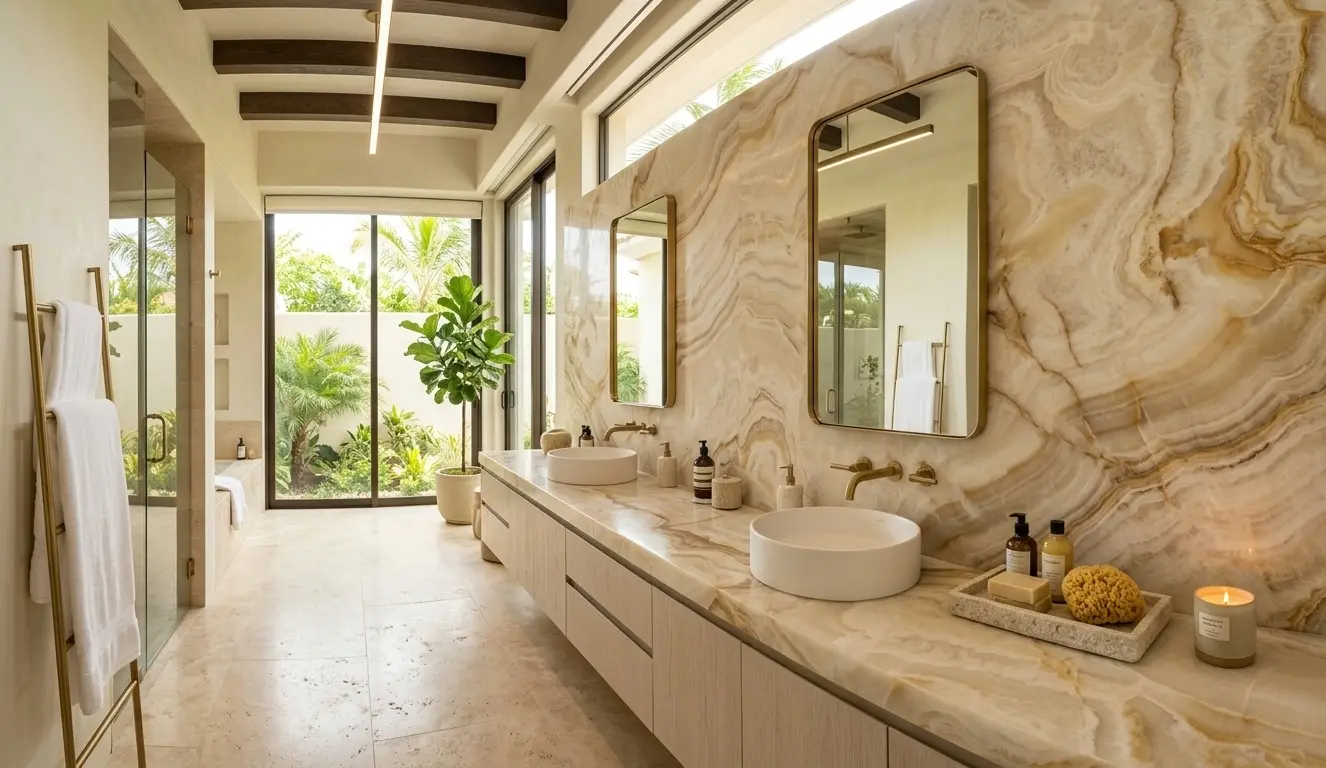
Primary bathroom vanities are another common fit, especially in homes with a spa-style layout. Vanity tops see lighter daily use than a kitchen island, and pairing onyx with under-cabinet or backlighting highlights the material's translucency.
Fireplace surrounds and accent walls give onyx room to be seen at scale. Because the stone reads differently depending on the angle and intensity of light behind or in front of it, a fireplace wall lets the material's translucency do the work without any concern about spills, cutting boards, or day-to-day contact.
Wine cellars and tasting rooms, which show up frequently in larger Granite Bay properties, are also well suited to onyx. Tabletop surfaces, backsplash panels, and display niches in these spaces are viewed more than they are used, which fits onyx's care requirements. Because banding and translucency vary so much slab to slab, browsing our live slab inventory ahead of a visit gives a useful preview of what is currently on hand.
Powder rooms are worth a mention as well, since they combine light guest use with a smaller footprint to finish. A powder room only needs to handle occasional hand washing rather than the constant activity of a family bathroom, which makes it a lower-risk place to introduce a translucent onyx vanity top or an onyx-clad accent wall behind the mirror.
Where Onyx Is a Riskier Fit
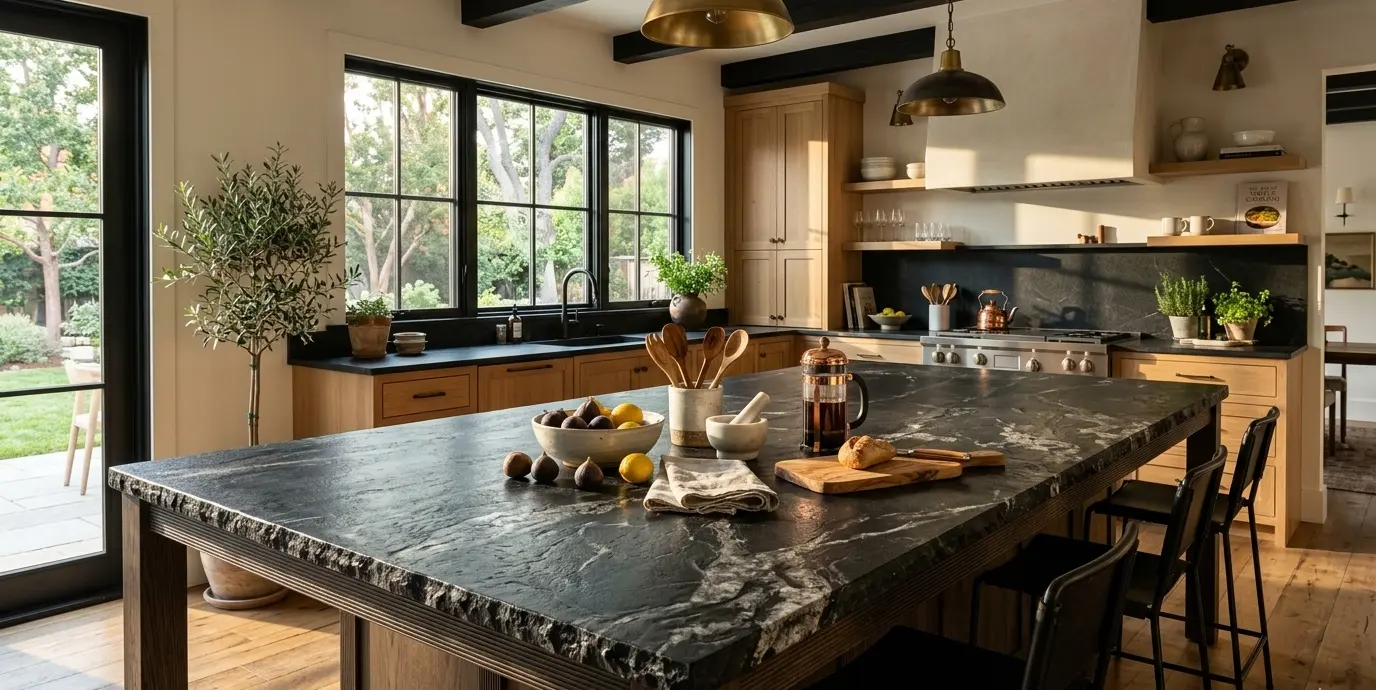
Kitchen countertops are the application where onyx runs into the most trouble. Countertops face daily contact with acidic foods, hot pans, and general kitchen activity, and onyx's softness and sensitivity to etching make it a more demanding surface to live with in that setting. General guidance on caring for calcareous stone confirms that acid exposure is the main risk factor for materials like onyx, marble, and limestone alike. Some homeowners do choose onyx for a kitchen island specifically for its visual effect, understanding the tradeoffs, but it is rarely the right choice for perimeter counters or prep zones that see heavy daily use.
Outdoor applications are another area to avoid. Onyx is not suited to exterior exposure, temperature swings, or direct weather contact, which rules it out for outdoor kitchens, pool surrounds, or patio features that are common in many Granite Bay backyards.
High-traffic bathroom counters used by a full household face the same concerns as kitchens. A single vanity in a primary suite, used mainly by one or two people, is a very different situation than a shared family bathroom counter that sees toothpaste, makeup, and cleaning products multiple times a day.
Practical Considerations for Granite Bay Homeowners
If you are drawn to onyx for its appearance, the most important decision is where in the home it will live. A feature wall, bar back, or single vanity gives you the visual payoff with far less exposure to the conditions that cause problems. Sealing and gentle, pH-neutral cleaning routines are part of living with onyx over time, and homeowners who go into the material with realistic expectations about care tend to be the happiest with the result.
Lighting design matters as much as the stone selection itself. Onyx that will be backlit needs to be paired with the right panel thickness and lighting setup to achieve even light transmission through the slab. Slabs cut too thick can block too much light, while slabs cut too thin can raise other structural concerns depending on the application, so this is a detail worth planning early rather than adjusting after a panel has already been fabricated.
Reviewing slabs in person, ideally under lighting similar to what will be used in the final installation, gives a much clearer sense of how a specific piece will look once it is placed. Two slabs from the same general color family can behave very differently under light depending on their banding pattern and density, so seeing the actual piece matters more with onyx than it does with many other stone choices. Once a specific slab is identified, submitting a slab quote request provides project-specific pricing before anything is finalized.
Granite Bay's mix of lake-view properties, larger lot sizes, and custom architecture means there is often a spot for a material like onyx, whether that is a wine room, a home bar, or a primary suite. The key is matching the material to a space where its translucency and pattern can be the point, rather than asking it to hold up to the same demands as a kitchen countertop. Looking at the full range of tile, stone, and flooring options we carry can also help clarify how onyx pairs with other surfaces elsewhere in the home.
Working with a designer or stone specialist early in the planning process also helps. Decisions about panel thickness, backlighting type, and edge treatment are easier to make before cabinetry, framing, or electrical work is finalized, since retrofitting a lighting source behind an installed panel is far more disruptive than planning for it from the start. Homeowners who bring photos of the room, along with a general sense of the mood they want the space to have, tend to find the slab selection process easier to navigate. Contractors and designers coordinating a custom Granite Bay build can also apply for a trade account for streamlined pricing across multiple projects.
Conclusion
Onyx rewards thoughtful placement more than any other natural stone we work with. In a Granite Bay home, that usually means a backlit bar wall, a primary vanity, a fireplace surround, or a wine room feature rather than a kitchen countertop or an outdoor space. If you are weighing onyx against other natural stone options for your project, our design team can walk through slab selection and placement in person at our Sacramento showroom at 6100 Warehouse Way, Sacramento, CA 95826, or by phone at (916) 913-6682. You can also book a design consultation online ahead of your visit.
Note: Some images on this page may be conceptual renderings created to illustrate design possibilities and may not depict actual installations.
Frequently Asked Questions
It can work for a kitchen island if the homeowner understands and accepts the tradeoffs, since onyx is softer and more prone to etching than granite or quartzite. Many homeowners prefer to reserve onyx for a feature wall, bar, or vanity and use a harder stone on surfaces that see daily food prep.
No. Onyx is not suited to exterior exposure, temperature changes, or direct weather contact, so it should be reserved for interior applications such as bars, vanities, and accent walls.
Onyx forms with a translucent, banded structure that allows light to pass through the stone. Backlighting reveals the depth of the veining and color in a way that standard room lighting cannot, which is why the material is so often used in bar backs, feature walls, and lit display niches.
Both are calcite-based stones that are sensitive to acidic substances and require sealing and gentle cleaning, but onyx is generally softer than marble and shows scratches and etching more readily. Placement in lower-traffic areas helps offset this difference.
A vanity top or an accent wall behind the vanity tends to work well, since a primary suite typically sees lighter daily use than a shared family bathroom. Pairing the vanity with backlighting or strong ambient light helps highlight the stone's translucency.