When you visit Nova Tile and Stone in Reno, NV, you will find countertop slabs in natural stone, quartz, sintered stone, and porcelain; wall and floor tile in a range of materials and formats; and flooring options including hardwood, luxury vinyl plank, laminate, and carpet, all available to see and compare in full size before purchasing.
We also offer free design consultations, a sample program, and a team with working knowledge of how Reno's high-desert climate affects material performance. Because Reno sits at 4,400 feet in a semi-arid valley with roughly 300 days of sunshine per year, low indoor humidity, and significant freeze-thaw cycling in winter, material selection here involves practical considerations that do not apply in most other regions, including how wood floors respond to dry air, which tile products are rated for outdoor frost exposure, and why engineered quartz is generally not recommended for outdoor countertops in Northern Nevada.
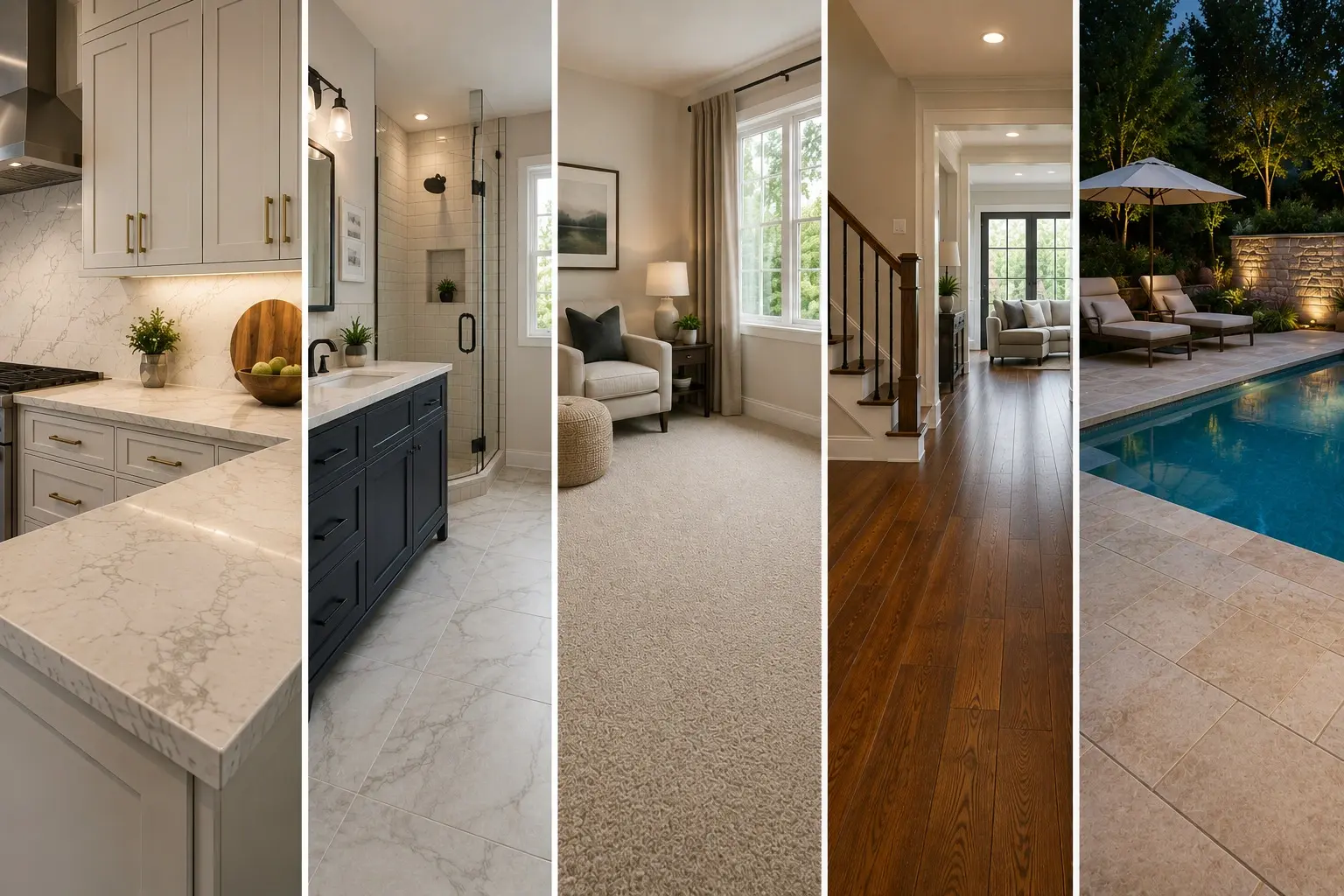
The Materials You Will Find at Our Reno Showroom
Countertop Slabs
Slabs are large, uncut pieces of stone or engineered material, typically around 120 by 60 inches, from which countertops are fabricated. Each natural stone slab is unique, which is why seeing our slab inventory in person, rather than approving a catalog photo, matters for the final result. We carry natural stone options including marble, quartzite, granite, and travertine, alongside engineered options such as quartz and sintered stone. Porcelain slabs are also available as a non-porous alternative for countertop and wall cladding applications.
For Reno specifically, quartz performs well indoors but is generally not suitable for outdoor countertops. The polymer resins used to bind engineered quartz are UV-sensitive, and prolonged direct sunlight causes them to yellow, fade, or discolor unevenly over time. If you are considering a kitchen island or bar counter on a covered patio, natural stone or sintered stone are more appropriate alternatives. Our team can help you find the right fit.
Tile
Porcelain, fired at temperatures up to approximately 1,300°C and achieving a water absorption rate below 0.5 percent per ANSI A137.1, is the most common floor and wall tile material we carry, available in formats ranging from small mosaics to large-format panels. Ceramic tile, natural stone tile, and glass tile are also part of our collection.
For wet area floors, slip resistance is worth paying attention to. Under ANSI A326.3, tiles for level interior floors walked on when wet must have a measured wet DCOF value of 0.42 or greater. Exterior applications, including patios and covered walkways, fall under a higher threshold of 0.55 under the same standard. For outdoor surfaces in Northern Nevada, frost resistance matters just as much: not all porcelain products are rated for the freeze-thaw cycling that patios and stairs experience between November and March. Our team can identify which products in our collection meet the right ratings for your specific application.
Hardwood
Hardwood flooring suits Reno's high-desert architecture well, pairing naturally with the earthen palettes and stone elements common in neighborhoods like Caughlin Ranch and Somersett. The practical challenge here is humidity management. Indoor relative humidity can drop below 20 percent during dry stretches, and wood responds by losing moisture and shrinking, producing gaps between planks in winter that close back up as conditions change.
The National Wood Flooring Association (NWFA) recommends maintaining indoor relative humidity between 35 and 55 percent year-round. Engineered hardwood, which consists of a real wood veneer over a dimensionally stable core, handles humidity variation better than solid hardwood and is compatible with radiant floor heating, which is common in high-desert homes. We carry both options, and our design team can walk you through which works best for your rooms and lifestyle.
Luxury Vinyl Plank
Luxury vinyl plank (LVP) is a fully waterproof, multi-layer synthetic product that is more forgiving than hardwood in spaces with moisture exposure or temperature fluctuation. For Reno homeowners, LVP does not shrink in dry winter air, holds up to moisture tracked in from ski trips and mudrooms, and works well in laundry rooms and bathrooms where hardwood is not appropriate.
Key specifications to review with our team include wear layer thickness, where a thicker layer provides greater scratch resistance, and core type. WPC (wood-plastic composite) uses a foam core and feels softer underfoot; SPC (stone-plastic composite) has a denser limestone-based core and is more dimensionally stable under temperature swings.
Laminate
Laminate resembles LVP visually but is not waterproof, making it better suited to dry spaces such as bedrooms, home offices, and living rooms. It is available at a lower price point than hardwood or LVP. When you visit, ask our team to clarify which products in our laminate range include attached underlayment and which require a separate pad, as that affects both installation cost and underfoot feel.
Carpet
Carpet remains the preferred flooring in many Reno bedrooms and home theaters, where acoustic and thermal properties matter more than water resistance. Nylon is the most durable fiber for high-traffic areas; polyester and triexta offer a softer feel and good stain resistance for lower-traffic rooms. In Reno's dry climate, carpets treated for anti-static performance are worth asking about. Our team can point you toward options that address this, particularly for bedrooms where static buildup in winter can be noticeable.

How to Make the Most of Your Visit
Arrive with room dimensions, since flooring is sold by the square foot and countertop work requires knowing your linear footage of runs. Bring photos of the existing space taken in natural light, since cabinetry tones and wall colors directly affect how a new material reads at home. A general sense of budget tier helps our team focus on the most relevant sections of the showroom. If you are working with a contractor, bring their specs so we can ensure material selections align with the planned installation method.
Our Design Consultation
Our free design consultations are available any time you visit. Sit down with one of our specialists and we will help you evaluate options side by side, coordinate finishes across countertop, backsplash, tile, and flooring, and work through a rough project estimate. This is most valuable for whole-home projects or any remodel where multiple surfaces need to work together. A kitchen remodel, for example, might involve a slab, a backsplash tile, a floor tile, and adjacent room flooring that all need to be coordinated deliberately. Book your consultation in advance to make the most of your time with us.
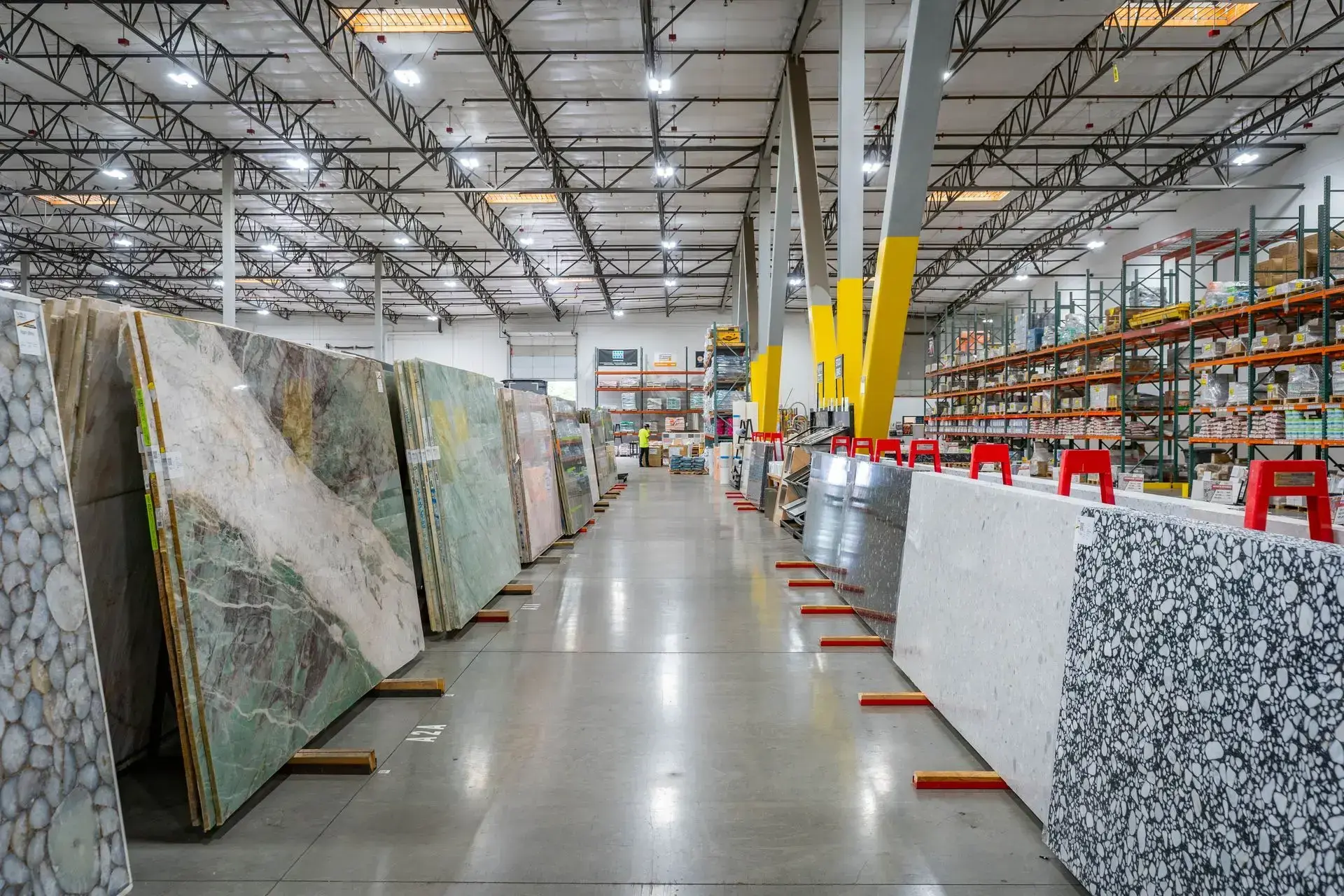
Visit Nova Tile and Stone in Reno, NV
Our Reno showroom is located at 12835 Old Virginia Road, Reno, NV 89521. As a family-owned direct stone importer, we carry thousands of countertop slabs alongside tile, flooring, and exterior stone. Free design consultations are available, and you are welcome to take a tile sample home for $1.
Address: 12835 Old Virginia Road, Reno, NV 89521 Phone: (775) 331-6682 Hours: Monday through Friday, 7:30 am to 6:00 pm | Saturday, 9:00 am to 3:00 pm | Sunday, Closed.
Book a free design consultation or stop in during showroom hours.
Conclusion
Visiting our Reno showroom is useful because it compresses decision-making in ways a screen cannot. You can stand in front of a full-size slab and know within seconds whether the veining works for your kitchen. You can place a tile sample next to a flooring board and see how they read together. None of that is possible from a browser tab.
For Reno homeowners, a visit to Nova Tile and Stone also gives you direct access to our team, who understand what the local climate does to materials: how low humidity affects wood floors, which tile products are rated for Northern Nevada patios, and why the countertop that works in a San Francisco kitchen may not suit an outdoor kitchen in Sparks. That local knowledge is something you will not find in an online product listing.
Frequently Asked Questions
DCOF, or Dynamic Coefficient of Friction, measures how much resistance a tile surface offers against sliding when wet. Under ANSI A326.3, interior wet floors require a minimum wet DCOF of 0.42, while exterior applications such as patios and covered walkways require 0.55 under the standard's 2022 revision. Our team can identify which products in our collection meet the right threshold for your project.
Solid hardwood is milled from a single piece of wood; engineered hardwood uses a real wood veneer over a dimensionally stable plywood or fiber core. In Reno's dry climate, engineered hardwood is generally the more stable choice because its layered construction is less reactive to humidity changes that cause solid hardwood to shrink and gap. We carry both and can help you decide based on your specific rooms and conditions.
Nylon is the most durable option for high-traffic areas, resisting abrasion and soil better than most alternatives. For Reno's dry climate, anti-static treatment is worth asking about regardless of fiber type. Stop by our Reno showroom and our team will help you find the right fiber and pad combination for your space.
A general browsing visit typically runs between 45 minutes and an hour and a half. A scheduled design consultation for a larger project such as a kitchen remodel or whole-home flooring replacement can run two hours or more. We recommend booking in advance if you want dedicated time with one of our design specialists.
Yes. We offer a trade program for contractors, designers, and builders that includes dedicated pricing, project estimators, and job site delivery. If you are working on a residential or commercial project in Northern Nevada, ask about our trade account on your first visit.
Curious About Something Else?
Note: Some images on this page may be conceptual renderings created to illustrate design possibilities and may not depict actual installations.