The biggest things to avoid on hardwood floors are excess water and steam cleaners, harsh or acidic cleaning products such as ammonia, bleach, and vinegar, tracked-in sand and grit, untrimmed pet nails or furniture moved without felt pads, and prolonged direct sunlight. In a Truckee mountain home, these risks are higher than average because of heavy snowfall, dry winter heat, and intense high-elevation sun, all of which put wood flooring under more stress than a milder, more consistent climate would. The sections below break down each risk in more detail, along with what to do instead, so a hardwood floor can hold up through a full Sierra winter and the mud season that follows.
Truckee's Climate Puts Extra Stress on Hardwood
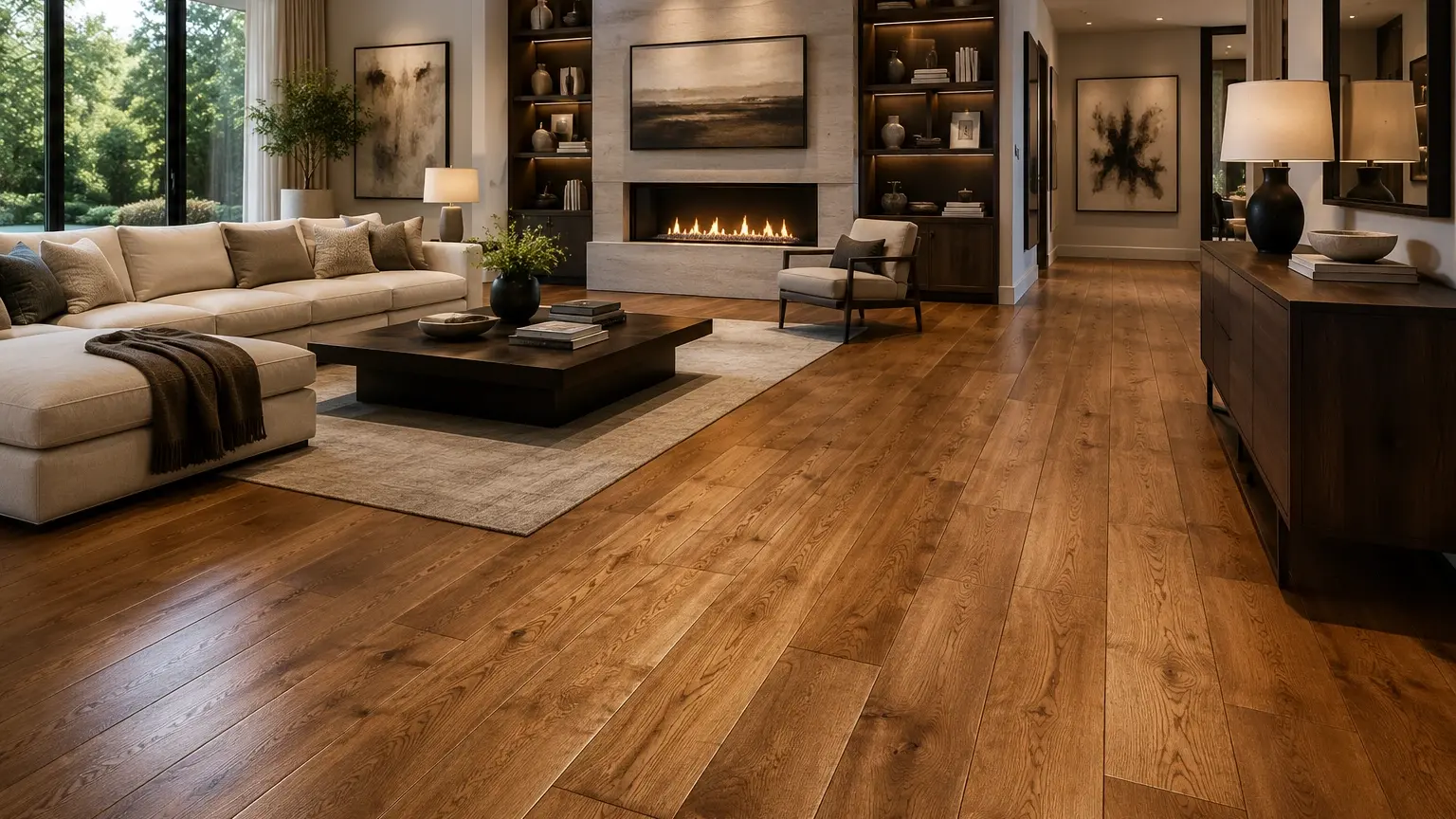
Truckee sits above 5,900 feet in the Sierra Nevada, where winters bring heavy snowfall and summers swing through wide daily temperature changes. That combination means indoor humidity in a Truckee home can shift dramatically between seasons: dry, heated air in the winter months, and a much wetter environment in spring when snow is melting and being tracked indoors on boots, skis, and gear bags. Wood floors respond directly to those swings by expanding and contracting, so avoiding sudden humidity extremes, rather than just reacting to damage after it appears, is one of the simplest ways to protect them. That back-and-forth, repeated every year, is part of what makes climate awareness more important for hardwood in Truckee than it might be in a milder, more consistent climate.
Moisture Is the Biggest Threat
Standing water, wet mops, and steam cleaners are the fastest ways to damage a hardwood floor, and that risk is higher in a place where snowmelt, boots, and ski gear are a normal part of daily life for much of the year. Spills and wet tracks should be wiped up right away rather than left to sit, since water that seeps between boards or into seams can cause swelling long before it's visible on the surface. Homes generally do best when indoor humidity stays between 30 and 50 percent, with room temperature held between 60 and 80 degrees Fahrenheit, since that range helps avoid the cupping and gapping that happen when wood gains or loses moisture too quickly. Cupping shows up as raised edges along the length of a board, while gapping and splitting appear when the wood dries out and shrinks. Small seasonal gaps that open and close with the weather are normal, but gaps that stay open through the wetter months are usually a sign it's time to call a flooring professional. In a mountain climate where forced-air heating runs for months at a stretch, a humidifier during winter and a dehumidifier during the wettest weeks of spring can help keep those swings in a narrower, safer range.
Cleaning Products and Tools to Skip
Ammonia, bleach, vinegar, and other acidic or multi-purpose cleaners can strip a wood floor's finish over time, leaving it duller and more exposed to scratching. Oil soaps and anything marketed to add "shine" tend to leave a residue that builds up and eventually needs to be professionally removed. Steam mops are another common mistake: the heat and moisture can damage the finish even on floors that otherwise look sealed and sturdy. Professional cleaners commonly point to multi-surface cleaners and vinegar as two of the most damaging products people reach for by habit, recommending a cleaner made specifically for hardwood instead. A dry or barely damp microfiber mop, paired with a hardwood-specific cleaner used sparingly, is a safer routine, and it's worth testing any new product in a closet or corner before using it across an entire room. It's also worth reading the label on any cleaner before assuming it's safe for wood. Products formulated for tile, laminate, or vinyl are not interchangeable with hardwood cleaners, even when they're sold in a similar spray bottle at the same store.
Foot Traffic, Snow, and Grit
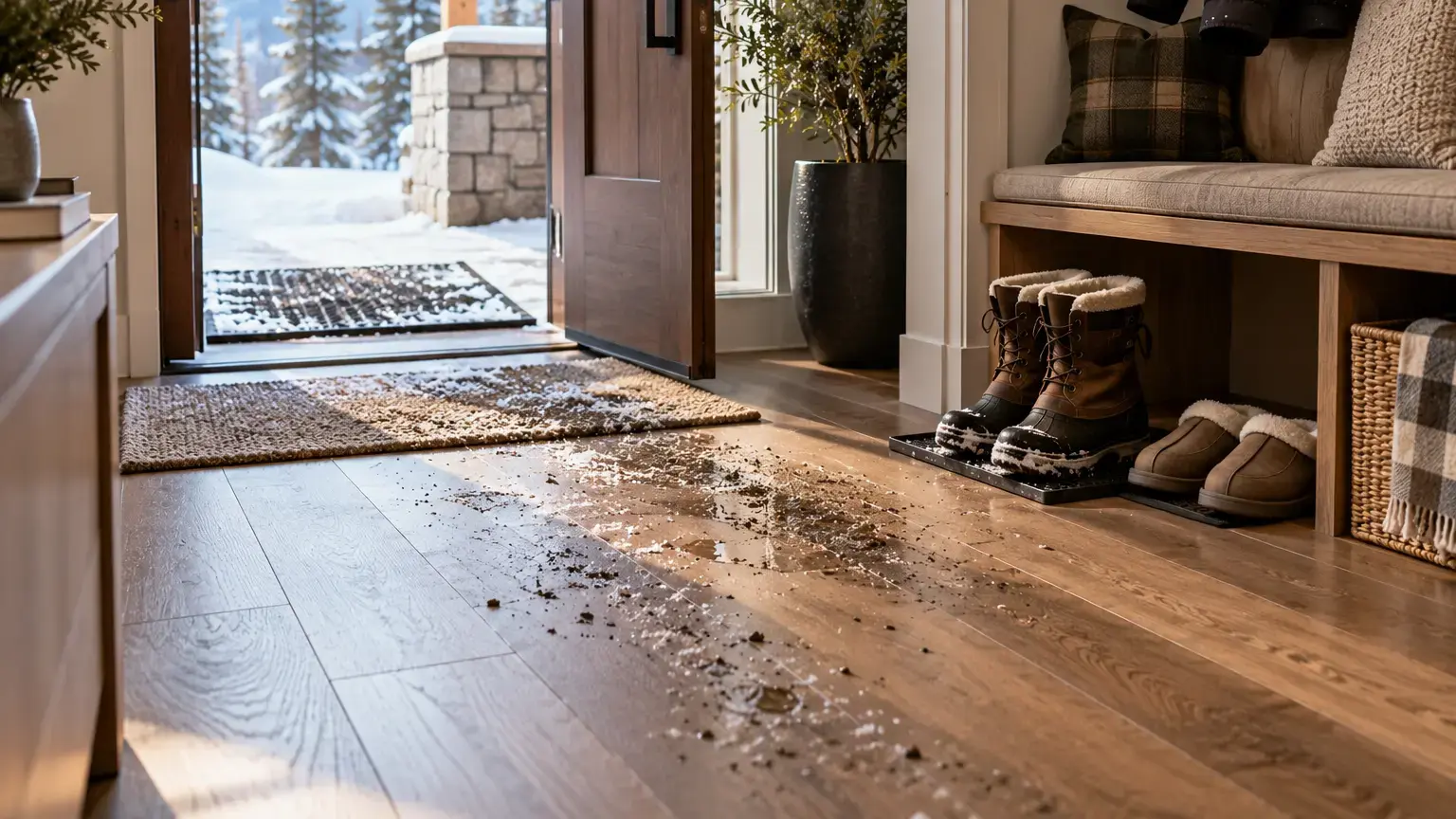
Winter in Truckee means sand, gravel, and de-icing grit get tracked onto floors from driveways and sidewalks, and that grit acts like sandpaper underfoot if it isn't swept or vacuumed up regularly. Pairing an absorbent mat just inside the door with a scraper mat outside it, along with a habit of switching to indoor shoes or slippers, cuts down significantly on both the moisture and the abrasive debris that come in with snow boots. High heels and hard-soled outdoor shoes are worth avoiding indoors as well, since a shoe with a worn or missing heel tip can concentrate a surprising amount of pressure on a small point of the floor. Mudrooms and entryways tend to take the brunt of this seasonal wear, so having a bench or spot to sit down and remove boots before stepping further into the house keeps most of that grit from spreading past the entry.
Where Hardwood Isn't the Right Fit
Given how much moisture and grit concentrate in those same entryways and mudrooms, it's worth a second look at whether solid hardwood belongs there at all. Engineered wood floors, tile, or other more moisture-tolerant materials are often a better match for these specific areas, while hardwood can still be the right choice for living rooms, bedrooms, and other spaces with lighter, drier traffic. Homes with radiant floor heating, common in colder climates, also call for a conversation about which wood species and installation method are rated for that kind of consistent, direct heat, since not every hardwood product is designed to handle it well over time.
Pets, Furniture, and Everyday Wear
Pet nails left untrimmed are one of the more overlooked causes of scratched hardwood, especially in a mountain town where dogs are part of daily life outdoors and in. Moving furniture without felt pads on the legs is another common source of damage, whether it's a full rearrangement or just pulling a chair out to clean underneath it. Pairing felt pads with regular vacuuming using a soft-brush, hard-floor setting helps as well, since rotating brush attachments and beater bars meant for carpet can scratch wood floors just as easily as dirt can. Rugs help protect high-traffic areas, but it's worth choosing ones with a breathable backing rather than solid rubber, which can trap moisture against the wood and discolor the finish underneath over time.

Sunlight and High-Elevation UV
Truckee's elevation means UV radiation increases measurably with altitude, so sunlight reaching the ground is more intense than it is closer to sea level, and that has a real effect on wood floors near large windows. Prolonged direct sun exposure can fade and unevenly discolor hardwood over time, particularly under furniture or rugs that block the light in one spot while the surrounding floor continues to darken or lighten. Rotating rugs and furniture occasionally, and using window coverings or UV-filtering glass where the sun hits hardest, helps the floor age more evenly across the room. This matters more in a home with south-facing windows and long, clear mountain days than it would somewhere with more consistent cloud cover.
Refinishing Mistakes to Avoid
When a hardwood floor eventually needs refinishing, whether from years of wear, sun fading, or moisture damage, the refinishing process itself introduces its own set of avoidable mistakes. Uneven sanding, often caused by pausing too long in one spot instead of keeping the sanding tool moving at a steady pace, can leave a lumpy or inconsistent finish that's difficult to correct without starting over. Applying a new topcoat too quickly, before the previous coat has fully cured, can trap bubbles or cloudiness in the finish. It's also worth avoiding the temptation to apply a wax or oil-based topcoat over a floor that already has a polyurethane or water-based finish, since the two don't bond properly and can leave a sticky surface that attracts more dirt than it repels. Refinishing is one part of hardwood care that's usually best left to a professional, particularly on solid wood floors that can only be sanded down a limited number of times over their lifespan.
Conclusion
A little awareness of moisture, cleaning habits, foot traffic, and sun exposure goes a long way toward keeping hardwood floors looking the way they did on installation day, even through a full Sierra winter and the mud season that follows. None of these habits require special tools or a large time investment, just a bit of consistency across the seasons that actually test a floor the most. The right flooring choice ultimately comes down to how a specific room is used across the year, from a ski-boot entryway to a sunlit living room, and hardwood is only one part of that decision. For entryways, mudrooms, or radiant-heat spaces where hardwood isn't the ideal fit, Nova Tile and Stone Offerings also include tile, natural stone slab, and other flooring materials better suited to moisture and heavy traffic, so a home can mix the right material for each room rather than defaulting to one option throughout.
Homeowners weighing their options can see these materials in person at Nova Tile and Stone's Reno showroom, located at 12835 Old Virginia Rd, Suite 24, Reno, NV 89521, or by phone at (775) 331-6682.
Frequently Asked Questions
No. Steam mops apply both heat and moisture directly to the floor, which can damage the finish and, over time, cause the wood underneath to swell or warp. This risk is higher in a mountain home where floors are already dealing with extra moisture from snow and mud tracked in during the winter and spring.
Most flooring professionals recommend keeping indoor humidity between 30 and 50 percent and room temperature between 60 and 80 degrees Fahrenheit. In a climate like Truckee's, where heated air runs dry all winter and spring snowmelt adds moisture back in, a humidifier and dehumidifier used seasonally can help keep those swings within a safer range.
No. Vinegar is acidic enough to dull and gradually damage a hardwood floor's finish, even though it's often recommended as a natural, all-purpose cleaner. A cleaner formulated specifically for hardwood is a safer choice for regular use.
It's usually worth reconsidering for these spaces. Entryways and mudrooms take on the most concentrated moisture, sand, and grit in a mountain home, which makes engineered wood, tile, or another moisture-tolerant material a more practical fit than solid hardwood in those specific areas.
Rotate rugs and furniture periodically so the same section of floor isn't shaded for months at a time while the rest of the room continues to darken or lighten from sun exposure. Window coverings or UV-filtering glass also help, and this matters more in a high-elevation home with long, clear days than it would somewhere with more consistent cloud cover.
Note: Some images on this page may be conceptual renderings created to illustrate design possibilities and may not depict actual installations.