The most reliable way to care for quartzite in a Minden home starts with three habits: cleaning it with a mild, non-abrasive product instead of harsh chemicals, keeping it sealed to account for its natural, somewhat porous makeup, and choosing a finish that matches how the space will be used. Beyond that, quartzite stays fairly low-maintenance for a natural material.
The names sound alike, which is why quartzite and quartz get confused so often, but the two materials are quite different. Quartz is an engineered material made from crushed stone and resin, while quartzite is a natural stone that forms when sandstone is exposed to intense heat and pressure underground, fusing the quartz grains together over a very long stretch of time.
That geological history helps explain why Minden area homeowners reach for quartzite when a project calls for real texture and depth, whether that means a floor, a wall, or something outdoors. A look through our natural stone selection is a good starting point for seeing what colors and patterns are currently on hand.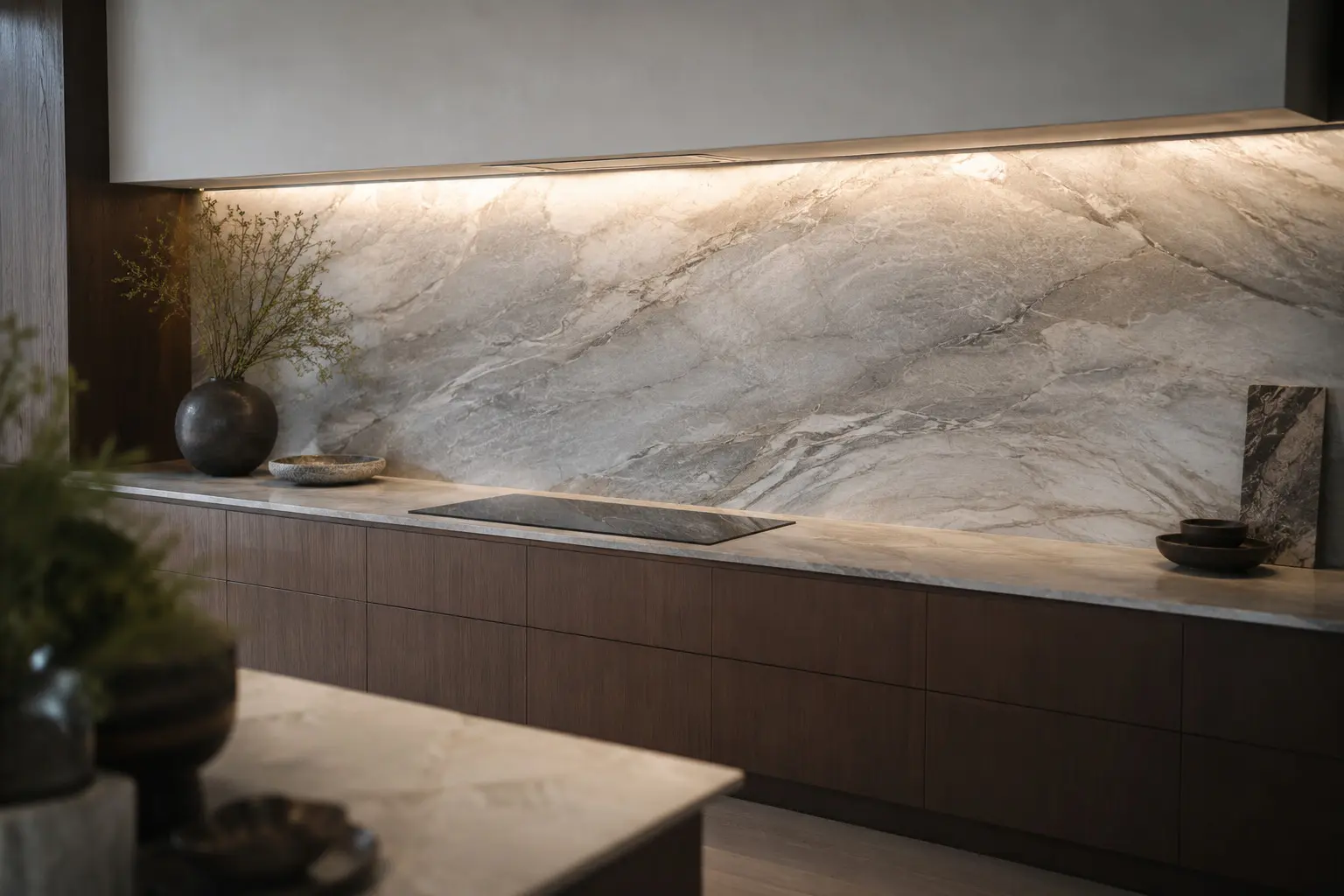
How Quartzite Differs From Engineered Stone
Quartzite is quarried rather than manufactured, so no two slabs read exactly the same way. Veining, color, and mineral movement vary from one block to the next, which is part of the appeal for homeowners who want a surface that feels unique to their space.
This is also the clearest place where quartzite and quartz part ways. For a closer look at how the two materials actually compare, formation and composition explain most of what separates them, and knowing that going in tends to set more realistic expectations for how each one looks and performs over time.
Natural stone also tends to ask for a bit more ongoing attention than engineered materials, largely due to how porous a specific stone can be. That is less a downside than a different set of habits worth building into a maintenance routine. Hardness is another point worth understanding: quartzite ranks among the harder natural stones available, and that strength is a big reason it tends to hold up well in high-traffic areas and outdoor settings where softer stones might show wear more quickly.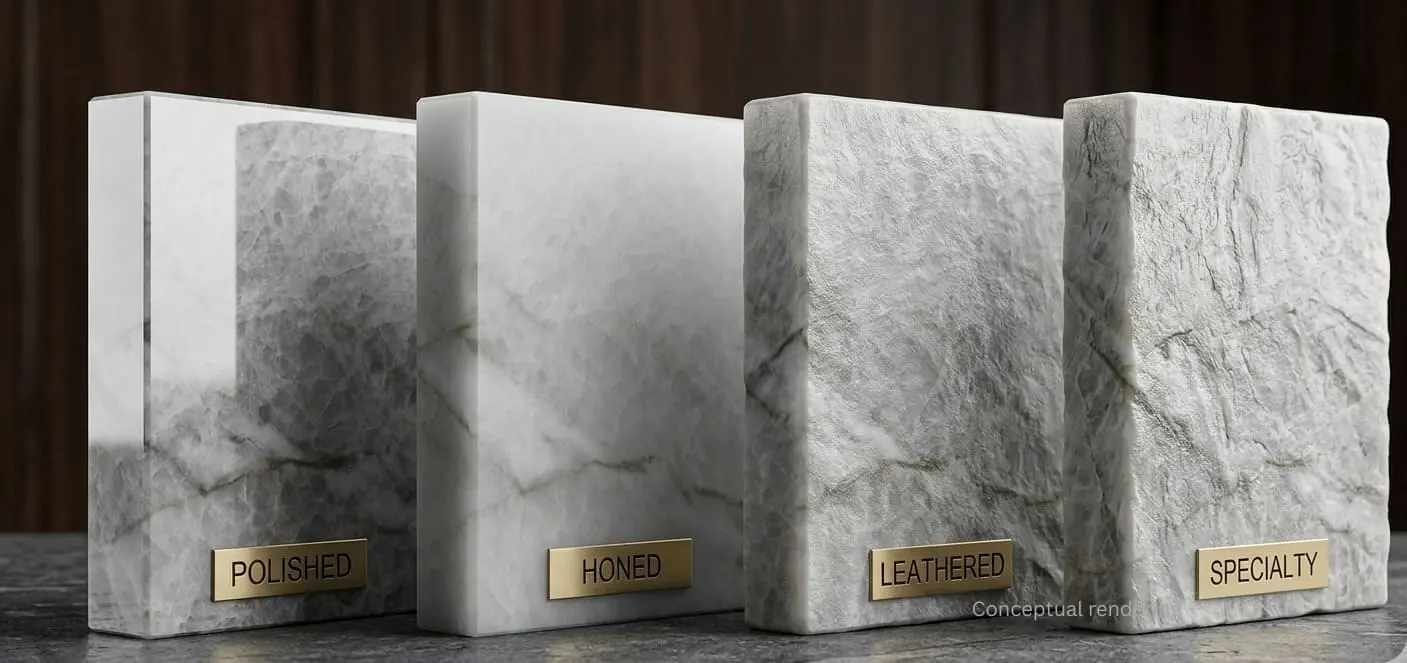
Choosing a Finish: Polished, Honed, Leathered, or Specialty
Quartzite comes in a range of finishes, and each one changes both the look and feel of the stone. A polished finish is smooth and reflective, bringing out color depth and movement in a way that reads formal and refined.
Honed quartzite trades shine for a flatter, matte surface, while a leathered finish adds a subtle texture that catches light differently and can feel more organic underfoot or against the hand. Some slabs are also available in specialty finishes for a more distinct, textured look, and the exact options can vary from slab to slab.
Design style often guides this choice as much as function does. A polished finish tends to suit spaces leaning toward a brighter, more traditional look, while honed and leathered finishes fit naturally into more relaxed, organic, or rustic settings where a softer sheen feels more at home.
Where Quartzite Performs Well Around a Minden Property
As a natural stone, quartzite fits a wider range of applications than many engineered materials. It shows up as flooring, wall cladding, fireplace surrounds, and outdoor surfaces such as patios and pool decks. Accent walls have also become a popular use: a single slab or a few matched panels can turn a stairwell, entryway, or living room wall into a focal point without covering an entire room in stone.
Quartzite also resists fading better than many materials when exposed to sunlight. Prolonged exposure and the specific color chosen can still affect how it holds up over the years. Outdoor settings differ from indoor ones; matching the finish to the specific application, such as an open pool deck versus a covered patio, is worth keeping in mind when planning a space.
Fireplace surrounds are another common use, given how well quartzite generally tolerates heat. Even so, heat resistance does not remove every risk of thermal shock, and sudden or extreme temperature swings near a fireplace are still worth avoiding where possible.
Every quartzite slab looks a little different, which makes viewing our live slab inventory ahead of a project a useful way to get a sense of the color and veining currently available before settling on a specific application.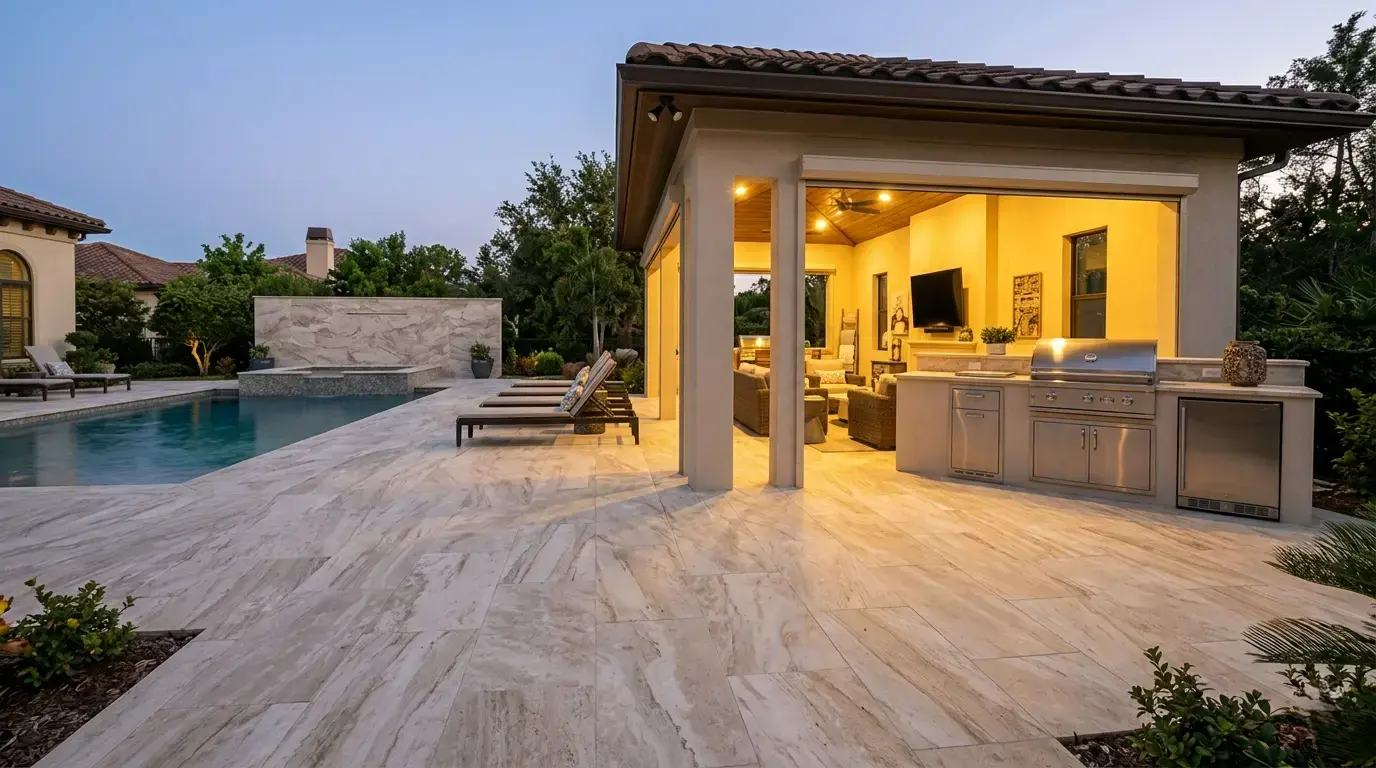
Sealing and Everyday Cleaning for Quartzite
Unlike fully engineered surfaces, quartzite can benefit from periodic sealing, a reflection of how much more porous natural stone tends to be compared with manufactured materials. Sealing helps the surface resist moisture and staining, and it becomes especially relevant in humid spots such as an area near a pool or a shower wall.
Day to day, a soft cloth and a pH neutral cleaner are usually enough to keep quartzite looking its best. Harsh chemicals and abrasive scouring pads are worth avoiding: they tend to wear down a finish faster than gentle, routine cleaning would.
For a wider view beyond any single source, the Natural Stone Institute's care resources walk through cleaning and sealing considerations across many stone types. Products and schedules are not identical from one stone to the next, which makes a broader reference point worth the extra look.
Protecting Quartzite From Wear Over Time
Quartzite holds up well under normal daily use, but like most natural stone, long-term performance still depends on ongoing maintenance rather than the material alone. Edges and corners in particular are worth a bit of extra care, as they tend to be more vulnerable to chipping than the flat surface of a slab.
Scratch resistance can also vary depending on the specific finish and color chosen. A busy entryway floor may show wear a little differently than a fireplace surround or an accent wall would. Sweeping or wiping away grit on a regular basis helps cut down on the fine scratching that dust and debris can cause underfoot over time. A simple mat or rug placed at a main entry point can also cut down on how much grit ever reaches the stone in the first place, especially in busier households.
Seeing Quartzite in Person at Our Minden Showroom
Quartzite carries so much natural variation that a photo on a screen only tells part of the story. Walking the floor at the Nova Tile and Stone Minden showroom makes it much easier to see how veining, color, and finish actually shift under real light, especially standing next to the other natural stone slabs on display.
Questions about a specific application, like whether a leathered finish makes more sense for a fireplace surround or a polished one suits an accent wall better, tend to come up naturally once a slab is right in front of someone. Working through those specific questions is easier with our free design consultation, especially when a project spans more than one room or material.
A visit does not need to take up an entire afternoon either. Most homeowners come in already knowing roughly what they are looking for. Our Minden showroom is located at 2548 Business Pkwy, Minden, NV 89423, and can be reached at (775) 783-4970. Those planning a stop can also check the map ahead of time if the visit is getting folded into a longer errand run around town.
Conclusion
None of this calls for a complicated routine. Gentle cleaning, sealing on a reasonable schedule, and picking a finish suited to the space cover most of what quartzite needs to hold up well in a Minden home for years to come.
What tends to matter more is choosing the right slab in the first place. No two look quite alike, and that is often the bigger decision. Once that decision is made, requesting a quote from us is a straightforward way to keep a project moving.
Frequently Asked Questions
Yes, quartzite generally benefits from periodic sealing as a natural, somewhat porous stone. Exactly how often depends on the specific slab, its finish, and how the space is used.
Quartzite is often chosen for outdoor spaces such as patios and pool decks, thanks to how well it holds up against sun exposure. The finish should still suit the amount of moisture and foot traffic the area will see.
Fireplace surrounds are one of the more common places to see quartzite used, given how well the stone generally tolerates heat. Sudden or extreme temperature changes are still worth avoiding to help protect it over time.
Honed quartzite has a smooth, flat, matte surface, while leathered quartzite carries a subtle texture that changes how light and touch interact with the stone. Slip resistance for either finish should be confirmed using the product's DCOF rating rather than assumed from texture alone.
A soft cloth or mop with a pH neutral cleaner is usually enough for routine care, and avoiding harsh chemicals or abrasive scrubbing helps protect both the finish and any sealant applied to the stone.
Note: Some images on this page may be conceptual renderings created to illustrate design possibilities and may not depict actual installations.