The best stones for an outdoor kitchen countertop in Folsom, CA are granite, quartzite, porcelain slab, and sintered stone. These materials resist heat, UV exposure, and moisture without fading, cracking, or staining, which makes them a strong match for Folsom's long, hot summers and shifting winter weather. Marble and engineered quartz are better suited to indoor kitchens, since sun exposure and temperature swings wear on them faster than on the materials built for outdoor use. Travertine can also work outdoors, but it demands more sealing and upkeep as a countertop surface than the other options on this list.
Folsom's outdoor living culture makes the backyard kitchen one of the most popular remodeling projects we see across the greater Sacramento area. Between the Folsom Lake waterfront, the American River Bike Trail, and a summer social calendar built around backyard grilling and evening gatherings, homeowners here want an outdoor kitchen that can keep up. Long, dry summers with triple-digit afternoons, cool winter mornings, and the occasional heavy winter rain all put outdoor stone surfaces through a real workout over the course of a year.
Not every countertop material that performs well indoors makes sense outside. For a broader look at how different stones perform across kitchens in general, it helps to understand the baseline properties before narrowing things down for outdoor use. Below, we break down which stone options are built for outdoor conditions, which ones are better left indoors, and what else to think about as you plan a Folsom outdoor kitchen.
Why Outdoor Conditions Change the Countertop Equation
Indoor kitchens are climate controlled. Outdoor kitchens are not. A countertop installed on a Folsom patio faces direct UV exposure for much of the day, surface temperatures that can climb well above the surrounding air temperature, sudden temperature swings between a hot afternoon and a cool evening, and exposure to rain, sprinkler overspray, and humidity shifts.
These conditions test a stone's structure in ways an interior kitchen never will. Some materials expand and contract with temperature changes in a way that leads to micro-cracking over time. Others absorb moisture and are prone to staining or freeze related damage when water gets trapped in the surface. UV rays can also cause certain materials to lose color richness or develop an uneven, faded appearance. Because of this, the same slab that works well on a kitchen island indoors is not automatically a good fit for a Folsom backyard.
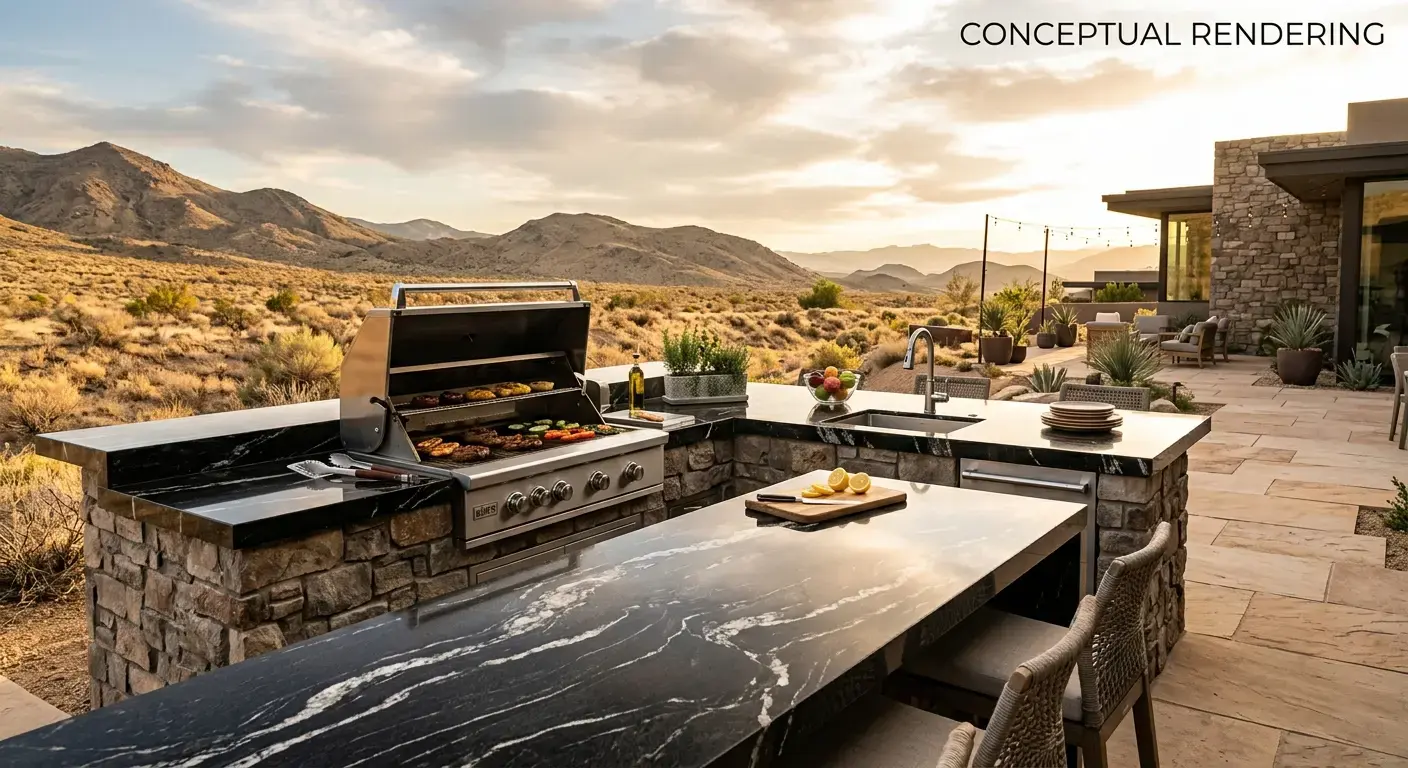
Granite: A Dependable Choice for Sacramento-Area Outdoor Kitchens
Granite is one of the most commonly recommended materials for outdoor countertops, and for good reason. As a naturally occurring igneous stone, granite has a dense, crystalline structure that resists heat, holds up well against UV exposure, and does not require any special treatment to handle direct sunlight. It resists scratching from grill tools and outdoor cookware, and its natural color variation gives every slab its own visual character.
A few notes for outdoor use in our climate:
- Lighter and mid-range granite colors are usually a better fit for outdoor kitchens than very dark colors, since dark surfaces absorb more heat and can become uncomfortably hot to the touch during a Folsom summer afternoon.
- Granite should be sealed periodically to help it resist staining from food, oils, and mineral deposits from sprinklers or rain.
- Edge profiles for outdoor granite tend to be simpler than indoor designs, since ornate edges can trap moisture and debris over time.
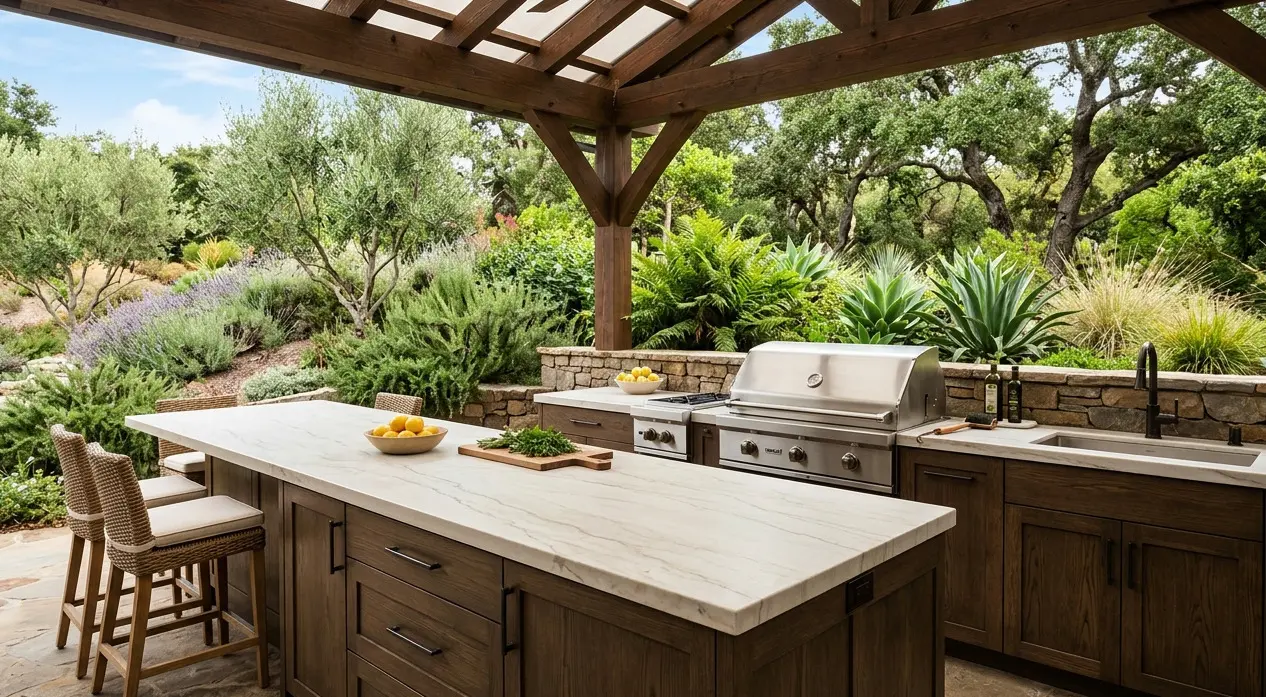
Quartzite: Strength With a Refined Look
Quartzite is a natural metamorphic stone that generally ranks harder than granite, and it performs well outdoors. It resists scratching, etching from acidic spills, and surface wear from repeated outdoor use. Like granite, quartzite is porous and needs to be sealed to resist staining and moisture absorption, which matters during the rainy months when a Folsom outdoor kitchen might see standing water or splashback. Sealing frequency can vary by slab, so it is worth asking about the specific quartzite you choose.
Quartzite tends to carry more movement and veining than granite, closer in appearance to marble, which makes it a popular choice for homeowners who want the visual richness of marble with a structure that can actually handle outdoor exposure. The tradeoff is cost. Quartzite generally runs higher than granite, and slab availability can vary, so we recommend browsing our current slab inventory in person to see what colors and patterns are on hand.
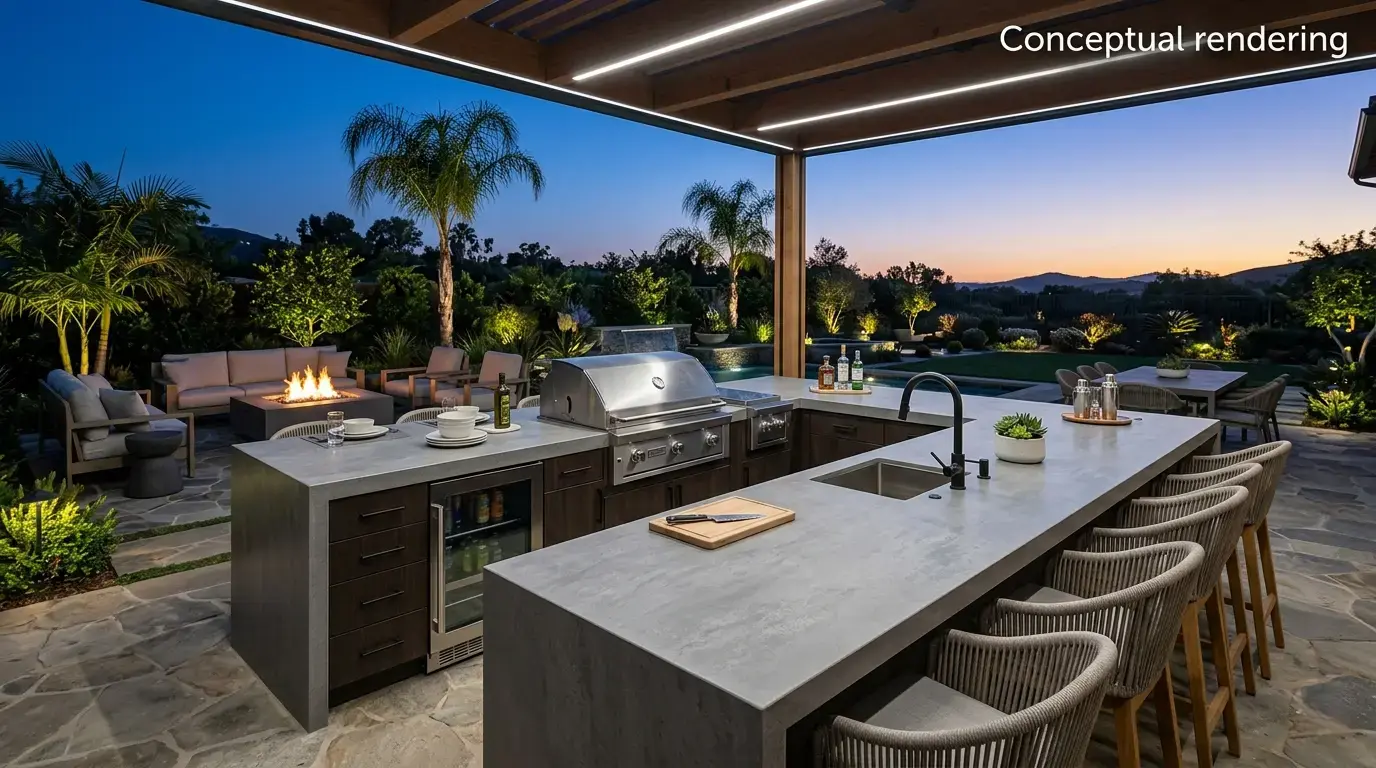
Porcelain Slab: Engineered for the Elements
Porcelain slab has become one of the fastest growing categories for outdoor countertops, and it is worth a serious look for a Folsom project. Manufactured by firing refined clay at extremely high temperatures, porcelain slab is non-porous, which means it will not absorb moisture, stain from food or drink, or develop bacteria growth in outdoor conditions. It also resists UV fading, so color stays consistent through years of direct sun exposure.
Porcelain slab is resistant to thermal shock, meaning it can handle the jump from a hot summer afternoon to a sudden downpour without cracking, which is a real consideration during Sacramento's occasional late-summer thunderstorms. It also will not require sealing, since the manufacturing process leaves no pores for moisture to enter. For homeowners who want a low-maintenance outdoor surface with a wide range of colors, including options that mimic the look of marble or concrete, porcelain slab is one of the strongest performers available for exterior use.
Sintered Stone: A High-Performance Alternative
Sintered stone is manufactured using a process that compresses natural mineral particles under extreme heat and pressure, resulting in a surface with very low porosity and a hard, scratch-resistant face. Like porcelain slab, sintered stone resists UV fading, staining, and moisture absorption, making it a solid option for an outdoor kitchen counter that will see years of sun and use. It is also resistant to thermal shock, so hot cookware and quick temperature changes are not a concern.
Sintered stone is available in a wide range of finishes, from natural stone look-alikes to solid contemporary colors, giving Folsom homeowners flexibility if they are matching an outdoor kitchen to a specific design style.
Materials That Need Extra Consideration Outdoors
Not every stone in our showroom is an automatic fit for an outdoor kitchen. A few materials either need to stay indoors or come with more upkeep outside than granite, quartzite, porcelain slab, and sintered stone:
Marble. Marble is a softer, more porous stone that is prone to etching from acidic exposure and staining from moisture. Outdoor conditions, including rain, humidity, and temperature swings, accelerate these issues. Marble is a better fit for indoor kitchens, bathrooms, and fireplace surrounds.
Travertine. Travertine is a common choice for outdoor patios and pool decks, but as a food-prep countertop surface it asks more of a homeowner than granite, quartzite, porcelain slab, or sintered stone. Its porous structure means it needs a quality filler and finish along with frequent sealing to resist staining and etching from food and drink, so it tends to suit homeowners who are comfortable with that level of upkeep.
Engineered quartz. Quartz countertops are made from crushed quartz combined with resin binders, and those resins break down under prolonged UV exposure. Over time, engineered quartz installed outdoors can fade, discolor, or crack, which is why we recommend keeping quartz surfaces indoors and choosing granite, quartzite, porcelain slab, or sintered stone for exterior applications.
Design Considerations for a Folsom Outdoor Kitchen
Beyond material selection, a few practical details make a real difference in how an outdoor countertop performs and looks over time:
Thickness. Outdoor countertops are typically fabricated at a thicker profile than indoor counterparts to add structural strength against temperature swings and outdoor wear.
Color selection. Mid-range and lighter tones reflect more heat than dark colors, which keeps the surface more comfortable to work on during hot Folsom afternoons.
Finish. A honed or leathered finish can help hide water spots and minor surface scratches better than a polished finish in an outdoor setting. Natural stone experts also point to a leathered or antique finish as a strong option for exterior applications, since the texture does an even better job hiding stains and dings than a standard honed surface.
Edge profile. Simpler, rounded edge profiles are typically recommended outdoors since they shed water more effectively and collect less debris than detailed edge treatments.
Overhangs and support. Outdoor kitchen islands often require additional structural support underneath overhangs, particularly if the space will see regular entertaining and use.
Bringing Your Folsom Outdoor Kitchen Project to Life
Every backyard is different, and the right stone choice often comes down to how the space will be used, how much direct sun it gets throughout the day, and the overall design style of the home. Some homeowners prioritize low maintenance above everything else and lean toward porcelain slab or sintered stone. Others want the natural variation of quarried stone and choose granite or quartzite for their outdoor kitchen island. Walking through slab options in person, under natural light, is usually the easiest way to narrow things down, since color and veining can look different outdoors than they do under showroom lighting. Once you have a slab in mind, you can request a quote for specific slabs to compare pricing before committing.
Contractors and designers working on a client's outdoor kitchen project are also welcome to look into our trade pricing program, which includes job-site delivery and a dedicated point of contact for ongoing projects. Homeowners planning a broader remodel beyond the outdoor kitchen can explore everything we carry online to coordinate materials across the whole property.
Conclusion
Building an outdoor kitchen in Folsom means planning for a surface that can handle real sun, real heat, and a full year of Sacramento-area weather without losing its visual appeal or structural integrity. Granite, quartzite, porcelain slab, and sintered stone all offer solid performance outdoors with minimal upkeep, while marble and engineered quartz are better suited to interior spaces and travertine can work outdoors for homeowners willing to keep up with regular sealing. The right choice ultimately depends on your budget, your design goals, and how the space will be used throughout the year. Our team at the Sacramento showroom, located at 6100 Warehouse Way, Sacramento, CA 95826, works with Folsom homeowners regularly on outdoor kitchen projects and can walk through current slab options with you in person. If you would like to talk through options for your backyard project, feel free to stop by the showroom, call us at (916) 913-6682, or schedule a design consultation online.
Note: Some images on this page may be conceptual renderings created to illustrate design possibilities and may not depict actual installations.
Frequently Asked Questions
Yes. Granite resists heat, holds up well under UV exposure, and stands up to the demands of outdoor cooking. Choosing a lighter or mid-range color helps keep the surface more comfortable to touch during hot summer afternoons.
Marble is not recommended for outdoor use. It is more porous and softer than other natural stones, which makes it prone to staining and etching when exposed to rain, humidity, and temperature swings over time.
No. Porcelain slab is non-porous, which means it does not require sealing. It naturally resists moisture, staining, and UV fading, making it one of the lower maintenance options for an outdoor kitchen.
Engineered quartz contains resin binders that break down with prolonged sun exposure. Outdoor installations of quartz can fade, discolor, or crack over time, so it is better suited to indoor kitchens and bathrooms.
Outdoor countertops are generally fabricated thicker than indoor countertops to add strength against temperature changes and everyday outdoor wear. The right thickness depends on the material and the design of the outdoor kitchen island.