The best stone for an accent wall depends on the room and the home, not a single material: quartzite and granite suit kitchens and higher-traffic areas, while marble and travertine work well in living rooms, bedrooms, and entryways where durability matters less. Marble is the most requested material for its veining and visual movement. Quartzite offers a similar look with meaningfully greater hardness, making it a practical choice near heat or kitchen activity. Granite brings a crystalline, mineral-based pattern rather than flowing veins. Travertine adds warmth and texture suited to Mediterranean and transitional interiors. For homeowners in Rancho Cordova, the right choice also depends on the home's age and layout, since newer open-concept builds and older, more compact homes call for different scales of stone. Our Sacramento showroom carries all four materials, making it possible to compare them in person before deciding.
Why an Accent Wall Is a Different Decision Than a Countertop
Stone chosen for a countertop has to hold up to daily contact: knives, hot pans, acidic spills, constant wiping. A wall carries almost none of that burden. This changes the calculus significantly, as this overview of stone countertop materials explains in more detail. Softer, more visually dramatic stones that might be a compromise on a kitchen counter become fully viable on a wall, since the durability trade-offs that matter horizontally matter far less vertically.
That means homeowners in Rancho Cordova who love the look of a heavily veined marble but were told it wasn't practical for their kitchen island can often use that same marble on an accent wall without hesitation. The visual impact stays, and the maintenance concerns mostly fall away.
Matching Stone to Rancho Cordova's Housing Stock
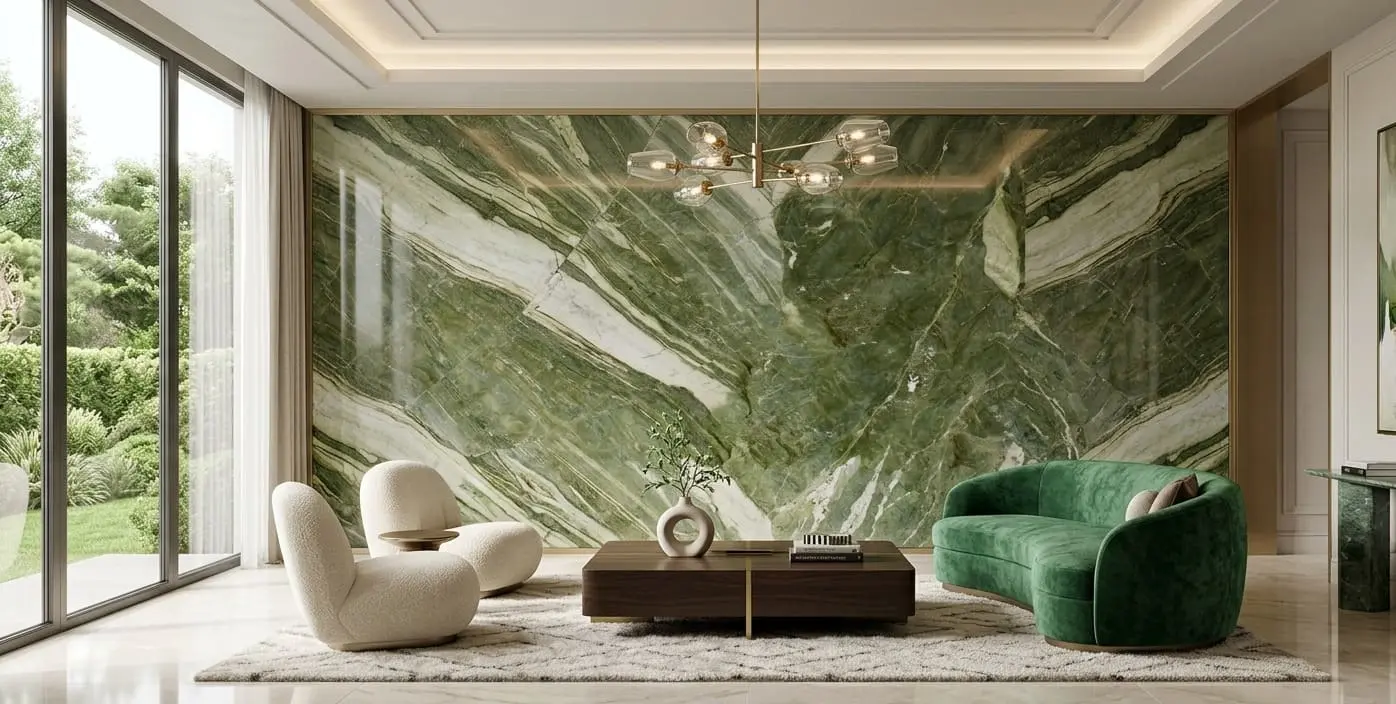
Newer construction communities. Homes in Rancho Cordova's newer developments, including areas near Anatolia, Sunridge, and Gold River, tend to have open floor plans with taller ceilings and larger, uninterrupted wall space. This kind of layout suits a bolder stone choice. A quartzite with dramatic natural movement or a book-matched marble panel reads well at that scale and becomes a genuine focal point rather than getting lost in a busy room. You can browse current options through our live slab inventory to see what's available.
Older homes near Mather Field and Folsom Boulevard. Homes built in the 1960s and 1970s typically have more compact rooms with lower ceilings and less continuous wall space. In these homes, a smaller accent wall, such as behind a fireplace or as a partial feature rather than floor-to-ceiling coverage, often works better proportionally. A warmer, more textured stone like travertine can also help soften the boxier architectural lines common to homes of that era.
Condos and townhomes. In more compact living spaces such as Rancho Cordova's condo and townhome communities, an accent wall is often one of the few opportunities to introduce a strong material statement without a full renovation. A single well-chosen wall, such as behind a media console or bed, can carry a lot of visual weight in a smaller floor plan.
Choosing Stone by Room
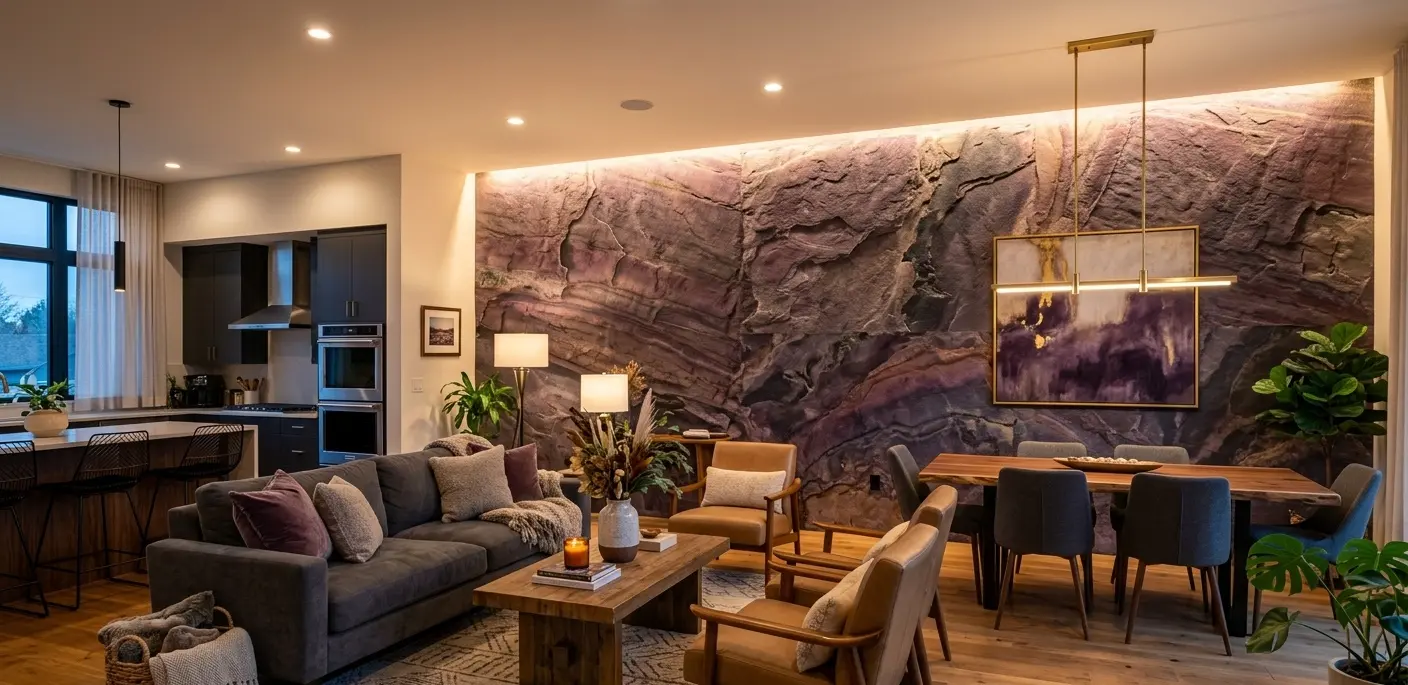
Living rooms. A living room accent wall, most often the fireplace wall or the wall behind the main seating area, benefits from a stone with strong visual presence. Marble's veining and granite's mineral pattern both work well here, and the choice usually comes down to whether a warmer, flowing look or a more crystalline, textured one fits the rest of the room's palette.
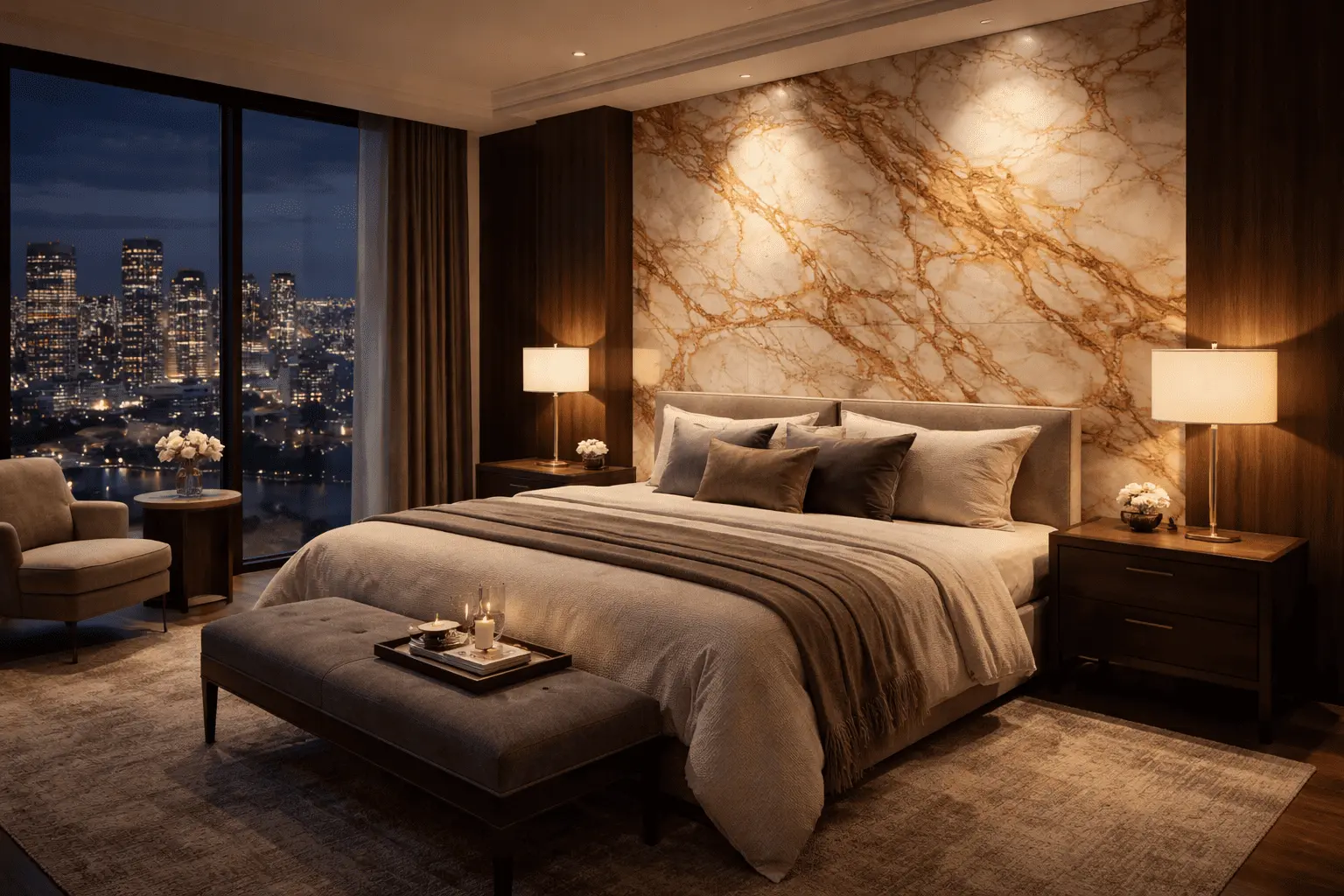
Primary bedrooms. A wall behind the headboard is one of the most common accent wall placements, and it tends to favor a calmer, less high-contrast stone since it's viewed at close range and for extended periods. Quartzite in a soft ivory or gray tone is a common choice for this reason.
Kitchens. A stone accent wall behind a range or running the full length behind a waterfall island ties the kitchen's countertop material to the surrounding wall for a cohesive look. Because this wall sits closer to heat and cooking activity than a living room or bedroom wall, quartzite or granite are generally better suited here than softer stones like travertine or marble.
Bathrooms. A stone wall behind a freestanding tub or as a shower backdrop is a common application in primary bathrooms. Since bathrooms carry more moisture exposure than other rooms, the stone chosen for this application should be sealed appropriately and homeowners should expect to reseal on a regular schedule.
Entryways. A full-height stone panel on the first wall visible when entering the home sets the tone for the rest of the interior. This tends to work best with a stone that has a strong, memorable pattern, since it's often seen only briefly as people move through the space.
A Quick Look at the Materials Themselves
Marble remains the most requested material for accent walls because of its veining and the sense of movement it brings to a wall. Lighter marbles brighten a room, while darker varieties create a more dramatic, formal effect.
Quartzite offers a similar visual quality to marble with meaningfully greater hardness, which makes it a practical choice anywhere the wall sits closer to kitchen activity or higher-traffic areas of the home.
Granite brings a different visual character than marble or quartzite, with crystalline flecks and mineral patterning rather than flowing veins. It suits contemporary and industrial-leaning interiors particularly well.
Travertine has a long history as an architectural wall material and brings warmth and texture that reads differently than the more reflective stones. It's a strong fit for Mediterranean, Tuscan, or transitional interior styles, which show up frequently in Rancho Cordova's older housing stock. For a deeper look at how these materials compare and perform over time, this natural stone countertop guide covers each type in detail.
Finish and Surrounding Palette
Beyond the stone type itself, the finish applied to the slab changes how it reads on a wall. A polished finish reflects more light and tends to intensify veining and color, which can work well in a formal living room but may feel like too much in a smaller bedroom. A honed or leathered finish softens that intensity and creates a more understated backdrop, which some Rancho Cordova homeowners prefer for bedroom or hallway walls where the stone is meant to set a mood rather than dominate the room.
The wall's surrounding palette matters just as much as the stone itself. A heavily veined stone paired with busy adjacent finishes, such as patterned wallpaper or an ornate light fixture, tends to compete for attention rather than create a clear focal point. Keeping the surfaces around an accent wall relatively simple lets the stone do the visual work it's meant to do.
Working With a Designer or Contractor
For homeowners planning an accent wall alongside a broader renovation, coordinating the stone selection with a designer or general contractor early in the process helps avoid mismatched expectations later. This is especially relevant when the accent wall needs to align with an existing countertop material, cabinetry finish, or flooring already selected for the space. If you're working with a contractor or designer on a project like this, our trade account program may be worth mentioning to them. A contractor can also flag any structural considerations specific to the wall in question, since slab installations are heavier than paint or tile and may require confirming the wall can support the material before installation begins.
Considering the Local Climate
Rancho Cordova's warm, dry summers and occasional wet winters don't have a major effect on indoor accent wall material choice, since interior walls are shielded from direct weather exposure. Where climate does matter more is in homes with large west- or south-facing windows near an accent wall, since intense afternoon sun can affect how a stone's color reads over the course of a day. Viewing a slab sample in the specific lighting conditions of the room it will occupy is the most reliable way to avoid surprises once installation is complete.
Viewing Slabs Before Deciding
Because an accent wall often spans a large, continuous area, seeing a full slab in person rather than a small sample is important. Veining, tonal range, and scale don't translate accurately from a photo or a small cut sample, and a stone that looks subtle in a six-inch square can read very differently across eight or ten feet of wall. This is especially true for homeowners deciding between two stones that look similar in a small sample but behave differently at full scale. Once you've found a slab you're interested in, you can request a quote directly, or check our website to browse current inventory before visiting in person.
Conclusion
There's no single best stone for every Rancho Cordova accent wall. The right choice depends on the home's age and layout, the specific room, and how much wear the wall is likely to see. A newer, open-concept home in Anatolia or Gold River can support a bolder, larger-scale stone statement, while an older home near Mather Field may call for a smaller, more proportionate application. Kitchens and bathrooms favor harder, more moisture-tolerant stones like quartzite or granite, while living rooms and bedrooms leave more room for softer, more dramatic choices like marble or travertine.
If you're weighing stone options for an accent wall in your Rancho Cordova home, our showroom at 6100 Warehouse Way in Sacramento carries marble, quartzite, granite, and travertine slabs, and our team can help you think through which material fits your room, your home's style, and how the wall will be used. Feel free to call us at (916) 913-6682, or book a free design consultation to ask about current inventory or schedule a visit.
Note: Some images on this page may be conceptual renderings created to illustrate design possibilities and may not depict actual installations.
Frequently Asked Questions
Quartzite and granite are generally better suited to kitchen accent walls than softer stones like marble or travertine, since they hold up better to nearby heat and cooking activity.
No. Marble's softness is more of a concern on countertops, where it faces direct contact and acidic spills. On a wall, marble's durability limitations matter much less, making it a popular accent wall choice.
Yes. Newer, open-concept homes with taller ceilings tend to support bolder, larger-scale stone statements, while older homes with more compact rooms often look more proportionate with a smaller accent wall application.
Most natural stone used on walls should be sealed at installation, particularly in bathrooms or other higher-moisture rooms. Living room and bedroom walls generally need less frequent resealing than bathroom applications.
Yes. Because veining and scale don't translate accurately from small samples, viewing a full slab in person is the most reliable way to know how a stone will look across a larger wall area.