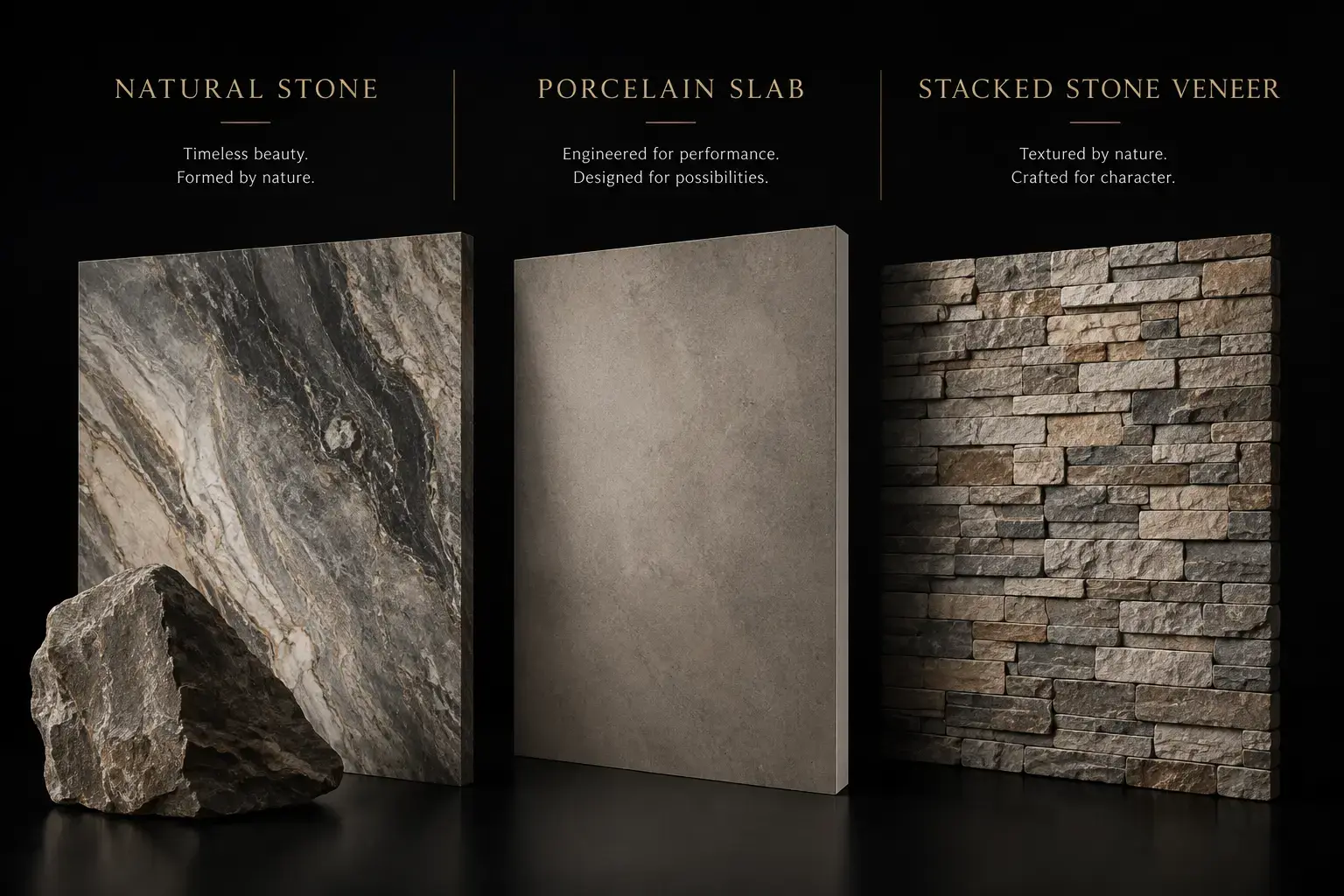
The best accent wall material for a Sparks, NV home usually comes down to three options: natural stone, porcelain slab, or stacked stone veneer. Natural stone, including marble, travertine, and quartzite, offers one-of-a-kind veining but needs periodic sealing. Porcelain slabs deliver a similar look with a non-porous surface that does not require the periodic sealing natural stone needs. Stacked stone adds the most texture and physical weight, and works best near fireplaces, entryways, or open shelving. Sparks' dry, semi-arid climate in the Truckee Meadows valley is forgiving toward all three materials indoors, so the right choice usually comes down to the room, the upkeep you're willing to take on, and the visual weight you want the wall to carry.
Why Material Choice Matters More for an Accent Wall
An accent wall is judged the moment you walk into a room, so the material carries more visual responsibility than it would if it were spread across a whole space. It also has to perform in place for years without a redo, which makes durability, moisture behavior, and installation weight just as important as color and veining.
Sparks sits in the Truckee Meadows, the valley shared with Reno between the Carson Range and the Virginia Range, at an elevation of roughly 4,400 feet. The city has a semi-arid climate with low humidity, especially in summer, which means indoor materials generally avoid the swelling and warping issues that come with damp regions. That said, homes here still see wide daily temperature swings between winter lows and summer highs, so a material that resists cracking or shifting with seasonal changes in indoor heating and cooling holds its finish longer.
Sparks also has a distinct character worth thinking about when planning an interior feature. The city was built as a railroad town in the early 1900s, and its downtown core, Victorian Square, still centers on that history alongside newer additions like an outdoor amphitheater and a lineup of annual events. Newer neighborhoods on the east side of the valley, including golf-course communities like D'Andrea with mountain views rising toward the Sierra, tend to favor open floor plans with fewer interior walls, which is exactly the kind of layout where a single, well-chosen accent wall does the most visual work.
Natural Stone for Texture and One-of-a-Kind Veining
Natural stone slabs and tile, including marble, travertine, and quartzite, are a common choice when the goal is a wall that looks unrepeatable. No two slabs read the same way, and the veining or crystalline structure gives a wall a depth that manufactured materials tend to imitate rather than match exactly. Honed and matte finishes are especially popular right now, with designers pointing to a shift away from high-gloss surfaces toward softer, more understated textures that read as less formal than polished stone, which suits a wide range of living rooms and primary bedrooms.
The tradeoff is porosity. Most natural stone needs periodic sealing to resist staining, particularly in kitchens or entries where hands, food, and pets are nearby. For a living room or bedroom feature wall away from heavy contact, that maintenance schedule is minimal. For a wall behind a wet bar or near a kitchen island, plan on resealing on a more regular basis.
Porcelain Slabs and Large-Format Tile for Low Upkeep
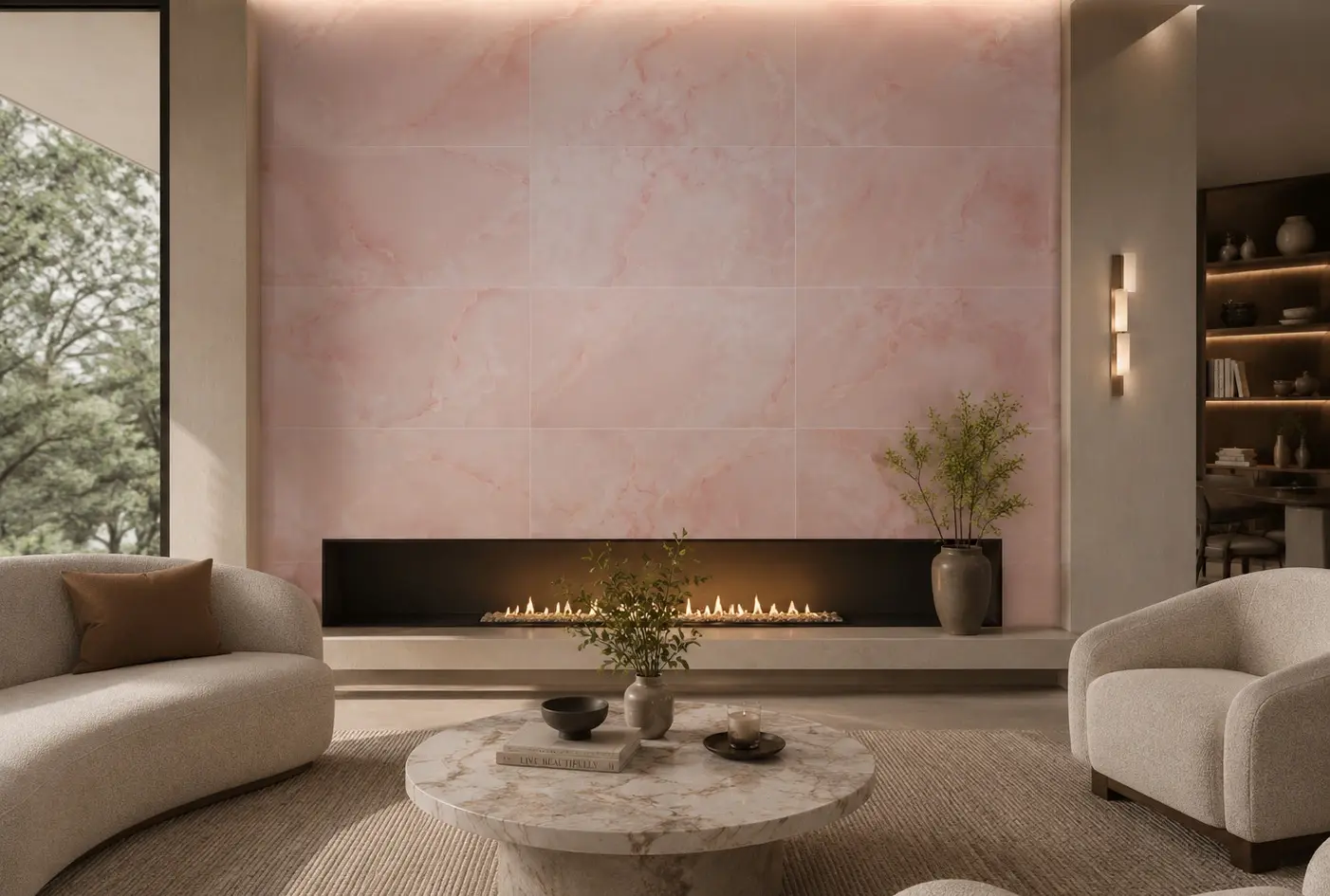
Porcelain slabs and large-format porcelain tile have grown more common for accent walls in recent years because they deliver the look of natural stone, marble, or concrete without the sealing requirement. Porcelain is fired at high temperatures into a dense, non-porous material, so it resists staining and scratching without ongoing maintenance. It is also lighter per square foot than most natural stone slabs of the same size, which matters when a wall installation depends on the substrate behind the drywall.
Because large-format porcelain panels can run to significant dimensions, proper substrate preparation and installation technique are not optional. National installation standards for gauged porcelain tile and panels call for modified mortar application and tighter tolerances specifically because of the size and weight involved, so this is a job for an installer familiar with large-format material rather than a standard tile hang.
Stacked Stone and Ledger Panels for a Textured, Layered Look
Stacked stone and ledger panels bring a more dimensional, rustic texture that reads well against a fireplace, in an entryway, or behind open shelving. Warm-toned stone in cream, travertine, and sandstone tones has been replacing cooler gray ledgestone in recent design cycles, giving the material a softer, more livable feel than it had a few years ago. Because individual pieces have real depth and thickness, stacked stone adds more physical weight to a wall than a flat slab or tile, so confirming the substrate can support it before installation is a practical first step, not an afterthought.
Style, Trends, and Staying Power
Design experts have pushed back recently on the idea that accent walls are dated, pointing out that a single intentional material or color moment can completely shift a room's mood, especially in small or awkward spaces where a full-room treatment would feel heavy. That holds true whether the accent takes the form of paint, wallpaper, or stone. Stone and porcelain simply add a durability and resale-value dimension that paint alone does not.
Current interior finishes are also trending warmer and more textured than the cool gray tones that dominated the last several years. Honed and matte finishes are replacing high-polish stone in a lot of new installations because they feel softer underfoot and on the eye, and warm neutrals like cream, taupe, and soft travertine tones are edging out the cooler slate grays that were common in older builds. For a Sparks home with a lot of natural light off the valley, a warmer stone or porcelain tone tends to feel more at home than a cooler, high-contrast option, though this ultimately comes down to personal taste and the rest of the room's palette.
Where Accent Walls Work Best in a Sparks Home
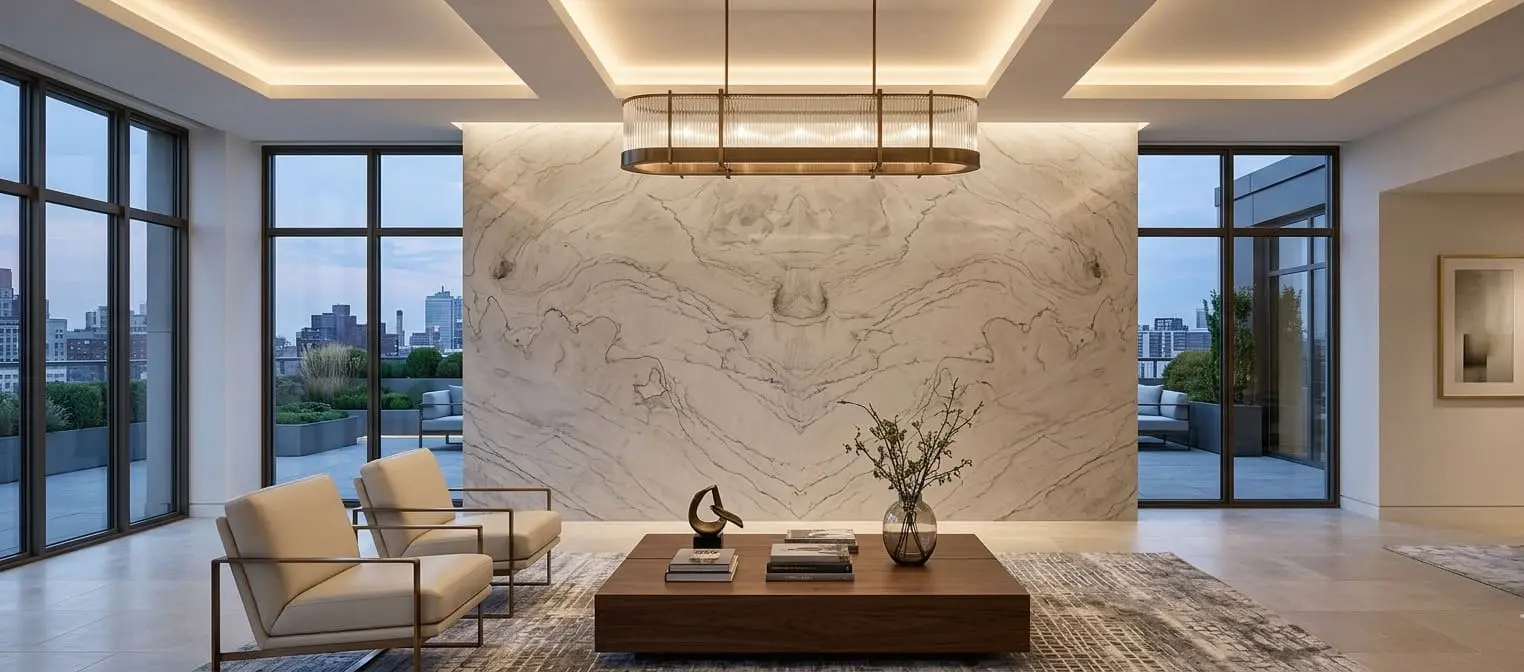
Living rooms with vaulted ceilings or a fireplace as the natural focal point are the most common candidates, since stone or porcelain there reinforces a feature the room already has. Primary bedrooms are close behind, with a headboard wall in stone or large-format tile creating a hotel-like anchor point. Home offices and entryways are smaller-footprint options that still deliver strong visual impact, which works well in the more compact layouts common in newer Sparks neighborhoods.
Budget and Planning Considerations
Total cost for an accent wall depends on more than the material's price per square foot. The size of the wall, the complexity of the pattern or layout, whether the substrate needs reinforcement, and the type of material all factor into the final number. Natural stone and stacked stone panels generally cost more to install than porcelain due to weight, cutting, and the additional labor of sealing. Porcelain slabs can carry a higher material cost per square foot than standard tile but often save on long-term maintenance since there is no sealing cycle to budget for. Getting a firm quote means measuring the actual wall and discussing the substrate condition with a designer rather than estimating from a general price range, since every room's starting point is a little different.
Before settling on a material, walk the room at different times of day, since natural and artificial light change how veining, texture, and finish read on a vertical surface compared with a countertop sample under showroom lighting. For an accent wall specifically, a stone or porcelain slab is usually easier to judge in person at the showroom, since scale and lighting affect how the material reads across a full wall. Nova Tile and Stone's complete collection can also help you compare different materials, colors, and finishes in person before making a final decision.
Conclusion
Choosing between the three usually comes down to how much upkeep you want to take on and how the wall will actually be used. If low maintenance matters most, porcelain removes the sealing question entirely. If the goal is a surface where no two installations look alike, natural stone delivers that in a way manufactured materials cannot fully replicate. If the wall is going behind a fireplace or in an entryway that can carry more visual weight, stacked stone brings the most texture, provided the substrate has been confirmed to support it. Sparks' dry climate does not rule out any of the three, so the room, the budget, and the amount of maintenance you're willing to keep up with end up mattering more than the local weather.
Nova Tile and Stone's Reno showroom serves homeowners throughout the Truckee Meadows, including Sparks, with natural stone, porcelain, and stacked stone options for accent walls, countertops, and flooring. Free design consultations are available to help you compare materials for your specific space and lighting. Stop by the showroom at 12835 Old Virginia Rd, Suite 24, Reno, NV 89521, or call (775) 331-6682 to plan your visit.
Frequently Asked Questions
Not necessarily. Coordinating tones, such as a stone accent wall that echoes a nearby countertop, can make a room feel pulled together, but a deliberate contrast, like a warm travertine wall against cooler countertops, is just as valid a design choice. The main thing to avoid is an unplanned near-match that reads as accidental rather than intentional.
Yes, weight matters. Natural stone slabs and stacked stone panels are considerably heavier than porcelain of the same size, so the wall's substrate needs to be confirmed as capable of supporting the load before installation begins. This is a step your installer should walk through with you rather than skip.
No. Porcelain is a non-porous, engineered material, so it does not require sealing the way most natural stone does. That is a large part of why homeowners choose porcelain slabs when they want the visual effect of stone with less ongoing maintenance.
Tile samples are available to take home for one dollar each, but natural stone and porcelain slab materials are not part of the take-home sample program. The best way to evaluate a slab for an accent wall is to see it in person at the showroom, where lighting and scale give a more accurate picture than a small sample would.
It helps, though it is not required. Angled or raking light, such as a wall-washer fixture or an adjustable sconce, brings out veining and texture more than a flat overhead light does. This matters most with natural stone and stacked stone, where the surface has more dimension for light to catch.
Note: Some images on this page may be conceptual renderings created to illustrate design possibilities and may not depict actual installations.