Black countertops are made from granite, quartz, quartzite, or porcelain, and each material differs in maintenance, heat resistance, and cost. The right choice for a Nevada City kitchen or bathroom depends on finish, lighting, and how much daily upkeep a household wants to take on. This guide covers the material and finish differences, lighting considerations, and care requirements homeowners should know before choosing a black countertop.
Why Black Countertops Are Getting a Second Look
For years, light and bright kitchens dominated design trends, with white cabinets and pale countertops used to make spaces feel open and airy. Lately, more homeowners are leaning toward the opposite approach: countertops that anchor a room and give it presence. Black surfaces do exactly that. They create a strong visual line against lighter cabinetry, or they blend into a moodier, more monochromatic scheme when paired with dark cabinets.
Nevada City's older homes, many with a rustic or Gold Rush-era character, and its newer builds tucked into the surrounding foothills both lend themselves to this kind of contrast. A black countertop against natural wood cabinetry or exposed beams tends to feel grounded rather than out of place, which is part of why the look works across such a wide range of home styles.
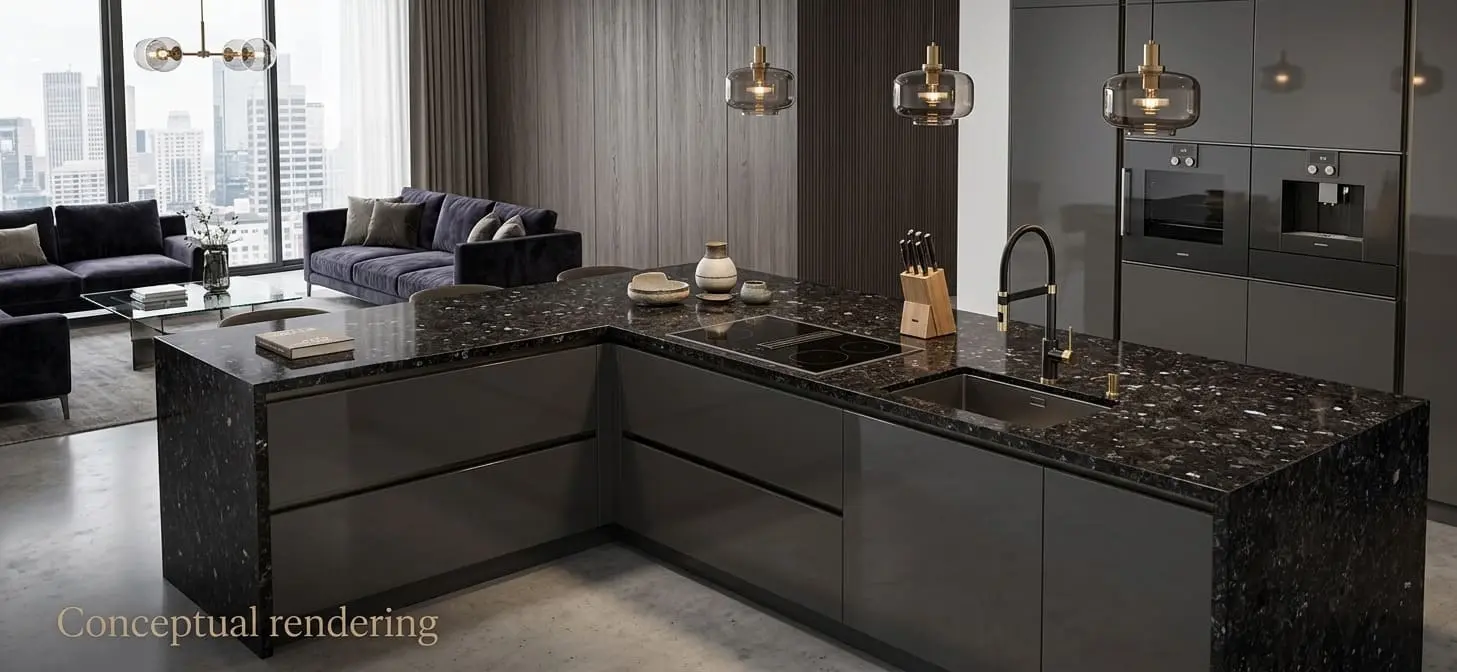
Material Options for Black Countertops
Not all black countertops are made from the same material, and each option behaves differently in day-to-day use.
Granite. Black granite is quarried in a range of patterns, from nearly solid black to versions with visible mineral flecks or veining. The natural variation in granite can help disguise crumbs, water spots, and light scratches better than a completely uniform surface.
Quartz. Engineered quartz surfaces are manufactured, which means the color and pattern are consistent from one edge of the slab to the other. This consistency appeals to homeowners who want a predictable look, though a solid black quartz surface can show dust, fingerprints, and water spots more readily than a patterned stone.
Quartzite. Black quartzite offers the toughness of granite combined with its own natural veining and mineral movement, often in dramatic white or gold contrast against the dark background. Because vein pattern and depth of color vary from slab to slab, viewing quartzite in person is especially useful with this material.
Porcelain. Porcelain slabs are another option for a black countertop, offering a manufactured surface with strong resistance to heat and scratching. The tradeoff is that porcelain edges and corners can chip under a heavy direct impact, so edge profile and placement near high-traffic areas like a sink are worth discussing before choosing this material. Porcelain can be produced in a range of finishes and is worth considering alongside natural stone and quartz.
Each of these materials also responds differently to heat, scratching, and staining, which is worth factoring in alongside appearance. Natural stone options like granite and quartzite generally hold up well to hot cookware set directly on the surface, though using trivets is still a good habit regardless of material. Engineered quartz contains a polymer resin binder that is more sensitive to heat than the quartz mineral itself, and even brief direct contact with hot cookware can scorch or discolor the resin, so manufacturers consistently recommend trivets or hot pads. Porcelain slabs are known for strong heat resistance as well, making them a practical option for households that cook frequently.
Cost and slab availability can also vary between these materials depending on sourcing and current inventory. Because black stone in particular can range widely in price depending on rarity and origin, it helps to have a rough budget in mind before comparing options side by side. Because material availability shifts over time, we recommend visiting our showroom to see current black stone and quartz options in person before settling on one. For general background on how different stone types compare and perform over time, This Old House's overview of stone countertops is a useful outside reference.
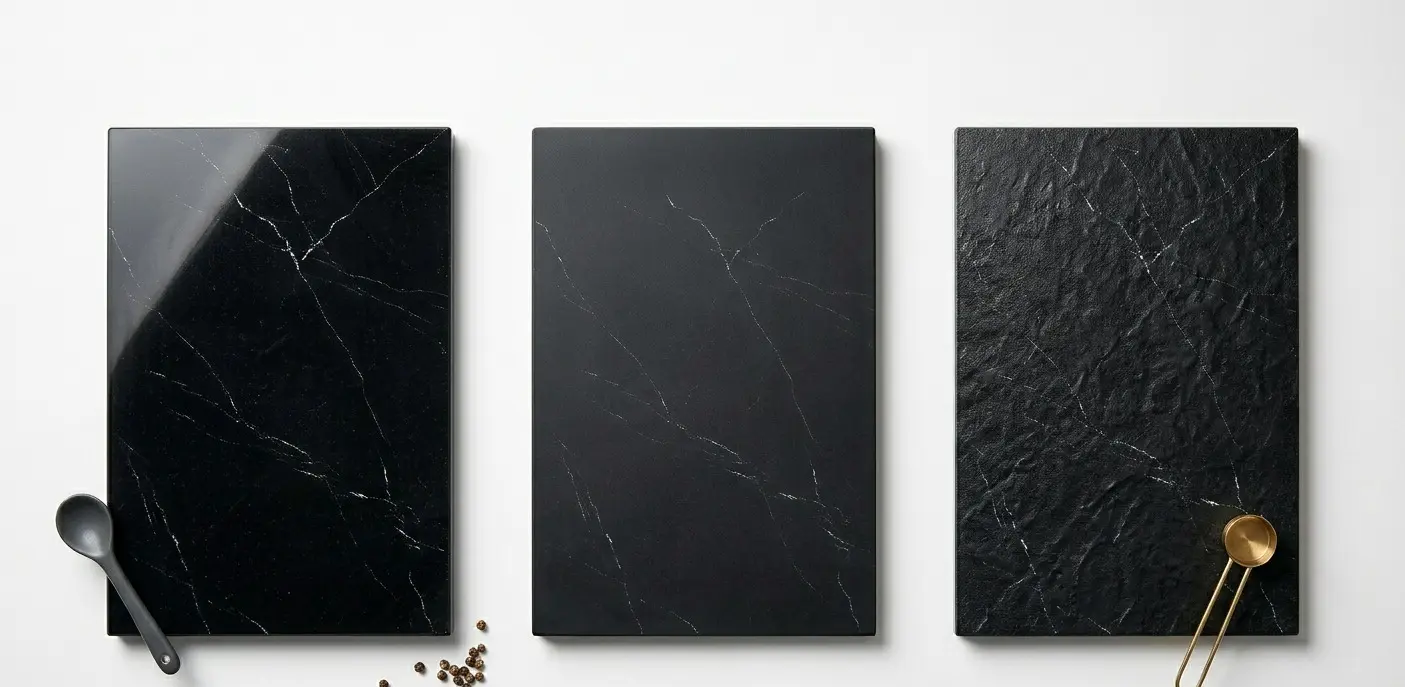
Finish Matters as Much as Material
The finish applied to a black countertop changes how it looks and how it holds up to daily use just as much as the material itself.
Polished finishes reflect light and give black surfaces a glossy, high-contrast look. Polished black countertops tend to show fingerprints, water spots, and dust more visibly because the reflective surface highlights anything that breaks up the shine.
Honed finishes have a matte, low-sheen surface. This finish tends to hide smudges and light residue more effectively than a polished surface, since there is less light bouncing off the countertop to reveal imperfections.
Leathered finishes add a subtle texture to the stone, which can further help mask fingerprints and water marks while still keeping the deep black color.
Homeowners who want the visual impact of black without worrying constantly about smudges often lean toward honed or leathered finishes rather than high-gloss polished ones.
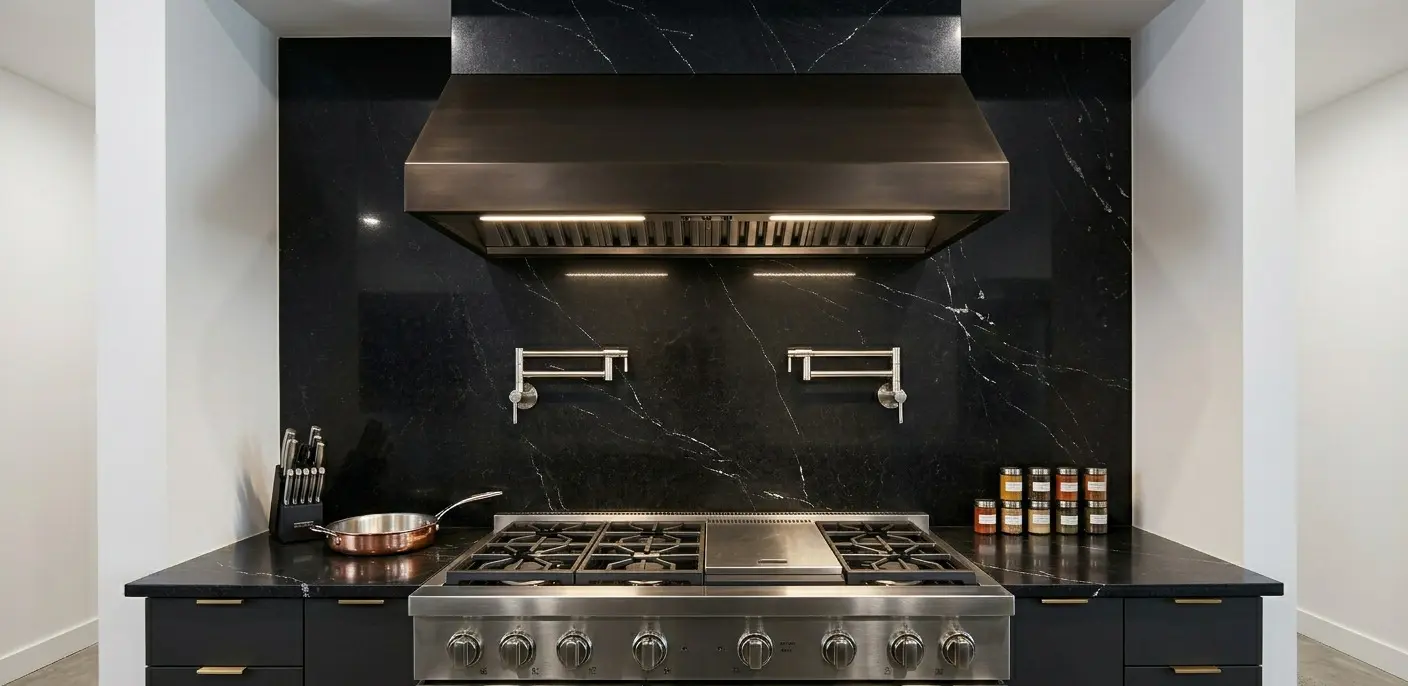
Lighting Changes Everything
Black countertops need more thoughtful lighting than lighter surfaces. In a kitchen with limited natural light, a dark countertop can make the space feel smaller or dimmer than intended. This doesn't mean black is off the table in a Nevada City home with modest window coverage. It simply means lighting needs to be part of the plan from the start.
Under-cabinet lighting helps illuminate the countertop surface directly, which both improves visibility for food prep and prevents the counter from reading as a flat, dark void. Pendant lighting over an island adds a focal point and can create appealing reflections on a polished black surface. Homes with larger windows or skylights often handle black countertops well without much additional lighting investment, since natural daylight does the work.
The direction and warmth of the light matters too. Warmer bulbs, typically in the 2700 to 3000 Kelvin range, tend to soften the starkness of a black surface and bring out subtle warmth in any veining or flecking within the stone. Cooler, brighter bulbs can make a black countertop feel more stark and modern, which works well in contemporary kitchens but may feel less inviting in a farmhouse or traditional-style space. Viewing the slab under a few different lighting conditions in the showroom, including near a window if possible, rather than relying on a single spot under bright overhead lighting, can help set more realistic expectations for how it will look at home. Homeowners planning a full kitchen or bathroom lighting layout around a black countertop can also book a design consultation to walk through options in person.
Pairing Black Countertops With Cabinetry
Black countertops work with a wide range of cabinet colors, which is part of their appeal.
Paired with white or light cabinetry, black countertops create a classic, high-contrast look that has remained popular for decades. Paired with natural wood tones, which are increasingly common in modern and farmhouse-style kitchens, black countertops add a grounding, earthy contrast. Paired with dark cabinets, black countertops create a more monochromatic, seamless look that works well in contemporary and industrial-style spaces, though this pairing benefits even more from strong lighting to keep the room from feeling closed in.
Backsplash choice plays a supporting role as well. A lighter backsplash, whether in tile, subway pattern, or a large-format material, tends to break up a black countertop and cabinet combination so the space doesn't feel too heavy. A darker or more textured backsplash can lean into the monochromatic look for homeowners who want a bolder, more unified aesthetic. Flooring color and material follow a similar logic, with lighter flooring generally helping balance a kitchen that already features black countertops and darker cabinetry.
Common Concerns About Black Countertops
Does black show every mark? This depends heavily on the material and finish, as covered above. A patterned black granite with a honed finish will generally show less than a solid, polished black quartz. Homeowners with young children, frequent cooking habits, or a household that doesn't want to wipe down counters after every use should factor this into the material and finish decision.
Will a black countertop make a small kitchen feel smaller? Not necessarily. When paired with lighter cabinets, adequate lighting, and some visual breathing room elsewhere in the space, black countertops can add depth without making a small kitchen feel cramped. The mistake to avoid is combining black countertops with dark cabinets, dark flooring, and minimal lighting all at once.
Is black a passing trend? Black stone and quartz surfaces have been used in kitchens and bathrooms for decades, and interest in the color tends to rise and fall along with broader design trends. Because black pairs with nearly any other color, it tends to remain a viable option even as surrounding trends shift.
Care Considerations
General care for a black countertop depends on the material. Natural stone surfaces like granite or quartzite typically benefit from periodic sealing to help resist staining, while engineered quartz and porcelain do not require sealing. Day-to-day cleaning across all these materials generally involves warm water, mild soap, and a soft cloth, along with prompt cleanup of spills. Because sealing needs and cleaning products vary by material, it's worth confirming the right care routine for the specific stone or surface chosen rather than applying a one-size-fits-all approach. Fine Homebuilding's guide to natural stone countertops covers additional detail on sealing frequency and stone-specific care for homeowners who want to go deeper on any one material.
Harsh cleaning products, particularly those containing bleach or strong acids, can dull or damage certain stone and quartz surfaces over time, so checking manufacturer guidance before introducing a new cleaning product is a reasonable precaution. Using cutting boards instead of cutting directly on the countertop, wiping up acidic spills like citrus juice or wine promptly, and avoiding abrasive scouring pads all help preserve the finish on a black countertop regardless of material. These habits matter more on a polished surface, where scratches and dulling are more visible against the reflective black background, than on a honed or leathered surface where the texture already masks minor wear.
Bringing a Black Countertop Into a Nevada City Home
Whether the goal is a bold contrast in a newer build or a deliberate pairing with original wood trim and vintage fixtures in an older home, the decision ultimately comes down to the same short list of practical steps. Choose a material and finish that match the household's daily habits, plan lighting alongside the countertop rather than as an afterthought, and consider how the countertop color will interact with existing or planned cabinetry.
Because slabs vary in color, veining, and pattern even within the same stone type, viewing full slabs in person remains the most reliable way to judge how a particular black countertop will actually look in a kitchen or bathroom, rather than relying on photos alone. Homeowners who already have a specific slab in mind can request a quote on a specific slab directly. Contractors and designers managing multiple black countertop projects can also apply for a trade account for trade pricing and job-site delivery.
Conclusion
Choosing a black countertop comes down to matching the material, finish, and lighting plan to how a household actually lives and cooks. Granite, quartz, quartzite, and porcelain each bring a different look and a different maintenance routine, and the difference between a polished and honed finish can significantly change how visible everyday fingerprints and water spots will be. For Nevada City homeowners ready to see black stone and quartz options in person, our Sacramento showroom at 6100 Warehouse Way in Sacramento is open for walk-ins, and our design team is available at (916) 913-6682 to help sort through the current selection and talk through what will work best for a specific kitchen or bathroom. Anyone exploring the full project, from countertops to flooring, can browse our full range of tile, stone, and flooring options at any time.
Note: Some images on this page may be conceptual renderings created to illustrate design possibilities and may not depict actual installations.
Frequently Asked Questions
Black countertops can show dust, fingerprints, and water spots more visibly than lighter surfaces, particularly with a polished finish. A honed or leathered finish, or a patterned stone rather than a solid color, tends to hide daily marks more effectively, and regular cleaning with warm water and mild soap keeps most black surfaces looking consistent.
There isn't a single best option since granite, quartz, quartzite, and porcelain each offer a different balance of natural variation, consistency, and maintenance needs. The right choice depends on whether a homeowner prefers the natural movement of stone or the uniform look of an engineered surface.
Not inherently. Paired with adequate lighting and at least some lighter elements in the room, such as cabinetry or walls, black countertops can add depth without making the space feel cramped. Combining black countertops with dark cabinets and low lighting is more likely to create that effect.
Natural stone options like black granite or quartzite generally benefit from periodic sealing to help resist staining, while engineered surfaces like quartz and porcelain do not require sealing. Confirming the specific care needs for the chosen material helps keep the countertop looking its best over time.
Yes, black countertops pair well with natural wood tones and are a common combination in modern and farmhouse-style kitchens. The contrast between the dark surface and the warmth of the wood tends to create a grounded, cohesive look.