Absolute Black granite countertops, including the slab carried at the Minden, NV showroom, need three simple daily habits: wipe up spills promptly, use a trivet under hot cookware, and avoid acidic cleaners. Sealing is separate and is best checked with a water-drop test rather than a fixed yearly schedule. Most damage comes from these habits fading over time, not from not knowing them.
At the Minden showroom, the question homeowners ask most often is some version of how do I keep it looking new, usually at the moment of purchase, before they have lived with the counter long enough to know which habits actually matter.
One bundle currently sits at the Minden location: polished Absolute Black, 110 by 74 inches, three centimeters thick.
Sealing Isn't a One-Time Fix
Most homeowners think of sealing as something that happened once, at installation or at the time of purchase. According to the Natural Stone Institute's care guidance, sealing products are technically impregnators, not permanent barriers. They act as a repellent rather than a true seal, which means the protection wears down with use and needs to be refreshed on a schedule, not applied once and forgotten.
Part of the confusion traces back to when sealing actually happens. A fabricator typically applies the first coat during installation, as a finishing step rather than an ongoing commitment. Once that step is checked off, nothing about daily life reminds an owner that the same product needs reapplying years later, unless something has already gone wrong.
Dark granite like Absolute Black is actually denser and less porous than many lighter granites, which means it can often go longer between resealings than a generic yearly schedule assumes. That is not the same as never needing it, though. A simple water-drop test, letting a few drops sit for several minutes and checking whether they bead or soak in, tells an individual slab's real schedule better than any fixed calendar interval does.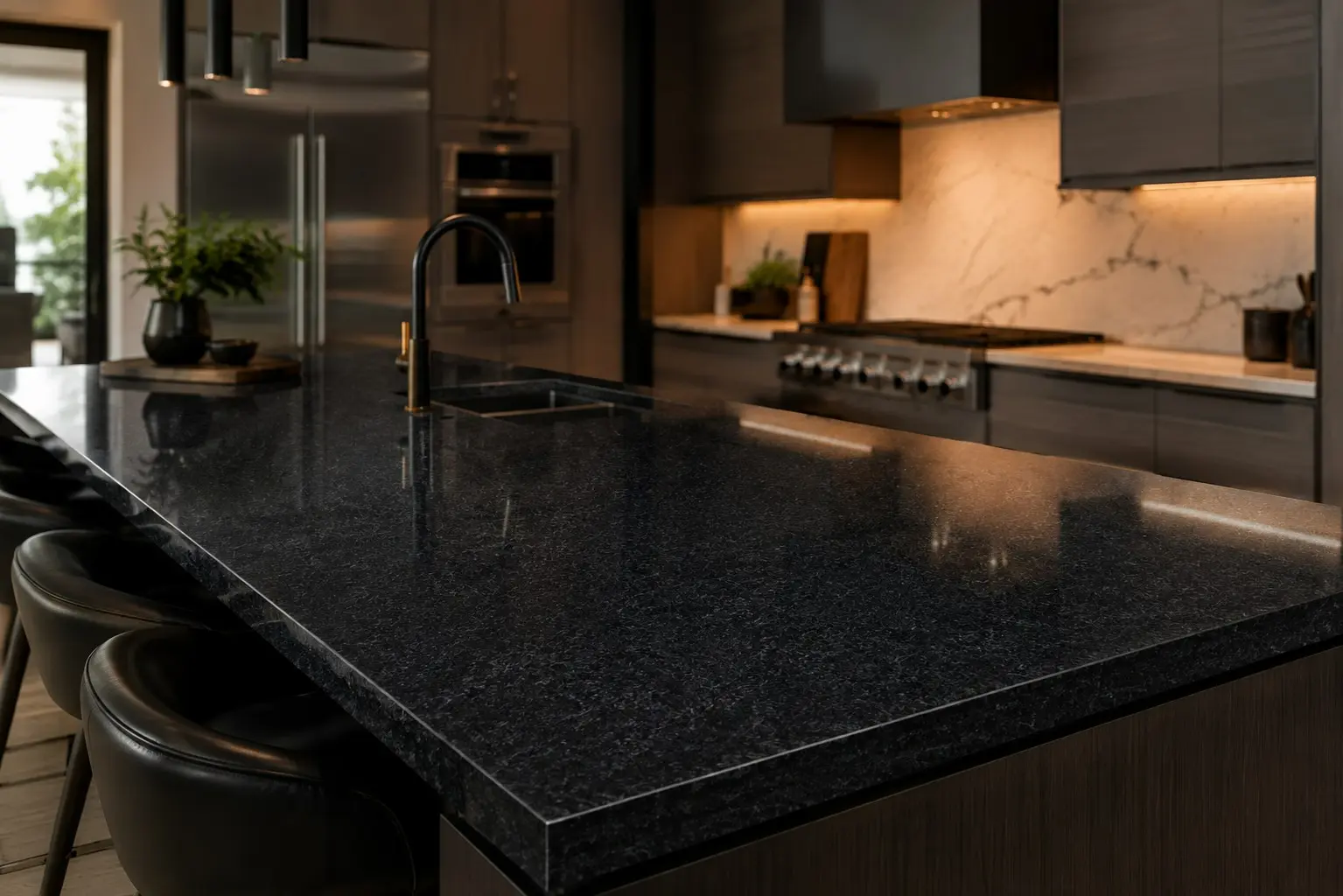
The Few Habits That Actually Matter
The full list of things that actually protect a granite counter is short: wipe up spills promptly instead of letting them sit, use a trivet under very hot cookware, and avoid acidic cleaners like vinegar or citrus sprays. That is close to the entire routine.
Bob Vila's breakdown of granite cleaning basics backs up how simple daily care is supposed to be: mild dish soap, a soft cloth, and prompt attention to spills cover most of it.
Granite resists stains well, but that resistance has limits: a spill left sitting overnight can still leave a mark that a quick wipe would have prevented. A countertop that gets this right for the first three months and then drifts back to old habits is not broken. It is just back to the habits nobody warned the owner would need to be permanent.
The trivet habit is usually the first to go, and it is easy to see why. Nothing catastrophic happens the first time a hot pan touches the surface directly, since granite can handle brief contact with normal cooking heat. That absence of an immediate consequence is exactly what makes it the easiest of the three habits to talk yourself out of, even though repeated direct contact adds up over years the same way skipped resealing does.
What Shows Up First When the Habit Slips
Hard water spotting is usually the first visible sign that the routine has lapsed, especially on a polished dark surface where cloudy mineral deposits show up more clearly than they would on a matte or lighter stone. Left long enough, mineral buildup from tap water can leave a faint ring or haze that a quick wipe no longer removes.
The fix for that specific problem is simpler than most people expect, and it should stay dry: 0000 steel wool, the finest grade made, buffed gently over the spot rather than scrubbed. Wet steel wool is more likely to mark a polished surface, which is why this works best as an occasional fix for a stubborn spot rather than a routine cleaning step.
Etching is a separate issue and shows up differently: a dull spot rather than a ring, usually from an acidic product left sitting on the surface. Granite's mineral composition makes it more resistant to kitchen acids than calcium-based stones like marble, but resistant is not immune, since trace minerals in any given slab can still react to prolonged acid contact.
Anything beyond a light surface mark, on either front, is worth handing to a professional rather than experimenting with household chemicals. Mixing an ammonia-based cleaner with bleach, a combination the Natural Stone Institute specifically warns against, produces a toxic gas rather than a better result.
If the Damage Has Already Set In
A countertop that has gone months or years without the basic routine is not necessarily beyond saving. Light etching and dulling can often be corrected by a stone restoration specialist through professional repolishing, which restores the original finish without needing new material.
For anyone still weighing whether a new slab is worth pursuing at all, a design consultation at the Minden showroom is a lower-commitment way to talk through the options before requesting a specific quote.
For damage too severe for repolishing to fix, sourcing a new slab that matches the original becomes the next question, and that is a materials question, not a repair one. Requesting a quote on a matching bundle is how to find out what is currently available in the same granite type. Natural stone does not repeat itself from one cut to the next, so getting a close visual match, similar veining, similar tone, usually means sourcing another bundle of the same specific granite rather than assuming any black granite on the market will read the same in person.
Before requesting a quote, it helps to know what is actually on hand. Browsing the current live inventory shows which Absolute Black bundles are on the floor right now, since matching against real, in-stock material works better than matching against a photo from a catalog.
Seeing What Well-Maintained Actually Looks Like
The Minden showroom keeps Absolute Black on the floor, polished and unsealed by daily use, which makes it a useful side-by-side reference for what the surface is supposed to look like before habits start to slip.
Nova Tile and Stone rotates inventory as bundles sell, meaning today's Minden floor piece is not the identical bundle a customer bought months or years back. The comparison still holds regardless of which specific bundle it is, since the point is the material's baseline appearance, not the individual piece.
For anyone who wants that side-by-side look in person, the Minden location sits at 2548 Business Pkwy, Minden, NV 89423, phone (775) 783-4970, with directions available here for the drive over.
Conclusion
Fresh granite on display in person shows what the material looks like before years of use, which makes the difference between a habit problem and a professional one much easier to see.
It needs the same three habits, spills wiped promptly, a trivet under hot pans, no acidic cleaners, repeated past the point where they stop feeling necessary. That is the entire system.
Frequently Asked Questions
Durability and stain resistance are not the same thing. Granite's hardness protects it from scratches and daily wear, but the sealant is a separate layer that repels moisture and staining agents, and that layer wears down with use regardless of how hard the stone underneath remains.
Water spots come from mineral deposits left behind after tap water evaporates on the surface, which shows up more visibly on a polished dark slab than on a lighter, matte one. Dry 0000 steel wool, the finest grade made, buffed gently over the spot, typically removes the residue, though it should stay dry and stay occasional rather than routine.
Granite's mineral composition makes it more resistant to common kitchen acids than calcium-based stones like marble, but resistant is not the same as immune. Trace minerals in an individual slab can still react to prolonged acid exposure, which is why acidic cleaners are still discouraged even on granite.
Realistically, three: wipe up spills promptly, use a trivet under very hot cookware, and skip acidic cleaners in favor of mild dish soap. Most of what goes wrong with a granite counter traces back to one of these three habits fading rather than a failure of the material itself.
Light etching or dulling can often be corrected by a stone restoration specialist through professional repolishing, which restores the surface without needing new material. For damage too extensive to repolish, sourcing a new bundle of the same granite type is a materials question, best started with a quote request rather than assuming any similar-looking stone will match.