Small-Space Storage, Solved for Fallon Bathrooms
A small bathroom in Fallon can feel like a puzzle when square footage is tight and clutter keeps creeping back. Warm minimalist design pairs clean lines with natural material warmth, so storage stays hidden without hiding personality. The right pick depends on how a compact, moisture-heavy room is used every day. Space-saving bathroom storage ideas for small Fallon homes usually start with one question: which slab material fits both the look and the daily wear of a compact, moisture-heavy room?
Quartz and porcelain are the best slab materials for small bathroom storage in Fallon homes, because both generally resist moisture without regular sealing. Marble and quartzite suit homeowners who want natural veining and accept periodic resealing. Each can be cut into floating vanities, recessed niches, and open shelves that add storage without bulk.
Older Fallon homes in particular tend to have narrower bathroom footprints than newer builds, which makes every inch of storage matter more. A single well-planned slab vanity can often replace two or three smaller cabinets, reducing visual clutter while still holding towels, toiletries, and daily essentials within easy reach. That efficiency is a big part of why warm minimalist layouts have become popular for remodels in the area.
Small Bathroom Storage Solutions Worth Considering
Storage solutions for a small bathroom rely on smart material choices as much as clever layouts. A slab vanity top paired with a built-in drawer bank or open shelf reduces visual clutter while keeping toiletries within reach, and the right stone finish keeps that surface looking sharp through daily use. Warm minimalist palettes favor soft veining and honed textures over glossy busyness, a look echoed in Good Housekeeping's roundup of 2026 interior design trends, so material selection matters as much as square footage. Browse Nova's slab options to compare finishes before narrowing down a final material.
Beyond looks, the practical difference between materials shows up over months of daily use. Engineered slabs like quartz and porcelain tend to shrug off toothpaste splatter and hard water spots with a quick wipe, while natural stone options bring depth and character that engineered surfaces cannot fully replicate. Neither category is universally better; the right pick depends on how much upkeep a household is willing to build into its routine.
Consider these advantages when comparing slab options for a Fallon bathroom project:
- Custom-cut floating shelves add storage without bulky cabinetry, though confirming exact wall dimensions before ordering helps prevent a mismatched fit.
- Non-porous engineered surfaces like quartz and porcelain resist daily moisture well, but spills should still be wiped promptly to avoid residue buildup.
- Natural stone veining in marble or quartzite adds warmth and texture, though periodic resealing helps preserve that natural sheen over time.
- Polished finishes create a bright, minimalist glow, but their smooth surface can be slippery when wet, so pairing with textured flooring nearby is worth considering.
- Slab-built niches maximize storage inside a small footprint, but locking in layout dimensions early helps avoid costly resizing later.
Where Warm Minimalist Slabs Fit in a Small Bathroom?
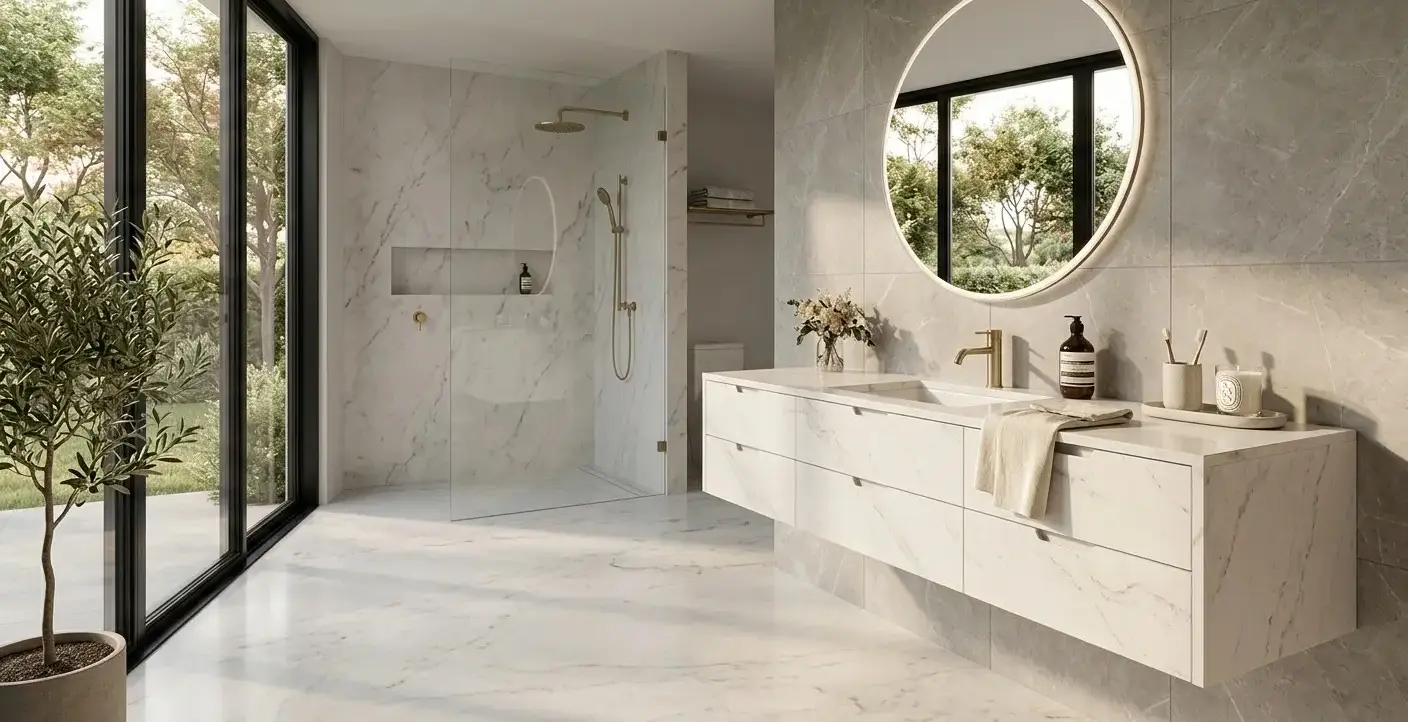
Once a material feels right on paper, the next step is picturing it inside an actual layout. A well-planned small Fallon bathroom often mixes one hero surface, like a vanity top, with a matching accent, like a niche or open shelf, so the whole room reads as one considered design rather than a patchwork of finishes. Design fairs also showcase bathroom and materials design, and Dezeen’s guide to 2026 design events lists several, including a kitchen and bathroom category at Design Shanghai.
 Conceptual rendering
Floating Vanity Storage
A floating vanity built from a single slab keeps sightlines open in a compact bathroom, an especially useful trick in older Fallon homes with narrow footprints. Quartz and porcelain tops pair well with integrated drawer fronts cut from the same slab, creating a seamless look with no visible seams at drawer edges. Because both materials generally resist moisture without regular sealing, they hold up to daily splashes near the sink, though wiping spills quickly still keeps the surface looking its best.
The floating effect also makes a small room easier to clean underneath, since there is no base cabinet trapping dust or moisture against the floor. Warm minimalist designers often pair a light quartz or porcelain vanity with a slightly darker floor tile to keep the eye moving through the room instead of stopping at a bulky cabinet edge.
Built-In Niches and Open Shelving
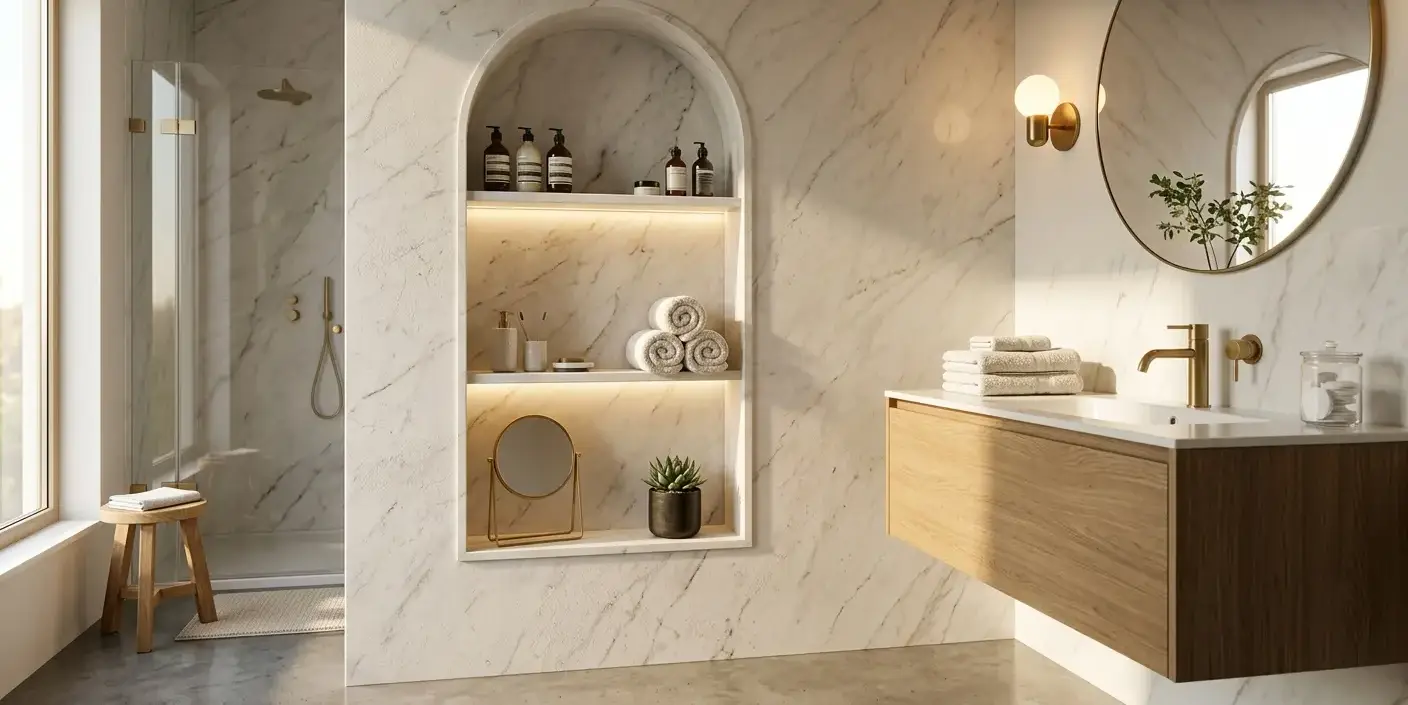
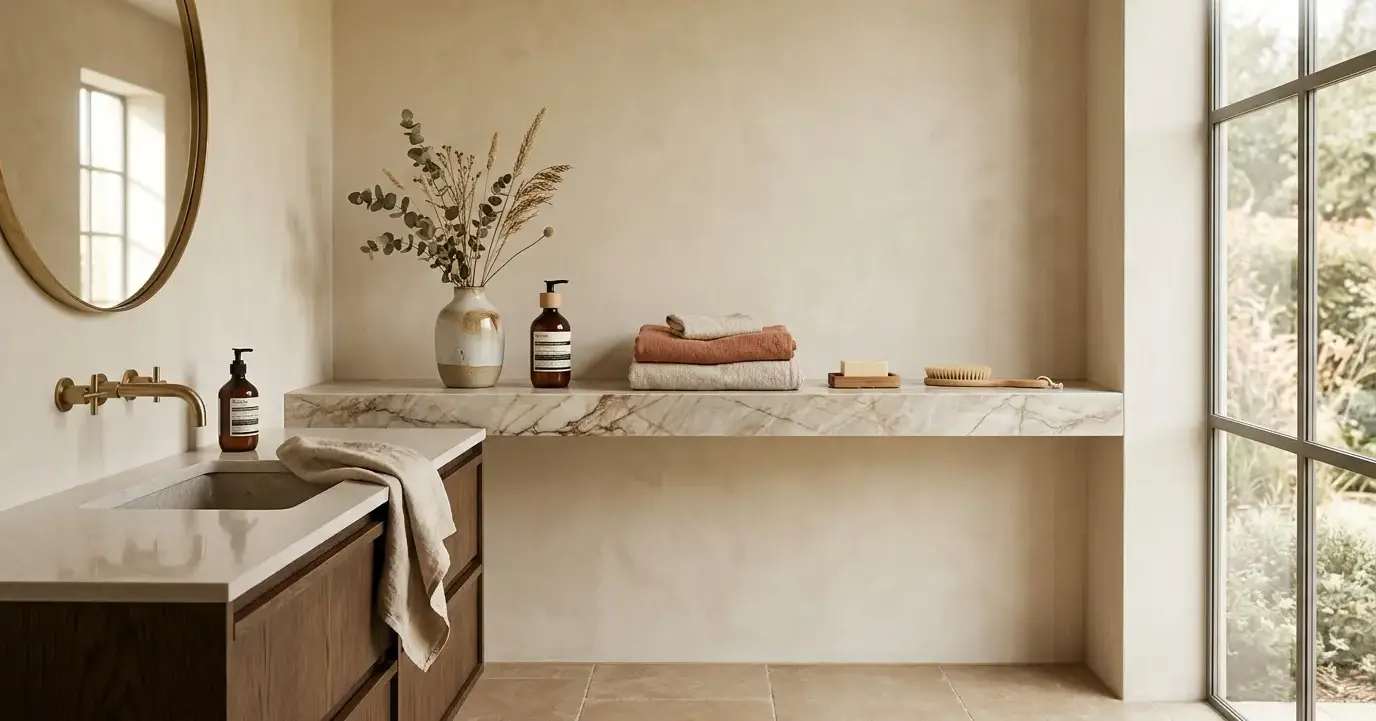
Recessed niches carved from marble or quartzite slabs turn shower walls into storage without adding visual weight, a hallmark of warm minimalist design. Open shelving cut from the same material as the vanity ties a small bathroom together visually. Marble's veining and quartzite's texture both need periodic resealing to stay resistant to moisture, and honed rather than polished finishes reduce slip risk on shelves near a wet shower floor. Fabrication and finishing quality matter here too, and the The Natural Stone Institute notes that sealing marble with a quality sealer makes sense in many cases, so confirming a sealing plan before finalizing a design is worthwhile.
 Conceptual rendering
A single continuous niche, rather than several small cutouts, tends to read as more intentional in a warm minimalist scheme. Pairing an open shelf with a recessed niche also gives a small bathroom two storage zones without adding any visible bulk to the walls, which matters most in rooms under roughly forty square feet.
Material | Type | Sealing Needed | Best Storage Use | Maintenance Note |
Quartz | Engineered | Generally not required | Floating vanity tops, drawer fronts | Avoid abrasive cleaners; wipe spills promptly |
Porcelain | Engineered | Generally not required | Large-format vanity tops, niche panels | Clean spills promptly; avoid abrasive pads |
Marble | Natural Stone | Required | Statement vanity tops, honed niches | Reseal periodically; avoid acidic cleaners |
Quartzite | Natural Stone | Required | Open shelving, backsplash niches | Reseal per manufacturer schedule; avoid abrasive cleaners |
5 Steps to Plan a Custom Slab Storage Project
- Measure the space. Record wall width, height, and depth available for a vanity, niche, or shelf before narrowing material options.
- Compare materials. Weigh quartz, porcelain, marble, and quartzite against desired look, moisture exposure, and care routine.
- Choose a finish. Polished finishes brighten a small room, while honed finishes reduce slip risk near wet areas.
- Review sizing. Confirm slab dimensions against the measured space to help avoid gaps or costly resizing later.
- Request a quote. Submit project details through a slab quote request once material and finish are set.
 Conceptual rendering
Visit Nova Tile and Stone for Expert Guidance
Choosing between quartz, porcelain, marble, and quartzite is easier with an expert nearby to compare actual slabs side by side. Nova's showroom team helps Fallon homeowners narrow down warm minimalist palettes based on how each stone behaves in a small, moisture-heavy room, not just how it photographs online.
The Fernley showroom keeps a rotating selection of full slabs on display, so veining, color, and finish can be judged in natural light before a final decision. Seeing a large-format quartzite or marble slab in person often changes a homeowner's plan more than any photo could, since a small swatch rarely captures how a full slab reads across a whole vanity or niche.
Those ready to move forward can schedule a showroom visit. Trade professionals working on multiple Fallon remodels can also open a trade account to streamline repeat slab orders across projects.
Nova serves Fallon along with Silver Springs, Wadsworth, and Stagecoach, giving small-bathroom remodels across the region access to the same slab inventory and showroom guidance.
Conclusion
Bathroom storage built from the right slab material turns a small Fallon bathroom into a calmer, more organized space without sacrificing warm minimalist style. Quartz and porcelain suit low-maintenance vanities and niches, while marble and quartzite add natural texture for homeowners willing to keep up with periodic resealing. Explore Nova's full stone selection to compare materials in person before finalizing a Fallon remodel. Ready to move forward? Visit the Fernley showroom or set up a consultation to get started.
Our latest content
Check out what's new in our company !
Frequently Asked Questions
Quartz and porcelain generally resist moisture without regular sealing, making them practical for compact vanities and shelving, while marble and quartzite offer more natural texture but need periodic resealing.
Polished finishes can be slippery when wet, so many small bathroom layouts pair polished vanity tops with honed or textured flooring nearby to reduce slip risk.
Resealing frequency depends on the material and how much daily moisture it sees, so following the manufacturer's specific resealing schedule is the most reliable guide.
Yes, both materials are commonly cut into floating vanity tops and shelves because they generally resist moisture well, though wiping spills promptly still helps preserve their finish over time.
Nova serves Fallon, Silver Springs, Wadsworth, and Stagecoach in addition to the Fernley showroom location, giving small bathroom remodels across the region access to the same slab inventory.
Visit Our Fernley Showroom – Nova Tile and Stone
1855 US Highway 95A North, Fernley, NV 89408
 Google Maps
Store hours this week:
- Mon. - Fri.: 7:30 am - 4:00 pm
- Sat. - Sun.: Closed