Updating a mid-century kitchen without losing its character means matching new tile and stone to the era's original design habits rather than replacing them outright. Homes in East Woodland's established neighborhoods often carry mid-century layouts, cabinetry lines, and material choices that can guide which tile shapes, stone finishes, and countertop materials will feel consistent with the home rather than at odds with it. The kitchens from this era were compact, functional, and defined by simple geometry, smaller enclosed floor plans, flat or recessed panel cabinetry, and materials like laminate, linoleum, and small-format tile. Homeowners weighing a full kitchen refresh can browse tile, stone, and flooring options together to see how different material categories work alongside each other before narrowing down a direction. Recognizing these characteristics before selecting new materials makes it easier to update a kitchen for modern use while keeping it visually connected to when the home was built.
What Defines a Mid-Century Kitchen
Mid-century kitchens were built around a different set of priorities than kitchens designed today. Layouts tended to be compact and efficient, often separated from adjoining living spaces rather than opened up into them. Cabinetry favored flat or simple recessed panel doors, low-profile hardware, and horizontal lines. Countertops and floors leaned on materials that held up to daily use and were easy to maintain, including laminate, linoleum, and small-format tile in geometric or checkerboard layouts.
Color palettes from this era included warm neutrals as well as saturated tones that later became closely associated with the period. Original kitchens in East Woodland homes may still carry some of these details, from the shape of a soffit to the placement of a window over the sink, even if the surfaces themselves have been replaced over the decades.
Recognizing these underlying design habits before starting a remodel helps homeowners decide which elements are worth preserving, which can be reinterpreted with newer materials, and which no longer serve how the kitchen is actually used. For a broader overview of how stone as a category has evolved as a countertop choice, this guide to stone countertops covers the tradeoffs across common stone types.
Choosing Tile That Respects the Era
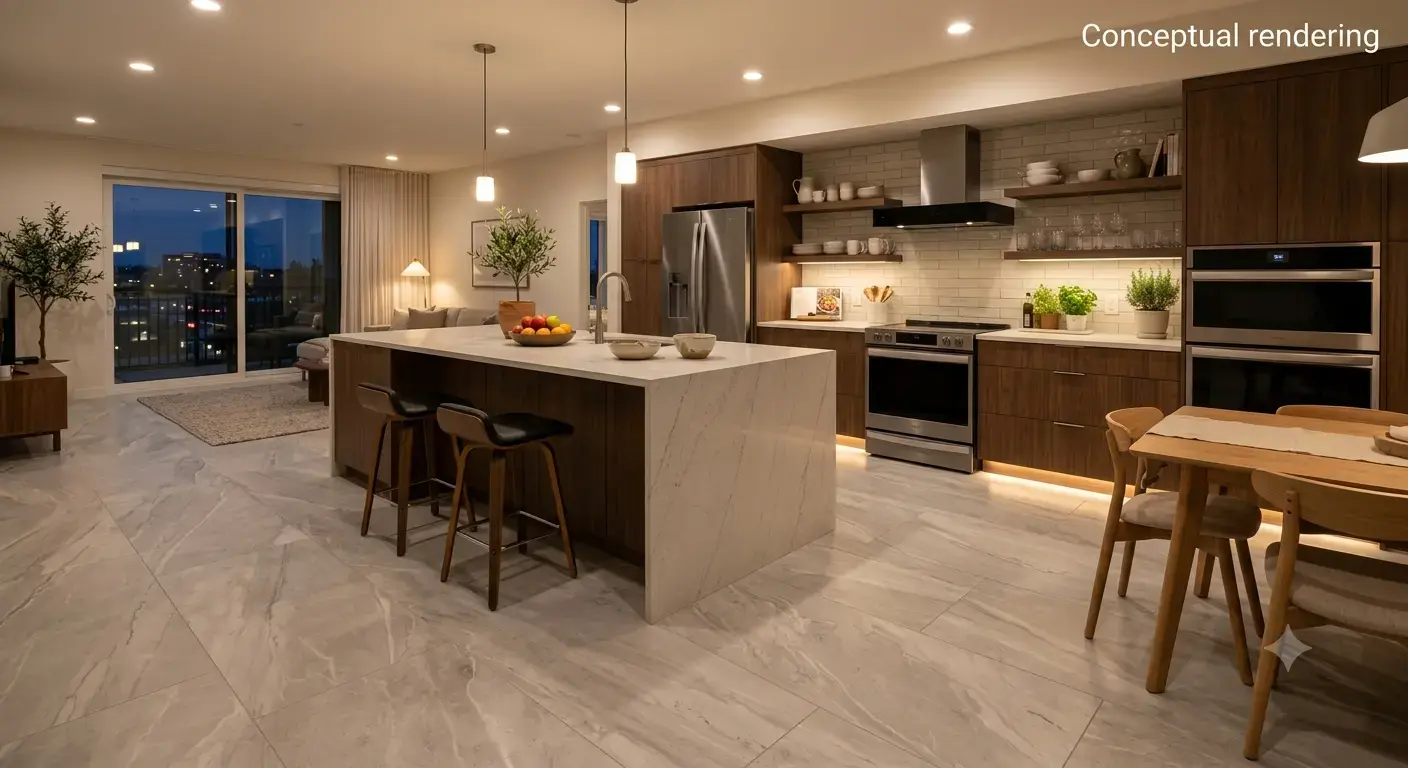
Tile is one of the most direct ways to carry mid-century character into an updated kitchen. Several approaches tend to work well for homeowners who want a kitchen that reads as updated but not disconnected from the home's original design:
Geometric patterns. Hexagon, penny round, and checkerboard tile layouts were common in kitchens and bathrooms of this period. A modern porcelain or ceramic tile in one of these shapes can echo that era without relying on reclaimed or vintage material.
Simple, saturated color. Mid-century interiors often used a single strong color as a backsplash or floor accent rather than heavily patterned or multicolor designs. A solid-color tile in a matte or satin finish can reference this without feeling dated.
Clean grout lines. Because mid-century tile work favored precision and simplicity, tighter grout lines and consistent spacing tend to look more period-appropriate than wide, rustic grout joints associated with more traditional or farmhouse styles. Tile installation quality is governed by recognized industry benchmarks, and homeowners curious about how grout and setting materials are tested can review the ANSI tile installation standards maintained by the Tile Council of North America.
Larger format for floors. While original mid-century kitchen floors were often small-format tile or linoleum, many homeowners today choose a larger format porcelain tile for floors to reduce grout lines and maintain the clean, uncluttered look the era's designers were going for, while working with a material suited to daily kitchen use.
Homeowners who want to browse current tile options by shape, color, or size before narrowing down a direction can shop tile styles online to get a sense of what's available in geometric and solid-color formats.
Countertop Materials for a Mid-Century Kitchen
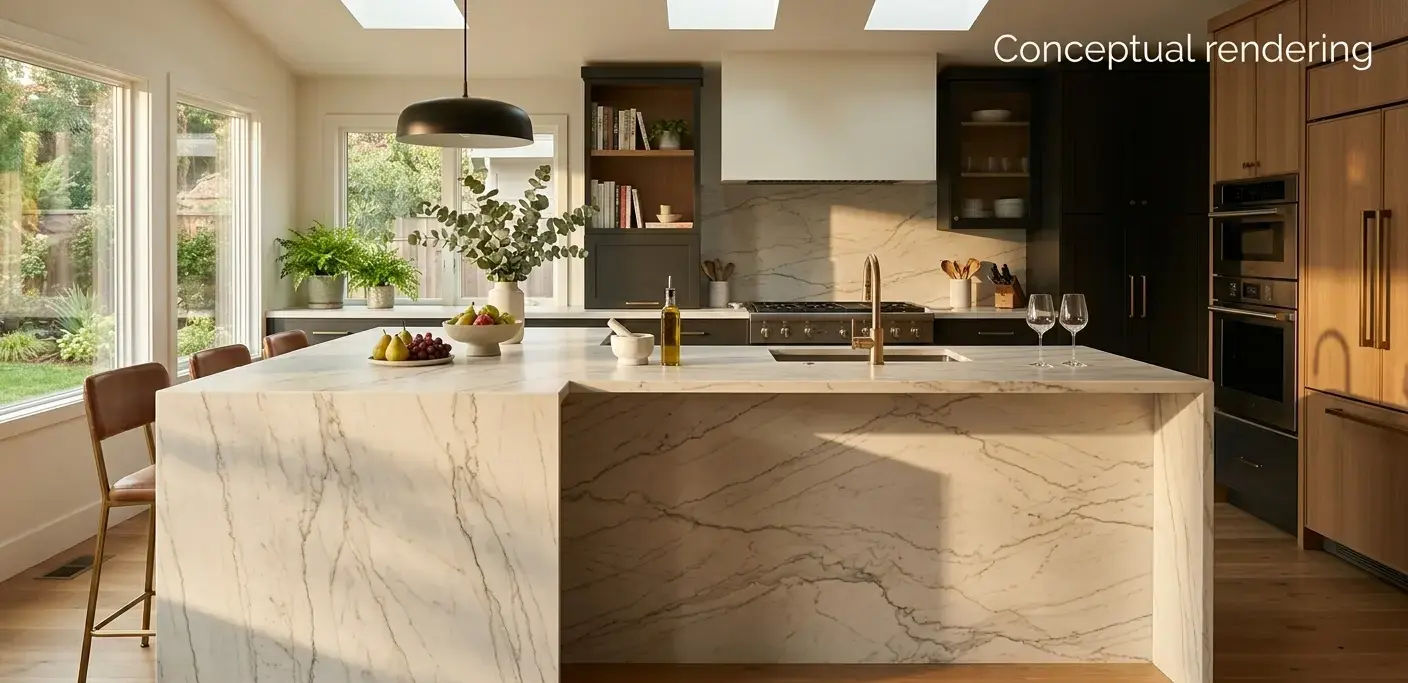
Countertop choices in original mid-century kitchens were largely practical: laminate was common because it was affordable, easy to clean, and available in a wide range of colors and patterns. Homeowners today generally have three broad paths when updating these kitchens:
Natural stone with a honed finish. A honed granite or quartzite countertop offers a matte surface that avoids the high-gloss look often associated with more contemporary kitchen styles. This finish tends to sit more comfortably alongside original mid-century cabinetry lines than a highly polished stone would. Homeowners can browse current natural stone slab inventory to see available honed options by color and pattern.
Quartz in solid or subtly patterned colors. Engineered quartz surfaces in solid neutral tones or muted patterns can reference the simplicity of original laminate countertops while offering a surface that requires less ongoing upkeep.
Terrazzo-look surfaces. Terrazzo was used in some mid-century commercial and residential spaces, and current terrazzo-look porcelain and quartz surfaces allow homeowners to bring that texture into a kitchen without the material or maintenance requirements of traditional poured terrazzo.
Whichever material is chosen, keeping the edge profile simple, such as a straight or gently eased edge, tends to support the clean lines associated with mid-century design more than a heavily ornamented edge profile would. Homeowners who have already identified a slab they're interested in can request a slab quote to get pricing on a specific bundle.
Working With the Existing Layout
One of the more practical challenges of updating an East Woodland mid-century kitchen is the floor plan itself. Many of these kitchens were designed as separate, enclosed rooms rather than open-concept spaces connected to a family or living room. Homeowners have different approaches to this:
Some choose to preserve the enclosed layout and focus updates on surfaces, finishes, and lighting rather than restructuring the room. This approach tends to be the most direct way to maintain the home's original character, since the room's proportions and window placement often shaped the rest of the design.
Others open the kitchen to an adjoining room, which changes the spatial character of the home more significantly. When this route is chosen, selecting tile and stone that echo the original era's material choices can help the new, larger space still feel connected to the home's history rather than reading as a completely disconnected addition.
Neither approach is inherently better. It depends on how the household uses the space and how much of the original layout logic the homeowner wants to retain.
Practical Considerations Before Selecting Materials
Homes in East Woodland have had decades to settle, which means a kitchen remodel often involves some additional planning beyond material selection alone. A few points are worth keeping in mind when narrowing down tile and stone options:
Older subfloors and substrates can vary in condition from one home to the next, so confirming the current state of the subfloor helps inform which flooring materials and formats are realistic options. Original cabinetry dimensions may not match the depth or height conventions used in newer kitchen designs, which can affect countertop overhang and backsplash height. Existing plumbing and electrical layouts, especially around the sink and range, may influence where certain material transitions or tile layouts make the most sense.
None of these considerations should discourage a homeowner from pursuing the kitchen they want, but they are useful to think through early, before finalizing tile or stone selections, so that the materials chosen work well with the home's existing conditions.
Bringing the Look Together
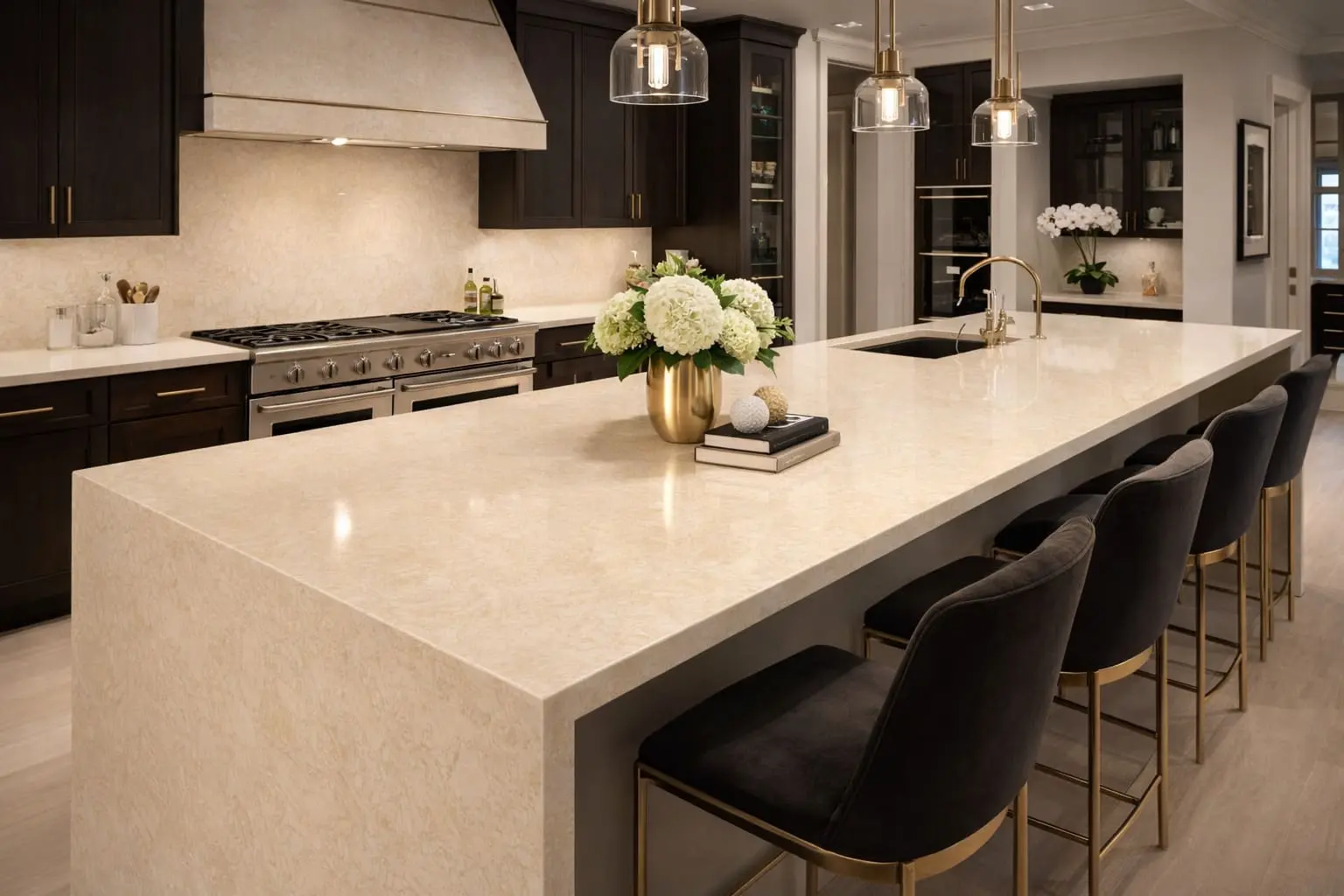
A kitchen update that respects mid-century character usually comes down to restraint. Rather than layering in multiple bold patterns or mixing several strong colors, most successful updates in this style rely on one or two clear material choices carried consistently through the space, a tile pattern for the floor or backsplash, a stone or quartz countertop in a complementary tone, and simple, low-profile fixtures that don't compete with the room's original lines.
Homeowners in East Woodland who want to see and compare tile and stone options in person are welcome to visit our Sacramento showroom at 6100 Warehouse Way, Sacramento, CA 95826, open Monday through Friday from 7:30 am to 6:00 pm and Saturday from 9:00 am to 3:00 pm. Homeowners driving in from East Woodland can get directions to the showroom ahead of their visit. Seeing samples under different lighting and against other finishes can make it easier to judge how a material will actually read in a kitchen with mid-century proportions and window placement. Homeowners can also schedule a design consultation to walk through material options with a design expert one-on-one.
Conclusion
Updating a mid-century kitchen in East Woodland is less about recreating the past and more about understanding why the original design worked the way it did. Compact layouts, clean lines, and simple material choices were not accidental, they reflected the design priorities of the era. By choosing tile and stone that echo those same qualities, whether through a geometric backsplash, a honed stone countertop, or a terrazzo-look floor, homeowners can bring a kitchen up to modern functional standards without erasing the character that drew them to an East Woodland home in the first place. Taking time to evaluate the home's existing layout and conditions before selecting materials helps ensure the final result feels like a natural continuation of the home rather than an unrelated addition. Homeowners who want to learn more about who sources and curates these materials can read our company's background.
Frequently Asked Questions
Hexagon, penny round, and checkerboard patterns are closely associated with mid-century design and tend to translate well into modern kitchens when done in current porcelain or ceramic tile.
This depends on how the household plans to use the space. Preserving the enclosed layout tends to keep more of the home's original character, while opening the kitchen creates a different, more contemporary feel that can still reference the era through material choices.
Laminate was the original material choice in many mid-century kitchens, and current versions remain a practical option. Many homeowners today choose honed stone or quartz instead for added durability while still keeping a simple, understated look.
A straight or gently eased edge generally supports the clean lines associated with mid-century design better than a heavily detailed or ornamental edge profile.
The existing subfloor condition varies by home and age, so it's worth having it evaluated before finalizing a tile format. This helps determine which flooring options are realistic for the space.