The best flooring options for a Crystal Bay, NV remodel are engineered hardwood, luxury vinyl plank, porcelain tile, and natural stone such as dolomite or quartzite, each suited to different rooms based on moisture exposure, radiant heat, and how often the home is occupied. Crystal Bay sits on the north shore of Lake Tahoe, at an elevation between about 6,229 and 6,800 feet, and most homes here are older cabins and mountain properties going through a remodel rather than new construction.
A home at this elevation deals with wide temperature swings between seasons, long stretches of snow cover, and, in many cases, months where nobody is living in the house at all. Add in steep, wooded lots that track dirt, pine needles, and melting snow into every entry, and the material choices for a Crystal Bay remodel start to look different from what you'd pick for a house in Reno or Sparks. The clearest way to work through those choices is room by room, starting with the spaces that see the least moisture and working toward the ones that take the most punishment.
Carpet for Bedrooms and Quieter Living Spaces
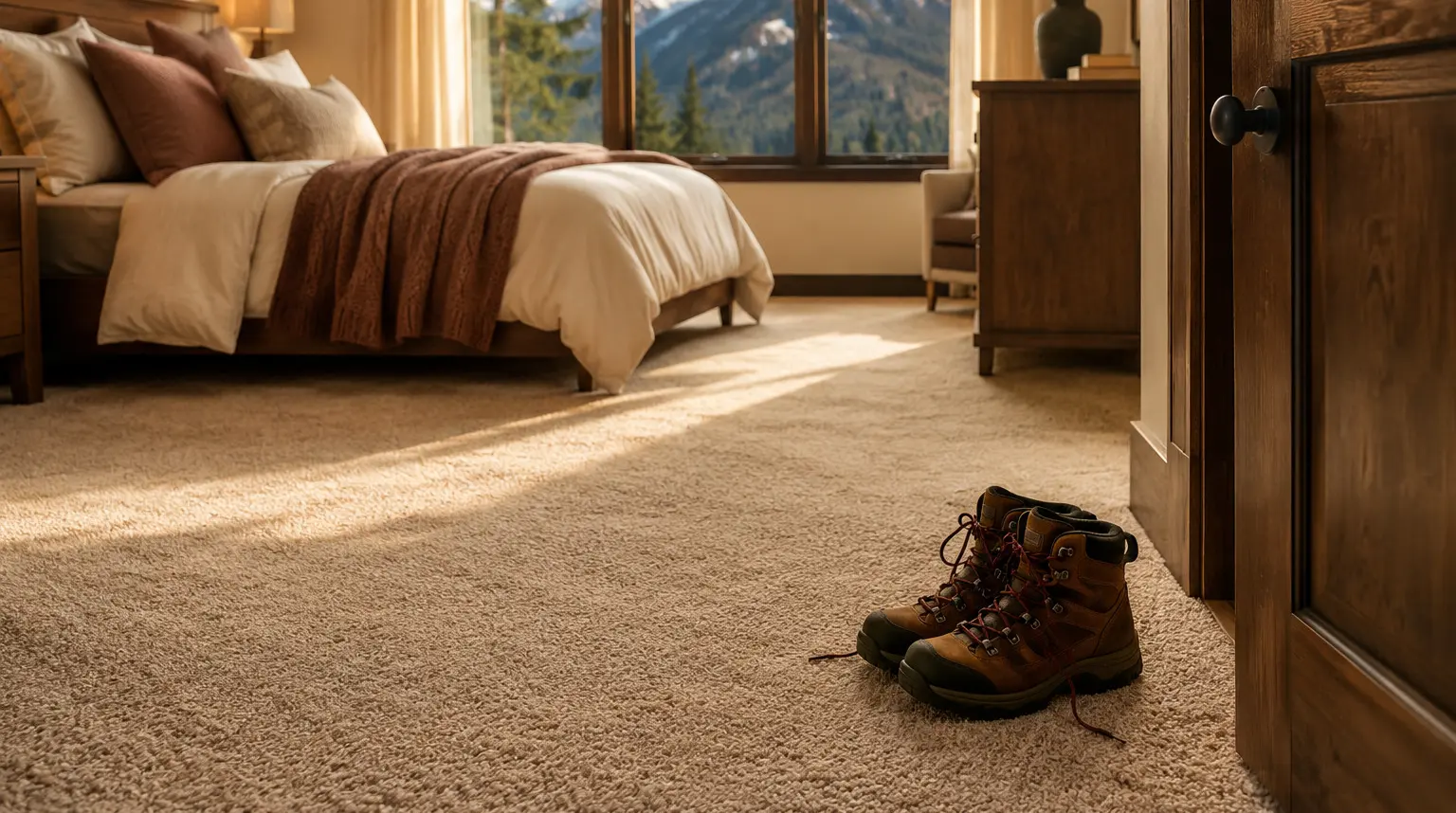
Bedrooms and upper-level living spaces face the least moisture exposure in a Crystal Bay remodel, which makes them the right starting point and the place where comfort can take priority over durability. Carpet earns its place here, where quiet matters more than moisture resistance, especially at an elevation where unheated rooms stay noticeably cold underfoot through the winter.
Solution-dyed nylon has become a popular fiber choice for this application. According to the Carpet and Rug Institute, solution-dyed fibers are pre-colored by introducing pigment into the polymer before extrusion, giving them outstanding fade resistance and colorfastness compared to fibers dyed after the fact. That resilience matters in a part-time home where humidity isn't always controlled by a running HVAC system, and a tighter, lower pile holds up better to the occasional dropped snow boot than a plush, high-pile carpet would.
Engineered Hardwood for Crystal Bay's Seasonal Swings
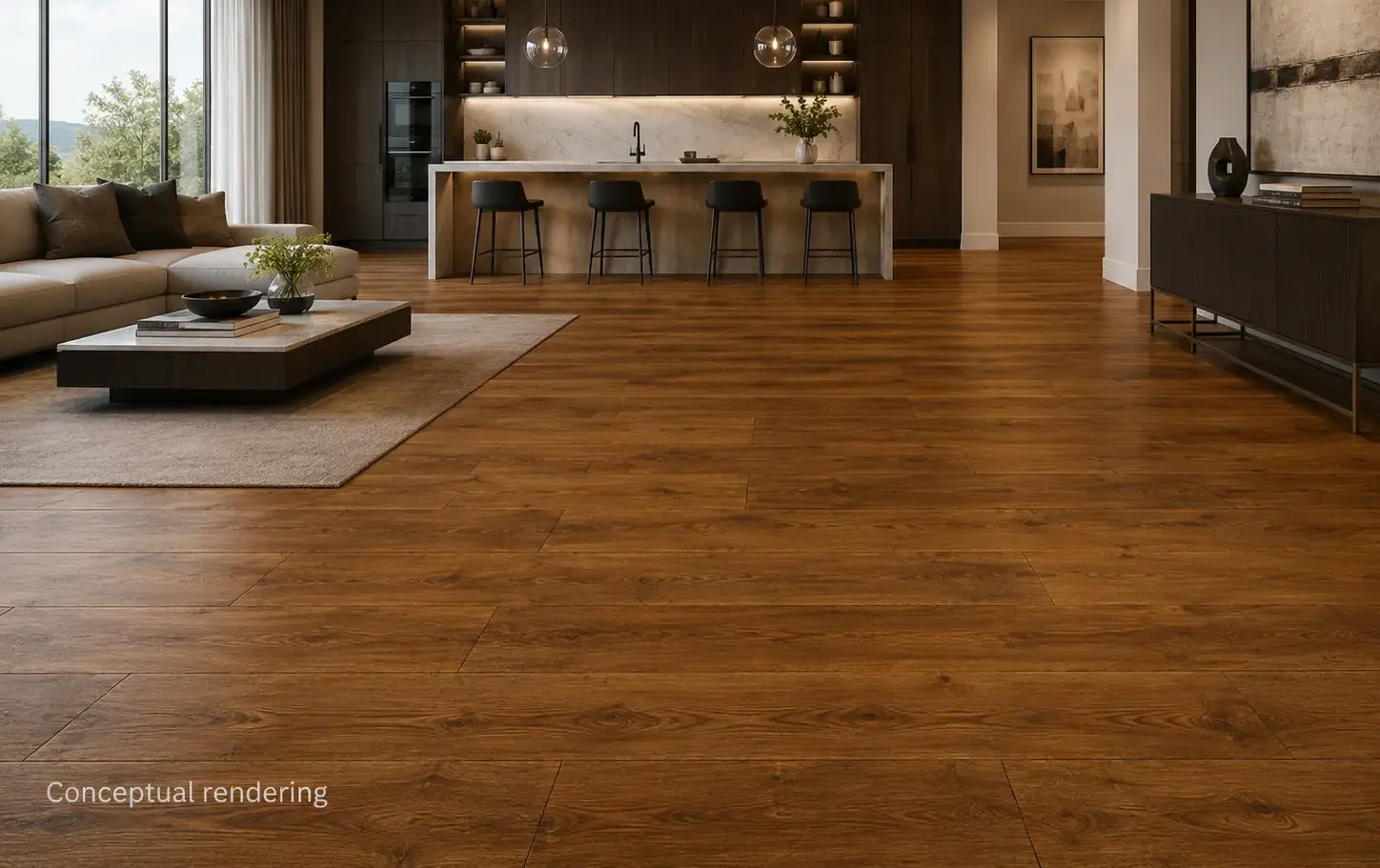
Moving from bedrooms into the living room, den, or primary suite raises the stakes slightly. These rooms see more daily use and more exposure to the home's seasonal humidity swings, which is where engineered hardwood outperforms solid wood. Its layered construction resists the cupping, crowning, and gapping that come with humidity changes in a home that isn't conditioned year-round. Solid hardwood is milled from a single piece of wood and moves with humidity in ways that become a real problem when a home sits empty for stretches. Engineered hardwood is built differently, with a hardwood veneer bonded to several layers of plywood or high-density fiberboard underneath. According to APA, The Engineered Wood Association, excess moisture at the time of installation is one of the most common causes of long-term flooring problems, which is why proper acclimation and moisture control matter as much as the material itself.
Wide-plank formats have become the more common choice in mountain remodels, both for the look and because fewer, wider boards mean fewer seams for moisture to work into. Most engineered products can also be sanded and refinished once or twice over their lifespan, depending on the thickness of the top veneer, so the material isn't necessarily a one-time investment.
Luxury Vinyl Plank and Tile for Moisture and Radiant Heat
Past the living spaces, entries, mudrooms, and kitchens face a different level of exposure entirely. These are the rooms where snow, mud, and daily foot traffic actually reach the floor, and where luxury vinyl plank and porcelain tile take over as the stronger choices. Both resist standing moisture, and both pair well with radiant subfloor heating, a common feature in North Shore remodels given how cold the shoulder seasons get at this elevation.
Vinyl plank is built with a waterproof core, so melting snow or wet boots don't threaten the material the way they would with wood, and most products click together without adhesive, which simplifies installation in the tight, oddly shaped mudroom layouts common in older cabins. It also transmits radiant heat efficiently without the expansion concerns that come with solid wood over a heated subfloor.
Porcelain tile holds up equally well in these same areas. According to the Tile Council of North America, true porcelain is defined by a water absorption rate of 0.5 percent or less, which is why it withstands repeated snowmelt and lake dampness without the sealing maintenance some natural stone requires. It's often the material of choice where the homeowner wants a heated floor underfoot without worrying about cracking or shifting over time.
Natural Stone for Entries, Floors, and Fireplaces
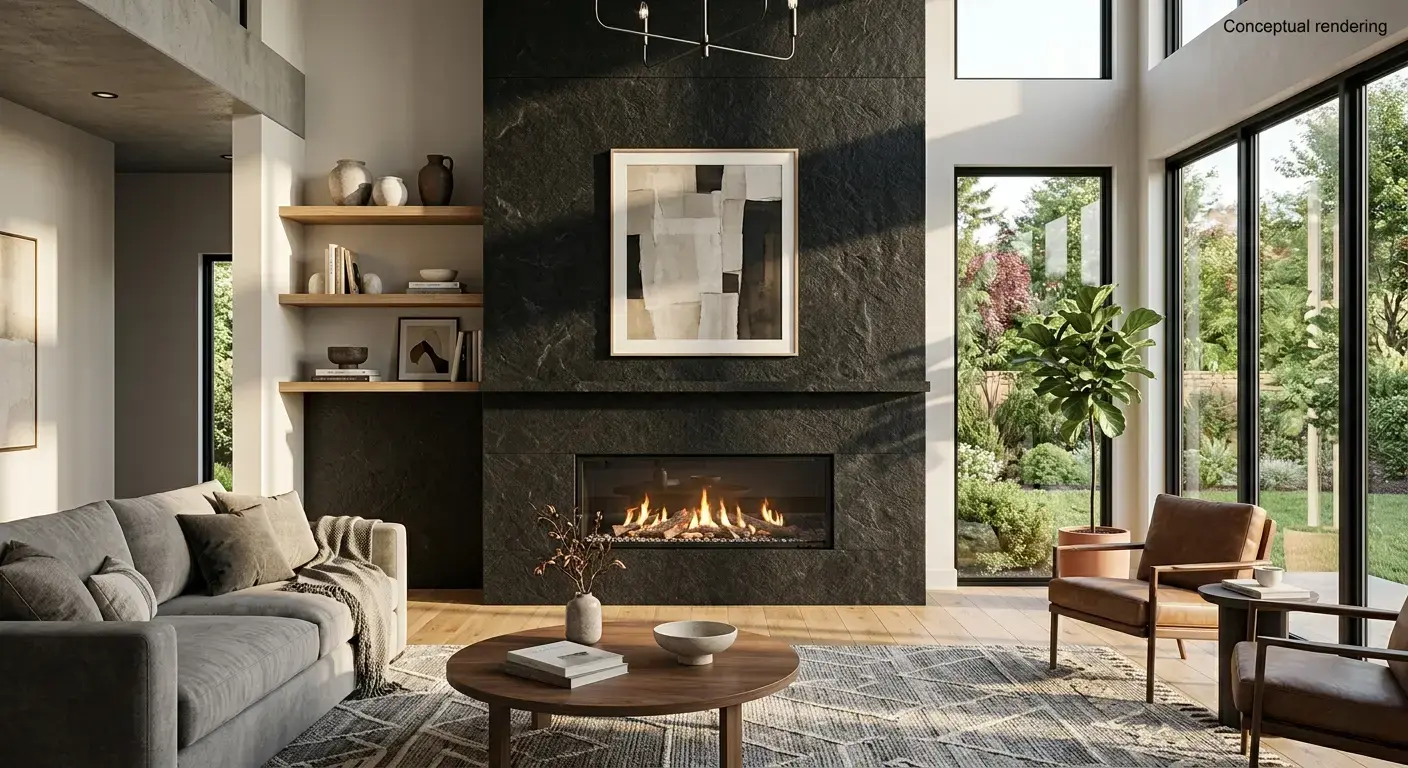
At the highest end of exposure and durability demands sits natural stone, particularly dolomite, quartzite, and marble. These materials handle the same entries and mudrooms as vinyl and tile, but bring a level of durability suited to the steepest, most exposed lots, along with a look that fits the classic Tahoe cabin aesthetic in a way engineered materials don't quite match.
Dolomite is one of the more versatile options. It comes in polished, honed, leathered, and specialty finishes, giving a remodel flexibility between a formal polished entry and a matte, textured honed finish that hides scuffing and salt residue through the winter months. Dolomite works on floors and walls indoors, and it's also a common choice for fireplace surrounds, which remain a focal point in most mountain home remodels regardless of budget.
Quartzite and marble are worth considering as well for homeowners who want the natural variation of true stone over an engineered look-alike. Both require periodic sealing to guard against moisture and staining in a home that isn't occupied full time. As the Natural Stone Institute notes, sealing doesn't make stone stain-proof, but it does make the surface more resistant to staining, and the right schedule depends on the specific stone and how the space is used.
Planning a North Shore Remodel Project
With the material choices mapped from lowest to highest moisture exposure, the remaining decisions come down to logistics. Steep, wooded lots can complicate material delivery and staging, and older cabins sometimes have uneven subfloors or additions built at different points in the home's history, which affects how much prep work a new floor needs. Homeowners planning a remodel around the off season should build in some flexibility, since winter weather can affect property access for stretches at a time. If you want to discuss material options or view products before finalizing your plans, visit our Reno showroom to explore available selections and speak with our team.
Conclusion
No single material works for an entire Crystal Bay home. The right approach is usually a mix, carpet or engineered hardwood in the rooms used daily, and vinyl, tile, or stone in the spaces that take on snow, moisture, and heavy traffic. Matching each room to its actual conditions, rather than choosing one flooring type for the whole house, tends to hold up better through the North Shore's seasonal swings and cost less to maintain over time.
For homeowners further along in the process, Nova Tile and Stone offers free design consultations and tile samples for $1 each. Slab materials such as granite, quartz, and marble are available to view in person at the Reno showroom.
Nova Tile and Stone
12835 Old Virginia Rd, Suite 24, Reno, NV 89521
(775) 331-6682
Frequently Asked Questions
Yes. At an elevation ranging from roughly 6,229 to over 6,800 feet, Crystal Bay sees wider daily and seasonal temperature swings than lower-elevation towns, which puts extra stress on solid wood flooring in particular.
Radiant subfloor heating shows up often in North Shore remodels because of how cold the shoulder seasons get at this elevation, and tile, stone, and luxury vinyl plank are the flooring types best suited to work with it.
Engineered hardwood and luxury vinyl plank tend to perform better than solid hardwood in homes that sit unconditioned for stretches, since they're less prone to the cupping and gapping that come with humidity swings in an unoccupied space.
Most natural stone in a high-moisture setting like the North Shore benefits from periodic resealing, though the right schedule depends on the specific stone and how the space is used. A leathered or honed finish tends to show wear and staining less than a polished surface between sealing cycles.
Tile samples are available for $1 each. Countertop and slab materials such as granite, quartz, and marble are viewed in person at the Reno showroom rather than taken home as samples.
Note: Some images on this page may be conceptual renderings created to illustrate design possibilities and may not depict actual installations.