Tile shower walls and natural stone shower walls differ mainly in maintenance and appearance: porcelain and ceramic tile resist water without sealing and cost less to install, while natural stone such as marble, travertine, and quartzite offers unique veining and fewer grout lines but requires periodic sealing to prevent staining and etching. For Roseville homeowners updating a primary bathroom or converting a tub into a walk-in shower, the right choice depends on how much upkeep fits the household and how large the shower's budget allows the installation to be. Browsing the full range of tile and stone options available at our Sacramento showroom can help narrow down which material fits a specific bathroom before any decisions are finalized.
Why This Decision Matters for Roseville Bathrooms
Many Roseville homes, whether in newer developments like Fiddyment Farm and Winding Creek or more established neighborhoods like Diamond Oaks and Woodcreek, are seeing bathroom updates as part of broader remodeling plans. The primary bathroom has become a focal point in many of these projects, with homeowners looking to create a calmer, more spa-like retreat. Shower walls play a large role in that transformation, since they cover the most visible surface area in the room and set the tone for the entire space.
Because a shower renovation is not something most homeowners repeat often, and because the materials involved carry different long-term costs and upkeep routines, it helps to understand what each option offers before committing to a design. A shower wall also has to perform under conditions unlike almost any other surface in the home: constant moisture, frequent temperature swings, and daily contact with soap, shampoo, and cleaning products. Both tile and natural stone can hold up well under these conditions, but they do so in different ways.
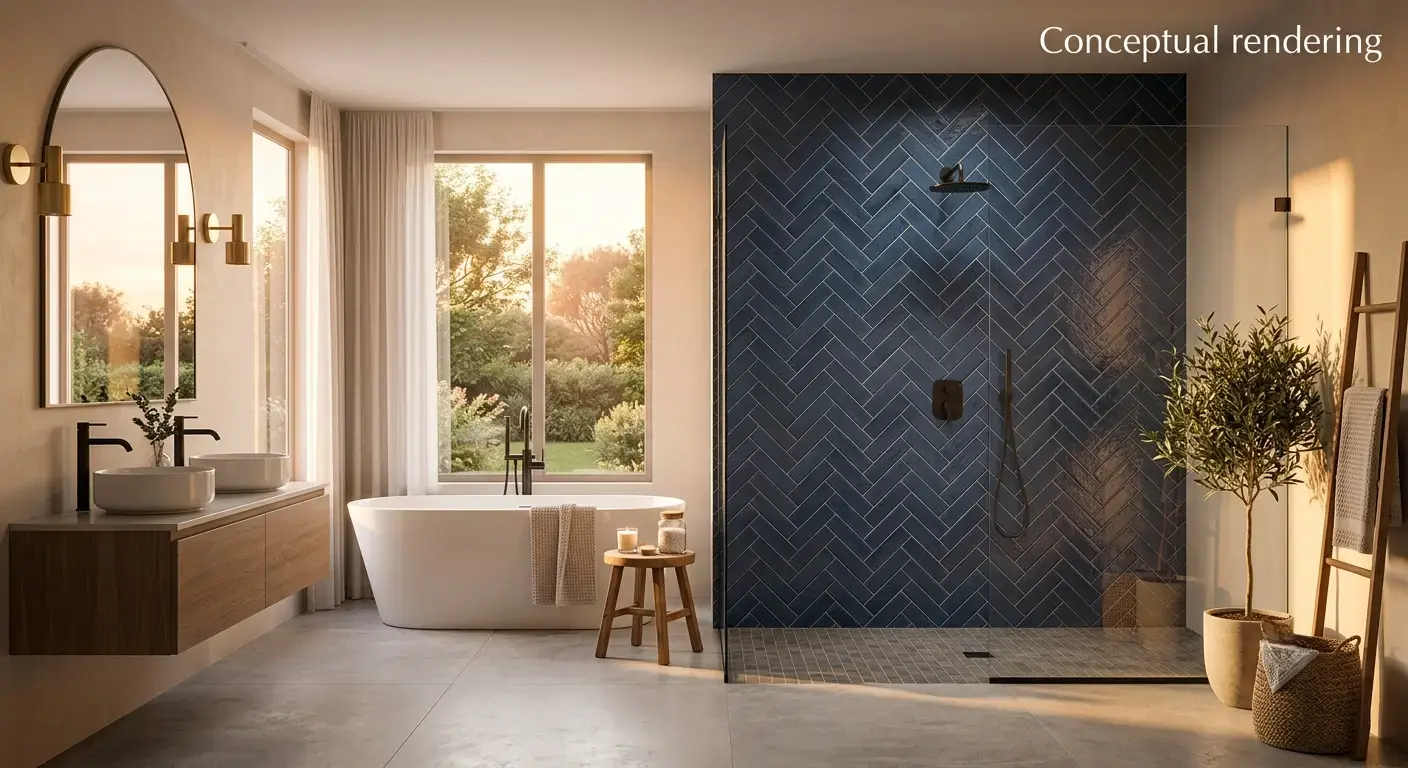
Tile Shower Walls: What to Expect
Porcelain and ceramic tile are the most common choices for shower walls, and for good reason. They come in an extensive range of colors, patterns, and finishes, from classic subway tile to large-format porcelain that mimics the look of natural stone or concrete.
Consistency. Manufactured tile offers predictable color and pattern matching across pieces, which makes it easier to plan a design in advance and order the exact quantity needed. This is particularly helpful for larger showers or when matching an accent wall to the surrounding tile field, since there is little risk of unexpected variation between boxes.
Water resistance. Porcelain tile has very low water absorption, which makes it well suited to constant moisture exposure in a shower. Genuine porcelain is defined by a strict water absorption threshold, and independent porcelain certification exists specifically to confirm a tile meets that standard rather than being mislabeled. Ceramic tile also performs well in wet areas, though it generally has a slightly higher absorption rate than porcelain.
Grout maintenance. Tile installations require grout lines, and grout needs periodic cleaning and occasional resealing to prevent staining or mildew buildup, particularly in a shower environment where moisture is constant. Grout color and width can also affect how much maintenance a shower requires over time, with narrower grout lines generally showing less buildup.
Cost. Tile is typically more budget-friendly than natural stone, especially for larger shower enclosures or full wall-to-ceiling installations. This cost advantage often extends to installation as well, since tile setting is a more standardized process than fitting large stone slabs.
Design flexibility. Because tile comes in many sizes, from small mosaics to large-format panels, homeowners have more flexibility in achieving different visual effects, including herringbone patterns, vertical stacking, or accent niches. Tile also allows for easier mixing of textures and finishes within a single shower, such as a matte field tile paired with a glossy accent strip. A slate-look porcelain tile is one example of how a manufactured option can bring a natural, textured appearance to a shower wall while still meeting the installation standards set out in the ANSI tile specifications.
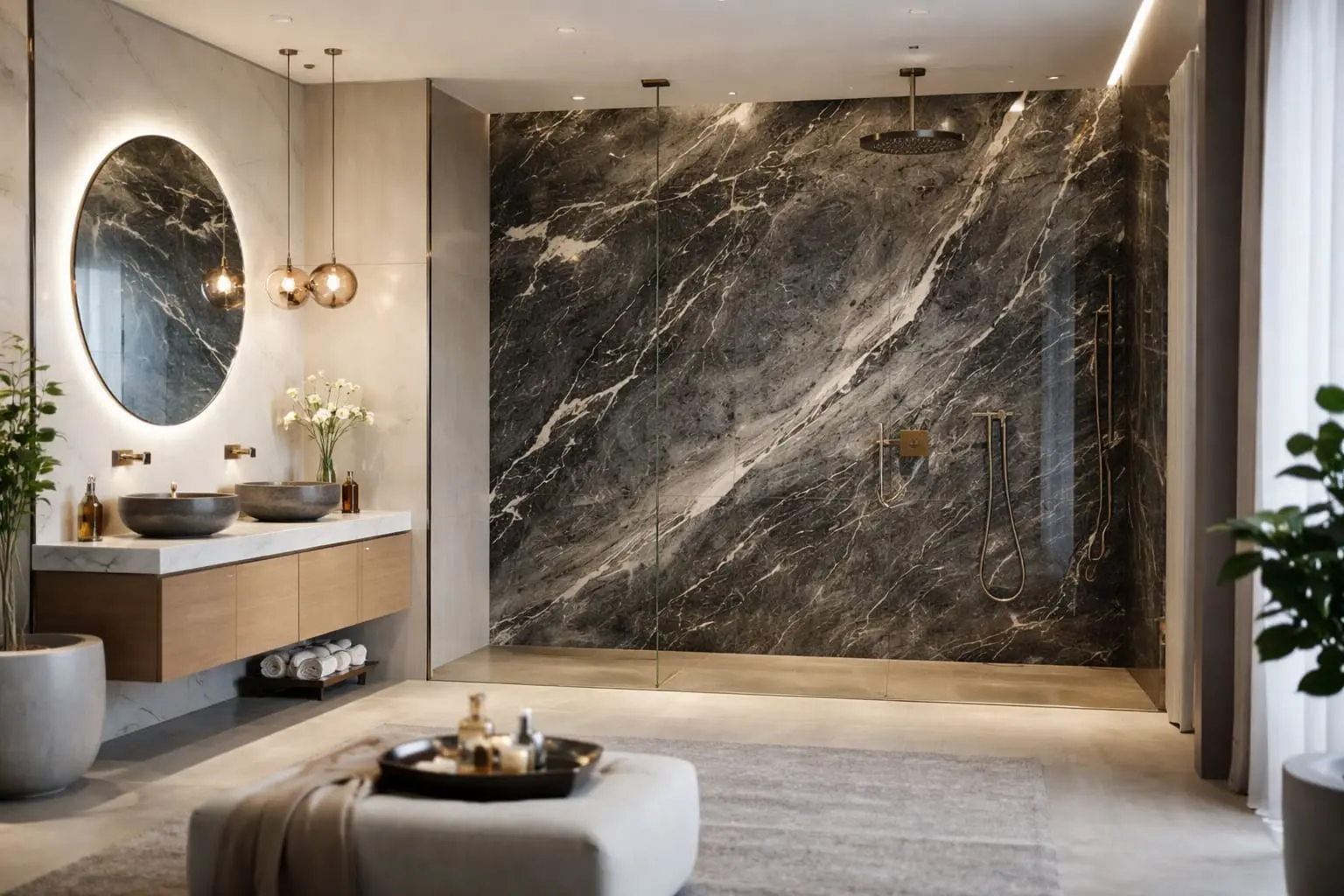
Natural Stone Shower Walls: What to Expect
Natural stone, including marble, travertine, and quartzite, brings a one-of-a-kind quality to a shower that manufactured tile cannot fully replicate. Each slab or tile cut from natural stone has its own veining and color variation, so no two installations look exactly alike.
Uniqueness. Since stone is a natural material, veining patterns and color shifts are part of the appeal. Homeowners who want a shower that feels custom to their home often gravitate toward stone for this reason. Bookmatched slabs, where two adjacent pieces are cut and mirrored to create a symmetrical veining pattern, are a common way to showcase this quality on a shower's main wall. Browsing available slabs and tile online ahead of time can help homeowners get a sense of veining and color range before visiting in person.
Sealing requirements. Most natural stone is porous and needs to be sealed, both at installation and periodically afterward, to protect against water absorption and staining. This is an ongoing maintenance step that tile does not typically require. The frequency of resealing depends on the specific stone and how much daily water exposure the shower sees.
Larger format options. Stone slabs can be cut to cover an entire shower wall with minimal or no seams, which reduces grout lines significantly compared to standard tile installations. This can create a more seamless, uninterrupted look across the wall.
Temperature and texture. Many natural stones stay cooler to the touch than porcelain, with a texture that feels noticeably different against the hand. Some homeowners like this quality on a shower wall, while others find a cooler surface less comfortable to lean against.
Cost. Natural stone generally costs more than tile, both in material and installation, due to the complexity of cutting, fitting, and sealing larger format pieces. Slab handling also typically requires more specialized equipment and labor than standard tile setting.
Comparing Maintenance Over Time
One of the biggest differences between these two materials shows up after installation, not during it.
Tile shower walls require attention mainly at the grout lines. Grout can be sealed initially, and depending on the sealant used, it may need to be reapplied every year or two to keep it resistant to mildew and discoloration. The tile surface itself, particularly porcelain, requires little more than regular cleaning with mild soap and water.
Natural stone shower walls need sealing at installation and then resealing periodically, often annually, depending on the specific stone type and how much water exposure the shower sees. Skipping this step can lead to water absorption, staining, or etching over time, particularly with softer stones like marble. Travertine and quartzite each have their own sealing needs as well, and a design consultant can help match a sealing schedule to the specific stone selected.
Homeowners who want the lowest maintenance option often lean toward tile. Homeowners who are comfortable with a bit more upkeep in exchange for the natural variation and larger format of stone often choose the latter. Neither choice is inherently better; the right fit depends on how much time a household wants to spend on upkeep versus the look they are trying to achieve.
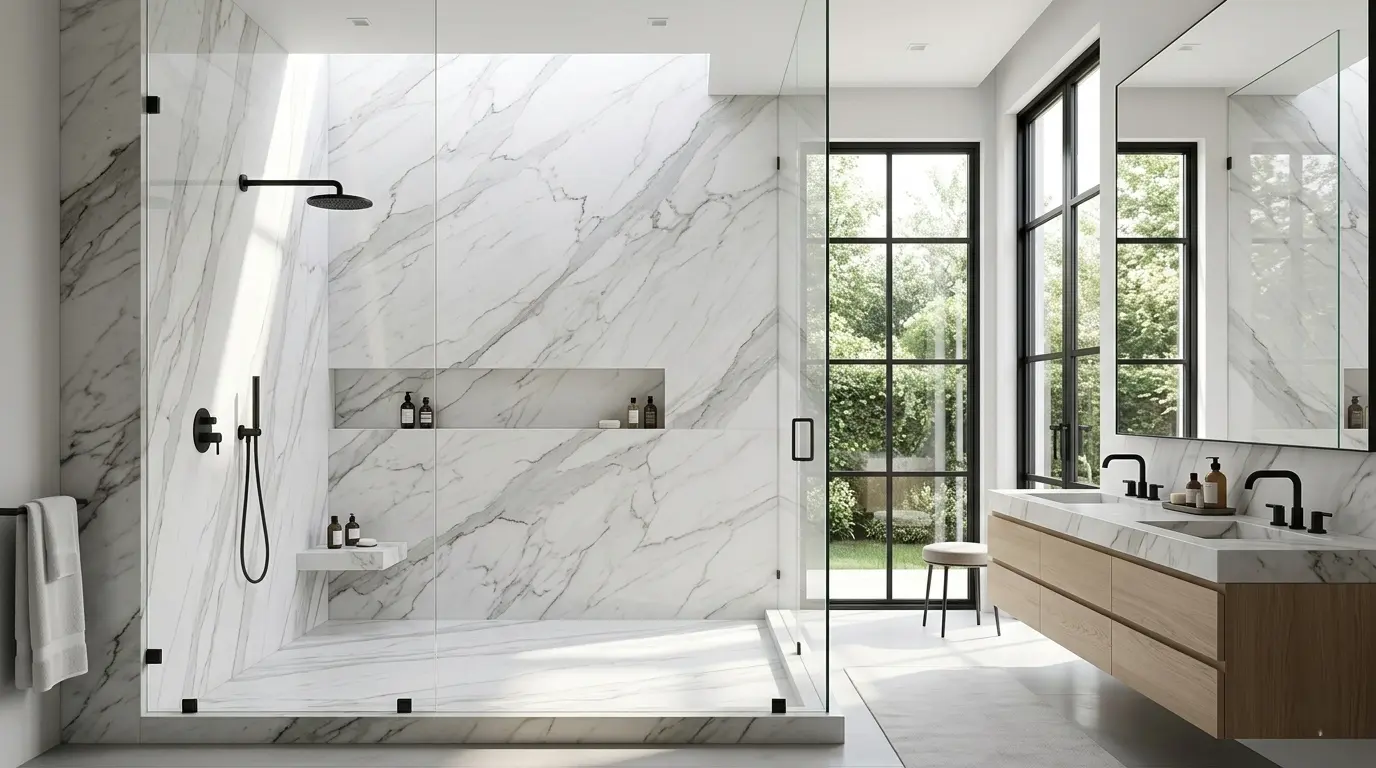
Which Option Fits Different Roseville Bathroom Styles
Bathroom remodels in the Roseville area currently lean toward a few recognizable styles, and each pairs somewhat differently with tile or stone.
Spa-inspired primary bathrooms. For homeowners building out a rainfall shower, built-in bench, or steam shower feature, natural stone slabs with minimal seams can reinforce that calmer, retreat-like feel. Large-format porcelain tile that mimics stone is a common alternative for the same aesthetic at a lower price point.
Guest and secondary bathrooms. These spaces see less daily wear and lower design budgets, making tile a practical choice that still allows for a range of pattern and color options without a heavy sealing commitment.
Family bathrooms with heavy daily use. Porcelain tile's water resistance and lower maintenance needs make it a fitting choice for busy households where a sealing schedule is easier to overlook. Households with children often favor this lower-maintenance path.
Homes preparing for resale. Buyers researching new construction in Roseville often compare upgraded finishes against builder-grade standards. Both tile and natural stone read as upgrades, but stone slab showers with minimal seams tend to stand out more in listing photos and walkthroughs.
Questions to Ask Before Choosing
Before settling on a material, it helps to walk through a few practical questions with a design consultant:
- How much ongoing maintenance are you willing to commit to, including periodic resealing?
- Is the shower a high-traffic space used daily by multiple household members, or a secondary bathroom with lighter use?
- Do you want a highly customized, one-of-a-kind look, or a more predictable and repeatable pattern?
- What is the budget range for the project, including both material and installation costs?
- Are you renovating to stay in the home long-term, or preparing the home for resale?
Working through these questions with a showroom consultant can help match the material to the household's actual habits rather than aesthetics alone. Bringing photos of the bathroom's current layout, along with any inspiration images, can also help narrow down options more quickly during a design consultation.
Conclusion
Tile and natural stone shower walls each bring different strengths to a bathroom remodel. Tile offers water resistance, budget flexibility, and lower ongoing maintenance, while natural stone offers a unique, large-format look with a sealing routine to match. For Roseville homeowners weighing a shower renovation, the right choice comes down to how much upkeep fits into daily life, the style of the bathroom, and the overall project budget. Our Sacramento showroom, located at 6100 Warehouse Way, Sacramento, CA 95826 (get directions), has both tile and natural stone samples on display for homeowners who want to compare texture, color, and finish in person before making a final decision. The showroom can be reached at (916) 913-6682, and homeowners can also learn more about our background and approach to design before scheduling a visit.
Note: Some images on this page may be conceptual renderings created to illustrate design possibilities and may not depict actual installations.
Frequently Asked Questions
Sealing frequency depends on the type of stone and how much daily water exposure the shower gets. Some stones need resealing annually, while denser stones may go longer between applications. A design consultant can recommend a sealing schedule based on the specific stone chosen.
Yes. Large-format porcelain tile is manufactured to replicate the veining and color variation of marble, travertine, and other natural stones, often at a lower cost and with less maintenance.
Natural stone slabs can typically be cut to cover larger areas with minimal seams, which reduces the number of grout lines compared to standard tile sizes. Large-format porcelain tile also reduces grout lines compared to smaller tile.
Porcelain tile's lower maintenance needs and water resistance often make it a practical choice for busy households where a sealing schedule might get overlooked.
Yes. Many homeowners use natural stone for an accent wall, niche, or bench top while using tile for the remaining walls and floor, which can balance cost with a custom look.