Tile walls are made up of individual pieces set in a pattern with grout lines between them. Slab walls use one continuous piece of natural stone or porcelain to cover most or all of a surface, with far fewer seams. Both create a striking finished wall, but they differ in maintenance, seam count, and how a room ultimately reads once it's done.
For homeowners near Lake Tahoe, that difference tends to come up early in a bathroom remodel, fireplace surround, or accent wall project. Tahoe City homes often blend rustic mountain character with cleaner modern lines, so the wall material chosen usually sets the tone for the whole room.
This guide breaks down how tile and slab walls compare, from durability and upkeep to which one fits a mountain or lake house style, so the decision feels like an informed choice rather than a guess.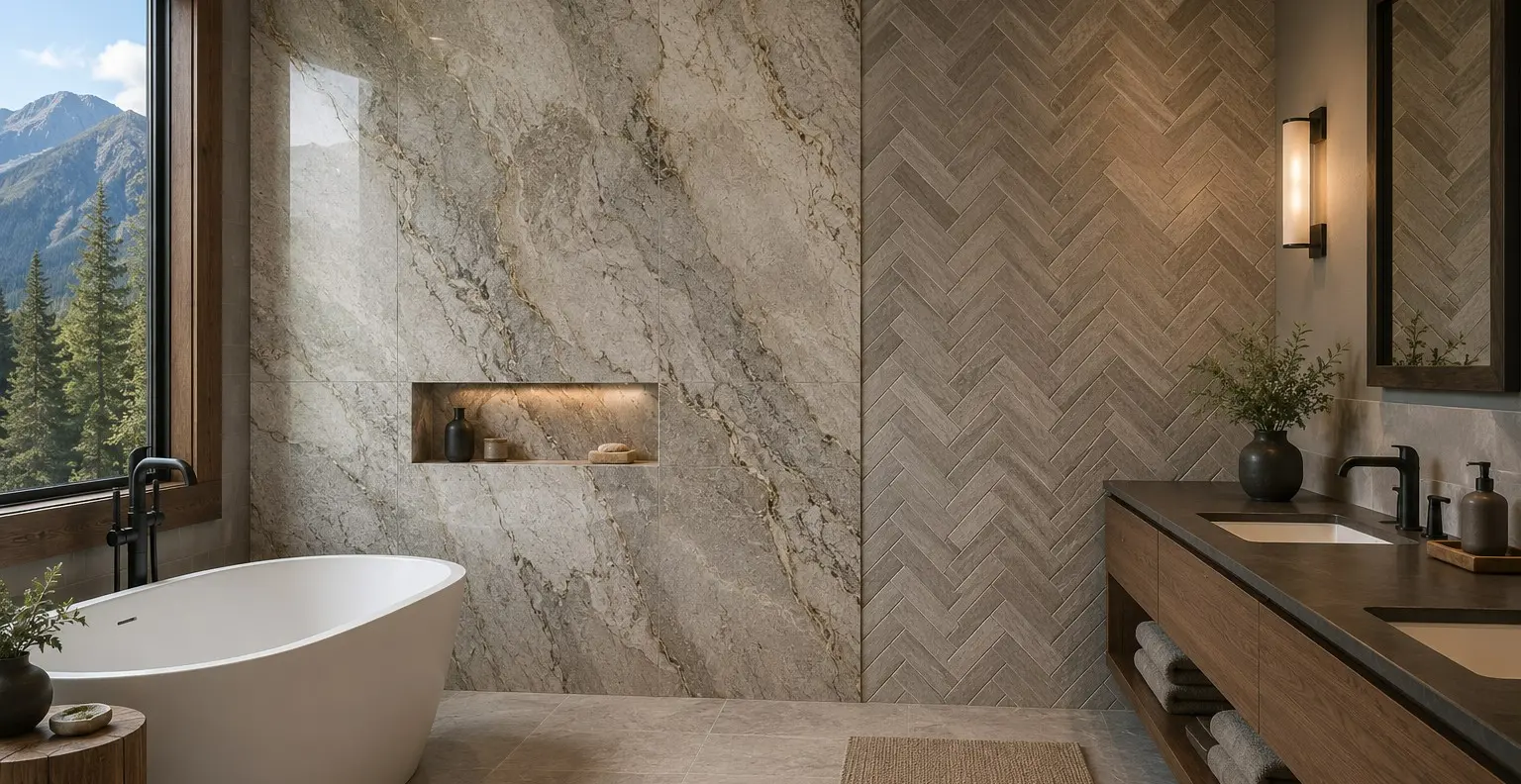
The Real Difference Between Tile and Slab Walls
Wall coverings generally fall into two broad categories. Tile refers to individual pieces, whether porcelain, ceramic, or natural stone, cut into consistent shapes and set in a pattern with grout lines between them.
Slabs work differently. They are cut from larger blocks of natural stone such as granite, marble, or quartzite, or manufactured as oversized porcelain panels, and installed with far fewer seams. At Nova Tile and Stone, both formats are available at our Minden showroom, so it helps to understand how they compare before settling on one for a specific room.
The full range of surfaces carried across every showroom spans both categories, which means the decision usually comes down to how a homeowner wants a wall to read visually rather than which material is objectively better.
Engineered slabs, meaning porcelain and quartz, add another layer of choice. These materials are manufactured to mimic the look of granite, marble, travertine, onyx, limestone, quartzite, slate, wood, concrete, and cement, so a homeowner can lean into a specific aesthetic without being limited to what a quarry happens to produce in that exact pattern.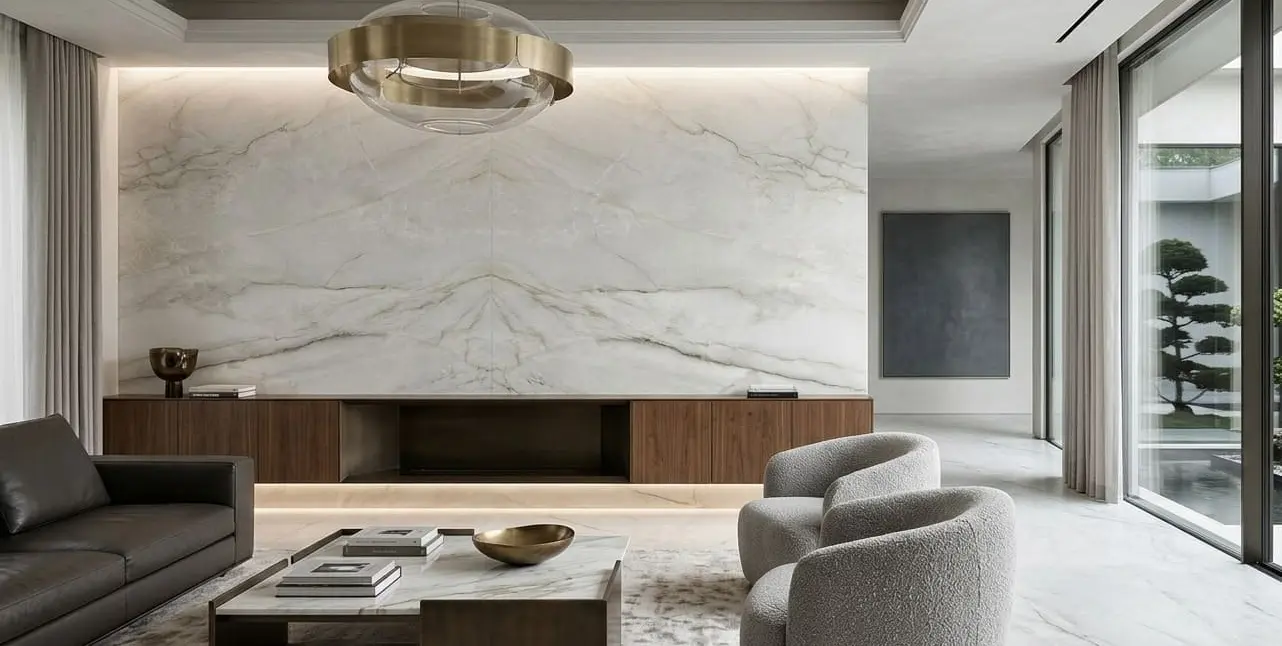
What Slab Walls Bring to a Tahoe City Space
Slab walls are prized for their continuous, uninterrupted surface. Because a single piece of stone or porcelain can cover most or all of a shower or accent wall, there are far fewer grout lines to collect grime or support mildew growth over time.
Natural stone slabs such as granite, marble, and quartzite each carry their own veining and color movement, so no two installations look quite alike. Anyone curious about what is currently on hand can browse the live slab inventory to see actual bundles of stacked slabs rather than a rendering.
Granite and quartzite slabs also hold up well in higher traffic or higher moisture rooms, though proper care will help preserve their appearance over the years. Marble slabs bring a softer, more classic look and work well indoors, but they are not recommended for exterior applications.
Porcelain slabs are worth considering too. They are moisture resistant, but standing water should still not be left sitting for long periods, and their non-porous makeup means they can perform well in humid bathroom settings without the routine sealing that natural stone typically needs.
Fireplace walls are another popular application in homes throughout the area, especially in great rooms built around a large hearth. Granite, marble, quartzite, travertine, and porcelain slabs are all suitable for fireplace surrounds, offering a seamless backdrop that highlights natural veining or a clean engineered pattern without visible grout lines interrupting the design.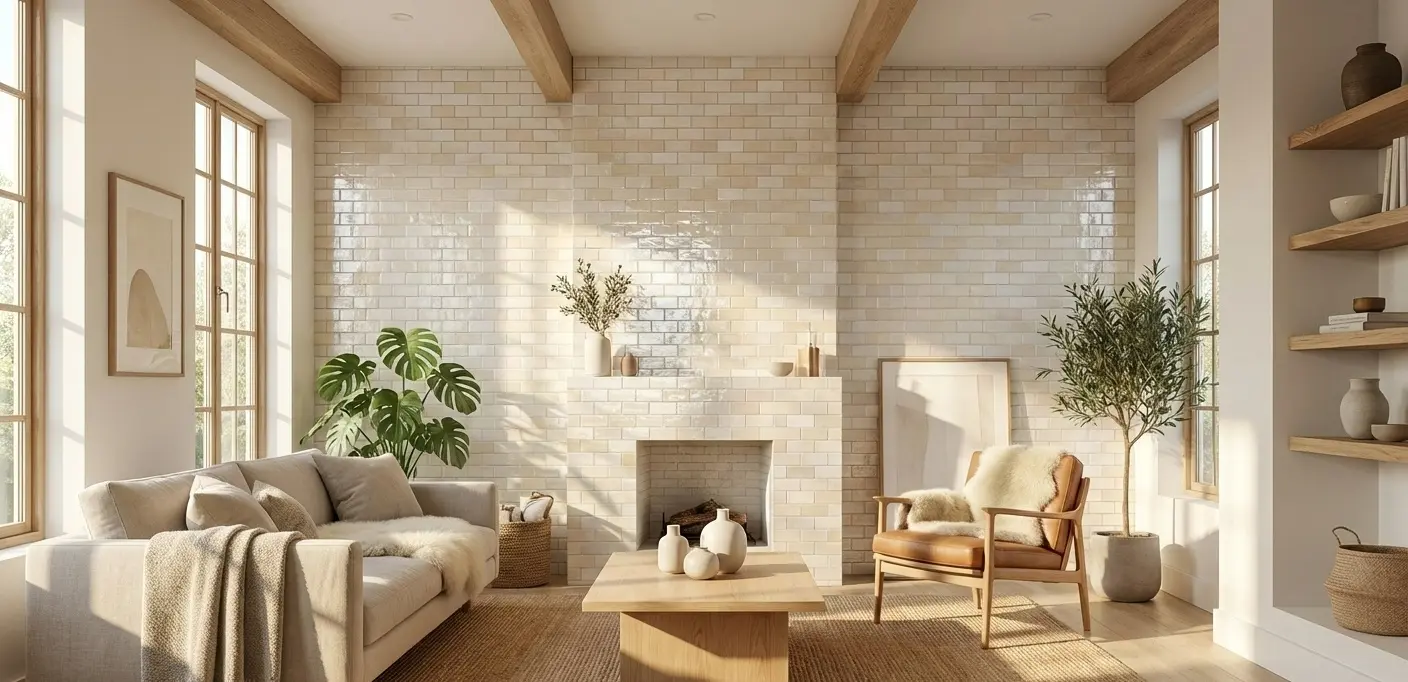
Where Tile Still Makes Sense for Walls
Tile has not lost relevance just because slab walls have grown popular. Smaller and mid format pieces allow for more intricate layouts, including herringbone, stacked, and mosaic patterns that a single slab cannot replicate.
Homeowners who want to mix textures or colors across one wall will find that a wide tile selection makes that kind of layering possible in a way slab simply cannot. Tile is also easier to fit into smaller or oddly shaped walls, since individual pieces can be cut around fixtures, windows, or the angled ceilings common in mountain style homes.
Porcelain and ceramic tile now come in finishes that mimic natural stone and wood, so the visual gap between tile and slab has narrowed quite a bit. Reviewing tile by type is a useful way to compare porcelain, ceramic, and natural stone side by side before deciding.
Many local projects also combine both approaches on a single wall, using a slab as the main field and tile as a border, niche liner, or transition into an adjoining space. This kind of layering keeps the clean look of a slab in the primary sightline while still bringing in some of tile's pattern options at the edges.
Comparing Durability and Maintenance
Both tile and slab walls can perform well over time, but they age differently. Grout lines in a tile wall need periodic cleaning and occasional resealing, while a slab wall's seams are usually limited to corners and transitions.
According to one detailed comparison of slab and tile shower wall systems, the reduced seam count on a slab installation is one of the biggest reasons homeowners lean toward it for wet areas, since fewer seams generally mean less opportunity for water to work its way behind the surface.
That said, both systems still depend on proper waterproofing behind the wall. A separate resource on sealing and waterproofing for stone shower walls points out that natural stone, whether cut into tile or a slab, is porous to some degree and benefits from routine sealing regardless of format.
Porcelain, in either tile or slab form, is non-porous, but regular cleaning is still recommended to keep it looking its best. Quartz walls are similarly easy to maintain, though harsh cleaners should be avoided no matter which material ends up on the wall.
Style Considerations for Lake Tahoe Interiors
Homes around Tahoe City often lean into natural textures, warm wood tones, and stone accents that echo the surrounding Sierra Nevada landscape. A leathered granite or quartzite slab wall can bring some of that outdoor texture indoors without feeling heavy handed.
Tile brings a different kind of flexibility to this look. Wood look and stone look porcelain tile can extend a cabin's natural palette onto a bathroom or fireplace wall, and browsing tile organized by style is a useful way to see how various finishes pair with a mountain or lake house aesthetic.
Because the area sees real seasonal swings, from summer sun through heavy mountain snowpack, interior materials often get chosen with an eye toward how they will read across different light throughout the year. A quartzite slab wall with cool gray tones can feel crisp in winter light, while a warmer travertine or wood look porcelain tile can soften a space during darker months.
Whichever direction a homeowner leans, matching the wall material to the rest of the home's finishes, from flooring to countertops, keeps the overall design feeling intentional rather than pieced together.
Choosing the Right Option for Your Project
There is no single correct answer between tile and slab walls. The right choice depends on the room, the look a homeowner is after, and how much seam or grout upkeep feels manageable long term.
Seeing both materials in person tends to make the decision easier, since photos and swatches rarely capture how a slab's veining or a tile's texture will actually look under real light. Our Minden showroom serves Douglas County and the surrounding Sierra Nevada region, including areas around Lake Tahoe. It's roughly an hour's drive from the north shore, but many homeowners planning a project near Tahoe City find it worth the trip to see materials firsthand before committing to a wall.
Our Minden location is at 2548 Business Pkwy, Minden, NV 89423, and can be reached at (775) 783-4970. The exact spot is also mapped out on Google Maps for anyone planning the drive ahead of time. Free tile samples can be taken home from our showroom to see how a material looks in an actual space and under real lighting before committing to a full wall.
For anyone ready to talk through a specific project, booking a free design consultation at our Minden location is a straightforward way to get expert input without any sales pressure.
Conclusion
Tile and slab walls each bring something different to a Lake Tahoe home, and the right pick usually comes down to priorities rather than one option being universally better. Fewer seams and a continuous look point toward slab, while more layout flexibility and easier tile-by-tile repairs point toward tile.
There is no wrong answer here, just a better fit for a specific room and how a homeowner wants to live with it long term.
Frequently Asked Questions
Tile is built from separate pieces arranged in a pattern, with grout joints running between each one. A slab wall instead uses a single, continuous piece of stone or porcelain across most or all of the surface, leaving far fewer seams to deal with.
Slab walls tend to have fewer seams for water to work into, which can make cleaning easier, though both tile and slab walls still need proper waterproofing behind the surface to perform well in humid spaces.
Slabs can be cut to fit smaller spaces, though very tight or oddly shaped bathrooms sometimes work better with tile, since individual pieces are easier to fit around fixtures and corners.
It depends on the stone. Granite and quartzite are suitable for outdoor use, but marble is not recommended for exterior applications due to its sensitivity to the elements.
Tile generally allows for more pattern variety, since smaller pieces can be arranged into layouts like herringbone or mosaic that a single slab cannot replicate.