The biggest downside of quartz countertops is heat sensitivity: the resin that binds the material together is a plastic, and it's prone to melting at sustained temperatures above roughly 300°F, which can cause scorch marks, discoloration, or cracking from hot cookware. Beyond heat, quartz also fades with prolonged sun exposure, isn't suited for outdoor installations, carries a higher price tag than many alternatives, and can show visible seams on larger layouts. None of these are dealbreakers for most kitchens, but in a high-desert, high-sun city like Reno, the heat and UV sensitivity matter more than they would in a shadier climate.
Quartz is an engineered material made from ground natural quartz bound together with polyester resins and pigments, typically around 90 to 94 percent stone by weight. That resin is what gives quartz its color consistency and stain resistance, but it's also the source of most of its weaknesses. Understanding where the resin creates limits helps you decide whether quartz fits your kitchen, your budget, and your local conditions.
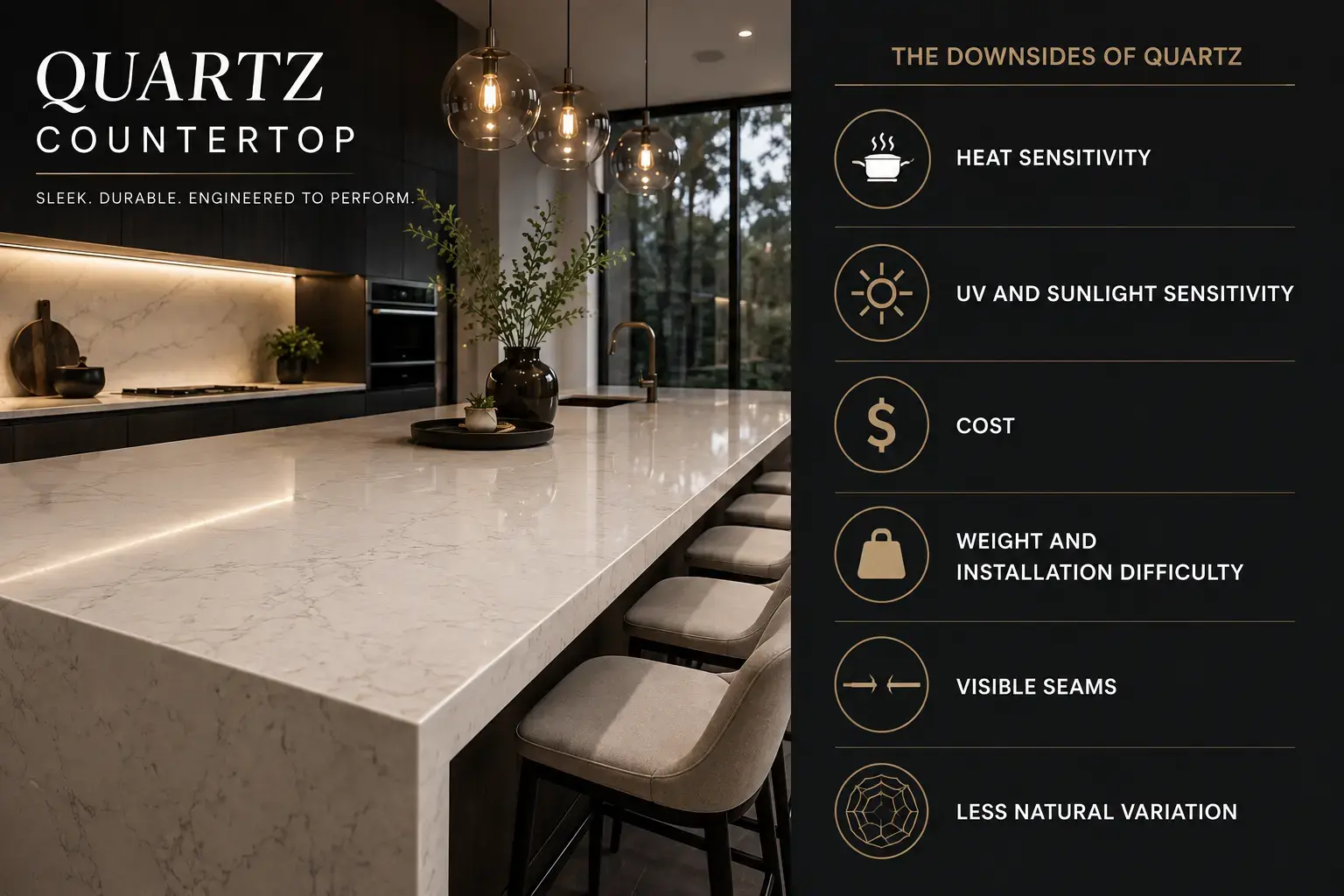
The Main Downsides of Quartz Countertops
Heat sensitivity. Quartz can generally tolerate everyday warmth, but the resin binders begin to soften and melt at sustained temperatures above roughly 300 degrees Fahrenheit. A pot straight off the stove or a pan pulled from a 400-degree oven can cause scorch marks, discoloration, or even hairline cracking from thermal shock, especially if a very hot pan meets a cool countertop surface all at once. Quartz needs a trivet more consistently than granite or quartzite, which tolerate direct heat better, but a trivet is good practice for any countertop.
UV and sunlight sensitivity. This is one of the most overlooked downsides. Direct, prolonged sunlight breaks down the resin over time, causing fading, yellowing, or a cloudy look, particularly in white and light-colored slabs. It's the reason quartz is considered strictly an indoor material.
Cost. Quartz sits toward the upper end of the countertop price range, typically costing more per square foot than laminate or tile. The total is shaped more by edge profiles, cutouts, and slab layout than by the base material alone.
Weight and installation difficulty. Quartz slabs are heavy and require precise, professional cutting and leveling. This has nothing to do with the resin; it comes down to slab density. DIY installation isn't realistic, and older or lower-quality cabinetry may need reinforcement before a slab goes in.
Visible seams. Quartz slabs come in fixed manufactured sizes, so on larger islands or wraparound counters, seams can be more noticeable than with a heavily patterned natural stone, though a skilled fabricator can minimize how much they stand out.
Less natural variation. Quartz patterns are engineered rather than formed by geology, so even the most convincing granite or marble look-alikes are, by design, more uniform and repeatable than an actual natural stone slab.
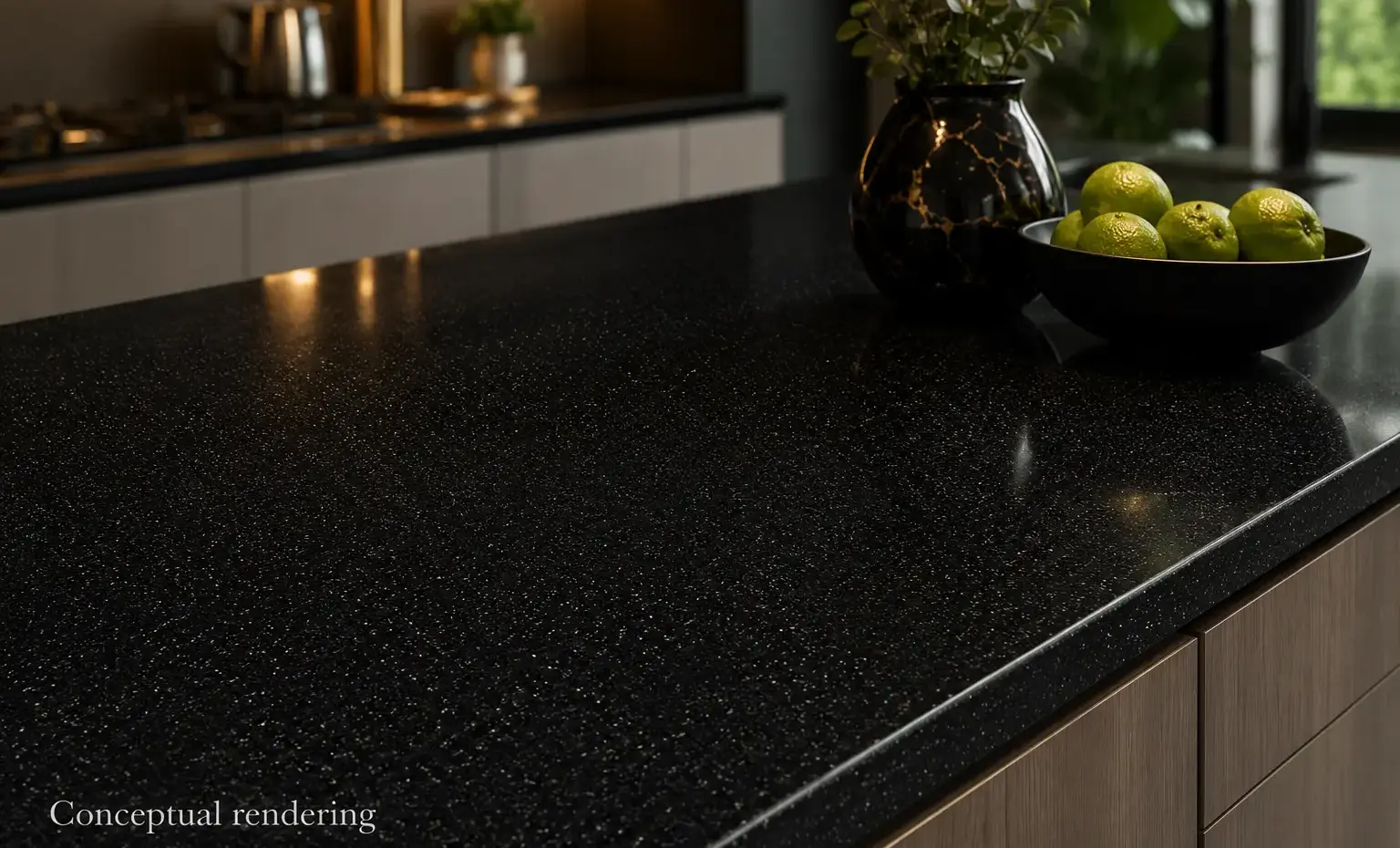
Why Reno's Climate Puts a Few of These Downsides Front and Center
Of the six downsides above, heat and UV sensitivity are the two that Reno's setting actively amplifies. The other four downsides (cost, weight, seams, and uniform appearance) are worth knowing regardless of where you live, but they don't shift much based on geography. Reno sits in a high-desert basin at roughly 4,500 feet elevation, with the Sierra Nevada rising immediately to the west and the Virginia Range to the east. That elevation means more direct, less-filtered sunlight year-round, and Reno's high-desert summers bring long stretches of intense, cloudless daylight through south- and west-facing kitchen windows, which is exactly the kind of exposure that fades and clouds quartz over time.
That same sun-drenched climate is also why quartz isn't the right call for outdoor kitchens, covered patios, or bar tops built to take in mountain or valley views, a common request in this area given how much of the year is comfortable for outdoor living. If an outdoor build is part of the plan it's worth having that conversation with a designer before falling in love with a specific quartz slab.
Quartz vs. Natural Stone: Weighing the Trade-offs
If heat and sun exposure are real concerns for your space, it's worth comparing quartz against the natural stone options. Granite and quartzite both handle direct heat and prolonged sunlight noticeably better than quartz, since they don't rely on a resin binder that can degrade. The trade-off is that natural stone is porous and typically needs periodic sealing, while quartz is sealed during manufacturing and generally doesn't require resealing.
Granite and quartz are generally priced in a comparable mid-range tier, so the decision often comes down to where the countertop will live rather than budget alone. A quartz island away from direct sun in an interior kitchen plays to its strengths. A sun-drenched kitchen with a wall of west-facing windows, or anything with outdoor exposure, tends to favor a natural stone or a sintered stone surface instead.
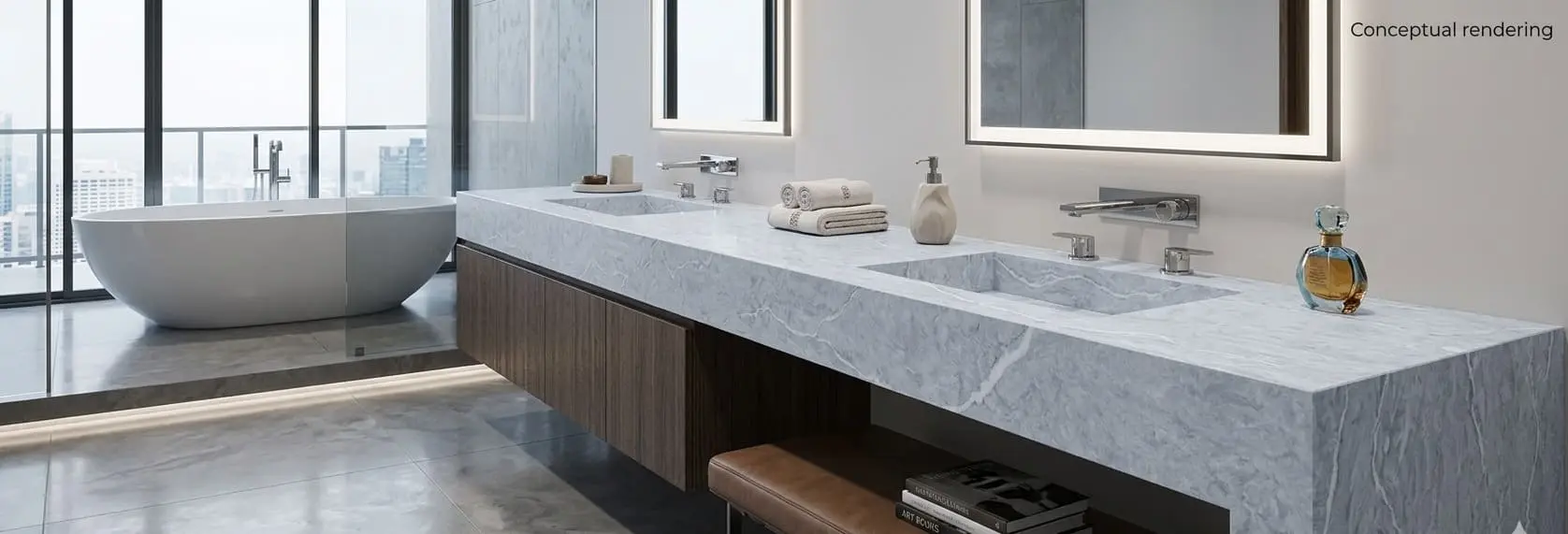
How to Minimize These Downsides If You Choose Quartz
None of this means quartz is a poor choice; it just means a few habits go a long way:
- Trivets, always. Never let a hot pan or dish touch the surface directly.
- Cover exposed windows. A film or window treatment goes a long way in a bright kitchen.
- Interior use only. Rule it out for patios, outdoor kitchens, or bar tops.
- Talk seam placement with your fabricator before the slab is cut.
- Have cabinets checked if you're working with an older base structure.
Working through this list before you order a slab is usually easier with an actual sample in hand rather than a photo on a screen, which is where a showroom visit helps.
Visiting Nova Tile and Stone in Reno
Nova Tile and Stone's Reno showroom, at 12835 Old Virginia Road, Suite 24, Reno, NV 89521, sits just off I-580 and US-395, and the team can be reached at (775) 331-6682. As a family-owned, direct stone importer, Nova Tile and Stone carries quartz along with natural stone, sintered stone, and porcelain slabs, so you can view a quartz slab alongside a granite or quartzite slab in the showroom and see how each handles light in person. Nova Tile and Stone's design team offers free consultations to walk through material options for your specific kitchen, including how much direct sun a space gets and whether that should steer you toward or away from quartz. Nova Tile and Stone supplies the materials; installation is handled by your own fabricator or contractor.
Conclusion
Most of quartz's downsides trace back to the resin that holds the slab together. That same resin is also what struggles with sustained heat and direct sunlight. Weight and seam visibility are a separate matter, tied to how dense and how large manufactured slabs are rather than to the resin itself, but they're worth planning around all the same. Put together, the decision comes down to fit rather than a simple better-or-worse comparison. In a high-desert, high-sun city like Reno, that fit mostly hinges on one question: how much direct sunlight and heat will this particular countertop see, day to day, in this particular kitchen. Answering that honestly before committing to a slab is what keeps these downsides theoretical instead of something you're dealing with a few years in.
Frequently Asked Questions
Sometimes, but not as easily as with natural stone. Minor discoloration can occasionally be buffed out, and small chips can be color-matched with resin fill, but matching the fill convincingly takes skill, and a deep crack or burn typically requires replacing that section of the slab rather than repairing it in place.
Window orientation matters more than most buyers expect. Even indirect, reflected daylight through a large window wall, increasingly common in newer Reno kitchens built around mountain or valley views, contributes to gradual fading just as much as hours of direct beam sunlight. A UV-rated film that specifically blocks a high percentage of UV rays tends to offer more consistent protection than blinds or curtains alone, since those only help while they're actually closed.
Sintered stone is manufactured at extremely high temperatures and is generally more heat than quartz, making it a common recommendation for sun-exposed kitchens or covered outdoor spaces where quartz wouldn't hold up as well. Nova Tile and Stone carries sintered stone alongside quartz for exactly this kind of comparison.
No. Quartz is nonporous and sealed during manufacturing, so generally it doesn't require resealing the way many natural stones do. That said, being nonporous isn't the same as being heatproof or UV-proof; the sealing has no bearing on its resistance to hot pans or sunlight.
Usually not. Quartz warranties commonly run for many years, sometimes for the life of the home, but they're generally written to cover manufacturing defects, not damage caused by hot cookware or prolonged UV exposure. Heat and sun damage result from normal use exceeding the material's limits, not from a flaw in the slab, so preventing that damage in the first place is more reliable than counting on a warranty claim.
Note: Some images on this page may be conceptual renderings created to illustrate design possibilities and may not depict actual installations.