What is the tile design trend for 2026? Tile design in 2026 is moving toward warm neutral colors, natural stone, textured surfaces, and large-format layouts, replacing the cool, flat minimalism of recent years. The dominant shifts include warm beige and terracotta palettes, 3D fluted and sculpted textures, a return of natural stone tile, restrained use of pattern on accent surfaces, and large-format porcelain with fewer grout lines.
For homes around Tahoe City, CA, these trends line up naturally with the local landscape and climate. Warm tones pair well with timber framing and granite stone already common in mountain architecture, while textured, durable porcelain suits entryways and mudrooms that face heavy snow and freeze-thaw conditions each winter. Below is a closer look at each trend and where it fits best in a Tahoe-area home, starting with the color shift that's touching nearly every room.
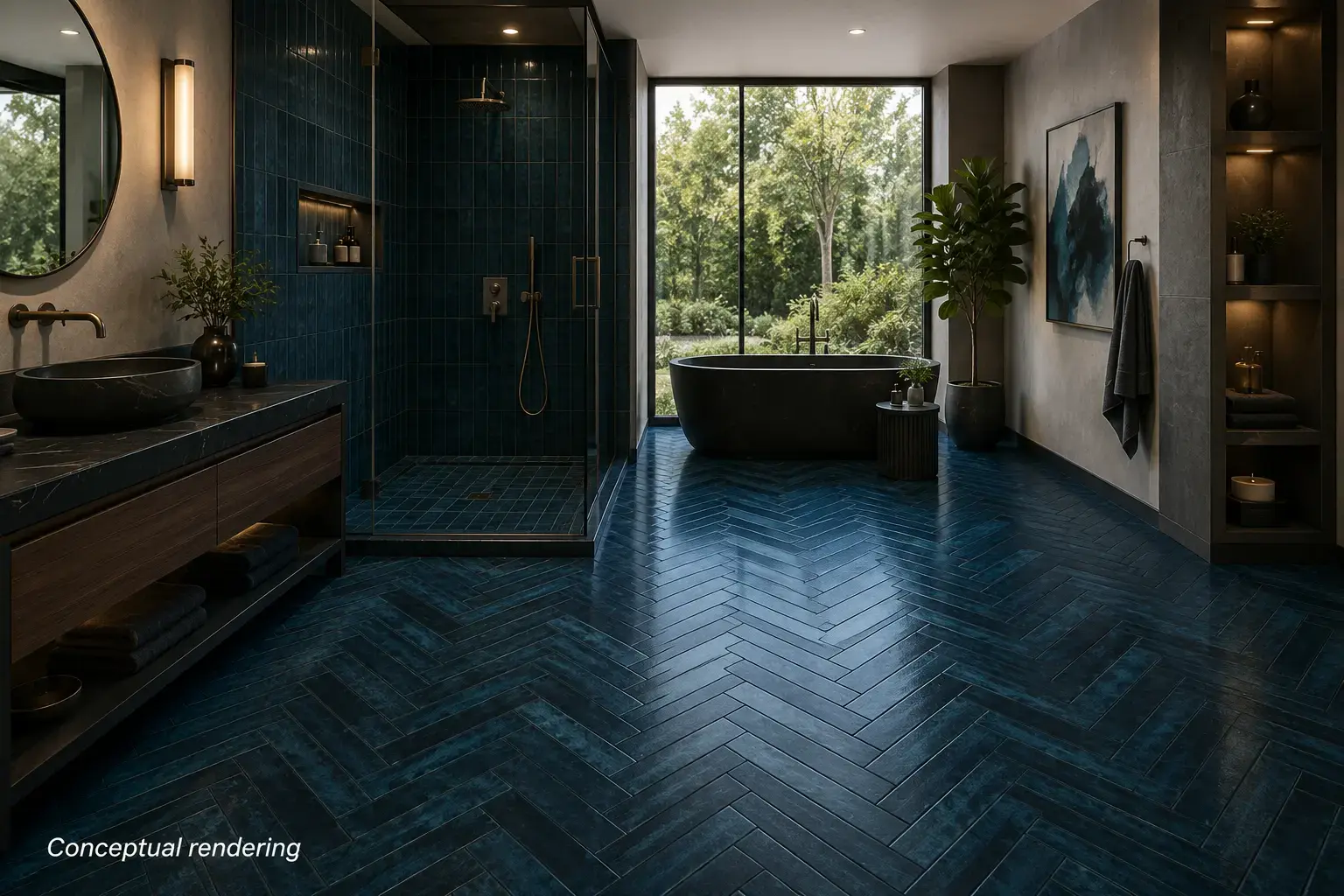
Warm, Earthy Palettes Replace Cool Minimalism
The stark grays and whites that filled kitchens and bathrooms for years are giving way to warmer tones this year. Soft beiges, creams, mocha, olive, and deeper heritage colors like terracotta and petrol blue are showing up across tile collections, bringing a grounded, calming feel to a room. Designers interviewed about 2026 color trends describe clients gravitating toward nature-inspired warm neutrals like wheat, caramel, and terracotta in place of the cool grays that dominated the past decade. Against pine forest and granite outcroppings, these warmer neutrals tend to sit more comfortably next to timber framing and stone fireplaces than the cooler palettes that came before them. A mudroom or entry floor in a warm, sandy tone also holds up better visually against muddy boots and wet gear than a stark white or icy gray does.
This warmer direction solves a problem a lot of homeowners run into without quite naming it. Cool gray tile, paired with knotty pine walls and a dark wood mantle, can end up feeling like two different design eras arguing with each other in the same room. Shifting the tile palette toward cream, mocha, or a soft olive brings flooring and architecture into the same visual family, so the materials read as chosen together rather than layered on top of one another over separate renovations.
Texture and Dimension Take Center Stage
Color is only half the shift. Alongside warmer tones, flat, glossy tile is giving way to surfaces with real depth this year. Fluted profiles, sculpted reliefs, and plaster-inspired finishes are appearing on walls and floors, catching light and shadow in a way flat tile simply cannot. In a home where large windows pull in shifting alpine light throughout the day, textured tile adds a dimension that changes with the light rather than staying static. A textured accent wall behind a wood stove or in a shower can pick up warmth from morning sun and cooler shadow in the evening, giving a space a livelier feel through the seasons.
This kind of texture also does quiet, practical work in a snow climate. A fluted or ribbed surface hides water spotting and mineral deposits from melting snow far better than a high-gloss finish, which tends to show every drip and streak the moment boots come off at the door.
Natural Stone Returns to the Spotlight
That same appetite for texture is part of what's driving the strongest material trend of the year: natural stone. From small tumbled mosaics to large-format slabs showing off natural veining, stone tile's appeal is less about polish and more about an honest, old-world character, tiles that look like they were pulled straight from the landscape rather than manufactured to hide their origin. Designers quoted in a natural stone tile trend roundup describe clients gravitating toward the organic look of tumbled stone and large-scale slabs that show off veining rather than uniform, machine-finished surfaces. That aesthetic fits well anywhere natural stone already surrounds a home, and around Lake Tahoe's north shore, granite boulders and rock outcroppings line much of the shoreline and hiking trails. Bringing that same material indoors, whether as a shower surround, a hearth, or a kitchen backsplash, ties a home visually to the terrain it sits in.
Homeowners exploring this trend usually have a choice between true natural stone and stone-look porcelain, and the right answer depends on where the tile is going. A fireplace surround or a low-traffic accent wall is a good place for actual natural stone like dolomite or marble, since the material's variation and depth are the whole point and the area does not take much daily wear. A kitchen floor or a shower pan, on the other hand, sees enough moisture and foot traffic that a porcelain tile designed to mimic stone veining often makes more practical sense, since it delivers similar visual warmth with less maintenance.
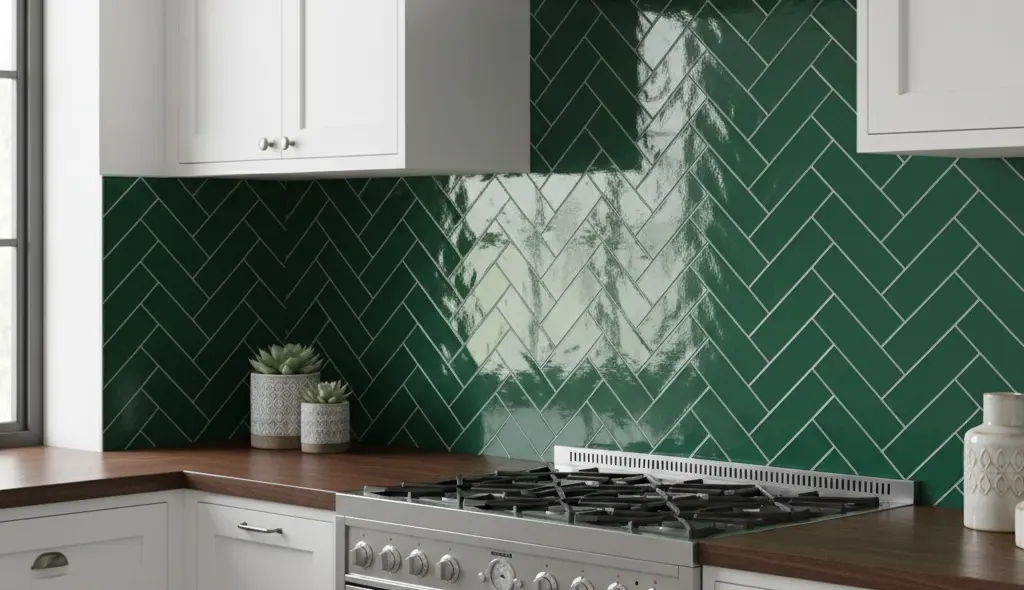
Pattern Is Coming Back, With Restraint
Where natural stone leans on texture and variation to make a statement, a parallel trend is doing something similar with layout. After a long stretch of quiet, uniform surfaces, pattern is reentering the mainstream. Geometric layouts, retro-inspired motifs, and mixed pattern tile are showing up on backsplashes and feature walls, often paired with a more contemporary take on black and white through contrasting textures rather than stark contrast alone. In a mountain home, pattern tends to work best in contained spaces, a powder room floor, a mudroom runner, or a kitchen backsplash, where it can add character without competing with the wood tones and stone already present throughout an open floor plan.
The key with this trend is restraint rather than avoidance. A patterned tile floor in a small powder room reads as a deliberate design choice and gives a guest bathroom a personality of its own. The same bold pattern spread across an entire open-concept great room, competing with exposed beams, a stone fireplace, and a wall of windows, tends to overwhelm rather than enhance the space. Choosing one or two rooms to carry the pattern, and letting the rest of a home stay in warmer solid tones, keeps the look current without tying the whole house to a single trend cycle.
Handmade Character and Imperfect Edges
The same restraint that makes pattern work in small doses also explains a related trend: a preference for tile with visible variation, slightly uneven edges, subtle shifts in color from piece to piece, and a general sense that a person rather than a machine had a hand in making it. Encaustic cement tiles are a common vehicle for this look, since their handmade production naturally produces small inconsistencies that give a floor or wall depth instead of the flat uniformity of mass-produced tile.
This trend pairs well with homes where a certain amount of rustic imperfection is already part of the design language, from hand-hewn beams to stacked stone chimneys. A tile with visible variation fits into that world more comfortably than a perfectly uniform, factory-flat tile does, and it tends to age gracefully rather than looking dated as trends shift in the years ahead.
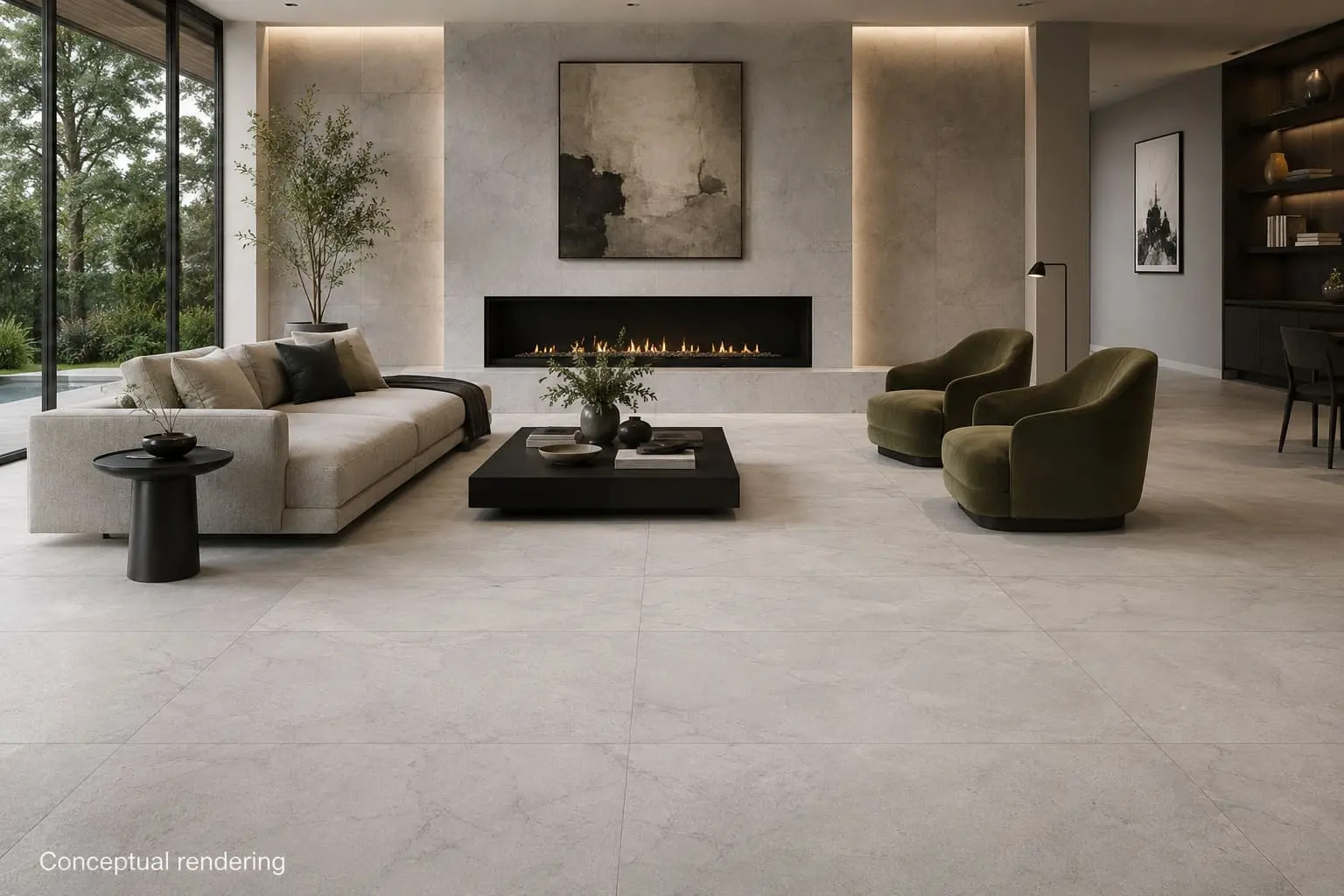
Larger Formats and Simpler Layouts
Alongside these smaller-scale, handmade details, the opposite trend is happening at the level of format and layout. Large-format porcelain continues to grow in popularity for its ability to create a seamless visual flow with minimal grout lines, which works well across open floor plans that move between kitchen, dining, and living areas without a lot of walls to break things up. Rectangular tiles in larger proportions, closer to four by twenty-four inches, are also replacing the traditional subway tile shape, and the traditional brick-style layout is giving way to a simpler vertical stack pattern that draws the eye upward.
Fewer grout lines are not just a visual preference. In a home that sees snowmelt, dirt, and salt tracked in for months at a time, grout is often where buildup shows first. Large-format tile with less grout overall means less surface area for that kind of grime to collect, which can make seasonal cleaning noticeably easier in a high-traffic entry or mudroom.
Choosing Tile Room by Room
With all six trends on the table, the natural next question is how they actually come together in a real home. Tahoe City itself is described by local housing sources as a mix of rustic cabins, urban lodges, and mountain retreats, which is exactly the kind of architecture these warmer, more textured tile trends are built to complement. In a kitchen, a large-format porcelain floor in a warm neutral tone gives a durable base for daily use, paired with a natural stone or stone-look backsplash where veining and texture can be appreciated without daily wear. In a primary bathroom, a fluted or plaster-inspired accent wall behind the vanity or in the shower brings in the textural trend without requiring a full room renovation, while a patterned tile floor in a smaller guest bathroom lets a more playful choice live somewhere lower stakes.
An entryway or mudroom, given how hard Tahoe winters are on that part of a home, is usually the place to prioritize durability first and trend second, which is why porcelain in a warm tone with some texture tends to hold up better there than natural stone. A home office or a den, by contrast, rarely sees snowmelt or salt underfoot, which makes it one of the easier rooms in the house to lean fully into a trend, whether that's a bold checkerboard floor, a handmade encaustic tile, or a natural stone that would be too high-maintenance somewhere closer to the front door.
Choosing Tile That Can Handle a Tahoe Winter
Room placement is one filter for these trends; climate is the other, and in Tahoe City it's the more demanding one. The winter of 2022-2023 was one of the snowiest on record for the region, with Palisades Tahoe's own season recap reporting 723 inches of total snowfall, nearly double the resort's typical seasonal average. Even in a normal year, reporting on Sierra Nevada snow conditions describes a daily freezing and thawing cycle on the mountain, where snow compacts, melts, and refreezes as temperatures swing between day and night. That same cycle plays out at ground level in a driveway or entryway, and it is part of why melting snow, road salt, and repeated freeze-thaw stress take such a toll on flooring near a home's entrance.
Two practical details follow from that. First, textured tile already resists water spotting better than a glossy finish, and that same texture typically also adds slip resistance underfoot, which matters just as much as staining once boots start tracking in snow and ice. Second, any natural stone used near an entryway or in a mudroom generally needs to be resealed more often in this climate than it would somewhere drier, since salt and repeated moisture cut into a sealant's lifespan faster than moisture on its own.
Anyone weighing these choices in person is welcome to visit our Reno showroom, stop by at 12835 Old Virginia Rd, Suite 24, Reno, NV 89521, or call (775) 331-6682. Tile samples are available for $1 each, and you can schedule a free design consultation to find the right material for your room and Tahoe's climate. You can also explore our products and learn more on our website before your visit.
Conclusion
2026's tile trends are less about chasing a fresh look and more about a return to warmth, texture, and material honesty, qualities that happen to suit a mountain home particularly well. Warm neutrals soften the contrast between tile and timber, textured and stone-look surfaces add depth without sacrificing durability, and pattern is finding its way back in smaller, more intentional doses rather than as an all-over statement. For a home surrounded by Sierra granite, tall pines, and genuinely tough winters, the most useful takeaway may be that trend and function are not competing considerations this year. A tile chosen for its warm tone or tactile finish is just as likely to be the right choice for a snowy entryway as it is to photograph well, which makes 2026 a fairly forgiving year to plan a remodel around.
Frequently Asked Questions
Yes, and in some ways mountain architecture is ahead of the trend rather than behind it. Beyond wall and floor tile, these warmer tones also pair well with darker iron fixtures and reclaimed wood beams, two finishes already common in older Tahoe-area cabins, so an updated tile choice can tie a home's existing hardware and woodwork together rather than existing as a separate design decision.
Natural stone can handle Tahoe's climate well, but it typically needs to be resealed more often here than in a drier climate, since repeated exposure to snowmelt and road salt breaks down a sealant faster than moisture alone would. For a fireplace surround or accent wall, resealing once a year is usually enough to keep the stone protected through a full winter season.
Large-format tile looks best over a flat, well-prepared subfloor, since any unevenness becomes more noticeable across a bigger tile than it would with smaller pieces. It is worth having a subfloor checked for level before committing to large-format porcelain, particularly in an older Tahoe cabin where a home may have settled over the decades.
Textured and handmade-style tiles can hold slightly more dust and grime in their surface variation than a flat, glossy tile, so a soft-bristle mop attachment and a slightly more frequent cleaning schedule in high-traffic rooms will keep the texture looking intentional rather than dingy over time.
Yes. Bringing a photo of the room in natural daylight, along with a scrap of existing wood trim or flooring if you have one, makes it easier to see how a tile's warm tone or texture will actually read against your home's existing materials rather than only under a showroom's lighting.
Note: Some images on this page may be conceptual renderings created to illustrate design possibilities and may not depict actual installations.