Terrazzo-look subway tile is a rectified porcelain tile that replicates the speckled aggregate look of traditional terrazzo in a classic subway shape. It comes in 3x6, 3x12, and 4x12 inch sizes, and the speckled pattern runs through the full body of the tile rather than sitting on the surface, so it won't wear away or fade the way a printed pattern would over time.
Unlike authentic terrazzo, which is made by embedding real marble, quartz, or glass chips into a resin or cement binder, this porcelain version delivers the same look without the weight, cost, or specialized installation that real terrazzo requires. For homes in the Minden area, where dry summers and snowy winters both track a fair amount of dirt and moisture across entryway floors, a patterned tile like this earns its place for reasons beyond style alone. Nova Tile and Stone carries the current terrazzo subway tile selection in-stock for browsing online or in person.
How It Differs From Traditional Terrazzo
Traditional terrazzo is made by embedding real marble, quartz, or glass chips into a resin or cement binder, then grinding and polishing the surface smooth so the individual chips show through. Reproducing that look in porcelain works differently: manufacturers replicate the chip pattern through the tile's full body rather than embedding actual stone fragments, which is what allows the tile to be manufactured at a fraction of the weight and cost of a real terrazzo installation.
The tile is stain resistant, but spills should still be cleaned promptly rather than left sitting. Because the pattern is through-body rather than a surface print, ordinary wear over the years won't expose a different color underneath, which is a common issue with printed tile patterns once the surface layer wears thin. Anyone curious how a genuine terrazzo floor or countertop compares can find more detail in this overview of working with terrazzo.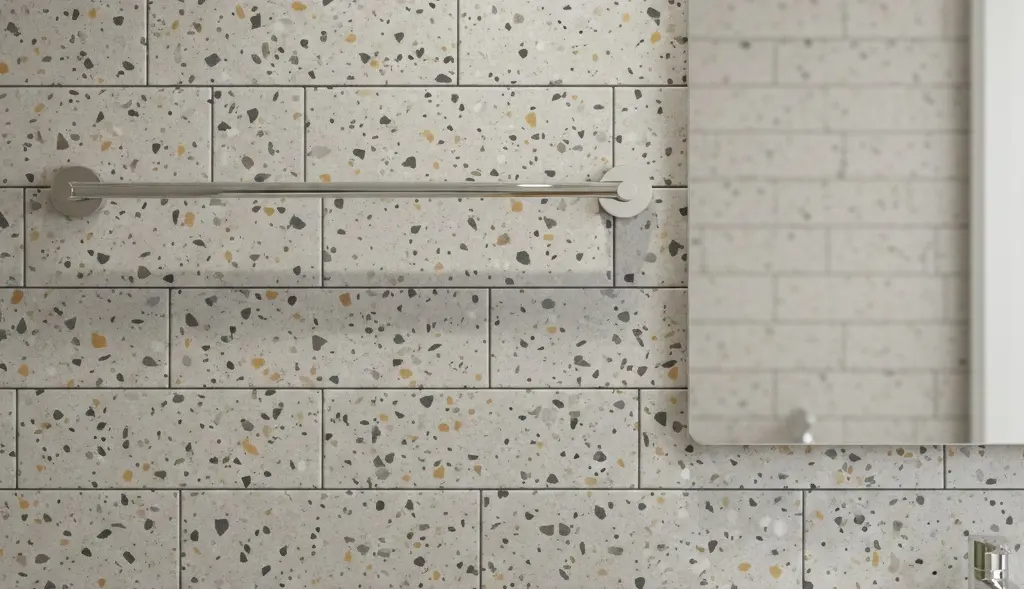
Sizes and Layout Patterns
The rectangular subway shape opens up more layout options than a traditional terrazzo floor typically allows. Running bond creates a horizontal rhythm that works well behind a stove or sink, since the repeating offset pattern reads as continuous rather than busy. Herringbone turns the same tile into something closer to an architectural feature, and a vertical stack pattern gives a room a cleaner, more contemporary look, with each column drawing the eye upward.
Rectified edges allow for tighter grout lines between pieces, which helps the speckled pattern read as one continuous surface rather than a grid of individual tiles. Slip resistance (DCOF) and shade variation level are both worth confirming on the specific size and finish before choosing it for a floor, since these figures can differ between SKUs within the same collection even when the overall look is similar. A higher shade variation rating generally means more color and pattern difference from piece to piece, which is part of what keeps a speckled look like this from reading as a flat, repeating print.
Homeowners deciding between formats can browse tiles by size to compare how 3x6, 3x12, and 4x12 look at different scales before settling on a layout.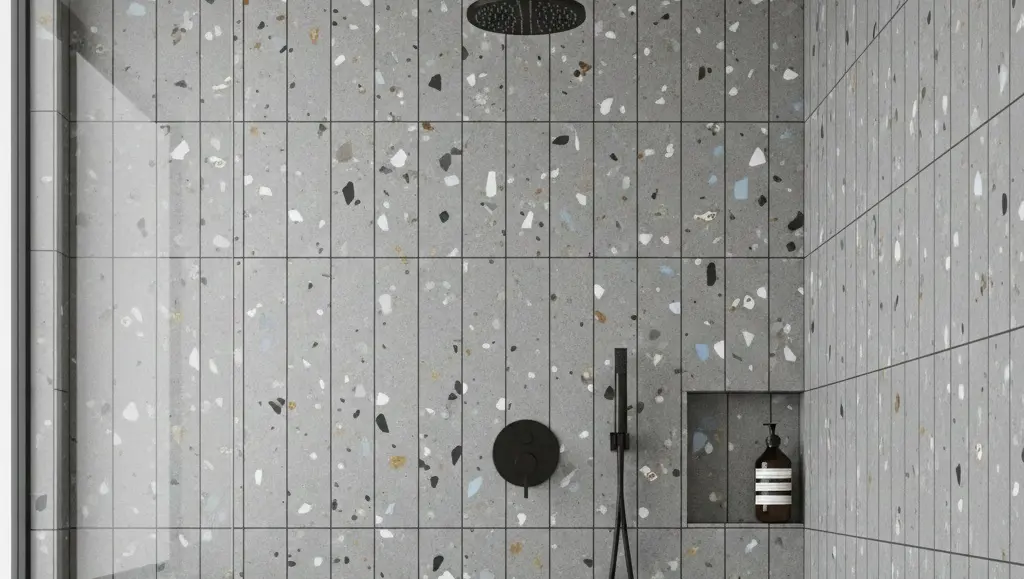
Where It Works Best At Home
This tile is rated for floor and wall use, but the manufacturer specifies interior installation only, so it isn't intended for exterior applications like a patio or outdoor kitchen. The subway shape itself is part of what makes it flexible: a homeowner can bring the speckled pattern into a room as a backsplash, an accent wall, or a shower surround without committing to an entire terrazzo floor. Inside the home, it shows up most often as a kitchen backsplash, a bathroom wall or floor, or a standalone feature wall in an entryway or living space.
A bathroom is one of the more common places homeowners choose it, since the speckled surface tends to hide daily water spots and soap residue better than a solid, single-color tile would. It also works well in a laundry room or mudroom floor, which matters more in Minden than it would in a milder climate. Carson Valley sits in the rain shadow of the Sierra Nevada, so summers run hot and dry with dust and grit tracked in constantly, while winters bring regular snowfall along with the mud and de-icer residue that comes with it. A busy, speckled pattern is more forgiving of both those conditions day to day than a plain, solid-color tile would be. For homeowners weighing it specifically for a bathroom remodel, this terrazzo bathroom design roundup is a useful place to see the look applied at different scales.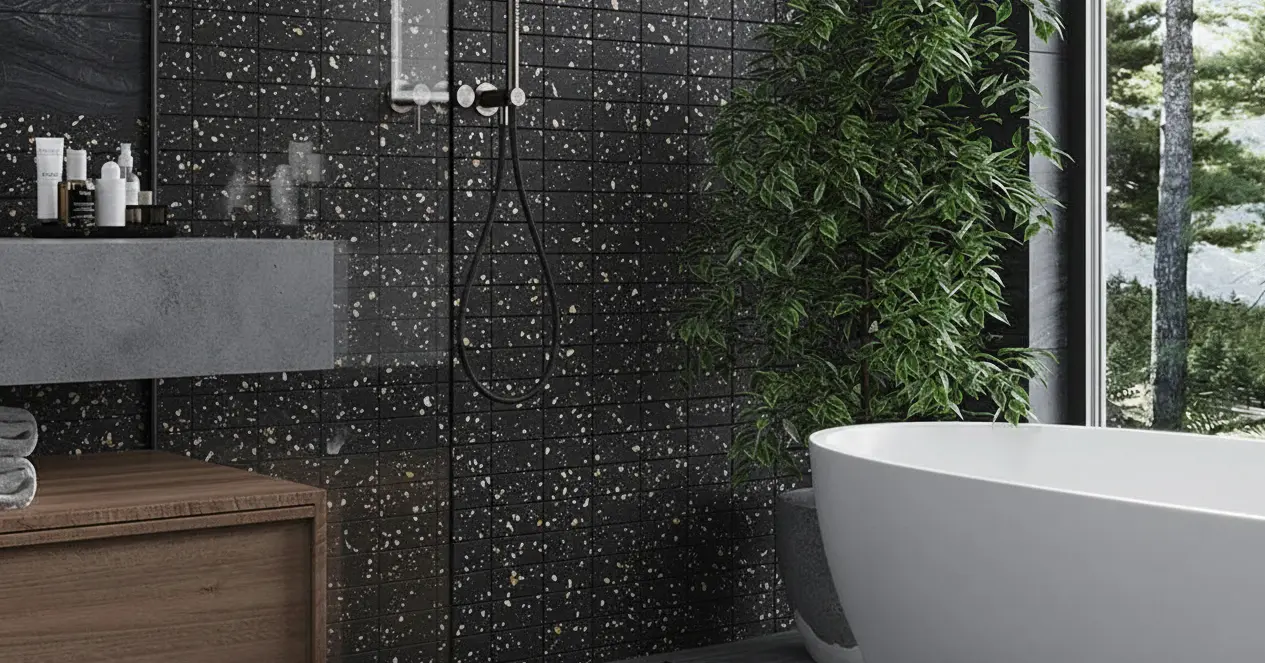
Moisture Performance and Everyday Care
Because it's porcelain rather than a cement-based material, this tile resists water absorption, but standing water shouldn't be left on the surface for extended periods regardless of the material. That resistance is part of why it holds up in showers and other wet areas when installed with proper waterproofing behind it.
Day to day cleaning is simple: mild soap and water is enough for regular upkeep. Unlike authentic terrazzo, which typically needs periodic sealing to protect the exposed stone chips, this porcelain version doesn't require that kind of ongoing maintenance, though grout joints between the tiles should still be kept clean since grout is more porous than the tile itself. Homeowners who want to see the full range of finishes and colors available in this look can check the complete terrazzo-look tile collection.
Pairing It With Other Materials
Because the speckled pattern already carries a lot of visual texture on its own, pairing it with a plain, single-color field tile elsewhere in the same room tends to read better than combining it with a second patterned material, which can end up competing with the terrazzo look rather than complementing it.
Grout choice changes the effect more than people expect. Matching the grout tone closely to the tile's base color lets the speckled texture dominate the wall or floor, while a contrasting grout makes the individual tile boundaries more visible as part of the design. A lighter grout tends to keep the look closer to a traditional terrazzo floor, where the fragments appear to float in a continuous field, while a darker grout turns the same tile into a more graphic, grid-like pattern. Homeowners planning a broader renovation can browse the full tile and stone catalog to see how this tile might pair with countertops or flooring elsewhere in the same space.
Conclusion
Terrazzo-look subway tile is available to view at our Minden showroom, along with the rest of our tile, natural stone, and slab countertop selection. Seeing the speckled pattern in person matters more than it does for a solid-color tile, since photos don't always capture how the fragment colors and grout lines read together at full scale. That's especially true in a place like Minden, where clear skies dominate most of the year, since the strong natural light common in the area can shift how warm or cool a tile's tones appear compared to how the same tile looks under a showroom's fixed lighting.
The Minden showroom is located at 2548 Business Pkwy, Minden, NV 89423, and can be reached at (775) 783-4970. Homeowners planning a visit can get directions to the showroom ahead of time, browse the Minden showroom page for more on what's available locally, or book a free design consultation to talk through layout and grout options for a specific room.
For homeowners still deciding between the terrazzo look and other subway tile styles, ordering a sample is the most reliable way to judge color and texture accurately, since screen colors rarely match what a tile looks like under a home's actual lighting. Samples ship for a dollar, which makes it an easy first step before committing to enough tile for a full backsplash or bathroom wall.
Frequently Asked Questions
The core difference is what's actually inside the material. Real terrazzo has actual stone chips suspended in a binder, while this tile replicates that same look through the full body of a fired porcelain piece. In practical terms, that difference is what keeps the cost, weight, and installation complexity closer to a standard tile project than a specialty stone installation.
Yes, when installed with proper waterproofing behind it, which matters more for the substrate than for the tile itself. The tile's job is resisting moisture at the surface; the waterproofing membrane behind it is what actually keeps water out of the wall assembly in a shower or other wet area.
Yes, though slip resistance and shade variation can differ between specific sizes and finishes within the same collection. It's worth confirming those figures for the exact size and finish before choosing it for a floor rather than assuming they match across the whole line.
Beyond color, grout joint width matters here too. A narrower joint keeps focus on the tile's own speckled pattern, while a wider joint introduces a more visible grid that can compete with the look rather than let it read as one continuous surface.
The tile itself doesn't need sealing, but the grout between pieces is a different story. Because grout is more porous than the tile, it can still benefit from a grout sealer in wet areas even though the tile surface itself doesn't require that upkeep.