Best Flooring Ideas for Fernley New Construction Homes
Fernley new construction flooring decisions shape every room's durability, design coherence, and long-term property value. Natural stone and porcelain tile are the top surface materials for kitchens, bathrooms, living rooms, and outdoor areas.
Granite, quartzite, marble, dolomite, and porcelain each serve distinct applications within a new build. Granite and quartzite are UV-stable and qualified for indoor and outdoor use across floors, walls, and fireplaces. Porcelain tile with water absorption at or below 0.5% passes frost-proof requirements, a meaningful spec for Fernley's variable winters. Explore the full slab collection to compare material profiles before specifications are finalized.
The Fernley showroom gives builders and homeowners direct, hands-on access to slab and tile materials early in the design process.
Why Stone and Tile Lead Fernley New Build Specifications
Benefits by material:
- Granite: UV-stable and suitable for indoor and outdoor floors, walls, and fireplaces. Available in polished, honed, leathered, and specialty finishes; durable with consistent care.
- Quartzite: UV-stable with natural scratch resistance. A reliable choice for kitchen floors and covered outdoor areas; periodic sealing preserves appearance over time.
- Marble: Brings depth and refined veining to bathroom walls, shower surrounds, and living room floors. Not UV-classified; best suited for interior and shaded applications only.
- Quartz: Consistent, low-maintenance indoor surface for kitchen and living room floors. Not rated for outdoor exposure.
- Porcelain: Frost-proof when water absorption is at or below 0.5%. DCOF-rated options support wet-area floor safety when DCOF meets or exceeds 0.42. The TCNA Handbook defines the performance testing standards specifiers rely on for tile selection.
Design coverage from Dezeen's 2026 events guide reflects the global design calendar that shapes residential material trends each year.
Material Comparison for Fernley New Construction
Material | Indoor | Outdoor | UV-Stable | Frost-Proof | Sealing Required | Finish Options |
Granite | ✓ | ✓ | ✓ | ✓ | Yes | P, H, L, S |
Quartzite | ✓ | ✓ | ✓ | ✓ | Yes | P, H, L, S |
Marble | ✓ | Shaded | ✗ | ✗ | Yes | P, H, L, S |
Dolomite | ✓ | Shaded | ✗ | ✗ | Yes | P, H, L, S |
Travertine | ✓ | Shaded | ✗ | ✗ | Yes | P, H, L, S |
Quartz | ✓ | ✗ | ✗ | ✗ | Minimal | P, H, S |
Porcelain | ✓ | ✓ | ✓ | ✓ (≤0.5%) | No | P, H, L, S |
P = Polished · H = Honed · L = Leathered · S = Specialty
Natural Stone vs. Porcelain Tile
Natural Stone: Pros
- Unique veining and slab pattern; no two surfaces are identical
- Heat-resistant countertop surface; trivets still required to prevent thermal shock
- Polished, honed, leathered, and specialty finishes available across most stone types
- Granite and quartzite carry UV stability for outdoor floor and wall applications
Natural Stone: Cons
- Periodic sealing required to maintain stain and moisture resistance
- Marble, travertine, and dolomite are not UV-classified for direct-sun outdoor use
- Heavier slab weight may require structural consideration at the build stage
Porcelain Tile: Pros
- Water absorption at or below 0.5% qualifies for frost-proof outdoor applications
- DCOF of 0.42 or greater available for wet-area floor safety in specified products
- Rectified edges allow tight 1/16" grout joints; verify through TCNA porcelain tile certification
- No periodic sealing required
Porcelain Tile: Cons
- Pattern repetition can be visible in large-format floor installations
- Non-rectified tile requires wider grout joints to account for natural size variation
- Grout color selection affects the finished floor appearance significantly
 Conceptual rendering
Room-by-Room Stone and Tile Design for New Builds
New construction offers the advantage of selecting stone and tile materials for each room before surfaces are enclosed. Coordinating tones, finishes, and formats at this stage ensures a cohesive design, prevents mismatched choices, and provides builders with clear direction for seamless installation and lasting results.
Kitchen Floors and Surfaces
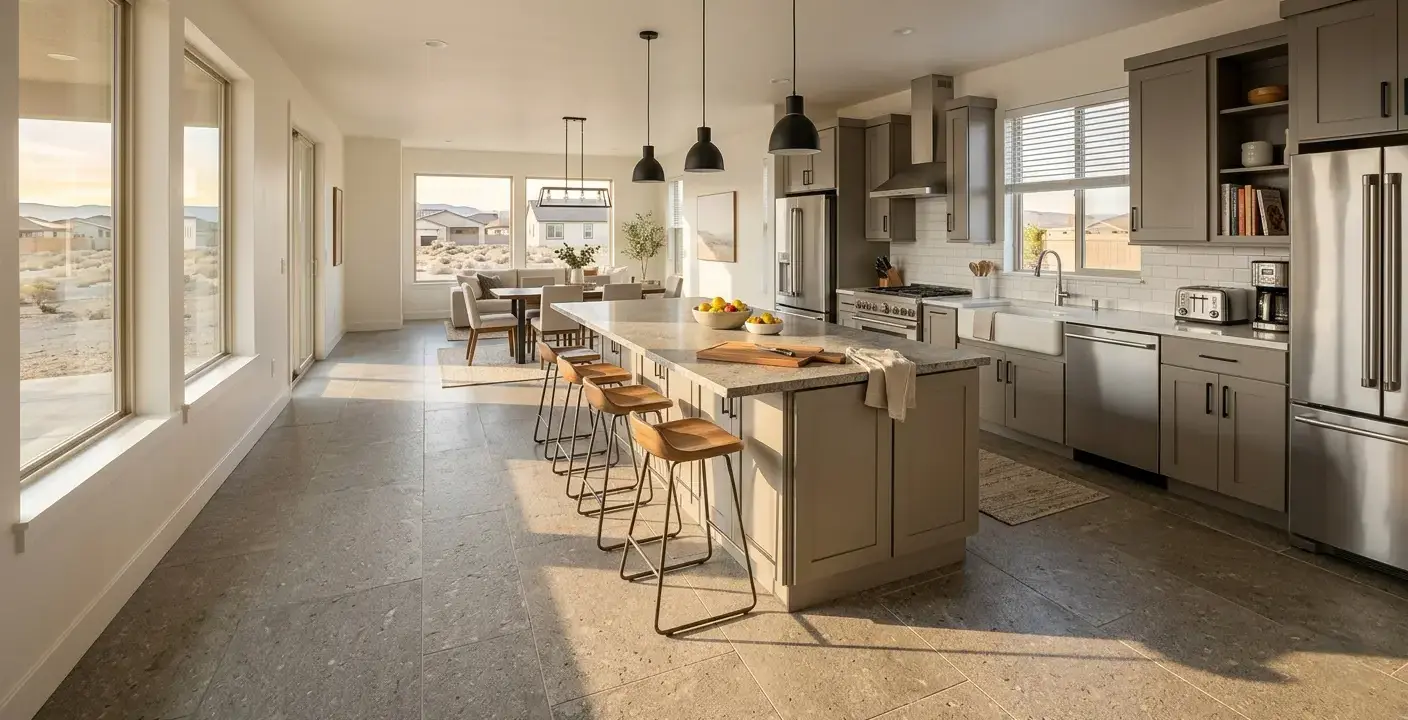
Honed and leathered granite and quartzite suit kitchen floors where grip and durability are the primary requirements. Polished finishes are slipperier when wet and better reserved for vertical backsplash surfaces. Cutting boards remain necessary on all stone surfaces to avoid finish wear over time.
Bathroom Floors, Walls, and Shower Surrounds
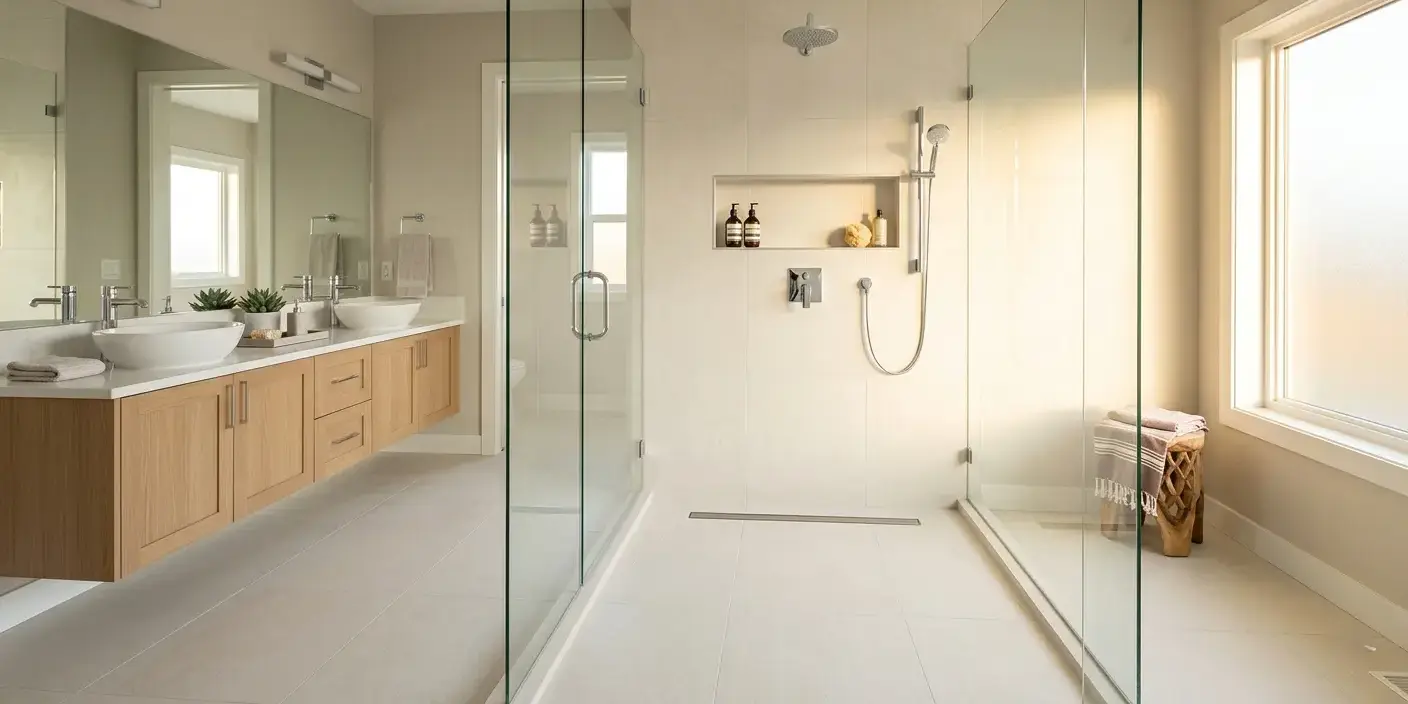
Any floor tile specified for a bathroom or shower should carry a DCOF of at least 0.42 to meet wet-area safety requirements. Porcelain tile with rectified edges supports tight 1/16" grout joints on shower floors for a clean, contemporary result. Honed marble and dolomite suit tub surrounds and wall applications where polished depth is desired without floor-level slip risk.
The Reno showroom carries bathroom tile and stone selections for in-person comparison.
The Minden location also stocks bath-focused materials where grout scale and tile format can be reviewed before specifications are confirmed.
Living Room Floors
Large-format tile and continuous slab runs suit main living areas where visual continuity is a priority. Polished marble and quartzite add reflective depth to high-ceiling rooms with natural light. Honed finishes reduce surface glare and suit spaces with significant direct sunlight.
Outdoor Floors and Patios
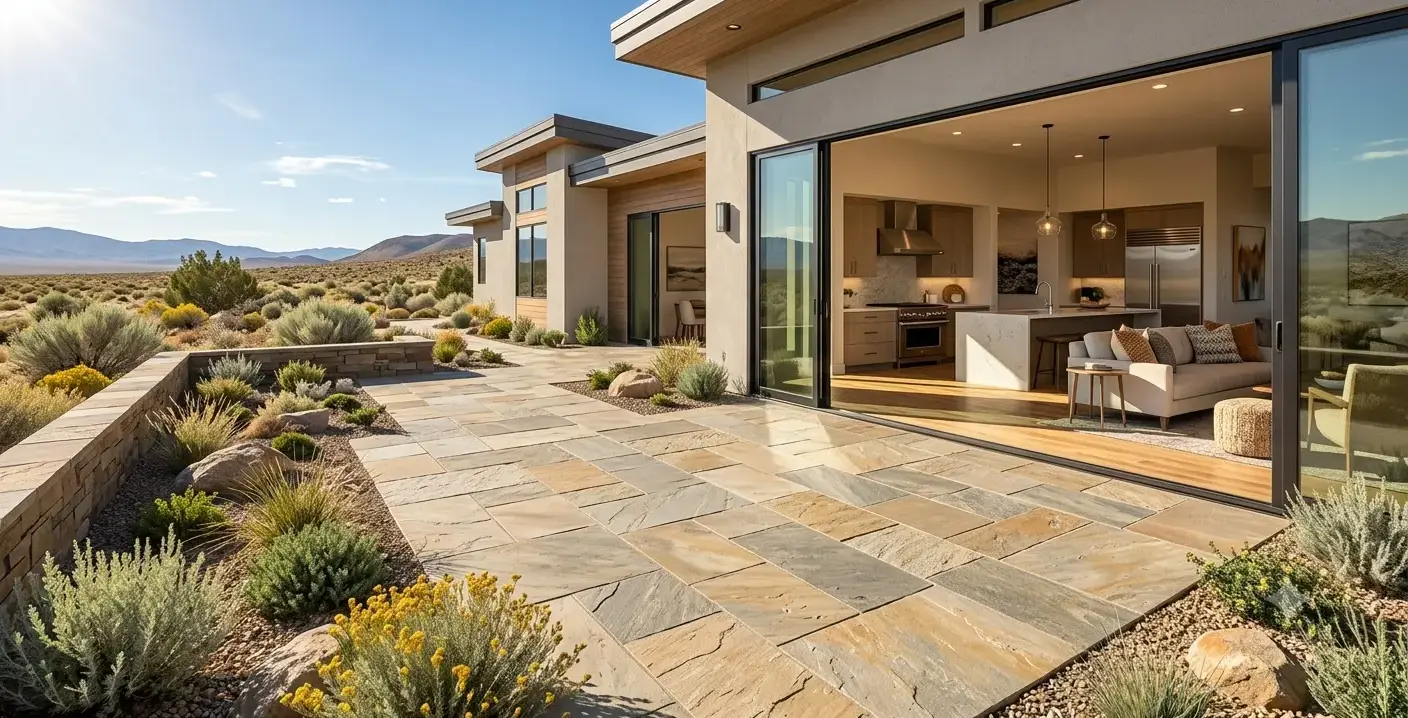
Fernley's climate requires frost-proof materials for any outdoor floor surface. Porcelain tile with water absorption at or below 0.5% handles freeze-thaw cycles without surface degradation. Granite and quartzite also qualify for outdoor floor use and are UV-stable for direct sun exposure.
The Sacramento showroom team can assist with outdoor tile specification and DCOF confirmation.
 Conceptual rendering
 Conceptual rendering
How to Choose Flooring for a Fernley New Build: 5 Steps
- Map zones by exposure. Identify which surfaces face UV, standing water, or heavy foot traffic before selecting materials for outdoor floors, entryways, or covered patios.
- Confirm DCOF for wet areas. Bathroom floors, shower floors, and covered patios require tile with a DCOF of at least 0.42. Verify this against the product specification before selections are finalized.
- Match finish to function. Polished finishes are slipperier when wet. Honed and leathered finishes improve grip for kitchen and bathroom floor applications.
- Check tile edge type. Rectified edges allow tight 1/16" grout joints for a seamless appearance. Non-rectified tile requires wider grout joints to account for natural size variation.
- Coordinate slabs and tile by surface type. Slabs suit countertops and feature walls; tile formats work well for shower surrounds, patterned layouts, and outdoor floors.
Bring Your Build to Nova Tile and Stone
Nova Tile and Stone serves new construction projects from showrooms in Fernley, Reno, Minden, and Sacramento, with material specialists available to match products to application requirements.
The Nova about page details the company's focus on slab and tile for residential and commercial projects across northern Nevada and Northern California.
Visit the shop local page to connect with the nearest showroom stocked with granite, quartzite, marble, porcelain tile, and more. In-person selection confirms material tone, veining, and finish texture before anything is committed to a specification.
Expert guidance on DCOF, finish type, and application suitability is available at every Nova showroom. All tile samples ship free.
Conclusion
Choosing stone and tile during the new construction stage ensures your flooring delivers both lasting durability and seamless design integration. Early selection avoids costly late‑stage substitutions and allows builders to align finishes with the overall architectural plan. Granite, quartzite, porcelain tile, and marble each offer proven performance across kitchens, bathrooms, living areas, and outdoor spaces, balancing strength with aesthetic appeal. Granite provides heat resistance, quartzite adds natural hardness, porcelain offers low‑maintenance versatility, and marble brings timeless elegance. By committing to materials at the start, homeowners secure a cohesive look and long‑term value. Browse the full material catalog today to explore options and begin the selection process with confidence.
Frequently Asked Questions
Honed or leathered granite and quartzite are strong choices for kitchen floors. Both are UV-stable, scratch-resistant with proper care, and available in finishes that improve grip compared to polished surfaces. Quartz works well for indoor kitchen floors with a consistent, low-maintenance surface.
Porcelain tile with water absorption at or below 0.5% qualifies as frost-proof and handles freeze-thaw cycles, making it suitable for Fernley outdoor patios. Confirm DCOF is at least 0.42 for any outdoor floor surface to meet wet-area safety standards.
Marble suits bathroom walls and tub surrounds but requires careful finish selection for floor use. A honed finish provides better grip than polished marble on a wet floor. Marble is not UV-classified, so reserve it for interior and shaded applications.
DCOF stands for Dynamic Coefficient of Friction. A floor tile with a DCOF of at least 0.42 meets the threshold for wet-area safety, as defined by TCNA standards. Any tile specified for shower floors, bathroom floors, or exterior patios in a new construction home should meet or exceed this value.
Rectified tile has mechanically finished edges that allow tight grout joints as narrow as 1/16 of an inch. Non-rectified tile has natural size variation and requires wider grout joints to accommodate it. Rectified tile delivers a more seamless, contemporary floor appearance.