Granite, marble, quartzite, travertine, and dolomite are the natural stone options most commonly used for indoor fireplace surrounds, each offering a different pattern, hardness, and price range. In Elk Grove, homeowners typically choose between these stones based on the style of the living room, the finish (polished, honed, or leathered), and how the surround will coordinate with existing countertops or flooring. This guide covers each stone option, the available finishes, and the design approaches worth considering before starting a fireplace surround project.
Why Homeowners in Elk Grove Are Turning to Natural Stone Fireplace Surrounds
A fireplace is often the visual anchor of a living room, especially in Elk Grove's many open-concept floor plans where the kitchen, dining, and living spaces flow into one another. A stone surround gives that focal point weight and texture that paint or standard tile can't replicate. It also tends to complement the natural material palette already showing up elsewhere in the home, such as stone kitchen countertops or a stone-topped island, creating a sense of continuity from room to room. Homeowners who are still deciding on a direction can browse tile, stone, and flooring options online before narrowing things down in person.
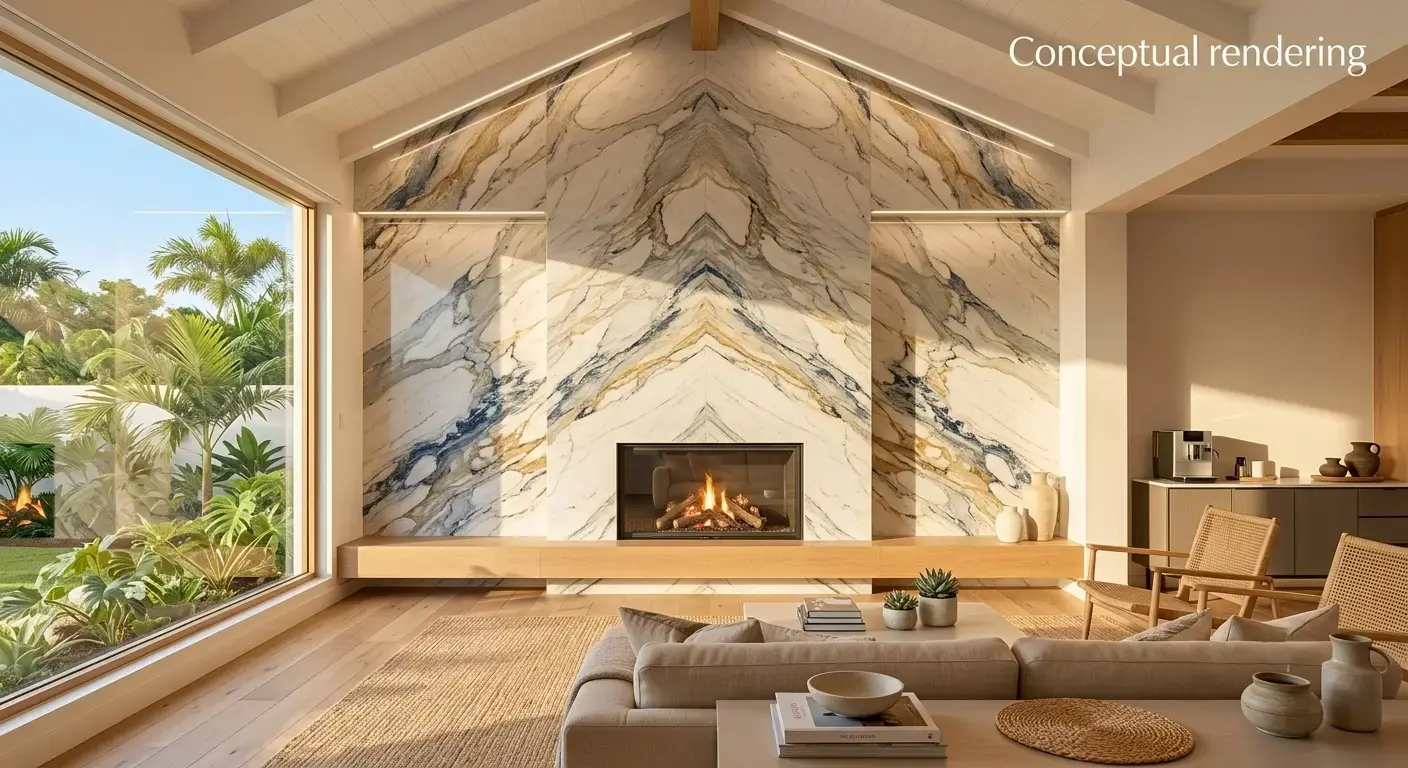
For homes with vaulted or two-story great rooms, a full-height stone surround that extends from the hearth to the ceiling can make the fireplace feel proportionate to the size of the room. In smaller or single-story living rooms, a more modest surround, perhaps stopping at mantel height or just above, keeps the scale appropriate without overwhelming the space. We'll cover the difference between these two approaches in more detail below.
Natural Stone Options for Fireplace Surrounds
Several types of natural stone work well for indoor fireplace surrounds, each with its own look and characteristics.
Granite is a common choice for fireplace surrounds because of its speckled or granular pattern and wide range of colors, from deep charcoal to warm beige tones. Its dense, crystalline structure makes it a practical option near a heat source, and it pairs well with both traditional and contemporary living room styles.
Marble brings a softer, more classic look with flowing veining that ranges from subtle to bold depending on the specific block. Marble has long been associated with fireplace surrounds and mantels in traditional design, and it remains a common choice for homeowners going for a more formal living room aesthetic.
Quartzite has become increasingly popular for fireplace surrounds because it often combines the movement and color variation associated with marble with a harder mineral composition. Depending on the specific quartzite, the look can range from soft and neutral to bold and pronounced, making it versatile for different design directions.
Travertine offers a warmer, more textured appearance with its characteristic pitted or layered surface. It works particularly well in living rooms with a rustic, Mediterranean, or transitional design theme, and its earthy tones can help ground a room that has a lot of natural light.
Dolomite is sometimes chosen as an alternative to marble for homeowners who want a similar soft, light appearance with a slightly different mineral makeup. It's worth discussing dolomite as an option during a design consultation if you like the marble look but want to compare a few different materials side by side.
Each of these stones is available in a range of finishes, which changes both the appearance and feel of the surround. For a broader look at how these same stones perform in kitchens and other high-use areas, This Old House's guide covers many of the same materials in more depth.
Choosing a Finish for Your Fireplace Surround
The finish applied to the stone has a significant impact on the final look of a fireplace surround.
- Polished finishes have a reflective, glossy surface that highlights color and veining, giving the surround a more formal or contemporary appearance.
- Honed finishes have a matte, non-reflective surface that creates a softer, more understated look. Honed stone is a common choice for fireplace surrounds because it tends to feel warmer and less formal than a polished surface.
- Leathered finishes have a slightly textured surface that adds tactile interest while still showing the natural pattern of the stone. This finish works well for homeowners who want a more organic, hand-crafted feel.
When choosing a finish, it helps to think about the overall style of the room. A polished surround tends to suit modern or glam interiors, while honed and leathered finishes fit more naturally into farmhouse, transitional, or organic modern spaces, all of which are common design directions in Elk Grove's newer neighborhoods.
Full-Height Surrounds vs. Framed Surrounds
There are two general approaches to designing a stone fireplace surround, and the right one depends on the room and the look you're going for.
A full-height surround extends the stone from the floor or hearth all the way to the ceiling. This approach works especially well in rooms with tall ceilings and gives the stone's natural pattern room to be the main visual feature of the wall.
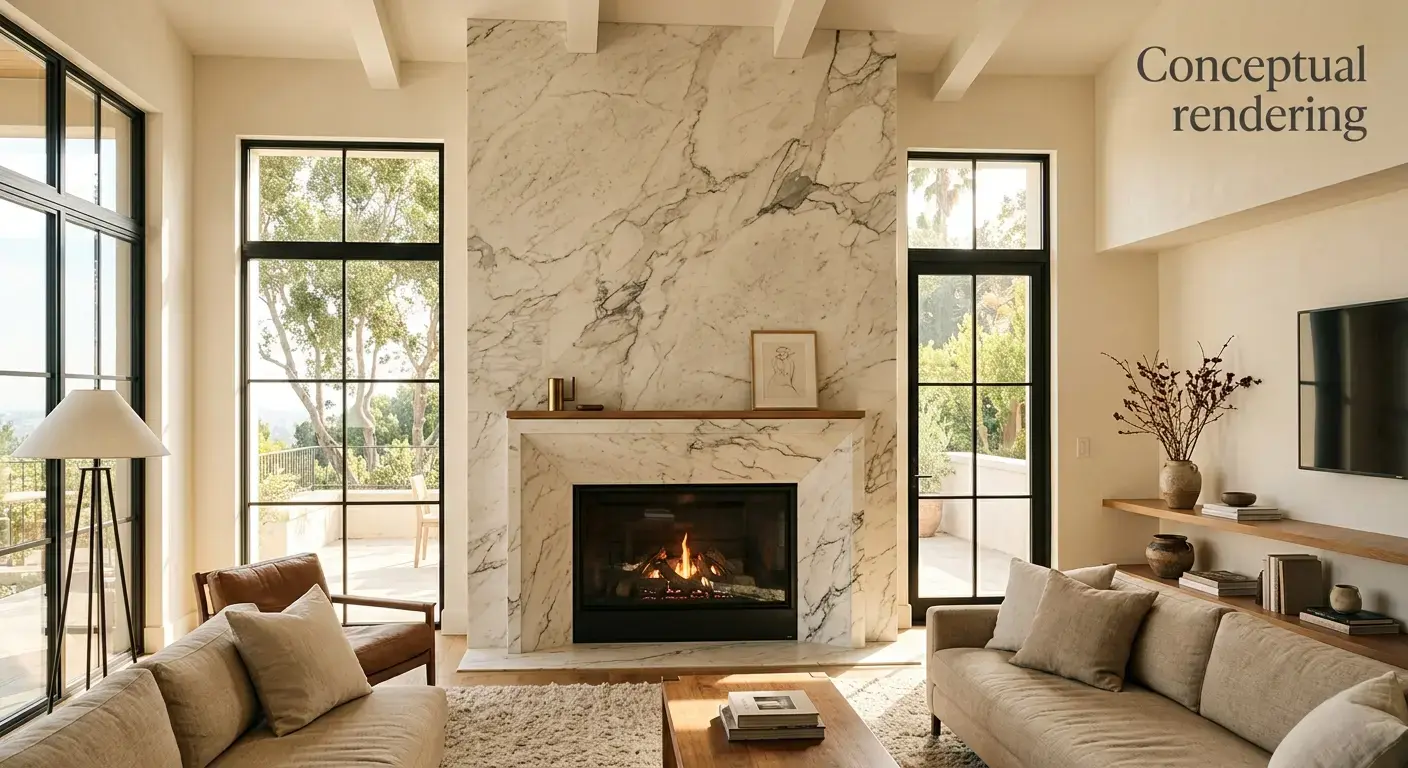
A framed surround keeps the stone contained to a defined area around the firebox, often bordered by trim, a mantel, or a change in wall material above. This is a more traditional approach and can feel more proportionate in living rooms with standard ceiling heights or in homes with a more classic architectural style.
Some homeowners also choose a hybrid approach, using a framed stone surround around the firebox itself with a complementary material, like painted millwork or shiplap, extending to the ceiling above the mantel.
Matching the Surround to the Rest of the Room
One of the most common questions we hear is how to coordinate a fireplace surround with countertops, flooring, and cabinetry already in the home. A few general guidelines can help:
- If your kitchen already features a natural stone countertop, consider whether the fireplace surround should match that material closely, echo its color palette, or intentionally contrast with it as a separate design feature. All three approaches can work depending on how open the floor plan is.
- Pay attention to the undertones in your existing materials. Warm-toned wood flooring or cabinetry often pairs well with travertine or warmer granite and quartzite selections, while cooler-toned spaces tend to lean toward marble, dolomite, or gray-based granite.
- If the fireplace wall is highly visible from the kitchen or dining area, as is common in many Elk Grove open floor plans, think about how the surround will read alongside those adjacent finishes rather than evaluating it in isolation.
Bringing photos of your kitchen, flooring, and any other finished materials to a design consultation can make it much easier to narrow down stone options that will feel cohesive with the rest of your home.
Practical Considerations for Fireplace Surrounds
Natural stone is a practical material for fireplace surrounds thanks to its mineral composition, but a few general points are worth keeping in mind as you plan your project.
Stone surrounds are typically installed with an appropriate clearance from the firebox opening, following the fireplace manufacturer's specifications and local building code requirements. A licensed contractor or fireplace installer can confirm the correct clearances for your specific fireplace insert or masonry firebox before the surround is fabricated and set. If your contractor sources materials regularly, it may be worth having them look into whether they can apply for a trade account for pricing on this and future projects.
Sealing is also worth discussing, particularly for more porous stones like travertine or certain marbles. A sealed surface can help the stone resist minor staining from smoke residue or handprints near the mantel, and periodic resealing is a normal part of caring for natural stone over the years. Because sealing needs vary by stone type and finish, it's a good idea to ask your design consultant which sealing approach applies to the material you select. Fine Homebuilding's guide to natural stone goes into more detail on how sealing and maintenance needs differ across granite, marble, quartzite, and travertine.
Cleaning a stone fireplace surround typically involves a soft cloth and a stone-safe, pH-neutral cleaner rather than harsh chemicals, which can affect the sealer or the stone's surface over time. Avoiding abrasive pads on polished finishes helps preserve the sheen.
Planning Your Elk Grove Fireplace Project
Because a fireplace surround is such a visible feature, it's worth taking time to look at full slabs in person rather than making a decision from small chips or photos alone. Lighting, veining direction, and color can shift depending on the specific block a slab was cut from, so seeing the actual material under real light conditions gives a much clearer sense of how it will look on your fireplace wall. You can browse our live slab inventory ahead of time to get a sense of current colors and patterns, then check hours and directions on our Sacramento showroom page before stopping by.
It's also worth thinking about the surround as part of a larger design plan rather than an isolated update. Many Elk Grove homeowners tackle a fireplace refresh alongside other living room changes, such as new flooring, updated built-ins, or a repainted accent wall, so considering how those elements will work together from the start can help avoid mismatched finishes down the road. Once you've narrowed down a few slabs you like, you can submit a slab quote request to get pricing on the specific bundles you're considering.
Conclusion
A natural stone fireplace surround is one of the more visible ways to update a living room, whether you're working with a builder-grade fireplace in a newer Elk Grove home or updating a dated surround in an established neighborhood. From the warm texture of travertine to the classic veining of marble or the versatile pattern of granite and quartzite, there are natural stone options suited to a range of home styles in the area. Our team works with homeowners throughout Elk Grove and the greater Sacramento area to compare stone types, finishes, and design approaches in person, so you can see how a slab will actually look before committing to it. If you're ready to start exploring options for your fireplace project, schedule a design consultation or get directions to our showroom at 6100 Warehouse Way, Sacramento, CA 95826. You can also reach us by phone at (916) 913-6682.
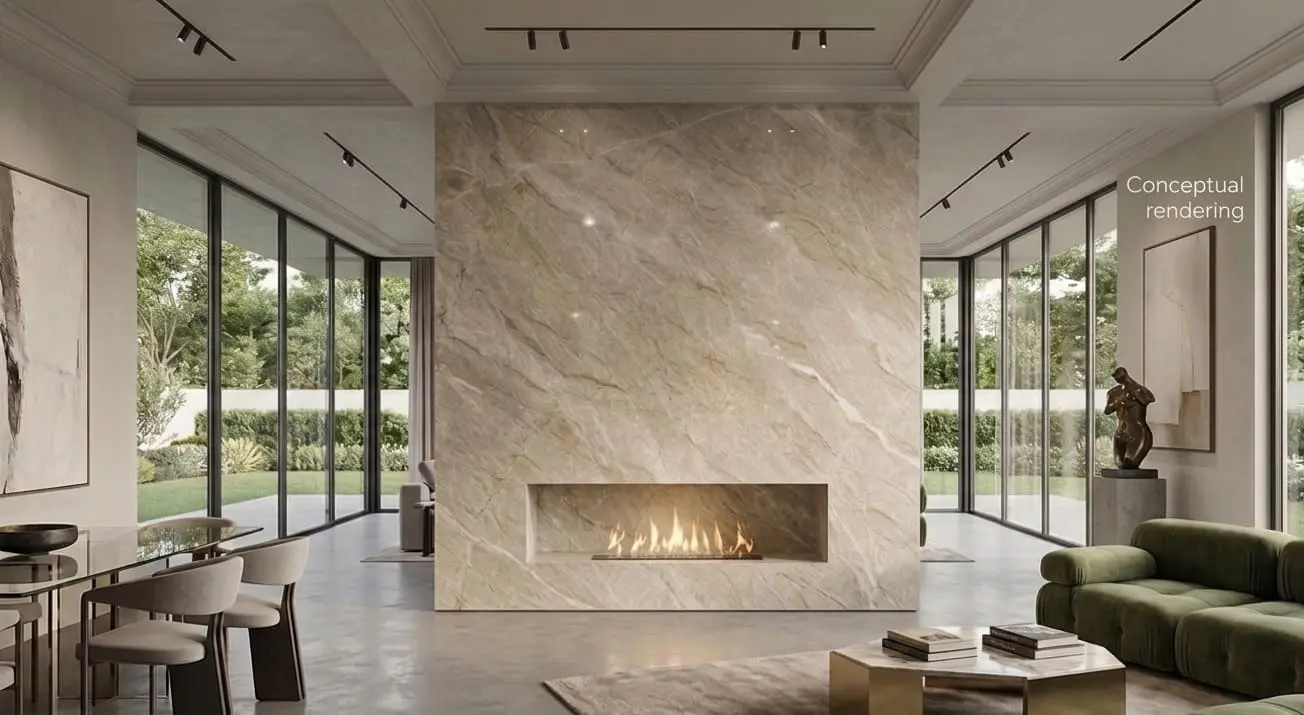
Note: Some images on this page may be conceptual renderings created to illustrate design possibilities and may not depict actual installations.
Frequently Asked Questions
There isn't a single best option, since the right stone depends on the look you want and the style of your living room. Granite offers a granular pattern and wide color range, marble provides classic veining, quartzite combines pattern with a harder composition, and travertine adds warm, textured character. A design consultation can help narrow down which option fits your space.
Most natural stone used for fireplace surrounds is installed at an appropriate clearance from the firebox opening, following the fireplace manufacturer's guidelines and local building codes. A licensed contractor or fireplace installer can confirm the correct clearance requirements for your specific fireplace before the surround is fabricated.
Most natural stone used for fireplace surrounds is installed at an appropriate clearance from the firebox opening, following the fireplace manufacturer's guidelines and local building codes. A licensed contractor or fireplace installer can confirm the correct clearance requirements for your specific fireplace before the surround is fabricated.
It depends on your preference and how open your floor plan is. Some homeowners choose a surround that closely matches their kitchen stone, others prefer a complementary color palette, and some intentionally choose a contrasting material as a separate design feature. All three approaches can work well.
A full-height surround, which extends from floor to ceiling, tends to suit rooms with taller ceilings and creates a strong focal point. A framed surround, contained around the firebox with a mantel or trim, often fits better in rooms with standard ceiling heights or more traditional architectural styles.