Stone Fireplace Surrounds That Warm Up Fernley Living Rooms
Stone fireplace surrounds turn a living room into a visual anchor, pairing natural texture with lasting durability. For Fernley homeowners planning a refresh, the right stone fireplace wall design depends on finish, color, and realistic upkeep. Granite, marble, quartzite, travertine, and porcelain each bring a distinct look and a different maintenance profile to a fireplace wall. In short, granite and quartzite suit busy households well, while marble and travertine reward homeowners who prefer a softer patina over time. Matching tile and stone type and finish to a room style, whether farmhouse, transitional, or modern, starts with understanding these tradeoffs before choosing a slab or tile layout.
Living room layout also shapes which surround style works best. A single-story ranch home common around Fernley often suits a simpler, floor-to-mantel surround, while newer two-story builds sometimes accommodate a full-height slab reaching the ceiling. Room orientation matters too, since a fireplace wall facing large windows will show stone texture and veining differently across the day as natural light shifts.
Benefits Of A Stone Fireplace Feature Wall
A stone surround adds texture, contrast, and a sense of permanence that paint alone cannot match. Yet each benefit carries a practical caveat: density, finish, and exposure all affect upkeep. No surface is entirely maintenance‑free, so careful selection and routine care are essential for lasting performance.
- Visual warmth: natural veining and color variation create depth, though lighting placement affects how patterns read in the room.
- Durability: dense stones like granite and quartzite resist daily wear well, but cutting boards and trivets still protect surfaces near a hearth.
- Design flexibility: honed, leathered, and polished finishes each shift the mood, though polished surfaces show fingerprints more readily.
- Resale appeal: stone surrounds are widely viewed as a desirable upgrade, though condition and consistent care influence long-term value.
- Timeless styling: classic color pairings tend to age gracefully, though personal taste should still guide final selection.
Weighing these benefits against household habits helps narrow the field before browsing specific slabs or tiles. A household with young children or pets, for example, may lean toward denser stone and a honed rather than polished finish to reduce visible smudging near the hearth.
Applications And Living Room Design Ideas
Once the material tradeoffs are clear, the next step is turning that knowledge into a real design plan for the room. From matching finish to floor plan through picking a mantel pairing, the choices below walk through how tile and stone type and finish options translate into a finished fireplace wall - starting with what each material offers on its own.
Granite and quartzite offer a dense, low-maintenance option well suited to active living rooms, available in polished, honed, leathered, or specialty finishes. Marble and dolomite bring softer veining and warmer tones, best suited to indoor or shaded settings rather than direct sun exposure. Travertine offers a similar soft, warm look and can be used both indoors and outdoors. Porcelain slabs replicate natural stone patterns while offering a consistent surface. Porcelain surrounds are typically installed following published ANSI tile standards, which give installers a consistent reference for layout, grout joints, and setting methods.
Finish choice affects daily upkeep as much as material choice does. A leathered finish hides fingerprints and light scuffing better than a polished surface, which makes it a practical option for a family living room with frequent use near the hearth.
Material | Typical Finish Options | Best Setting | Maintenance Note |
Granite | Polished, honed, leathered | Indoor or outdoor | Sealing maintains stain resistance |
Marble | Polished, honed, leathered | Indoor or shaded | Softer stone, more careful cleaning |
Quartzite | Polished, honed, leathered | Indoor or outdoor | Durable, still benefits from sealing |
Travertine | Honed, leathered, filled | Indoor or shaded | Natural pitting adds character |
Porcelain | Polished, matte | Indoor or outdoor | Low porosity, easy upkeep |
Living Room Design Pairings
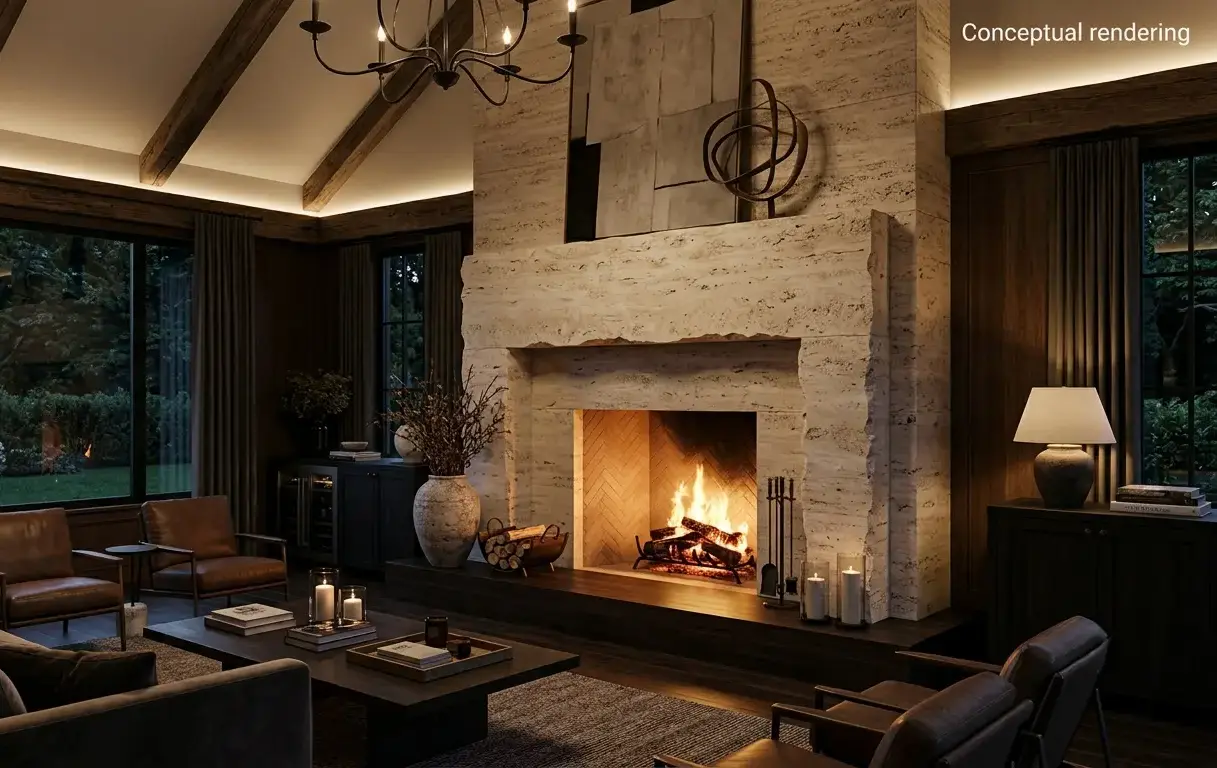
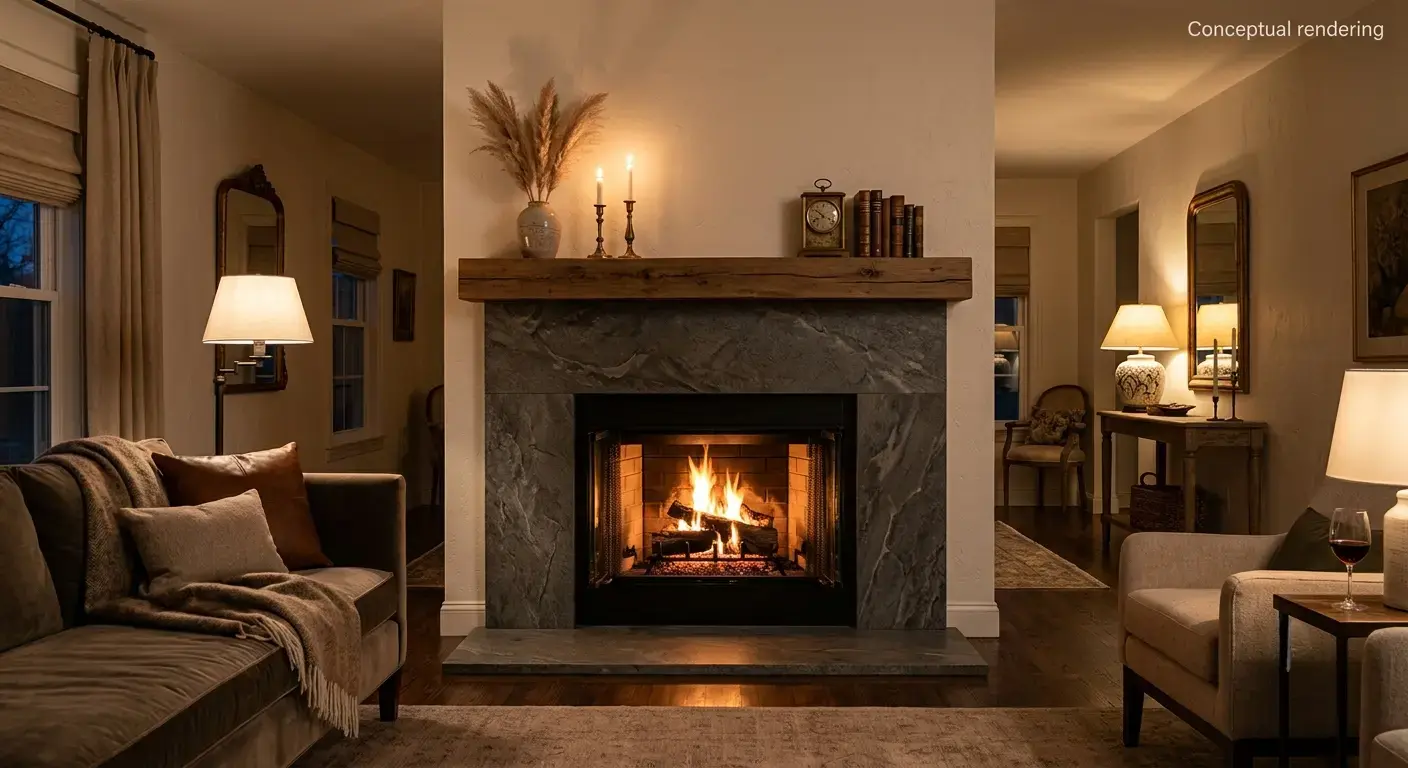
A honed granite surround pairs naturally with warm wood mantels for a transitional living room look. Leathered quartzite adds texture to modern spaces with clean lines and minimal ornamentation. Travertine surrounds complement farmhouse and Mediterranean-inspired rooms, especially alongside current interior trends favoring natural materials. Full-height stone slab surrounds extending to the ceiling create a dramatic focal point in larger great rooms. Smaller living rooms often benefit from a more modest surround that frames the firebox without overwhelming nearby seating or window sightlines. Mixing a stone surround with a wood-toned mantel or built-in shelving on either side tends to balance the visual weight of a larger slab surround.
Choosing A Surround In Five Steps
- Assess the living room style, noting existing wood tones, wall color, and ceiling height, since these details influence which stone reads best against the room.
- Narrow material options between granite, marble, quartzite, travertine, and porcelain based on desired upkeep and how much shading the fireplace wall receives.
- Select a finish, comparing polished, honed, and leathered samples in natural light, since showroom lighting can shift how a color reads once brought into the room.
- Review slab options or tile sizing for the planned surround dimensions, accounting for mantel height and any built-in shelving nearby.
- Confirm color consistency against existing furnishings before finalizing a selection, ideally comparing a physical sample rather than a printed photo.
Advantages And Considerations
- Advantage: natural stone slabs offer one-of-a-kind veining that no two surrounds share exactly.
- Consideration: leathered and honed finishes require slightly more frequent sealing than polished surfaces.
- Advantage: porcelain surrounds bring consistent patterning across large surrounds.
- Consideration: dolomite and marble need shaded placement, ruling out full-sun exterior fireplace walls.
- Advantage: tile-based surrounds allow smaller, modular design compared to full slab treatments, useful for narrower fireplace walls.
Bringing The Look Home With Nova
Selecting the right tile and stone type and finish benefits from seeing samples in person under real lighting conditions, since photos on a screen rarely capture true veining or color depth. Nova's tile sample program ships select tile finishes directly to a Fernley home for side-by-side comparison against existing decor, making it easier to judge undertones against wall paint and wood trim. Tile material remains best viewed in the full inventory, since slab selection depends heavily on individual veining and slab-specific patterning that photos cannot fully represent.
Reno, Minden, and Sacramento showrooms carry additional slab inventory beyond what a single location stocks, which helps when a specific vein pattern or block lot is needed. The Reno showroom rotates seasonal slab arrivals throughout the year. The Minden location maintains its own slab selection worth browsing for larger great-room projects. The Sacramento showroom carries a separate slab inventory as well, useful for households comparing options across regions.
Fernley, Fallon, Silver Springs, Wadsworth, and Stagecoach households can all work with the Fernley showroom team for design guidance suited to the region's homes. A consultation typically covers material tradeoffs, finish selection, and how a proposed surround will read against existing furnishings and lighting. Bringing room photos or paint swatches to that conversation tends to speed up the decision process considerably.
Homeowners weighing several stone types at once often find it useful to shortlist two or three finalists before a showroom visit, rather than arriving with an open-ended search. Narrowing by finish first, then by color family, tends to make in-person comparisons faster and less overwhelming, especially when comparing slab veining across multiple lots.
Conclusion
Stone fireplace surrounds bring lasting warmth and design flexibility to Fernley living rooms, provided the material and finish match the household’s style and care habits. Granite, quartzite, and porcelain suit busy homes thanks to their durability and low‑maintenance qualities, while marble and travertine offer softer veining and warmer tones that work best in shaded or gentler settings.
Finish choice shapes both the look and the upkeep routine, with polished surfaces requiring more careful maintenance and honed or leathered textures hiding everyday wear more effectively. Exploring the full collection allows homeowners to compare options side by side before narrowing down a final choice. Scheduling a free consultation ensures the best material is selected for the room’s design and long‑term performance.
Company Highlights
Catch up on our newest content!
Frequently Asked Questions
Granite, quartzite, and porcelain tend to hold up well in busy living rooms thanks to their density, though sealing and routine cleaning still preserve their appearance over time.
Marble suits fireplace surrounds well, particularly indoor or shaded settings, since it is not classed for full-sun exterior exposure and benefits from gentler cleaning products.
Honed finishes offer a matte, softer look while polished finishes provide a reflective shine, and each shows fingerprints, dust, or wear differently over time.
Stone surrounds benefit from prompt spill cleanup, periodic sealing depending on material, and avoiding abrasive cleaners, since proper care preserves appearance rather than guaranteeing permanence.
Tile suits smaller budgets and modular layouts, while slab offers a seamless look with dramatic veining, so the choice often comes down to desired scale, available space, and whether the wall extends to the ceiling.
Visit Our Fernley Showroom – Nova Tile and Stone
1855 US Highway 95A North, Fernley, NV 89408
Store hours this week:
- Mon. - Fri.: 7:30 am - 4:00 pm
- Sat. - Sun.: Closed
Note: Some images on this page may be conceptual renderings created to illustrate design possibilities and may not depict actual installations.