Choosing Kitchen Remodel Materials for a Stagecoach Home
Kitchen remodel materials fall into three broad categories: natural stone slabs, engineered quartz, and tile. Granite performs well for countertops and outdoor-facing surfaces because it tolerates sun and temperature swings. Quartz suits indoor counters where a consistent pattern matters most. Tile shapes the floors and walls that tie a kitchen together.
Stagecoach homeowners planning a remodel usually juggle two questions at once: which surface belongs where, and how each material holds up over time. Granite, quartz, and tile each answer those questions differently, and the right combination depends on whether a stone surface sits indoors, outdoors, underfoot, or on a wall. A kitchen remodel rarely uses just one material; most projects blend a slab countertop with tile floor and wall designs to balance durability, style, and long-term upkeep.
The sections below walk through benefits, placement guidance, a side-by-side comparison table, and a short planning checklist to help narrow the choices before a single sample arrives. Homeowners weighing an outdoor kitchen island alongside indoor counters will find separate guidance for each, since outdoor conditions rule out certain materials entirely.
Benefits of Granite, Quartz, and Tile for Kitchen Remodels
Each material brings a distinct set of advantages to a kitchen project, though every benefit below comes with a practical caveat worth keeping in mind.
- Granite resists heat well, though trivets still protect against sudden temperature shock.
- Granite holds up to sun and weather, though periodic sealing helps preserve stain resistance.
- Quartz offers a consistent surface pattern, though direct prolonged sunlight can affect its appearance over time.
- Quartz resists everyday scratching reasonably well, though a cutting board still prevents surface marks.
- Tile offers wide design flexibility for floors and walls, though grout lines need periodic cleaning to stay bright.
- Tile comes in many finishes and sizes, though non-rectified edges call for wider grout joints and natural size variation.
Countertops, Wall and Floor Designs, and Outdoor Kitchen Islands
Matching a stone surface to its exact location is the most critical choice in any kitchen remodel. The decision shifts depending on whether the surface must withstand heavy indoor traffic, endure outdoor weather exposure, or serve as vertical wall cladding, each requiring unique durability, finish, and maintenance considerations.
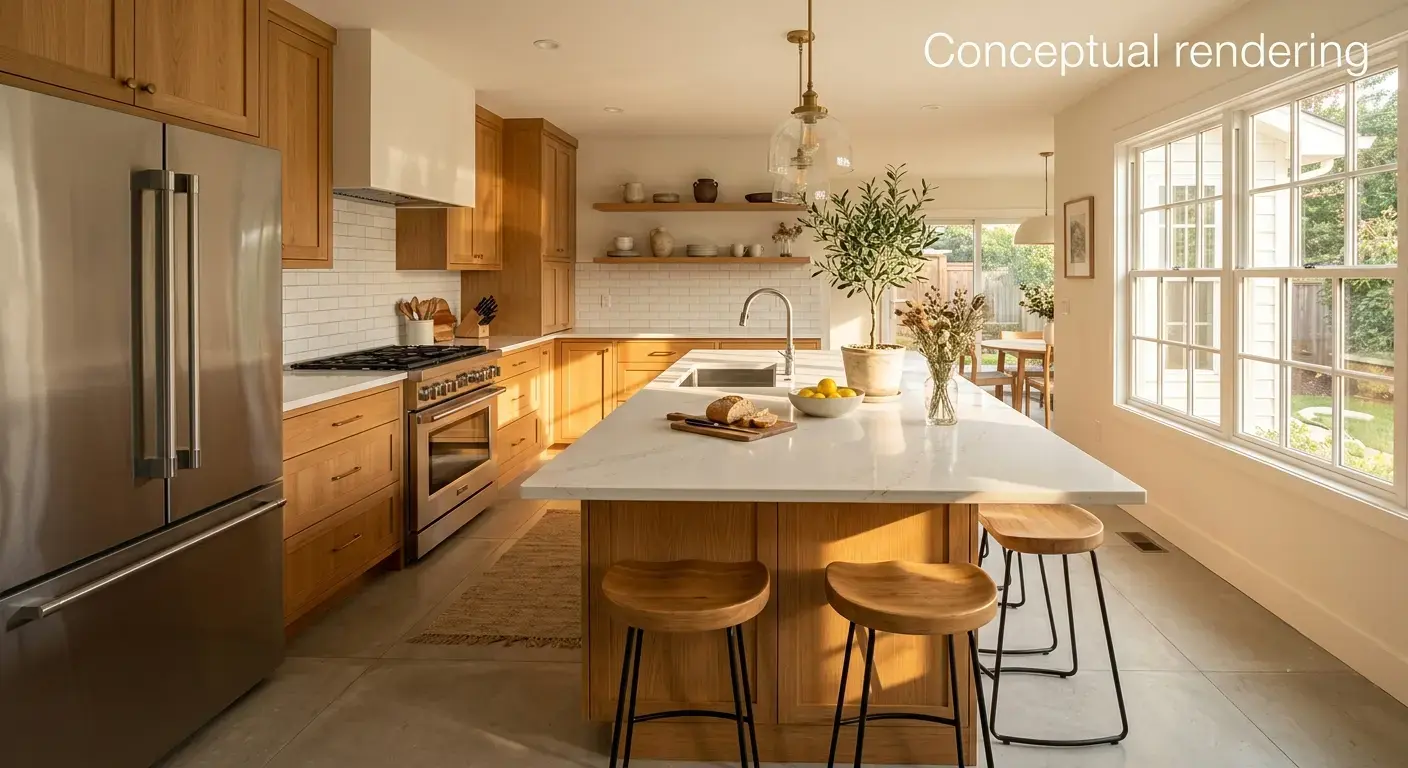
Countertop Stone Surface Options
Indoor kitchen counters can draw from granite, quartz, or porcelain slab, each with a different maintenance rhythm. Quartz counters stay indoors only, since the material is not rated for outdoor exposure. Granite counters handle indoor kitchens comfortably and can transition to covered or full sun outdoor spaces when the layout calls for it. Spills on any polished surface should be wiped promptly, since acidic liquids can dull a polished finish over time.
A polished stone surface looks striking under kitchen lighting, though a honed or leathered finish tends to hide fingerprints and small scratches more easily on a daily-use counter. Homeowners drawn to a lighter maintenance routine often lean toward these matte finishes for the main prep counter, while reserving a polished slab for a lower-traffic island top. Cutting boards remain a good habit on any counter material, since even a scratch-resistant surface benefits from a barrier against knives.
Wall and Floor Tile Designs
Tile remains the most flexible material for floor and wall design, from a full backsplash to a floor-to-ceiling accent wall. Current interior trends favor large-format tile paired with a textured, matte finish for visual contrast, a direction covered in this roundup of 2026 design trends. Rectified tile edges allow tighter grout lines for a cleaner look, while non-rectified tile shows natural size variation and needs a wider grout joint to compensate. Certified porcelain tile certification can help homeowners compare quality benchmarks across product lines during the selection process. Innovations in flooring adhesives and setting materials, covered in a recent flooring innovation report, continue to expand what is possible with tile floor and wall applications.
Outdoor Kitchen Islands
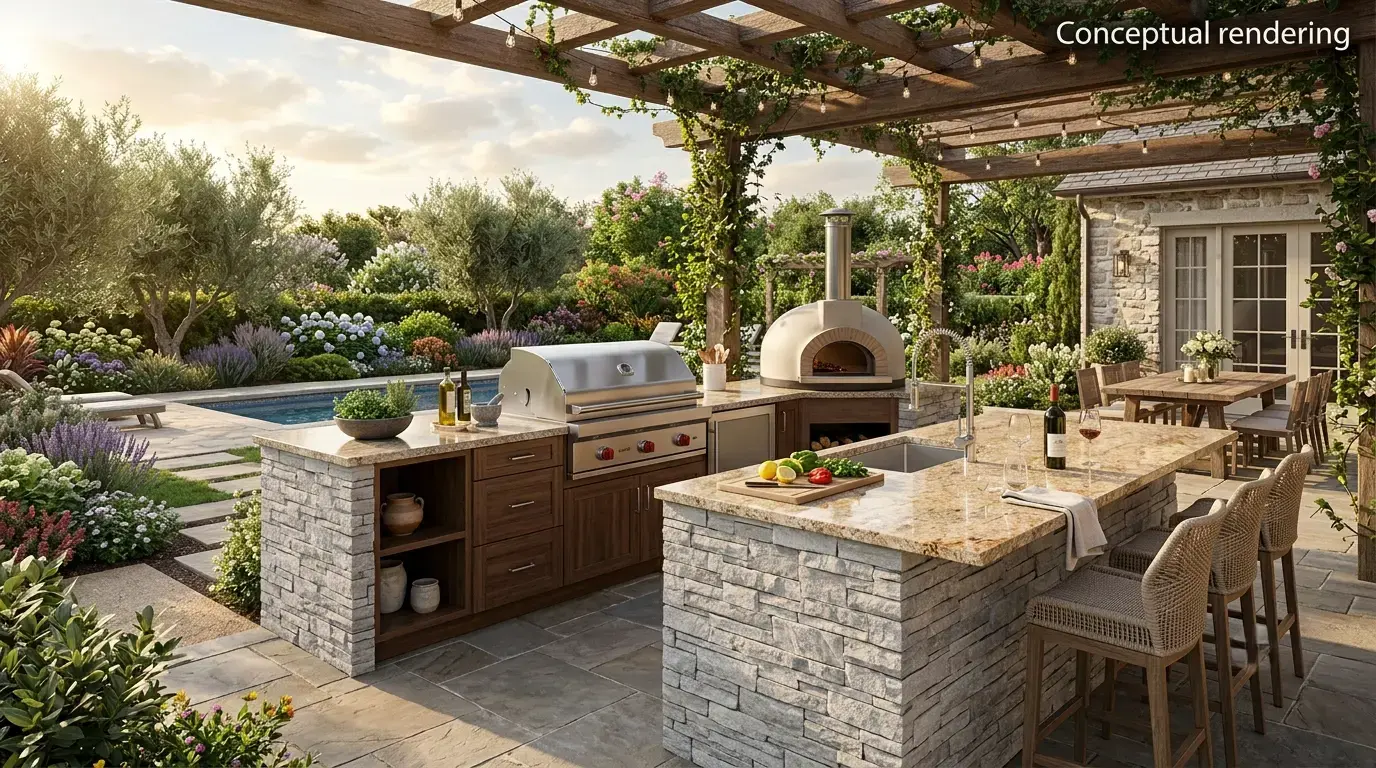
Outdoor kitchen islands call for materials rated for full sun and temperature swings, which rules out quartz entirely. Granite and porcelain slab both tolerate outdoor conditions well, making either a reasonable choice for an island top exposed to weather. A honed or leathered finish is worth considering for an outdoor island, since a polished surface becomes noticeably slicker once wet. Sealing schedules for outdoor granite differ from indoor counters, so a surface exposed to rain and sun benefits from more frequent attention.
Stagecoach summers bring long stretches of direct sun, which makes UV-stable materials worth prioritizing for any outdoor island design. Quartzite is another option worth a look for an outdoor build, since it shares granite's tolerance for sun and weather while offering a different natural veining pattern. Whichever stone surface gets chosen, a trivet stays worthwhile near any outdoor cooking zone, since heat resistance still has limits even on a durable outdoor slab.
Material | Typical Kitchen Use | Outdoor Suitability | Maintenance Note |
Granite | Countertops, outdoor islands | Full sun, all climates | Reseal periodically to preserve stain resistance |
Quartz | Indoor countertops | Indoor use only | Keep away from prolonged direct sunlight |
Porcelain Tile | Floors, backsplash walls | Indoor use recommended | Clean spills promptly to protect the finish |
Advantages and Disadvantages of Quartz Countertops
Advantages:
- Consistent pattern across the entire slab
- Reasonable resistance to everyday scratching, with a cutting board still recommended
- Wide range of colors for indoor kitchen designs
Disadvantages:
- Not rated for outdoor or full sun applications
- Can be affected by prolonged heat exposure without a trivet
- Limited to indoor floor and wall placements only
Steps for Planning Kitchen Remodel Materials
- Walk through the kitchen and note which surfaces face indoor use, outdoor exposure, floors, or walls.
- Shortlist granite or porcelain slab for any surface that will see full sun or outdoor weather.
- Reserve quartz for indoor counters where a consistent pattern matters most.
- Choose tile finishes and sizes for floor and wall zones, checking rectified edges against desired grout width.
- Request material samples and compare them under the kitchen's actual lighting before finalizing a decision.
Nova Tile and Stone Serves Stagecoach and Beyond
Nova Tile and Stone supplies granite, quartz, and tile to homeowners across Fernley, Fallon, Silver Springs, Wadsworth, and Stagecoach, Nevada. A team of material specialists can walk through Nova's slab collection to help match granite or quartz to a specific kitchen layout. Tile samples ship free of charge, giving homeowners a chance to check color and finish in their own kitchen lighting before committing to a full order.
Nova operates showroom locations that support the broader region. The Fernley showroom sits closest to Stagecoach homeowners planning a kitchen project. The Reno showroom carries an expanded selection of slab finishes. The Minden showroom stocks a similarly wide range of stone surface options. The Sacramento showroom serves homeowners further west who want to see full slabs in person. Visitors can learn about Nova and its material specialists before scheduling a showroom visit. A specialist visit helps confirm which surfaces suit each part of a kitchen remodel.
Homeowners across Fallon, Silver Springs, and Wadsworth are welcome at any of these locations as well, since the surrounding service area shares similar climate considerations for outdoor slab selection. A specialist can walk through finish samples side by side, which makes the difference between a honed and polished surface much easier to judge than photos alone. Bringing rough measurements or a sketch of the kitchen layout to a showroom visit tends to speed up the material selection process considerably.
Conclusion
Kitchen remodel materials work best when matched to their location: granite and porcelain slab for outdoor kitchen islands, quartz for indoor counters, and tile for floor and wall design. Stagecoach homeowners weighing these options can explore Nova's collection to compare finishes side by side. A short planning checklist and a few samples in hand make the final material decision far easier than guessing from photos alone.
Frequently Asked Questions
Granite and porcelain slab suit outdoor kitchen islands well, since both tolerate full sun and temperature swings. Quartz is not recommended outdoors and should stay limited to indoor counters.
Quartz is intended for indoor use only and is not rated for outdoor exposure. Indoor counters remain the better fit for quartz in a kitchen remodel.
Rectified tile has precisely cut edges that allow tighter grout lines for a cleaner look. Non-rectified tile shows natural size variation and needs a wider grout joint.
Granite counters benefit from periodic sealing to help preserve stain resistance over time. Spills should be wiped promptly to protect the finish.
Tile samples ship free of charge so homeowners can check color and finish at home. Slab samples follow a separate process through a showroom visit.