Layered Design Comes to Stagecoach Contemporary Homes
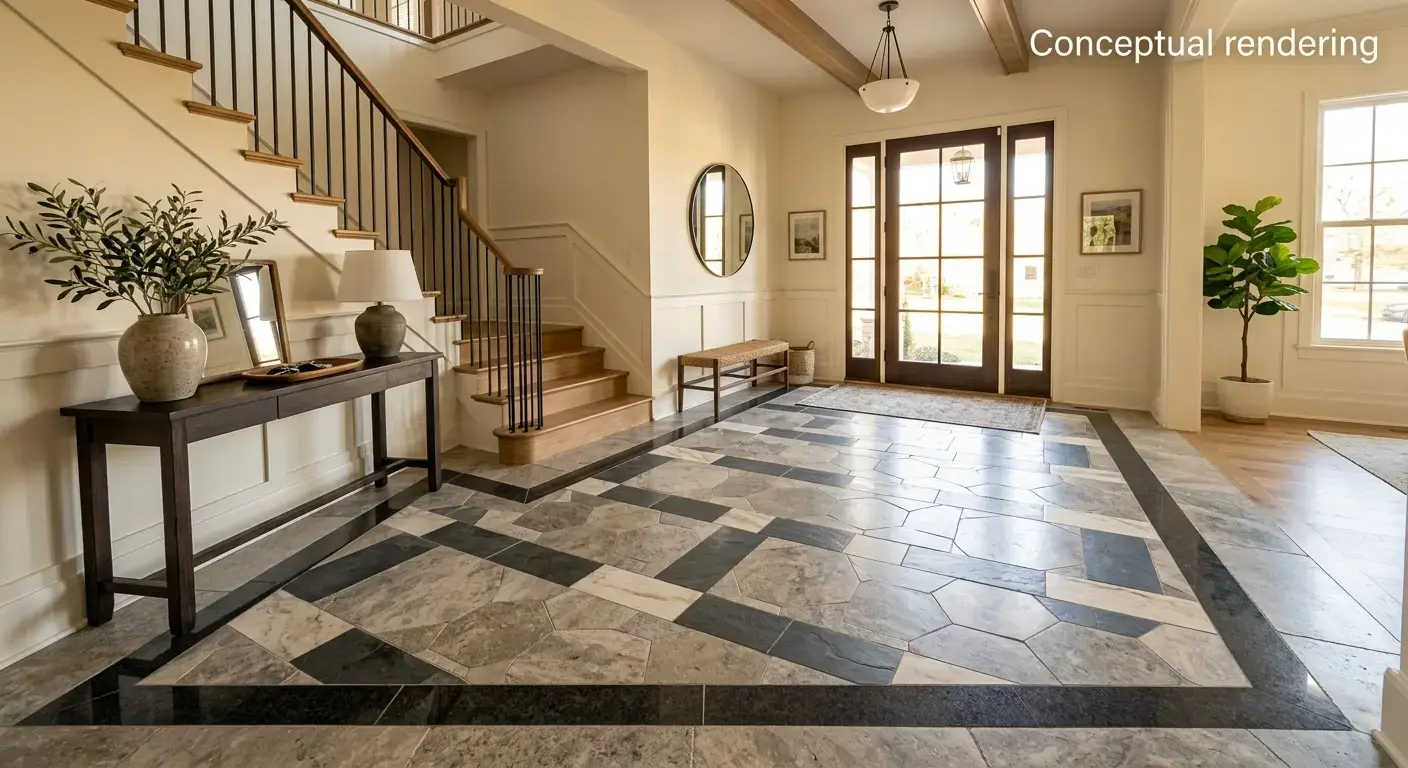
Tile and stone mix flooring pairs porcelain tile fields with natural stone slab accents to create a layered, dimensional floor design. The combination lets homeowners define zones, add texture contrast, and highlight architectural details without changing an entire floor to one material. It works well in open-concept homes throughout Stagecoach and nearby Nevada communities.
Homeowners in Fallon, Silver Springs, and Wadsworth are pairing tile fields with granite or quartzite slab borders to bring a tile and stone interior design sensibility into contemporary living spaces. Design teams working on homes near Fernley often use this layered approach to separate kitchens from living areas without a hard material break. The visual result reads as intentional rather than mismatched, especially when tone and veining are coordinated across both surfaces.
Contemporary builds in northern Nevada often favor open floor plans, which puts more visual weight on flooring choices than in homes with more walls and doorways. A single material can start to feel flat across a large, uninterrupted space. Layering tile and stone gives a floor plan more depth, and it lets a homeowner echo the same palette used in countertops, backsplashes, or a fireplace surround elsewhere in the home.
Design Advantages of Combining Tile and Natural Stone Slabs
Blending tile and stone slab flooring gives contemporary homes more design range than a single material allows. Porcelain tile offers consistent sizing and a wide color palette, while natural stone slabs bring one-of-a-kind veining and texture. Together, they let a floor plan shift character from room to room while keeping a cohesive base tone throughout the home.
Durability varies by material and finish, so pairing choices should account for daily use. Porcelain tile resists moisture well in most residential settings, but proper care still preserves its appearance over time. Natural stone slabs add richness to a design, though many varieties require periodic sealing to guard against staining. Homeowners comparing options in person can browse the tile shop before finalizing a layout plan. Reviewing the porcelain certification standards that guide quality benchmarks across the industry can help clarify what a given tile rating actually covers.
Material choice also affects where a slab accent can go within a contemporary layout. Granite and quartzite tolerate a wider range of conditions, including shaded outdoor transitions, though performance still depends on finish and ongoing care. Travertine can be used outdoors but offers less UV resistance compared to other stones, while marble and dolomite are intended for indoor use and are not approved for outdoor applications. Semi-precious stone accents work well on walls but are not intended for floor or countertop use, so they pair with tile as a vertical feature rather than underfoot.
Advantages and Considerations of Mixed Tile and Stone Flooring
- Advantage: Mixing formats creates zone definition without a full material change across the home.
- Advantage: Natural stone slab accents add unique veining that porcelain alone cannot replicate.
- Advantage: Coordinated tone between tile and stone supports a cohesive whole-home palette.
- Consideration: Aligning grout lines with slab seams takes careful planning before any layout is finalized.
- Consideration: Natural stone finishes need periodic resealing, so ongoing care affects long-term appearance.
- Consideration: Polished stone surfaces can be slippery when wet, so finish choice matters near entries.
Weighing these advantages and considerations together before finalizing a floor plan helps avoid costly changes later in a project. A short planning conversation with a design team can flag which stone and tile pairings work well for a specific room, and which combinations may need a different finish to hold up in a high-moisture area.
Where Tile and Stone Mix Flooring Fits Best in Contemporary Homes
This layered flooring style suits several zones within a contemporary home, from open living areas to smaller transition points. Choosing where to apply each material depends on traffic patterns, moisture exposure, and the overall design story a homeowner wants to tell. Contemporary floor plans throughout Stagecoach and the surrounding area often favor fewer interior walls, which means flooring alone has to carry more of the room-to-room distinction that walls once provided.
Open-Concept Living Areas
Large porcelain tile fields anchor open living areas, while a stone slab border can outline a seating zone or hallway path. This layout draws the eye through the space without requiring a full change in flooring material. Recent coverage of flooring innovation trends points to more homeowners embracing this layered, zone-based approach.
Keeping the tile field in a neutral tone lets a bolder stone accent carry the visual interest without competing for attention. A quartzite border with strong movement, for example, stands out more clearly against a calmer porcelain field. Grout color also matters here, since a mismatched grout line can undercut an otherwise well-planned layout.
Kitchen and Entry Transitions
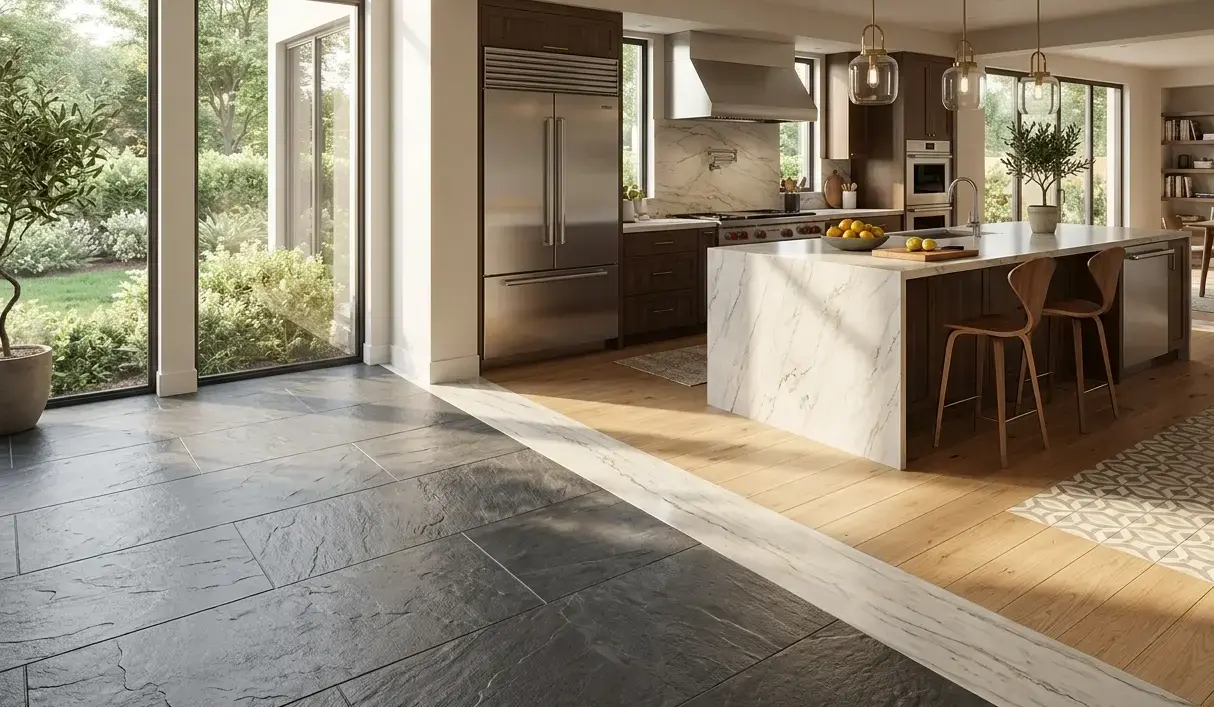
Entryways and kitchen thresholds are natural spots for a stone slab strip against a tile field, since the transition marks a shift in room function. A honed or matte finish is worth considering in these zones, since polished surfaces can be slippery when wet near sinks or exterior doors.
A narrow stone strip at a threshold also gives a home a sense of arrival without a large material commitment. This works especially well where a mudroom, kitchen, or entry meets a larger open living area. Keeping the strip width consistent throughout a home ties separate transitions together as one design decision rather than several unrelated ones.
Accent Walls and Fireplace Surrounds
Stone slabs also extend vertically as fireplace surrounds or accent walls, paired with a coordinating tile floor below. This vertical and horizontal pairing ties a room together visually. Designers following architects and designers resources often cite this pairing as a defining feature of current contemporary interiors.
Fireplace surrounds benefit from a slab with strong, consistent veining, since the surface sits at eye level rather than underfoot. Heat tolerance varies by stone type and finish, so matching the surround material to its intended clearance from the firebox matters. Pairing that surround with the same stone used as a floor accent elsewhere in the home reinforces the overall design story.
Porcelain Tile vs. Natural Stone Slab for Mixed Flooring
 Conceptual rendering
Feature | Porcelain Tile | Natural Stone Slab |
Composition | Engineered, consistent sizing | Quarried, unique veining |
Sealing Needs | Minimal or none in most cases | Often needed periodically |
Finish Range | Polished, honed, specialty | Polished, honed, leathered, specialty |
Best Zones | Large floor fields | Borders, accents, fireplace surrounds |
Design Character | Uniform, predictable | One-of-a-kind, natural variation |
Planning a Mixed Tile and Stone Flooring Layout
- Map the zones where tile fields meet stone slab accents throughout the floor plan.
- Choose a dominant material for the largest surfaces to anchor the overall palette.
- Coordinate tone and veining between the tile and stone before committing to a layout.
- View finish options in person, since lighting changes how a surface reads day to day.
- Confirm the plan and explore slab options with the design team.
Nova Tile and Stone Supports Stagecoach-Area Design Projects
Homeowners planning a mixed tile and stone flooring project can rely on guidance from Nova's design team to coordinate materials, tones, and finishes across a floor plan. Their team helps translate a design vision into a workable material palette suited to the home's layout and light.
Nova Tile and Stone serves homeowners in Fernley, Fallon, Silver Springs, Wadsworth, and Stagecoach, NV, with a showroom where tile and stone selections can be viewed side by side. Contractors and designers working on multiple projects can complete a trade account application to streamline ongoing material sourcing.
Bringing reference photos or a rough floor plan sketch to a showroom visit helps the design team narrow down tile and slab pairings more quickly. Lighting in a showroom setting differs from home lighting, so viewing finishes near a window or under warm lighting can round out the picture. A short conversation with the design team often surfaces pairing options a homeowner had not considered.
Newer contemporary builds in Stagecoach tend to feature larger great rooms and fewer segmented spaces, which puts flooring choices front and center in the overall design. Homeowners working on a new build or a remodel in the area can use the same layered tile and stone approach to distinguish a kitchen, dining nook, or entry within one continuous room. Coordinating those choices early in a project tends to produce a more unified result than adjusting the plan partway through.
Visiting the Fernley showroom lets homeowners see tile and stone finishes side by side before finalizing a design. Scheduling time to book a consultation ahead of a visit helps the design team prepare relevant options in advance.
Conclusion
Tile and stone mix flooring gives Stagecoach-area homeowners a way to layer texture, tone, and material character across a contemporary floor plan. Thoughtful zone planning, coordinated finishes, and attention to moisture-prone zones keep the design cohesive from room to room and functional for daily life. Whether the goal is a subtle threshold accent or a full fireplace surround, matching each material to its proper zone supports a look that holds up over time with routine care. Homeowners ready to compare options can explore the full collection available through Nova Tile and Stone.
Our latest content
Check out what's new in our company !
Frequently Asked Questions
This flooring style combines porcelain tile fields with natural stone slab accents in a single floor design. The layered approach adds texture contrast and zone definition without switching the entire floor to one material.
Yes, granite slab borders or accents pair well with porcelain tile fields in many contemporary layouts. Coordinating tone between the two materials helps the combination read as intentional rather than mismatched.
Many natural stone varieties, including granite and marble, benefit from periodic sealing to guard against staining. In most cases, porcelain tile resists staining without the need for sealing, which is why it’s commonly chosen for expansive floor sections.
Polished finishes can become slippery when wet, so honed or matte finishes are worth considering near entries, kitchens, and other moisture-prone transitions. Finish choice should match how a zone is actually used day to day.
Materials like granite, quartzite, and porcelain tolerate outdoor exposure better than travertine, which suits shaded or indoor settings. Matching each material to its appropriate zone keeps a mixed flooring design performing well long term.
Visit Our Fernley Showroom – Nova Tile and Stone
1855 US Highway 95A North, Fernley, NV 89408
Store hours this week:
- Mon. - Fri.: 7:30 am - 4:00 pm
- Sat. - Sun.: Closed