Stagecoach bathroom design often starts with a simple question: stone, tile, or both? Marble and travertine slabs bring natural veining and warmth to vanities and shower walls, while porcelain tile offers a durable, low-maintenance floor option. Homeowners near Stagecoach, Fallon, Silver Springs, and Wadsworth can combine these materials to balance style with everyday practicality. Selecting the right finish for each surface matters as much as the material itself, since polished stone behaves differently underfoot than honed or textured options. This guide walks through where marble, travertine, and tile perform best in a bathroom, along with maintenance considerations that keep surfaces looking their part for years. A quick trip to Nova's Fernley showroom lets homeowners see marble, travertine, and tile finishes in person before finalizing a plan.
A bathroom remodel touches nearly every surface in the room, so material decisions made early on shape how the space looks and functions for years to come. Natural stone slabs and porcelain tile can be mixed within a single bathroom, letting a marble vanity pair with a tile floor, or a travertine accent wall sit beside a porcelain shower surround. Thinking through moisture exposure, foot traffic, and cleaning routine for each surface helps narrow the options before finishes are chosen.
Benefits of Marble, Travertine, and Tile for Nevada Bathroom Design
Natural stone and porcelain tile each bring distinct qualities to a bathroom remodel. Marble slabs offer dramatic veining that few materials can match, though the surface benefits from regular sealing to resist staining. Travertine's warm, earthy tone pairs well with both traditional and modern bathroom palettes, and its naturally textured finish can help with underfoot traction when honed rather than polished. Porcelain tile brings consistent color and pattern across large floor or wall areas, making it a practical choice for busy household bathrooms.
- Marble slab countertops and shower surrounds create a distinctive focal point, though sealing and prompt cleanup of spills help preserve the finish.
- Travertine tile and slab surfaces bring warm, layered color variation, with honed or tumbled finishes suited to areas that stay damp.
- Porcelain tile floors and walls offer consistent design flexibility, and matching bathroom fixtures becomes simpler with a wide color range.
- Every material referenced here performs best when finish selection matches the specific surface and moisture exposure of the space.
For a deeper look at how tile standards are developed industry-wide, the TCNA Handbook outlines methods and specifications used across the tile industry.
Color and pattern also play a role in how a bathroom feels day to day. Marble's veining tends to read as a statement piece, so many homeowners pair it with simpler tile elsewhere in the room to avoid visual competition. Travertine's warmer, more uniform tone works well as a supporting material behind a bolder marble feature. Porcelain tile, since it comes in a wide range of printed patterns, can echo the look of natural stone while offering a more uniform, repeatable appearance across large surfaces.
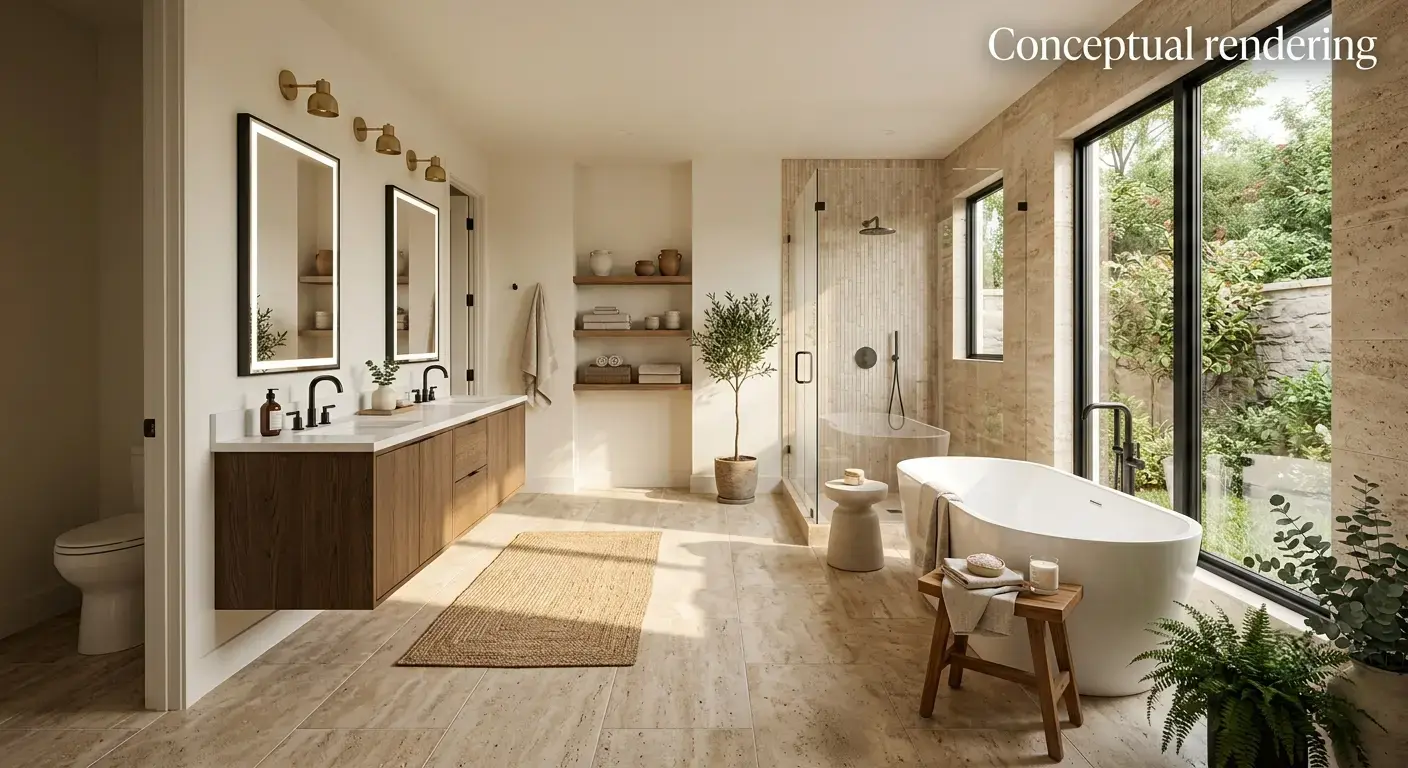
Floor, Wall, and Countertop Applications for Stone and Tile
Bathroom Walls
Shower walls and accent walls are where polished marble often shines, since splash exposure matters more than foot traffic. Travertine tile in a honed finish creates a softer, matte look for full-height shower surrounds. Porcelain tile walls extend design consistency from floor to ceiling while keeping grout lines manageable. Current design coverage from Tile Letter points to continued innovation in surface materials for bathroom applications.
A single accent wall behind a tub or vanity is a common way to introduce marble's veining without covering an entire room in natural stone. Pairing that accent wall with simpler porcelain tile on the remaining walls keeps the overall material palette balanced. Homeowners who prefer a more uniform look throughout can extend the same tile from wall to wall, reserving marble or travertine for a single focal surface.
-
Bathroom Floors
Bathroom floors face constant moisture, so finish selection carries real weight. Honed or leathered marble and travertine reduce slipperiness compared to polished finishes, though a bath mat near the shower remains a sensible precaution regardless of material. Porcelain tile floors are available in matte and textured finishes suited to wet-area use. The American National Standards Institute publishes guidance on measuring wet-area traction, and the ANSI DCOF resource explains how these standards apply to hard-surface walkways.
Grout joint width is another floor consideration that gets overlooked. Natural stone tile with natural edge variation typically needs a wider grout joint to accommodate slight size differences between pieces, while rectified porcelain tile can support tighter joint lines for a more streamlined look. Either approach works in a bathroom setting, so the choice often comes down to whether a homeowner prefers a more textured or more seamless floor appearance.
-
Bathroom Countertops
Marble and travertine slab countertops bring a natural stone look to vanities, though both benefit from sealing and avoiding acidic cleaners that can dull the surface. Porcelain slab or tile countertops offer a low-maintenance alternative with consistent color across the full vanity run. Pairing a stone countertop with tile flooring or wall surfaces creates a cohesive look without requiring identical materials throughout the room.
Comparison: Marble, Travertine, and Porcelain Tile.
Material | Best Bathroom Use | Recommended Finish | Maintenance Note |
Marble | Countertops, accent walls | Honed or polished | Seal regularly; avoid acidic cleaners |
Travertine | Floors, shower walls | Honed or tumbled | Seal regularly; wipe spills promptly |
Porcelain Tile | Floors, walls, countertops | Matte or textured | Clean with non-abrasive products |
Advantages and Considerations
Advantages:
- Marble and travertine slabs offer one-of-a-kind veining and natural color depth.
- Porcelain tile provides consistent pattern matching across large surface areas.
- Combining stone and tile allows design flexibility across floors, walls, and countertops.
Considerations:
- Natural stone requires periodic sealing to maintain stain resistance.
- Polished finishes are more prone to slipperiness in wet bathroom areas.
- Surface care routines differ by material, so a consistent cleaning plan helps preserve appearance.
Five Steps to Planning a Stagecoach Bathroom Remodel
- Map each surface separately. Decide which zones, floor, wall, countertop, will use stone, tile, or both.
- Match finish to moisture exposure. Choose honed or textured finishes for floors and showers, saving polished finishes for lower-splash walls.
- Coordinate color and veining. Compare marble, travertine, and tile samples together to confirm they complement each other.
- Confirm a maintenance routine. Sealing schedules and cleaning products vary by material, so a written plan helps once surfaces are in place.
- Review samples before ordering. Tile samples ship free, making it easy to compare finishes at home ahead of a final decision.
Bring Your Stagecoach Bathroom Vision to Nova Tile and Stone
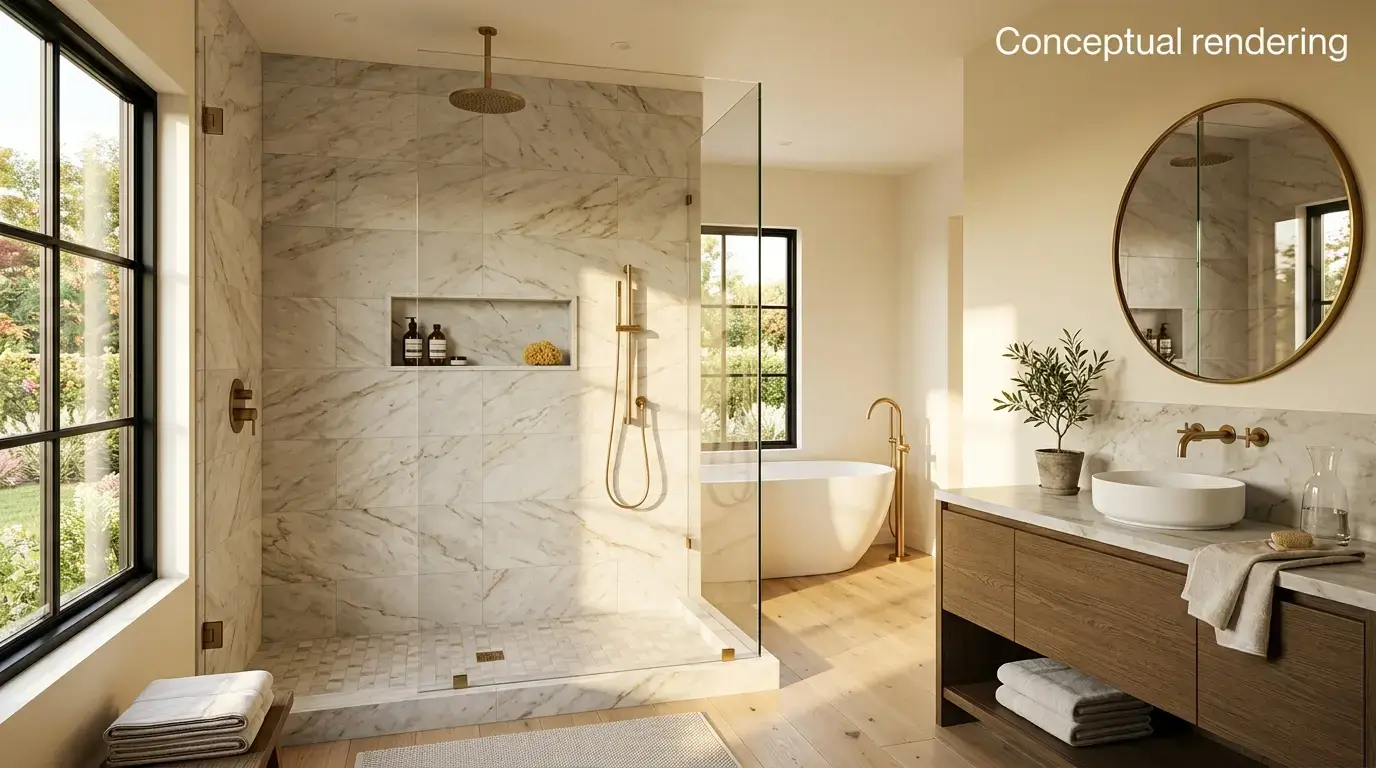
Nova's team offers guidance on matching marble, travertine, and tile surfaces to a bathroom's layout and moisture zones. Slab options span a range of veining and color, while tile samples ship free for homeowners comparing finishes before a final decision. Visiting a showroom in person remains the clearest way to judge how a stone slab or tile finish reads in natural light.
Bathroom lighting, whether natural daylight or vanity fixtures, changes how marble veining and travertine tone appear compared to how they look under showroom lighting. Bringing a tile sample home and viewing it at different times of day helps confirm a finish choice before committing to a full bathroom surface plan.
Nova serves homeowners throughout the Stagecoach, Fallon, Silver Springs, and Wadsworth area. Showrooms are also available in Reno for those planning a visit while in the area. A Minden location offers the same slab and tile selection for southern Nevada projects. Homeowners traveling toward California can also stop by the Sacramento showroom to compare finishes in person.
Learn more about Nova's background and showroom locations before starting a bathroom material search.
Conclusion
Stagecoach bathroom design benefits from thoughtful pairing of marble, travertine, and tile across floors, walls, and countertops. Each material brings a different balance of color, texture, and upkeep, and matching finish to moisture zone keeps surfaces performing well over time. Comparing tile samples and stone slab options side by side, under real bathroom lighting, makes the decision easier before any surface is finalized. Browsing stone and tile options helps narrow down choices ahead of a showroom visit. A well-planned material palette turns a bathroom remodel into a lasting, cohesive space for daily use.
Frequently Asked Questions
Marble can work on bathroom floors when finished honed or leathered rather than polished, since matte finishes offer better traction. Regular sealing helps protect against staining and moisture absorption over time.
Travertine is a natural stone with warm, varied color and texture, while porcelain tile offers a manufactured, consistent pattern. Both can suit bathroom floors and walls depending on the desired look and maintenance routine.
Yes, marble and travertine are porous natural stones that benefit from periodic sealing in bathroom settings. Sealing helps resist staining and moisture absorption, and a consistent cleaning routine preserves the surface longer.
Tile and stone pair well together, such as a porcelain tile floor with a marble or travertine countertop or accent wall. Coordinating color and veining across materials creates a cohesive overall look.
Tile samples ship free, making it possible to compare finishes and colors at home before finalizing a bathroom design plan. Slab samples are not offered, though showroom visits allow direct comparison of stone options.