The difference between solid and engineered hardwood comes down to construction. Solid hardwood is a single piece of wood, usually ¾ inch thick, that can be sanded and refinished multiple times. Engineered hardwood is a thin real-wood veneer, typically 0.6mm to 6mm, bonded over layers of cross-grained plywood, which makes it more resistant to expansion and contraction than solid wood. Solid hardwood generally costs more upfront but can be refinished for decades, while engineered hardwood costs less initially and handles humidity changes and installation over concrete or radiant heat more reliably. In Virginia City Highlands, where elevation near 5,984 feet brings wide daily temperature swings and low humidity, that construction difference has a direct effect on which type of hardwood holds up better over time.
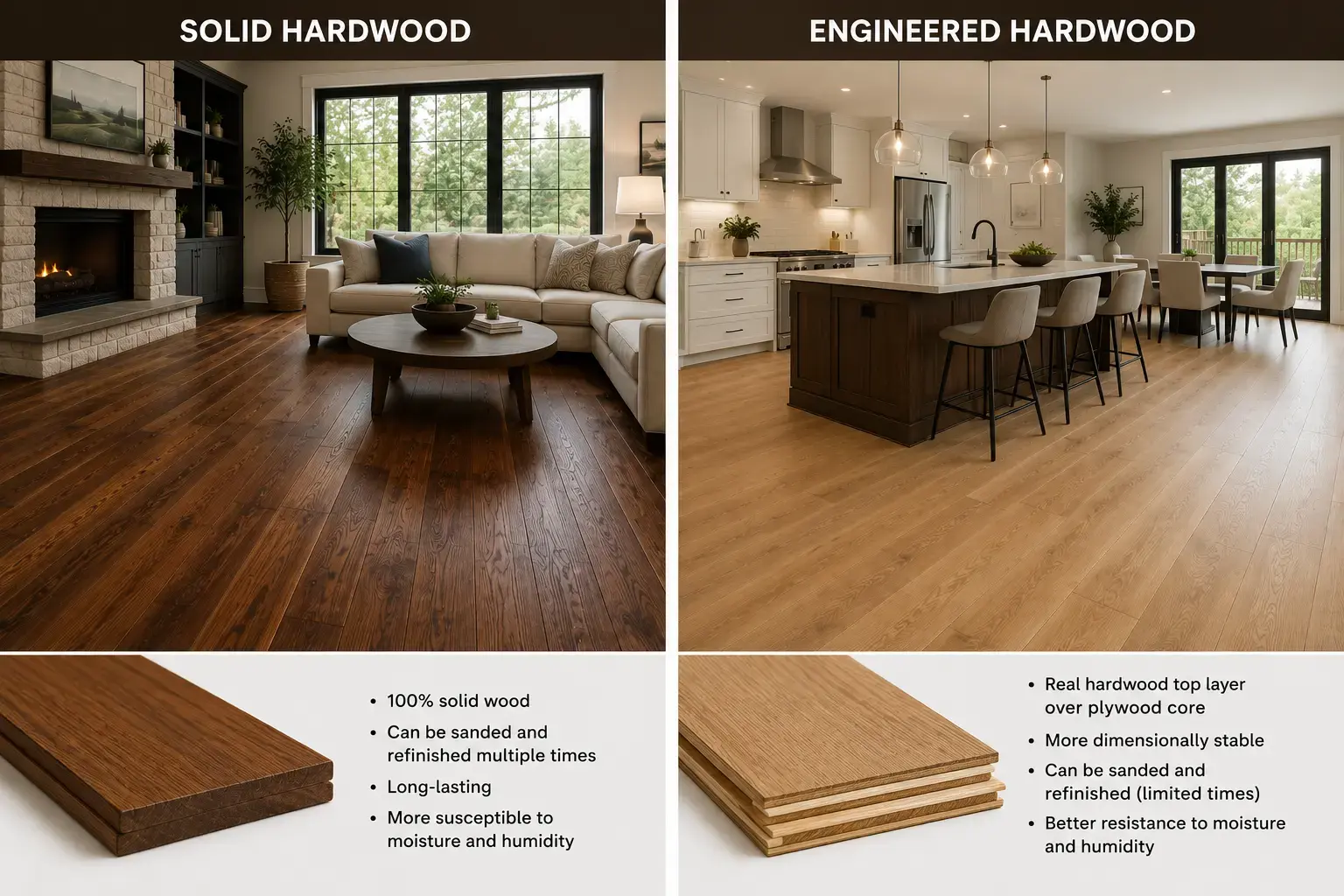
What Separates Solid Hardwood From Engineered Hardwood
Solid hardwood is one material all the way through; engineered hardwood is a real wood layer bonded over a plywood core. That difference is what separates the two once they're graded, milled, and finished for sale. Solid hardwood is cut directly from a log, so the grain and color run consistently through the entire thickness of the plank. Engineered hardwood's visible surface is a wood veneer, so its appearance depends on the quality and species of that top layer, while the plywood core underneath handles the structural work of resisting movement.
Both products come in the same range of species, finishes, and plank widths, and side by side on a showroom floor, most homeowners can't tell them apart by look alone. The differences show up in how each one performs once it's installed in a specific home and climate.
How the Highlands Climate Factors Into the Decision
Virginia City Highlands sits at roughly 5,984 feet elevation in a high desert environment, with wide swings between daytime highs and nighttime lows and low ambient humidity for much of the year. That kind of climate puts more stress on wood flooring than the milder, more humid conditions closer to Lake Tahoe. Solid hardwood expands and contracts with seasonal humidity changes, and in an environment with sharp swings, that can mean more noticeable gapping between planks in dry winter months if the home's interior humidity isn't well managed.
Engineered hardwood's cross-layered core resists that movement, which is one reason it tends to hold up better in homes without tightly controlled year-round humidity. This is also relevant for Highlands properties on well water and private systems rather than municipal utilities, where indoor humidity levels can vary more than in a home connected to a public water supply. Homes on the larger, more dispersed lots typical of the Highlands, many with barns, outbuildings, or additions built at different times, may also have varying subfloor conditions from one room to the next, which is worth discussing during a flooring consultation regardless of which product is chosen.
The National Wood Flooring Association's technical guidelines address regional climate variations and moisture-related recommendations for wood floor installations, generally pointing toward maintaining indoor conditions in a fairly narrow temperature and humidity band for the life of the floor. That range is harder to hold steady in a high desert climate like the Highlands' than in more temperate parts of the Truckee Meadows. Winter heating season is typically when indoor humidity drops fastest here, and running a humidifier during those months can meaningfully reduce gapping in solid hardwood installations. Because engineered hardwood is less sensitive to these swings, it's often the more forgiving option for homeowners who aren't planning to actively monitor and adjust indoor humidity throughout the year.
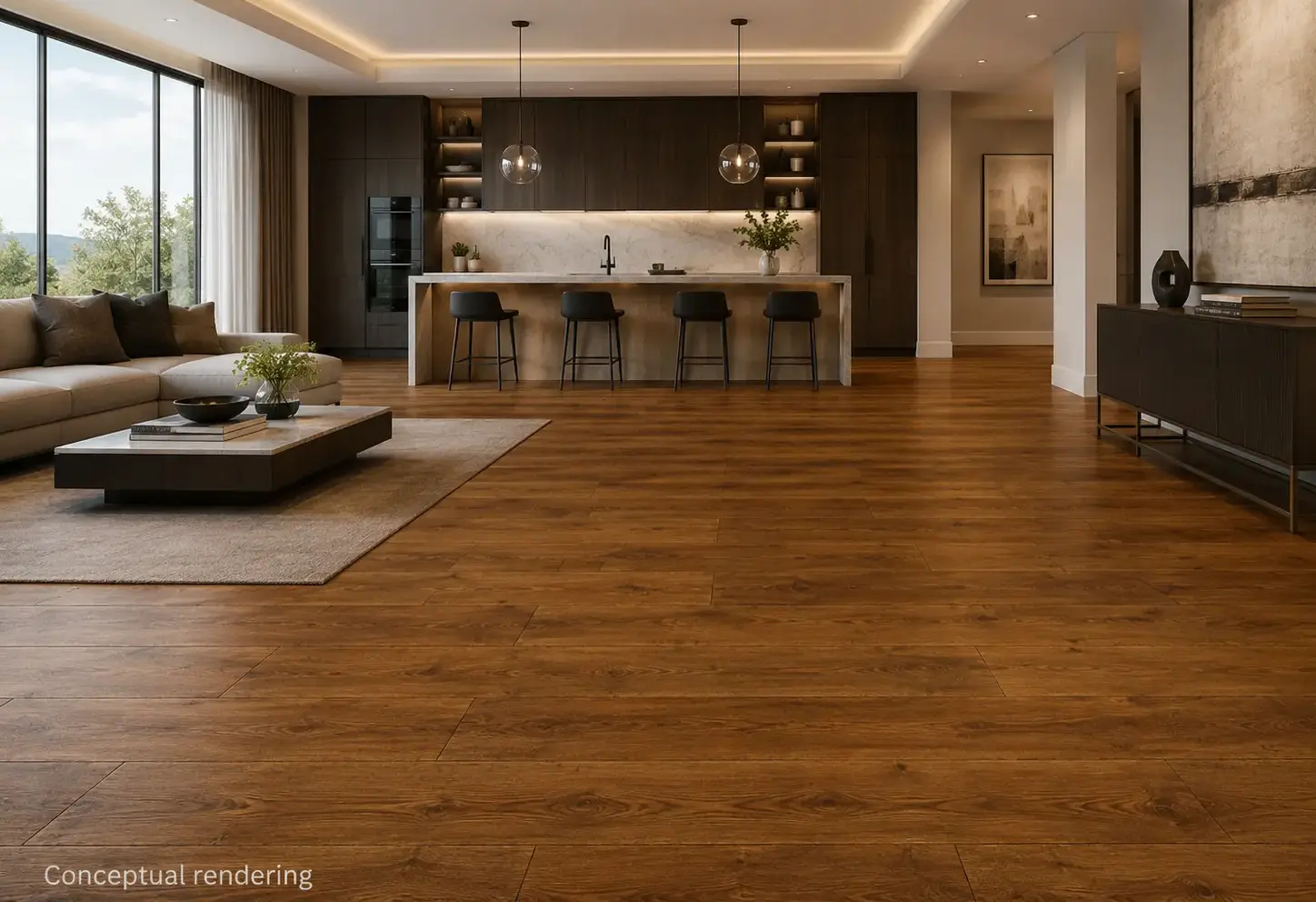
Durability, Refinishing, and Where Each Type Works Best
Solid hardwood's biggest long-term advantage is refinishing. Because the entire plank is the same species all the way through, it can typically be sanded and refinished multiple times, restoring the surface after decades of wear. Engineered hardwood can also be refinished, but only as many times as its wear layer allows, generally once or twice depending on veneer thickness, and very thin veneers may not be refinishable at all.
In terms of raw hardness and resistance to dents, that comes down to species rather than construction type. Hardness is measured on the Janka Scale, which rates the pound-force needed to push a steel ball halfway into a wood species; common domestic species like maple, hickory, and oak rate harder than species like walnut, cherry, and birch, and that hardness rating applies specifically to solid wood rather than engineered flooring.
That durability profile points to where each type performs best. Solid hardwood is suited to main living areas with relatively stable indoor climate control, above grade, and away from major sources of moisture, a strong fit for the great rooms and primary living spaces common in the custom homes throughout the Highlands. Engineered hardwood opens up more flexibility: it can be installed over concrete, over radiant heat systems, and in spaces where moisture or temperature swings are more likely, making it a practical choice for lower levels, additions, or rooms adjacent to unconditioned spaces, situations that come up more often on large, multi-structure Highlands properties than in a typical in-town lot.
Finish Options: Prefinished vs. Site-Finished Hardwood
Both solid and engineered hardwood are available prefinished or site-finished, and this decision is separate from the solid-versus-engineered choice. Prefinished planks arrive from the factory with the stain and protective coating already cured, which means less dust and disruption during installation and a finish backed by manufacturer testing. Site-finished floors are sanded, stained, and coated after installation, which allows for custom stain colors and a seamless, board-to-board finish without the beveled edges common on some prefinished products.
For a large Highlands home with multiple rooms or an open floor plan, prefinished flooring is often the more practical choice simply because it shortens the installation timeline. Site-finishing tends to appeal more to homeowners chasing a very specific stain color or a completely flush, gap-free look across a single large room. Homeowners weighing this choice should also know that, according to U.S. EPA guidance on indoor air quality, adhesives, sealants, and coatings applied during on-site finishing can off-gas volatile organic compounds during and after installation, so proper ventilation while a site-finished floor cures is worth planning for.
Living With the Floor: Upkeep and Cost
Day-to-day care is nearly identical for both products. Sweeping or vacuuming regularly to remove grit, along with occasional damp mopping using a cleaner made for wood floors, keeps either type looking its best. Standing water is the bigger concern for both, since prolonged moisture exposure can damage the finish or, in more serious cases, warp the wood underneath. Cornell Cooperative Extension's guidance on hardwood floor maintenance recommends using a humidifier throughout the winter months specifically to keep wood movement and shrinkage to a minimum, a tip that carries extra weight in a low-humidity climate like the Highlands. Preventive habits make the biggest difference over time: felt pads under furniture legs, rugs in high-traffic areas, and prompt cleanup of spills all reduce how often either floor type needs attention beyond routine cleaning.
Cost follows a similar split. Engineered hardwood is generally the more budget-friendly option upfront, largely because it uses less of the premium hardwood species per plank. Solid hardwood tends to carry a higher material and installation cost, partly because it typically requires nail-down installation over a wood subfloor, while engineered planks can be installed with a wider range of methods depending on the subfloor. Over time, the cost picture can shift: solid hardwood's ability to be refinished repeatedly means a homeowner can restore the floor's appearance for a fraction of replacement cost, which can offset the higher initial investment across a few decades of ownership.
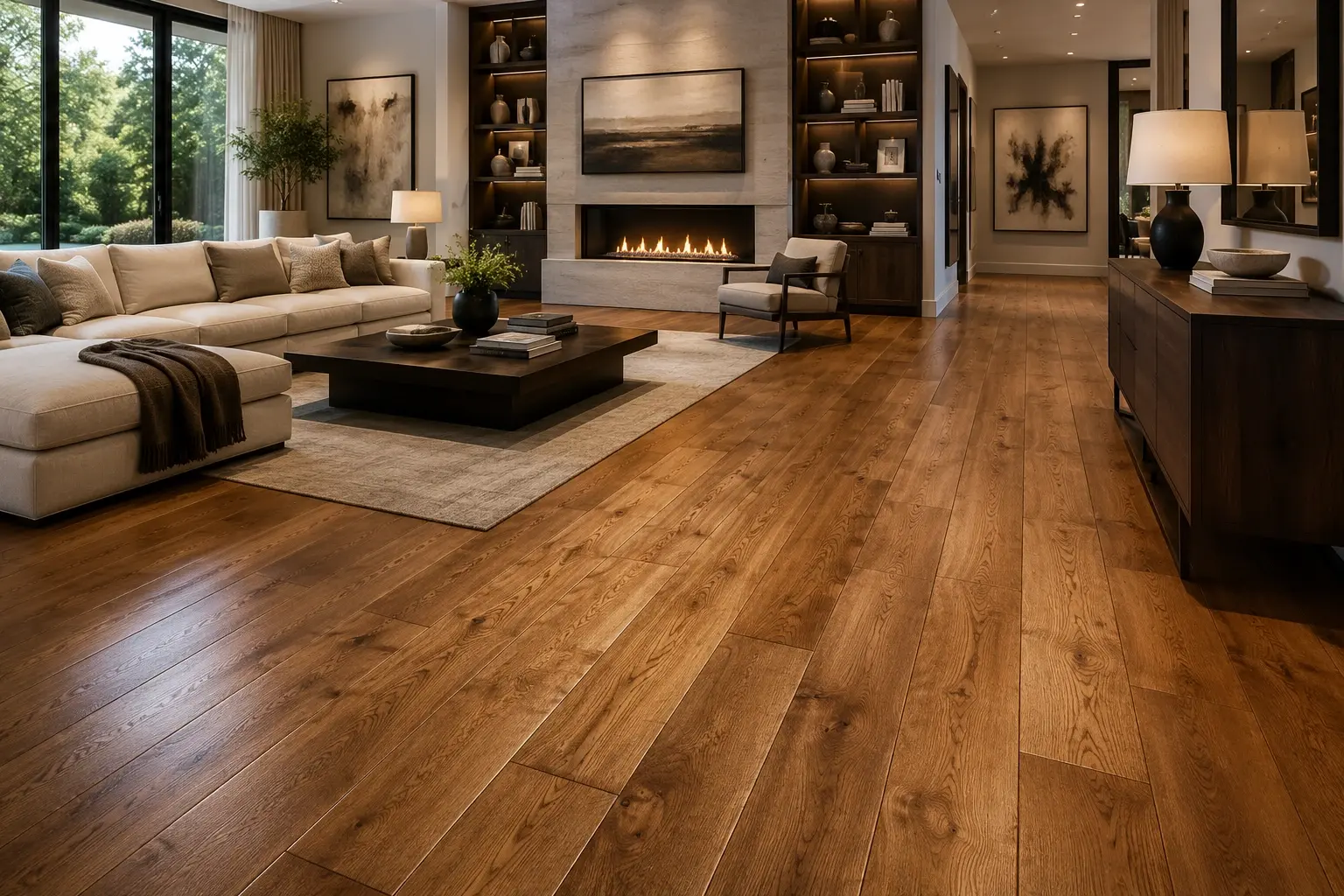
Resale Value Considerations
Flooring choice can factor into resale value, and hardwood consistently ranks among the stronger investments homeowners make. NAR's 2022 Remodeling Impact Report found that hardwood flooring has one of the most positive impacts on home resale value, with an estimated 118 percent return on investment. That data doesn't distinguish sharply between solid and engineered for resale purposes, since buyers and appraisers generally respond to the look and quality of the finished floor rather than the specific construction underneath it.
Visiting Nova Tile and Stone in Reno
Nova Tile and Stone's Reno showroom, located at 12835 Old Virginia Rd, Suite 24, Reno, NV 89521, and reachable at (775) 331-6682, carries both solid and engineered hardwood options alongside a broad selection of natural stone, tile, and other flooring materials. The showroom team can walk Highlands homeowners through species, finish, and construction options suited to their specific home and layout, and free design consultations are available for those ready to plan a project. Nova Tile and Stone operates as a material supplier, so installation is handled by separate fabricators and installers of the homeowner's choosing.
Conclusion
Solid and engineered hardwood both bring genuine wood beauty into a home, but the Highlands' high desert climate, larger properties, and varied subfloor conditions make the choice between them worth more than a passing thought. Solid hardwood rewards homeowners who can maintain stable indoor humidity and want a floor that can be refinished for generations. Engineered hardwood offers more flexibility for varied spaces and less predictable climate conditions, without sacrificing the warmth and character that draws people to hardwood in the first place. Weighing factors like humidity control, subfloor type, and long-term refinishing needs against the specific layout of a Highlands home is what ultimately points toward the right choice between the two.
Frequently Asked Questions
Yes. Since the top layer of engineered hardwood is a real wood veneer, the grain, color, and texture match solid hardwood closely enough that most people can't tell the difference once it's installed and finished.
Not always. Solid hardwood is generally recommended for above-grade spaces with consistent climate control. Additions, walkout lower levels, or rooms over concrete are usually better suited to engineered hardwood because of its added dimensional stability.
It depends on the thickness of the top wear layer. A veneer of 3mm or more can typically be refinished once or twice, while thinner veneers may not support refinishing at all. Solid hardwood, by contrast, can often be refinished four to six times over its lifespan.
Both are generally considered good choices for indoor air quality since neither traps dust, allergens, or pet dander the way carpet does. Engineered hardwood's plywood core can involve adhesives, so homeowners with sensitivities may want to ask about low-VOC certified products when comparing specific lines.
Wood flooring needs time indoors to adjust to a home's temperature and humidity before it's installed, since planks that go in too soon can shrink or expand afterward and cause gaps or buckling. This step matters more in a high desert climate with low ambient humidity, where the gap between outdoor and indoor moisture conditions tends to be wider than in more humid regions. Acclimation timelines vary based on moisture readings taken on-site, which is something an installer typically checks before starting the job.
Note: Some images on this page may be conceptual renderings created to illustrate design possibilities and may not depict actual installations.