Smart Home Integration for Stone and Tile Surfaces
Smart Home Integration is reshaping how Fernley homeowners plan kitchens, bathrooms, and living rooms, pairing connected appliances with durable stone and tile surfaces. Induction cooktops, smart faucets, and app-controlled radiant flooring now sit directly against quartz, granite, porcelain, and tile finishes, so surface choice affects daily performance. The short answer: choose a material rated for the appliance's heat, moisture, and clearance needs, then confirm cutout dimensions before surfaces are set in place.
Northern Nevada homes increasingly blend design and technology, and stone or tile surfaces provide a stable, easy-to-clean base for sensors, charging pads, and embedded lighting. Fernley homeowners exploring a kitchen or bath refresh benefit from understanding which materials pair naturally with smart fixtures, and which require extra planning around heat or moisture exposure. This guide covers practical benefits, room-by-room applications, and a short planning checklist for a technology-forward remodel.
Benefits of Smart-Ready Stone and Tile Surfaces
Pairing connected technology with stone or tile surfaces works best when the material's real-world limits are understood upfront. Heat-resistant materials still benefit from trivets, since heat resistance is not the same as thermal-shock protection near cooktops. Scratch resistance also varies by material and finish, so cutting boards remain a smart habit even on durable countertops.
Surface fabrication standards outlined in the TCNA Handbook can help inform proper substrate preparation, tile installation, and coordination around integrated fixtures. Exact cutout dimensions and placement for cooktops, faucets, and sensors should still follow the appliance manufacturer’s specifications and the fabricator’s requirements before slabs are set in place.
Beyond cutouts, homeowners often overlook power and cable routing for smart fixtures until late in a project. Planning conduit paths through cabinetry, rather than across a finished surface, keeps countertops and backsplashes free of visible wiring. Coordinating this early with a design team helps sensors, charging pads, and lighting controls sit where they are actually useful, rather than wherever access happens to allow.
Key benefits homeowners often look for:
- Non-porous, sealed surfaces support touchless faucets and hygiene sensors, though sealing needs periodic maintenance to stay effective.
- Consistent, stable countertop surfaces suit embedded charging pads, though spills should be wiped promptly to avoid residue buildup.
- Quartz and granite and quartzite slab options accommodate precise induction cooktop cutouts, though exact fit depends on appliance specifications confirmed in advance.
- Tile flooring paired with app-controlled radiant heat adds comfort, though thermostat placement should follow manufacturer clearance guidance.
- Natural stone and porcelain finishes generally clean easily with mild, non-abrasive products, which helps around frequently touched smart fixtures.
Where Smart Home Integration Works Best
Kitchen Counters and Islands
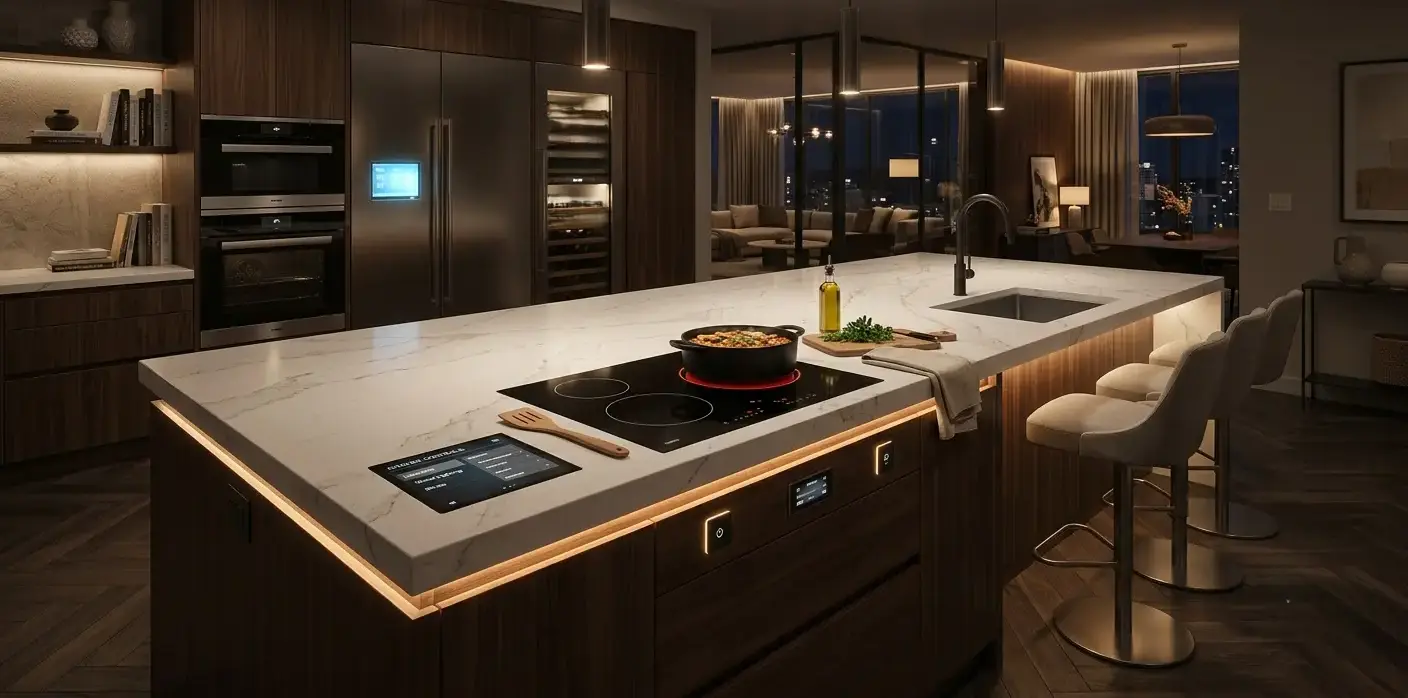
Kitchen islands are a common starting point for Smart Home Integration, since induction cooktops, warming drawers, and smart faucets often cluster in one work zone. Quartz is well suited to indoor kitchen counters and islands, though it is not rated for outdoor or floor-level exterior use. Granite handles similar cutouts while also tolerating a wider range of indoor placements.
Waterfall-edge islands finished in polished stone pair well with embedded LED lighting channels, creating a layered look around connected appliances. Polished finishes look sleek but become slipperier when wet, so matte or honed finishes suit floor areas near sinks better than polished slabs. Design trends shared through resources like the International Surface Event often highlight this pairing of matte floors with polished vertical surfaces.
Smart faucets with touchless sensors also depend on countertop geometry, since sensor range and mounting angle can shift depending on counter thickness and edge profile. Confirming these dimensions against a specific faucet model before surfaces are set in place helps avoid awkward gaps or sensor placement that misses its target.
Bathroom Vanities and Wet Areas
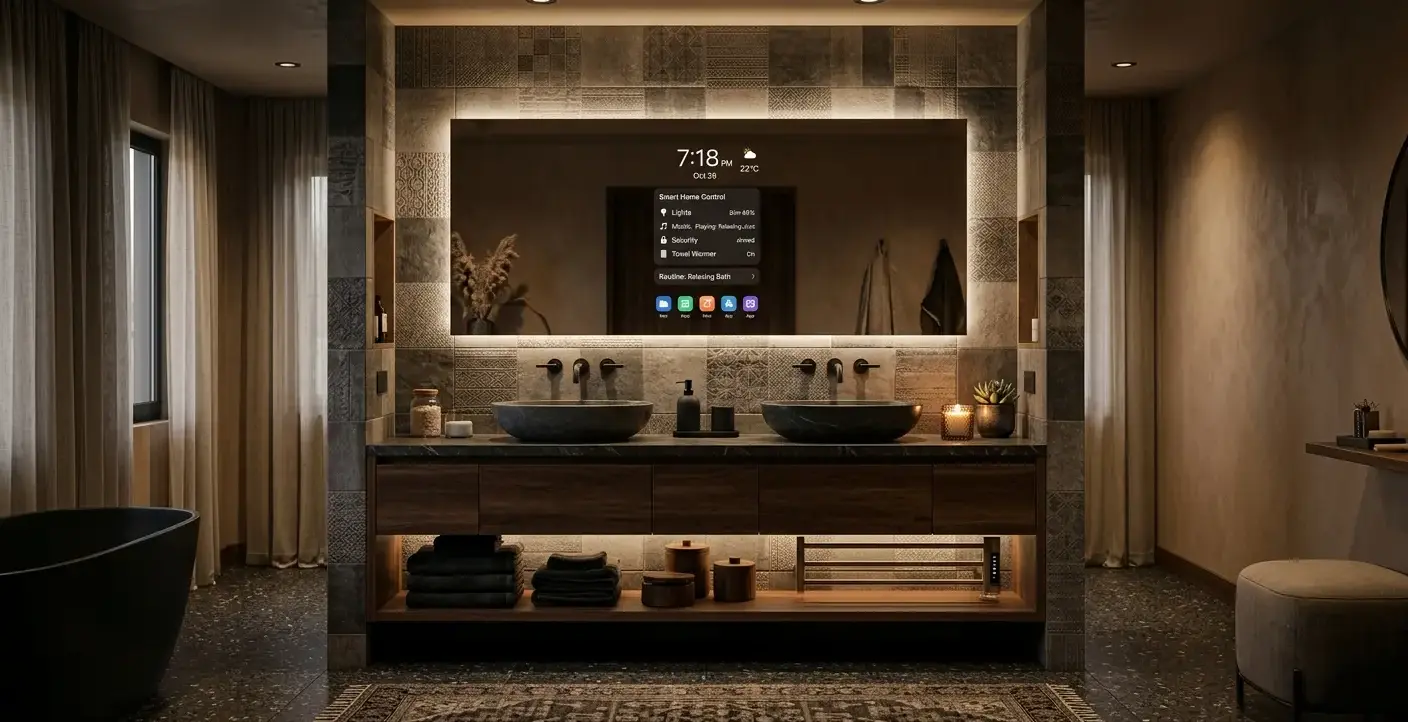
Bathrooms increasingly feature smart mirrors framed by tile surrounds, touchless faucets over stone basins, and app-controlled heated flooring beneath porcelain tile. Porcelain generally suits these humid, frequently cleaned spaces well, and manufacturers sometimes certify porcelain products through programs like porcelain tile certification reviews.
Natural stone vanity tops such as marble or dolomite bring warmth to a bathroom design, though these materials are best kept to interior or shaded spaces rather than full-sun exterior applications. Humidity sensors paired with sealed stone tops can help homeowners monitor moisture, but sealing still needs periodic reapplication to remain effective over time.
Smart mirrors with built-in defoggers work well against tile surrounds, since a stable, moisture-tolerant frame keeps the mirror's electronics protected from direct splash exposure. Matte or textured tile on shower floors pairs naturally with polished tile on surrounding walls, keeping the wet floor zone safer underfoot while preserving a brighter look above.
Living Room Surfaces and Ambient Tech
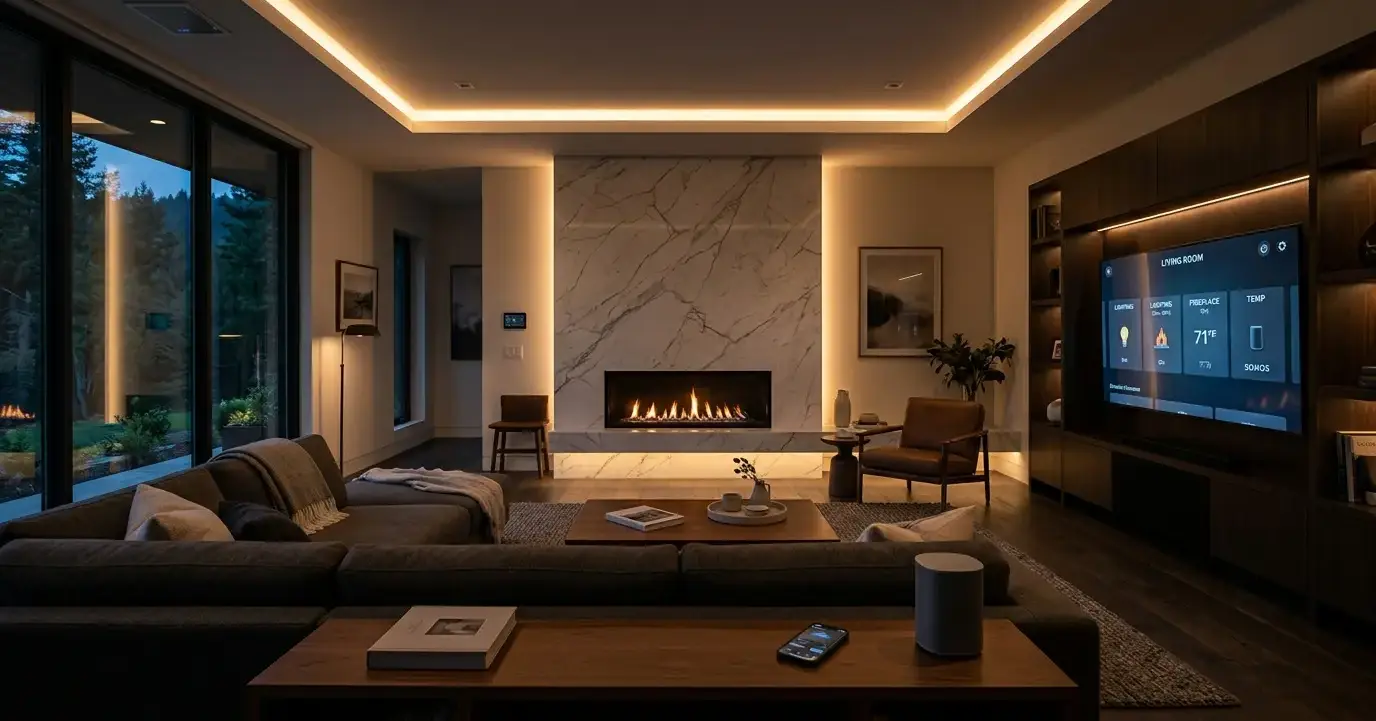
Living rooms benefit from Smart Home Integration through app-controlled fireplace inserts framed by stone or tile surrounds. Granite, quartzite, and porcelain are suited to fireplace applications and can handle both interior placement and covered exterior spaces. Programmable accent lighting behind textured stone panels adds depth without overwhelming a room's existing finishes.
Homeowners comparing materials for a media wall or fireplace surround can browse local options through shop local resources before narrowing a shortlist. Matching a stone or tile surface to the room's lighting plan generally works best when clearance codes for any gas insert are confirmed with a qualified specialist first.
Ambient lighting controlled through a smart hub can also highlight the natural veining in quartzite or granite panels, shifting color temperature throughout the evening. Choosing a honed or leathered finish for a large accent wall tends to soften glare from overhead lighting compared with a fully polished surface.
Material | Common Smart Pairing | Suited Location | Design Note |
Quartz | Induction cooktops, charging pads | Indoor counters, floors, walls | Consistent pattern, no leathered finish option |
Granite | Cooktops, fireplace surrounds | Indoor and outdoor, floor, wall, fireplace | Broad finish range including leathered texture |
Porcelain | Heated flooring, vanity tops | Indoor and outdoor, floor, wall, fireplace | Consistent slabs, no natural-stone origin claims needed |
Marble/Dolomite | Vanity tops, accent walls | Indoor or shaded areas only | Not rated for full-sun exterior use |
Quartzite | Fireplace surrounds, islands | Indoor and outdoor, floor, wall, fireplace | Natural veining varies slab to slab |
Material Comparison for Smart-Integrated Surfaces
Pros and Cons of Pairing Smart Tech With Stone or Tile
Pros
- Stable, easy-clean surfaces support sensors, touchless fixtures, and embedded lighting.
- Wide material range allows matching finish to each room's moisture and heat exposure.
- Design flexibility spans kitchens, bathrooms, and living room accent features.
Cons
- Cutout planning for appliances takes extra coordination before surfaces are set in place.
- Polished finishes require matte or honed alternatives in wet-floor zones.
- Sealing and cleaning routines still apply despite a surface's durable reputation.
Five-Step Planning Checklist
Nova Tile and Stone Smart Kitchen Integration
Homeowners planning a technology-forward remodel can lean on Nova Tile and Stone's material range to match surfaces with connected appliances. Learning Nova's showroom background helps explain why the Fernley showroom carries such a broad stone and tile selection.
Northern Nevada and Northern California homeowners are not limited to a single location. The Reno showroom carries additional slab options for larger island projects. The Minden location supports homeowners planning bathroom or living room refreshes. The Sacramento showroom rounds out the regional selection for California-based projects.
Free shipping on all tile samples makes it simple to compare finishes at home before committing to a material. Reach out to a showroom team for expert guidance on matching a surface to specific smart appliances and fixtures. Bringing sample pieces home also helps confirm how a finish reads under a kitchen's actual under-cabinet or pendant lighting.
Conclusion
Smart Home Integration works best when stone and tile selections are aligned with each appliance’s heat tolerance, moisture exposure, and clearance requirements from the very beginning of a project. Coordinating materials with connected technology ensures both safety and long-term performance. Explore the full Nova catalog to compare options for kitchens, bathrooms, or living rooms designed around smart fixtures and devices. Fernley homeowners can begin with a short list of planned appliances and features, then refine choices step by step to achieve a seamless, technology-ready layout.
Frequently Asked Questions
Induction cooktops, warming drawers, and embedded charging pads commonly pair with quartz or granite countertops, though appliance clearance and cutout specifications should be confirmed before surfaces are set in place.
Quartz can be used near induction cooktops in indoor kitchens, though trivets are still recommended since heat resistance is not the same as thermal-shock protection.
Porcelain tile generally works well with app-controlled radiant heating systems in bathrooms, though thermostat and sensor placement should follow the heating manufacturer's clearance guidance.
Smart, touchless faucets can pair with sealed natural stone sinks, though sealing needs periodic reapplication to keep the surface performing well around frequent moisture exposure.
A good starting point is listing planned appliances and fixtures, matching materials to each room's needs, and requesting tile samples to compare finishes under home lighting.