Choosing Slip Resistant Bathroom Tile for Your Fernley Home
Slip resistant bathroom tile gives Fernley homeowners a practical answer to a common problem: wet floors near tubs, showers, and sinks. The right surface texture, color, and pattern reduce slipping while still delivering a polished, updated look. Bathroom remodels are as much about safety as they are about style, and tile selection plays a central role in both.
For wet-area floors, look for tiles with a DCOF (Dynamic Coefficient of Friction) rating of 0.42 or higher, the industry benchmark for slip resistance in wet conditions. Matte and textured finishes typically perform better underfoot than high-gloss surfaces. Pattern, color, and size also affect how a small bathroom feels and functions day to day.
This guide covers surface textures, floor patterns, and coordinated wall and countertop designs suited to Fernley bathrooms, along with a comparison table, a short buying guide, and answers to common questions homeowners ask before starting a project.
Fernley's dry climate and hard water can leave mineral residue on bathroom surfaces over time, which makes finish choice especially relevant for local homeowners. A tile that resists slipping while remaining easy to wipe down helps simplify weekly upkeep in a busy household bathroom.
Homeowners weighing a full remodel against a partial refresh often start with the shower floor and walk-in areas first, since those surfaces carry the highest daily moisture exposure. Extending the same tile family into drier zones, such as vanity backsplashes, can help the room read as one cohesive design.
Key Benefits of Textured, Slip Resistant Surfaces
Choosing the right bathroom floor tile involves more than color matching. Texture, finish, and layout each affect comfort, safety, and long-term appearance in a room that sees daily moisture exposure.
Homeowners often assume any tile will work in a bathroom, but wet-area performance varies widely between finishes. A short list of core benefits helps frame the decision before narrowing down specific colors or patterns.
- Textured and matte finishes offer better underfoot traction near tubs and showers, though rugs or mats still help in high-splash zones
- Smaller format tiles create more grout lines, which can add traction, though grout still needs periodic sealing to resist staining
- Neutral and warm tile tones can make small bathrooms feel larger, though final results vary by lighting and layout
- Durable glazed or porcelain surfaces hold up to daily use, though abrasive cleaners can dull the finish over time
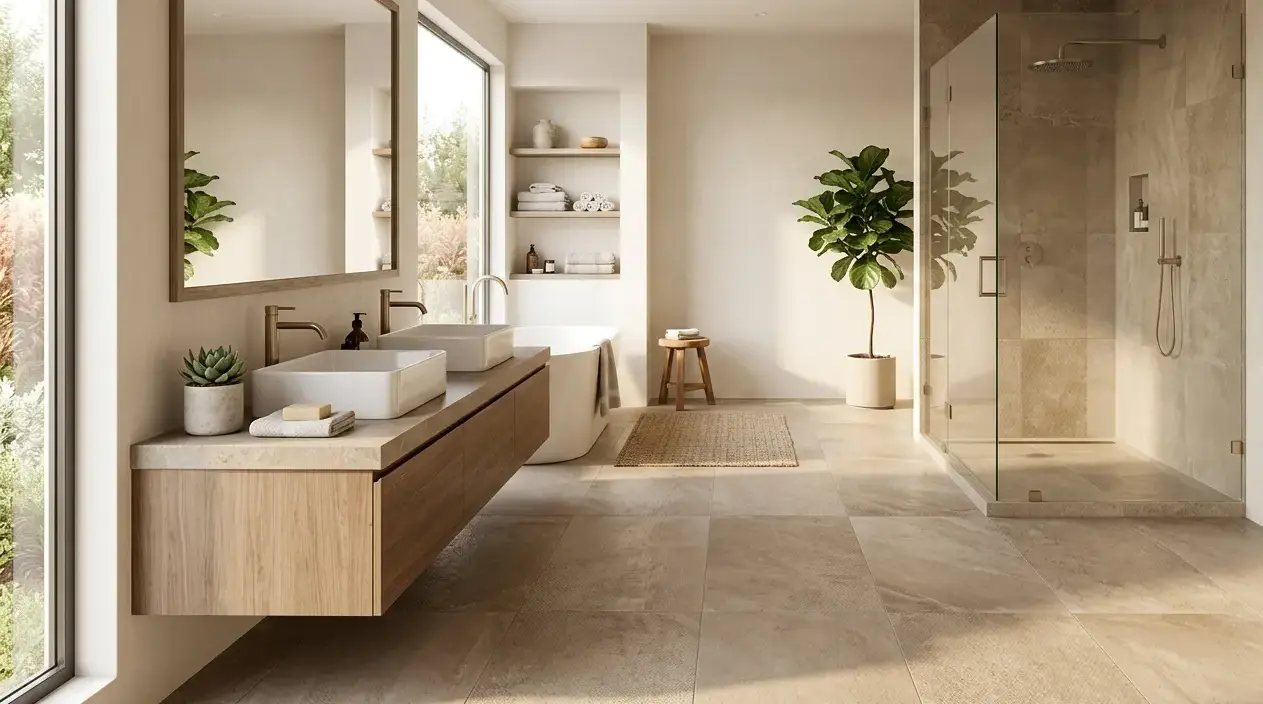 Conceptual rendering
Design trends for 2026 continue to favor natural-looking textures paired with functional performance, a shift covered in recent 2026 design trends coverage. Fernley bathrooms benefit from this pairing of practicality and updated style. Browsing a curated tile product selection helps narrow choices before visiting a showroom.
Beyond traction, tile choice affects long-term comfort in ways that are easy to overlook. Underfoot warmth, glare in a small windowless bathroom, and how easily a surface hides water spots all factor into daily satisfaction with the finished space.
None of these benefits eliminate the need for basic upkeep. Sealing grout on a regular schedule, drying standing water promptly, and avoiding harsh abrasive cleaners all help preserve both the look and the traction of a slip resistant floor over the years.
Tile Surface, Color, and Bathroom Floor Pattern Options
Bathroom tile decisions typically start with surface texture, move to color and pattern, and finish with how the floor coordinates with walls and countertops. Each choice affects both safety and the finished look of the room.
Layering these decisions in order helps avoid costly changes later. A homeowner who locks in floor texture and color first has an easier time selecting complementary wall tile and countertop material without starting the search over.
Tile Surface and Color Choices
Surface finish affects both traction and light reflection. Matte, honed, and lightly textured surfaces tend to read as slip resistant bathroom tile options, while high-gloss finishes are usually better reserved for walls. Color choice shapes the room's mood significantly.
Warm neutrals, soft grays, and muted blues remain common choices for Fernley bathrooms. Homeowners can browse a full range through the shop tiles by color catalog to compare shade families side by side before committing to a palette.
Darker tile tones tend to hide water spots and mineral deposits between cleanings, which can be useful in busy family bathrooms. Lighter tones brighten small, low-light spaces, though they may show residue sooner and require more frequent wiping.
Bathroom Floor Pattern Ideas
Floor pattern influences how spacious or intricate a bathroom feels. Classic layouts like herringbone, basketweave, and running bond each create a different visual rhythm underfoot, and smaller tiles generally add more grout for texture.
Patterned floors pair well with simpler wall tile, keeping the overall design balanced. Homeowners planning a full layout can explore options through the browse tile shop before finalizing a floor plan.
Diagonal layouts can make a narrow bathroom feel wider, while a straight grid layout tends to read as more traditional. Grout color also plays a role, since a contrasting grout line emphasizes pattern more than a matching tone.
Matching Wall and Countertop Designs
Coordinating floor tile with shower walls and vanity countertops creates a cohesive bathroom design. A classic approach pairs a textured floor with a complementary wall tone, following classic color schemes that tend to stay in style over time.
Countertop surfaces should echo, rather than exactly match, the floor and wall tile for visual depth. Slight variation between surfaces avoids a flat, monotone look while keeping the palette unified throughout the space.
Mixing finishes, such as a matte floor with a subtly veined countertop surface, adds visual interest without competing patterns. Keeping a consistent undertone across all three surfaces, whether warm or cool, ties the room together even when textures differ.
How Nova Tile and Stone Supports Your Bathroom Project
Selecting slip resistant bathroom tile is easier with guidance from a team familiar with local homes and climate conditions across the Fernley area. Nova Tile and Stone offers sample shipping on tile selections, letting homeowners compare texture, color, and finish before deciding.
Design consultants can help match floor, wall, and countertop tile for a cohesive bathroom, factoring in traffic patterns and moisture exposure. Homeowners are encouraged to contact Nova today to schedule time with a design consultant.
Nova serves Fernley, Fallon, Silver Springs, Wadsworth, and Stagecoach, and homeowners nearby can find shop local Fernley options in person. Industry direction from events like the International Surface Event also informs the tile selection Nova carries each season. Learn more learn about Nova Tile and Stone and its showroom locations.
Ordering physical samples remains one of the most reliable ways to judge how a tile will actually perform in a specific bathroom, since lighting and existing fixtures can shift how a color or finish reads in person. Reviewing a handful of finalists side by side at home, under both daytime and evening light, often narrows a decision faster than browsing alone.
5-Step Guide to Choosing Bathroom Tile
- Identify wet zones such as shower floors, areas around the tub, and the space directly in front of the sink
- Check the DCOF rating and prioritize tiles rated 0.42 or higher for those specific wet zones
- Select a surface texture and color family that suits the bathroom's size, natural light, and existing fixtures
- Coordinate wall and countertop tones with the floor tile for a cohesive design once everything is in place
- Compare physical samples at home in different lighting conditions before finalizing a full tile order
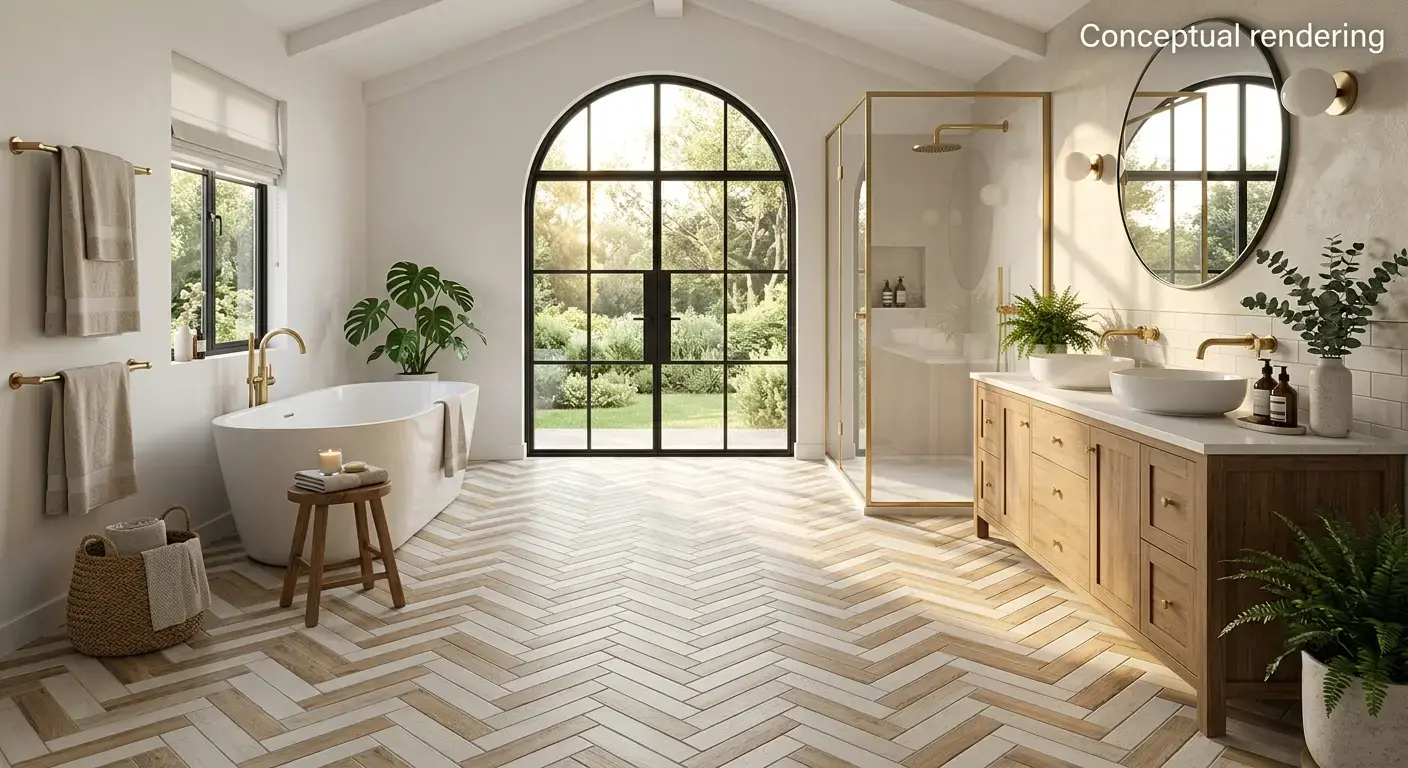 Conceptual rendering
Reviewing finish types side by side makes it easier to match each surface to the right spot in the bathroom, from the shower floor to the vanity backsplash.
Comparison Table: Bathroom Tile Surface Finishes
Finish Type | Traction Level | Best Placement | Maintenance Note |
Matte | Higher | Shower and bathroom floors | Occasional grout sealing recommended |
Textured | Higher | Wet-area floors | Textured grooves may need extra cleaning |
Honed | Moderate | Floors and walls | Avoid abrasive cleaners |
Polished | Lower when wet | Walls and dry countertops | Not recommended for shower floors |
Advantages and Considerations of Slip Resistant Bathroom Tile
Advantages
- Reduced slipping risk in wet zones when DCOF-rated tile is used correctly
- Wide range of colors and patterns available for custom bathroom design
- Coordinated wall, floor, and countertop options simplify overall design decisions
Considerations
- Textured surfaces can require more thorough cleaning in grout lines
- Pattern-heavy layouts may need professional planning for consistent alignment
- Performance still depends on proper care; no tile is entirely maintenance-free
Conclusion
Slip resistant bathroom tile offers Fernley homeowners a practical way to balance safety with design, from surface texture and DCOF ratings to coordinated color and pattern choices. Matching floor, wall, and countertop tones brings the whole room together while keeping wet zones safer underfoot. Comparing finishes side by side, then reviewing physical samples at home, helps confirm the right fit before committing to a full order. Reviewing Nova's tile collection is a useful next step before finalizing a bathroom plan.
Frequently Asked Questions
Slip resistant tiles typically have a matte or textured surface and a DCOF rating of 0.42 or higher, which improves traction in wet conditions compared to polished finishes.
Polished tile is generally better suited to walls or dry countertops rather than shower or bathroom floors, since smooth, glossy surfaces become slipperier when wet.
Choose complementary rather than identical tones across floor, wall, and countertop surfaces, and use texture or pattern variation to add depth while keeping the palette unified.
Lighter, neutral tile tones tend to make small bathrooms feel more open, while darker tones can add warmth and contrast, depending on lighting and layout.
Textured and smaller-format tiles create more grout lines, which can improve traction but may need more frequent cleaning and periodic sealing to resist staining.
Curious About Something Else?