Slab maintenance in Davis, CA comes down to three habits: routine cleaning, periodic sealing, and protection from heat and acidic spills. Granite, quartzite, and marble are common natural stone choices for Davis kitchens, and each one ages differently under Davis's hard water and dry Central Valley summers. Regular care keeps a slab looking its best and helps homeowners avoid costly mistakes like using the wrong cleaner or skipping resealing.
Davis homeowners deal with a particular mix of conditions. The city's water supply runs moderately hard to hard depending on the season and the blend of surface and groundwater in use at the time, university housing turns over tenants often, and many kitchens see heavy daily use from student roommates, young families, or multigenerational households near campus. All of that shapes how a stone countertop should be cared for here compared to other parts of the region.
Because Davis is a smaller, close-knit community with a large share of long-term homeowners alongside university-affiliated renters, maintenance habits often get passed along informally between neighbors or picked up from whoever lived in a home before. That can lead to a mix of good and outdated advice circulating locally, so it helps to start with a clear, current picture of what each stone type actually needs, whether you're weighing a single countertop or browsing the full range of tile, stone, and flooring options for a larger remodel.
Why Davis's Climate and Water Matter for Slab Care
Davis sits in the Central Valley, which means long, dry summers with intense sun and relatively low humidity. Kitchens with west-facing windows or skylights can see direct sunlight hit a countertop for hours at a stretch. Prolonged heat and UV exposure won't damage most natural stone the way it can with some synthetic surfaces, but it can accelerate the evaporation of sealers over time, which is worth factoring into your resealing schedule. For a broader look at how different stone types perform under everyday wear, Fine Homebuilding's guide to natural stone countertops breaks down the tradeoffs between granite, quartzite, marble, and other options.
Water hardness is the other local factor. Davis's water supply draws on a mix of Sacramento River surface water and local groundwater wells, and the exact blend shifts throughout the year, which is why hardness readings around town can range from moderately hard to hard depending on when and where you measure. Harder water leaves behind calcium and mineral deposits when it dries on a stone surface, especially around sinks and faucet areas. Left unaddressed, these deposits can build into a cloudy film that's easy to mistake for etching or a sealing problem.
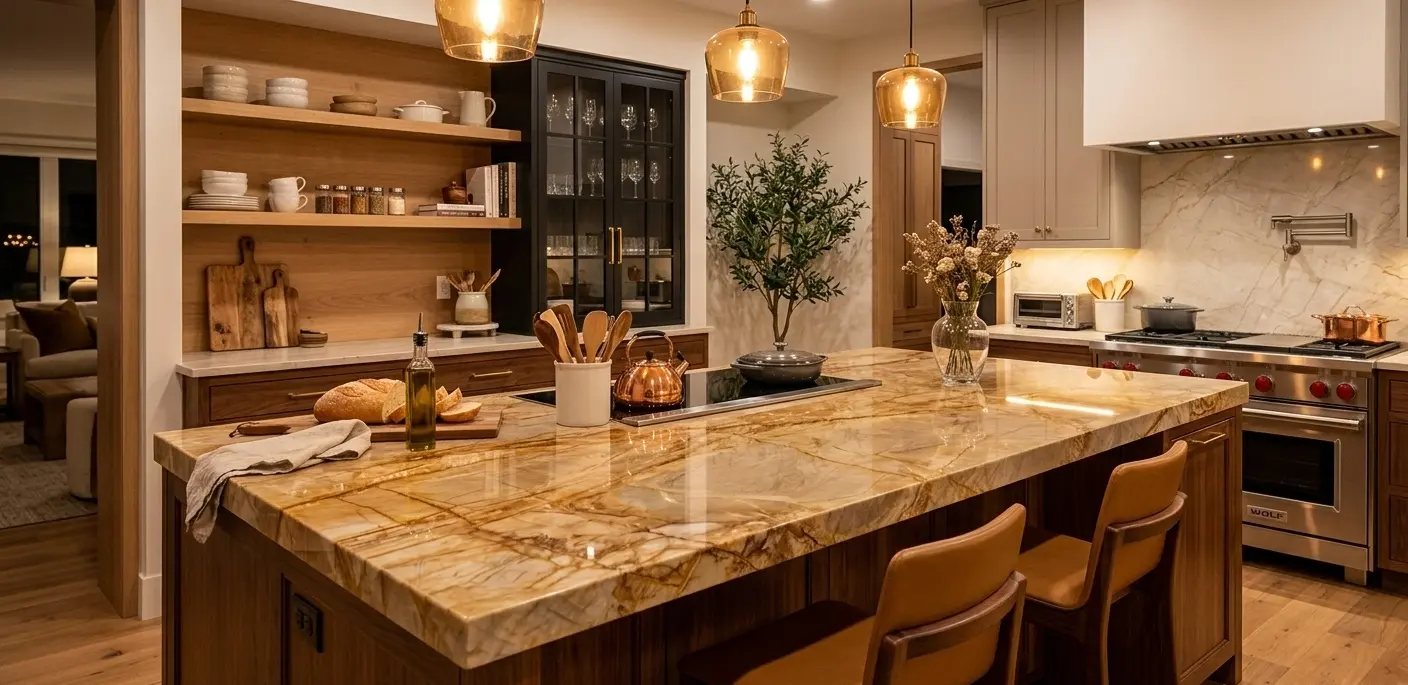
Daily Cleaning Habits That Protect Your Slab
One of the more useful habits for any natural stone slab is wiping up spills as they happen rather than letting them sit. This matters most for marble, which reacts to acidic substances, but it's good practice across granite and quartzite as well.
A few cleaning basics apply across the board:
- Use a pH-neutral stone cleaner or a mix of warm water and a small amount of mild dish soap.
- Avoid vinegar, lemon juice, and other acidic household cleaners on marble and other calcium-based stones.
- Skip abrasive scrub pads or powders, which can dull a polished finish over time.
- Dry the surface with a soft cloth after cleaning, especially around sinks, to reduce mineral spotting from Davis's hard water.
- For hard water film buildup, a cleaner formulated for mineral deposits, used according to the product's instructions, generally clears it without affecting the stone's finish.
Cutting boards and trivets are worth using consistently, not because the stone can't handle a knife or a hot pan occasionally, but because repeated direct contact with sharp edges or high heat concentrated in one spot adds up visually over the years. This Old House's guide to stone countertops covers similar daily care basics if you want a second reference point.
Understanding Sealing
Sealing is a routine part of caring for most natural stone, though how often it's needed depends on the stone type, the sealer used, and how the surface is used day to day. Granite and quartzite are generally denser and less porous, so they tend to need resealing less frequently than marble or other more porous stones.
A simple way to check whether a slab needs resealing is the water test: place a few drops of water on the surface and watch how long it takes to absorb. If the water beads up and sits for several minutes, the seal is still doing its job. If it soaks in and darkens the stone within a minute or two, it's a sign resealing is due.
Sealing products are widely available at hardware and home improvement stores, and most are designed for straightforward homeowner application, following the manufacturer's instructions for coverage and cure time. Because Davis's dry summer air can shorten the effective life of some sealers, homeowners here may find they're checking the water test a bit more often than in more humid climates. If you're still deciding on a stone type and want to compare how different slabs are expected to perform, you can request a slab quote to see options side by side before you commit.
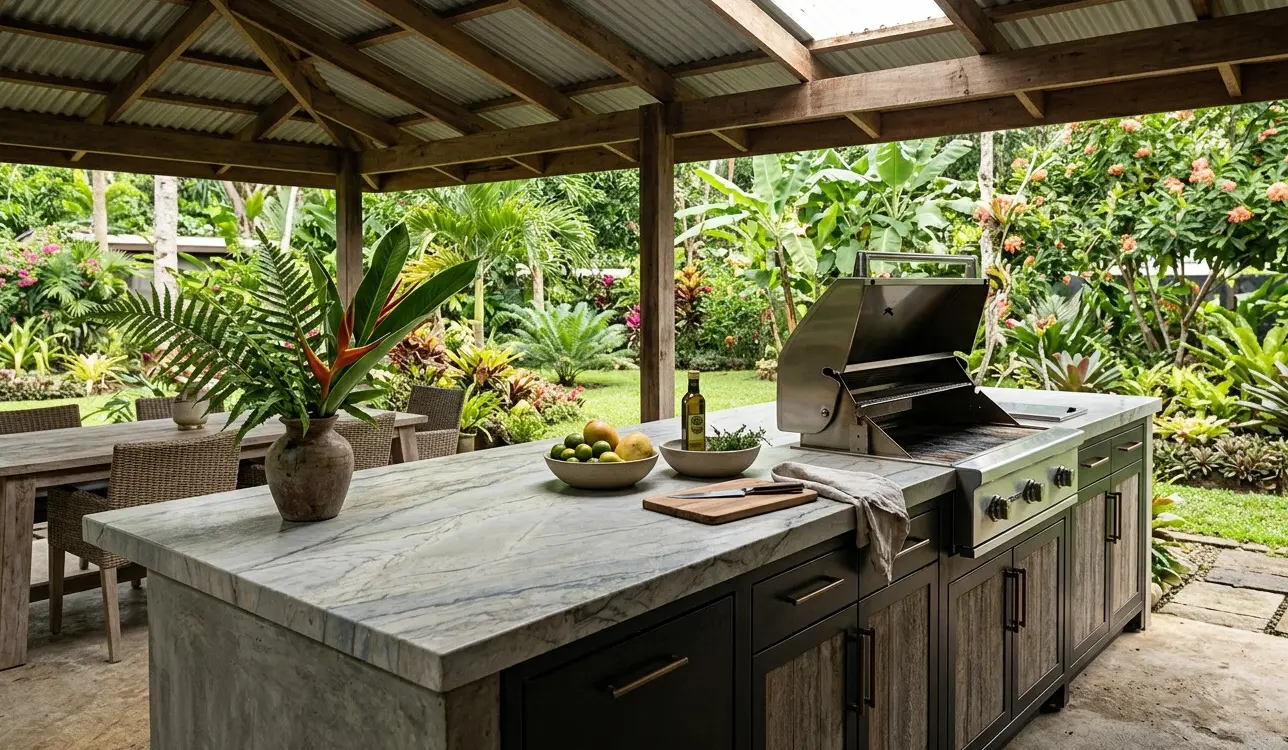
Protecting Slabs from Heat, Sun, and Acidic Substances
Even though natural stone handles heat better than many surfaces, a few precautions go a long way:
- Use trivets or pot holders under hot cookware straight from the stove or oven, particularly on marble.
- Keep acidic foods and drinks, such as citrus, wine, tomato sauce, and vinegar-based dressings, from sitting directly on marble or limestone surfaces. Granite and quartzite are more resistant to etching from these substances but still benefit from a quick wipe-up.
- If a kitchen or bathroom slab sits in direct sun for large parts of the day, keep an eye on the sealer's performance using the water-bead test mentioned above, since UV exposure and heat can shorten the interval between resealing.
- Avoid placing rubber or vinyl mats directly on stone for extended periods, since some can trap moisture or leave discoloration underneath.
Finish also plays a role here. Honed and leathered finishes tend to hide heat marks and minor scuffs better than a high polish, which is worth keeping in mind if you're browsing our live slab inventory for a kitchen with heavy sun exposure.

Caring for Different Stone Types
Granite is one of the more forgiving natural stones for everyday households. It resists etching from acidic foods well and generally needs resealing only occasionally. Routine cleaning with a pH-neutral product and prompt spill cleanup covers most of what a granite slab needs.
Quartzite shares many of granite's practical advantages, including strong resistance to acidic substances, but individual slabs can vary in porosity depending on the specific quarry and stone. Because of that variation, it's worth doing the water test on a quartzite slab rather than assuming it behaves exactly like granite.
Marble requires the most attention of the three. Its calcium content makes it reactive to acids, so cleanup speed matters more here than with other stones, and etching can occur even with careful use. Many Davis homeowners who choose marble do so with an understanding that a soft, worn look will develop with age and treat that as part of the material's character rather than a defect to prevent entirely. If you're torn between these three materials, booking a design consultation is a straightforward way to talk through which one fits your household's habits before you buy.
Common Mistakes Davis Homeowners Make
A few patterns show up often in local households, particularly in shared or rental-adjacent housing near campus:
- Using all-purpose cleaners with citrus or vinegar as active ingredients, which are marketed for general kitchen use but aren't suited to marble or limestone.
- Letting hard water spots accumulate around the sink for weeks before addressing them, which makes the mineral film harder to remove.
- Skipping the water test entirely and reapplying sealer on a fixed calendar schedule that may not match how the stone is actually performing.
- Placing hot pans directly on the counter as a matter of habit, which is more of a concern with marble than with granite or quartzite.
- Assuming that because a stone looks similar to one in a neighbor's kitchen, it will behave the same way. Even slabs of the same stone type can differ in porosity and finish, so it's worth checking a new countertop's specific care needs rather than relying on secondhand advice.
For contractors and designers handling multiple rental or remodel projects in Davis, keeping care recommendations consistent across units is easier with a dedicated materials source. Our trade account program is set up for that kind of ongoing work.
Conclusion
Slab maintenance in Davis comes down to matching your routine to your stone type and to the realities of the local climate and water. Wipe up spills quickly, clean with pH-neutral products, run the water-bead test periodically to know when resealing is due, and use trivets and cutting boards as a matter of habit rather than an exception. Granite and quartzite tolerate a wider margin of error, while marble rewards a bit more attention and quick cleanup. If you're weighing which natural stone fits your household's habits and your kitchen's sun exposure, our team is glad to walk through the options in person at our Sacramento showroom, located at 6100 Warehouse Way, Sacramento, CA 95826, or by phone at (916) 913-6682.
Note: Some images on this page may be conceptual renderings created to illustrate design possibilities and may not depict actual installations.
Frequently Asked Questions
It depends on the stone and how it's used, but a simple water-bead test every few months is a more reliable guide than a fixed schedule. If water absorbs into the stone within a minute or two instead of beading up, it's time to reseal.
Hard water itself doesn't damage granite, quartzite, or marble, but it can leave mineral deposits that build up around sinks and faucets if not wiped away. Drying the surface after use and using a mineral-deposit cleaner when needed keeps this from becoming a bigger issue.
Not on marble or other calcium-based stones, since the acid can etch the surface. Granite and quartzite are more resistant, but a pH-neutral stone cleaner is the safer choice across all natural stone types.
Both hold up well with minimal upkeep and resist etching from acidic foods better than marble. The right choice usually comes down to appearance preferences and how the specific slab performs on a porosity test, since quartzite can vary more from slab to slab.
Prolonged sun and heat exposure won't damage the stone structurally, but it can shorten how long a sealer performs before it needs to be reapplied. Kitchens with strong afternoon sun may need to check the water-bead test a bit more frequently.